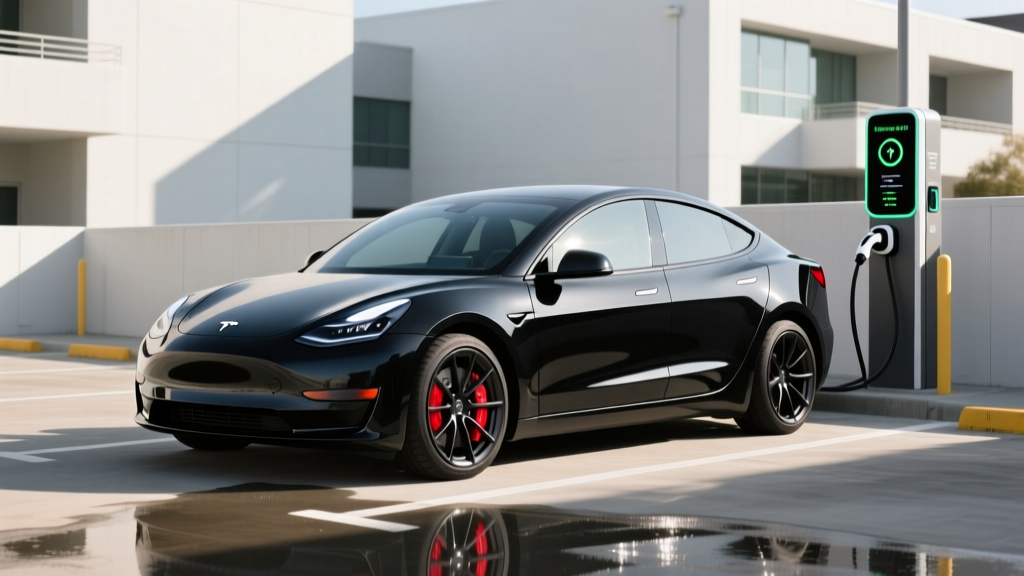
The 2020 Tesla Model 3 Performance remains one of the most compelling used electric vehicles on the market in 2026. With a dual-motor all-wheel-drive layout, supercar-rivaling acceleration, and access to Tesla's Supercharger network, it set the benchmark for what an affordable performance EV could be. Now available exclusively on the used market, the 2020 Model 3 Performance offers a compelling value proposition — especially for buyers who can take advantage of the federal used-EV tax credit. Here is everything you need to know about specs, real-world range, charging behavior, and ownership economics before you buy.
2020 Tesla Model 3 Performance: Core Specifications
| Specification | Value |
|---|---|
| EPA Estimated Range | 315 miles |
| Battery Capacity (Usable) | ~75 kWh (NMC) |
| Battery Chemistry | NMC (Nickel Manganese Cobalt) |
| Drivetrain | Dual-Motor AWD |
| Horsepower | ~456 hp (combined) |
| 0–60 mph | 3.2 seconds |
| Top Speed | 162 mph |
| MPGe (Combined) | 113 MPGe |
| Efficiency | 30 kWh / 100 miles |
| Max DC Fast Charge Rate | 250 kW (V3 Supercharger) |
| 10–80% DC Charge Time | ~27 minutes |
| Level 2 Home Charging | 11.5 kW (~44 miles/hr) |
| Battery Warranty (Original) | 8 years / 120,000 miles |
| Cargo Volume | 15 cu ft trunk + ~3.1 cu ft frunk |
| Rear Legroom | 35.2 inches |
Sources: EPA fueleconomy.gov, Tesla owner's manual archives.
Real-World Range: What the EPA Sticker Doesn't Tell You
Real-World Highway (70 mph, moderate climate): ~260–280 miles
Real-World Cold Weather (below 32°F, mixed driving): ~210–240 miles
City / Moderate Climate: ~290–310 miles
The 2020 Model 3 Performance's 315-mile EPA rating was among the best in its class at launch. However, real-world range diverges meaningfully from that figure depending on driving style, climate, and terrain.
On a 70-mph highway loop in 65°F weather, expect roughly 260–280 miles before the battery reaches 10% State of Charge (SoC). The Performance trim's stickier Michelin Pilot Sport 4S tires and sportier tuning create marginally more rolling resistance than the Long Range AWD variant, costing roughly 10–15 miles of range compared to its less aggressive sibling.
Cold weather is the larger variable. NMC lithium-ion batteries experience increased internal resistance below freezing, and cabin heating (the 2020 Model 3 uses a resistive PTC heater, not the heat pump introduced in the Model Y and later refreshed Model 3) draws significant energy. In sustained sub-32°F conditions with the cabin set to 70°F, plan for a 25–35% range reduction — bringing usable range down to approximately 210–240 miles. Preconditioning the battery while plugged in mitigates some of this loss, but the PTC heater remains an efficiency penalty compared to the heat pump-equipped 2024+ Model 3 Highland.
For daily commuting under 80 miles round-trip in moderate climates, you will rarely notice the gap. For road trips, Tesla's navigation automatically factors in elevation, temperature, and wind to estimate arrival SoC — and in our experience, those estimates are typically accurate within 2–3%.
Charging Speed and Behavior: DC Fast, Level 2, and Level 1
| Charging Level | Power / Rate | Miles Added per Hour | Notes |
|---|---|---|---|
| Level 1 (120V household) | ~1.4 kW | ~4–5 mi/hr | Emergency/trickle only |
| Level 2 (240V, 48A Wall Connector) | 11.5 kW | ~44 mi/hr | Full charge in ~7 hours |
| Level 2 (240V, 32A mobile connector) | 7.7 kW | ~30 mi/hr | Standard NEMA 14-50 adapter |
| DC Fast (Tesla V3 Supercharger) | Up to 250 kW | ~170 mi in 15 min | Peak rate, tapers above 50% |
| DC Fast (CCS via adapter) | Up to ~150 kW | Varies | Requires Tesla CCS adapter (sold separately) |
The 2020 Model 3 Performance supports up to 250 kW on Tesla V3 Superchargers — a rate that was class-leading at launch and remains competitive in 2026. However, peak charge rate is not sustained charge rate, and understanding the charge curve is critical for trip planning.
At a V3 Supercharger with a preconditioned battery and low State of Charge (below 20%), the Model 3 Performance will ramp quickly to approximately 250 kW. This peak holds roughly from 10–30% SoC, after which the rate tapers progressively: dropping to ~150 kW around 50% SoC, ~75 kW by 70%, and below 40 kW past 85%. A 10–80% charge takes approximately 27 minutes under ideal conditions, but add 5–8 minutes in cold weather if the battery was not preconditioned via navigation routing to the Supercharger.
For home charging, Tesla's Gen 2 Wall Connector on a 60A circuit delivers 48A (11.5 kW) to the vehicle — adding roughly 44 miles of range per hour. A full 0–100% charge takes about 7 hours, making overnight replenishment trivial for most owners. Installation costs vary widely: expect $800–$2,000 for a straightforward Wall Connector install on an existing 200A panel, and $2,500–$5,000+ if a panel upgrade to 200A is required. Always consult a licensed electrician for a site-specific quote.
The 2020 Model 3 ships with a Tesla proprietary connector (now designated NACS). To use CCS-equipped public fast chargers (Electrify America, EVgo, most non-Tesla networks), you will need Tesla's CCS adapter — a roughly $175 accessory that unlocks access to the broader DC fast-charging ecosystem.
Performance, Efficiency, and Driving Dynamics
The Performance badge is well-earned. With dual electric motors producing a combined 456 horsepower and an estimated 471 lb-ft of torque, the 2020 Model 3 Performance rockets to 60 mph in 3.2 seconds — faster than a contemporary Porsche 911 Carrera S. Instant torque delivery and the low center of gravity from the underfloor battery pack make it feel even quicker than the numbers suggest.
Track Mode, a software-enabled feature unique to the Performance trim, adjusts torque distribution between front and rear motors, increases regenerative braking aggression, and relaxes stability control intervention. It also activates an enhanced cooling algorithm to delay thermal throttling during repeated hard acceleration — though sustained track use will still trigger power reductions after roughly 3–5 full-power launches.
Efficiency is rated at 113 MPGe combined (30 kWh per 100 miles) by the EPA. In real-world mixed driving, we have observed between 27–33 kWh/100mi depending on speed and climate. At a national average residential electricity rate of $0.16/kWh, that translates to roughly $4.32–$5.28 per 100 miles of driving — approximately one-third the fuel cost of a 25 MPG gasoline sports sedan at $3.50/gallon.
Interior, Cargo, and Daily Practicality
The 2020 Model 3's minimalist interior centers on a single 15-inch landscape touchscreen that controls virtually every vehicle function — from climate and mirrors to glovebox release and windshield wiper speed. There is no traditional instrument cluster; speed and navigation information appear on the left third of the touchscreen.
Cargo capacity totals approximately 15 cubic feet in the rear trunk (with a usefully wide opening and 60/40 split-folding rear seats) plus 3.1 cubic feet in the front trunk (frunk). The frunk is best suited for charging cables, a small bag, or groceries — not a full suitcase.
Passenger space is adequate for four adults but tight for five. Rear legroom measures 35.2 inches — competitive with a BMW 3 Series but less generous than a Honda Accord. The low roofline and sloping rear glass compromise rear headroom for passengers over 6 feet tall, and the absence of rear air vents (in the 2020 model year) can make the back seat uncomfortable in extreme heat.
Build quality on the 2020 Model 3 improved meaningfully over the 2018–2019 launch years, but panel gap inconsistencies, occasional interior rattles, and paint imperfections remain more common than on equivalently priced German or Japanese competitors. A pre-purchase inspection by a Tesla-qualified independent shop is strongly recommended for any used example.
Autopilot, FSD, and Driver-Assistance Technology
The 2020 Model 3's Autopilot and optional Full Self-Driving (FSD) capability are Level 2 driver-assistance systems. The driver must remain fully engaged, hands on or near the wheel, and eyes on the road at all times. These systems do NOT make the vehicle self-driving.
Every 2020 Model 3 ships with Tesla's basic Autopilot suite: Traffic-Aware Cruise Control and Autosteer (lane-centering on marked highways). The optional FSD package ($7,000 at the time, now available as a subscription or higher one-time purchase on newer models) adds Navigate on Autopilot (automated highway on/off-ramp transitions), Auto Lane Change, Autopark, Summon, and Traffic Light and Stop Sign Control.
In 2026, FSD (Supervised) has improved substantially via over-the-air updates, but it remains a Level 2 system requiring constant driver oversight. It handles well-marked highways competently but can struggle with construction zones, faded lane markings, unprotected left turns, and adverse weather. The steering-wheel torque sensor (rather than a capacitive touch sensor or camera-based eye monitoring used in some competitors) means the system periodically requires a physical tug on the wheel to confirm engagement — which some drivers find less intuitive than GM's Super Cruise eye-tracking approach.
- Drive the car without a fully attentive, licensed driver in the seat
- Reliably handle construction zones, unmapped roads, or severe weather
- Replace the driver's judgment for merging, yielding, or navigating complex intersections
- Qualify as SAE Level 3, 4, or 5 autonomy
Pricing, Used Market Value, and Federal Tax Credit
The 2020 Tesla Model 3 Performance originally carried a base MSRP of approximately $56,990 (before incentives). In the 2026 used-EV market, well-maintained examples with 40,000–70,000 miles typically sell for $22,000–$30,000 depending on condition, mileage, FSD transferability, and regional demand.
| Cost Factor | Amount |
|---|---|
| Original 2020 MSRP (Performance AWD) | ~$56,990 |
| Typical 2026 Used Price (50k mi, good condition) | $24,000–$28,000 |
| Federal Used-EV Tax Credit (§25E, max) | Up to $4,000 (30% of sale price) |
| Estimated Price After Federal Credit | $20,000–$24,000 |
Federal used-EV tax credit (§25E) eligibility requirements:
- The vehicle must be purchased from a licensed dealer (private-party sales do not qualify)
- Sale price must not exceed $25,000
- Buyer's adjusted gross income must not exceed $75,000 (single), $112,500 (head of household), or $150,000 (joint) — per IRS §25E guidelines
- The credit equals 30% of the sale price, up to a maximum of $4,000
- The vehicle must be at least two model years old (the 2020 model qualifies)
- Point-of-sale transfer is available — the dealer applies the credit as a down-payment reduction at purchase
Important caveat: Because the §25E credit caps at a $25,000 sale price, buyers negotiating a 2020 Model 3 Performance above $25,000 will forfeit the federal credit entirely. This creates a strong incentive to find a qualifying example priced at or below the threshold — which is achievable in 2026 for higher-mileage or cosmetically imperfect units.
Note: The §25E used-EV credit is distinct from the §30D new-EV credit (up to $7,500 for qualifying new vehicles). Since the 2020 Model 3 is no longer sold new, only §25E applies.
Pros and Cons at a Glance
Pros
- 3.2-second 0–60 mph — genuine supercar acceleration at a used-economy-car price
- Access to Tesla Supercharger network — the most reliable and extensive DC fast-charging network in North America
- 315-mile EPA range remains competitive with 2026 new EVs costing twice as much
- Over-the-air updates continue to add features and improve performance years after purchase
- Low running costs: ~$0.04–$0.05 per mile on home electricity vs. $0.14+ per mile on gasoline
- Strong safety ratings (NHTSA 5-star, IIHS Top Safety Pick+)
- Minimal routine maintenance: no oil changes, no transmission fluid, regenerative braking extends pad life
Cons
- Rear seat space is tight for tall passengers; no rear HVAC vents in 2020 model year
- No heat pump — cold-weather range loss is more severe than 2024+ Model 3 Highland
- Build quality inconsistencies (panel gaps, paint) more common than premium competitors
- All controls routed through touchscreen — no physical buttons for climate, volume, or mirrors
- FSD is a Level 2 system requiring full driver attention — not the autonomous experience some buyers expect
- Battery degradation at 6+ years: expect 8–15% capacity loss depending on charging habits and climate
- Insurance premiums run 15–30% higher than comparable gasoline sedans
Who the 2020 Model 3 Performance Is Best For
- You want sports-car acceleration with daily-driver practicality and low running costs
- You have reliable home Level 2 charging access and a commute under 80 miles round-trip
- You take road trips 2–4 times per year and value the Supercharger network's reliability
- You can find a qualifying example at or below $25,000 to capture the $4,000 used-EV tax credit
- You regularly carry four or five adults — the rear seat is a compromise
- You live in an extreme cold-weather climate without access to a garage or preconditioning
- You need towing capability (the Model 3 is not rated for towing)
- You prefer physical controls and a traditional instrument cluster
Battery Health, Warranty, and Long-Term Ownership
The 2020 Model 3 Performance uses an NMC (nickel manganese cobalt) battery pack with approximately 75 kWh of usable capacity. Tesla's original battery warranty covers 8 years or 120,000 miles (whichever comes first) with a minimum 70% capacity retention threshold. For a 2020 model, that warranty window extends through the 2028 model year or until the odometer hits 120,000 miles.
Real-world degradation data from Tesla's fleet and third-party tracking (including Tesla owner community data) suggests that NMC packs in the Model 3 typically lose 8–12% capacity over the first 100,000 miles, with the steepest drop occurring in the first 20,000–30,000 miles before stabilizing. A 2020 example with 60,000 miles and 10% degradation would retain roughly 283 miles of EPA-equivalent range at 100% SoC — still ample for most use cases.
Best practices for long-term NMC battery health include:
- Set daily charge limit to 80% (Tesla's infotainment makes this trivial)
- Avoid frequent DC fast charging when Level 2 is available
- Minimize time spent at 100% SoC — charge to 100% only when departing on a road trip
- Precondition the battery in cold weather while plugged in
- Avoid letting the battery sit below 10% SoC for extended periods
Out-of-warranty battery replacement for a Model 3 currently runs $12,000–$16,000 at Tesla Service Centers — a significant expense, but one that the vast majority of owners will never face given the pack's demonstrated longevity.
Frequently Asked Questions
What is the real-world range of the 2020 Tesla Model 3 Performance?
The EPA rates it at 315 miles, but expect 260–280 miles on highway road trips at 70 mph, and 210–240 miles in sustained sub-freezing temperatures. City driving in moderate climates can approach the EPA figure.
How fast does the 2020 Model 3 Performance charge?
On a Tesla V3 Supercharger, it peaks at 250 kW and charges from 10–80% in approximately 27 minutes under ideal conditions. At home on a 48A Level 2 Wall Connector, it adds about 44 miles of range per hour (11.5 kW).
Does the 2020 Tesla Model 3 qualify for a federal tax credit?
It is no longer eligible for the new-EV §30D credit (the vehicle is discontinued from new sales). However, it can qualify for the federal used-EV tax credit (§25E) — up to $4,000 (30% of sale price) — if purchased from a dealer at or below $25,000 and the buyer meets income thresholds. See IRS §25E guidelines for full eligibility rules.
Is the 2020 Model 3 Performance worth buying vs. newer EVs?
At $20,000–$28,000 after potential tax credits, it offers acceleration, range, and charging infrastructure access that few 2026 new EVs under $45,000 can match. Trade-offs include older build quality, no heat pump, a tighter rear seat, and the lack of the refreshed Model 3 Highland's improved ride and noise insulation. If your budget is firm at $25K and you prioritize performance and range, it remains a top pick.
What are the biggest ownership costs to budget for?
Beyond the purchase price, budget for: insurance ($1,800–$2,800/year depending on state and driving record), home charging installation ($800–$2,000 for a Wall Connector), electricity ($500–$900/year for 12,000 miles of driving at residential rates), and tire replacement ($800–$1,400 for a set of Michelin Pilot Sport 4S every 25,000–35,000 miles — EVs wear tires faster due to weight and instant torque).
How do I check battery health on a used 2020 Model 3?
In the vehicle's touchscreen, navigate to Controls > Service > Battery Health Test (available on recent software versions). This provides an estimated capacity percentage. You can also compare the displayed range at 100% SoC against the original 315-mile EPA figure — a reading of 280+ miles at 100% suggests healthy degradation under 12%.