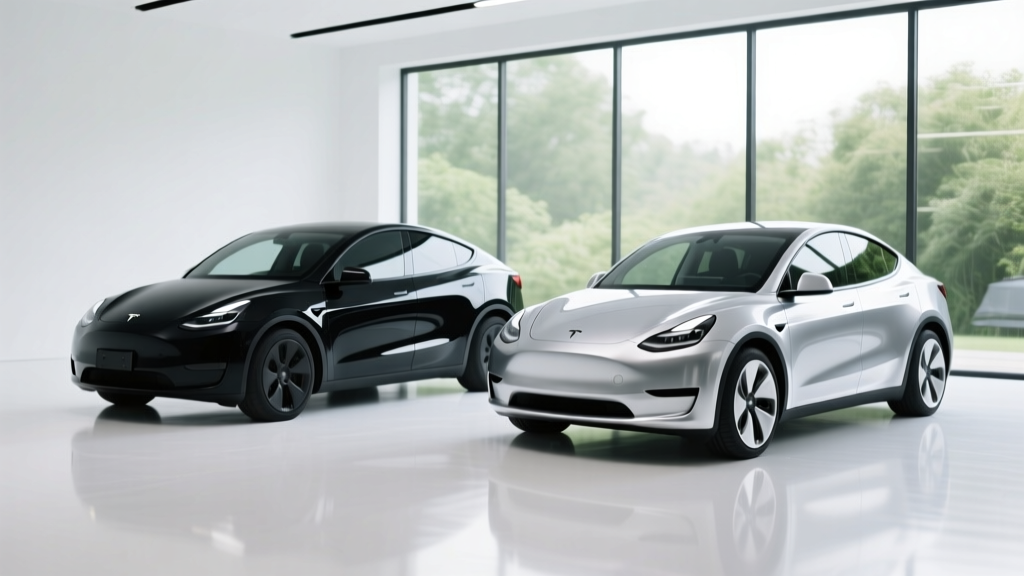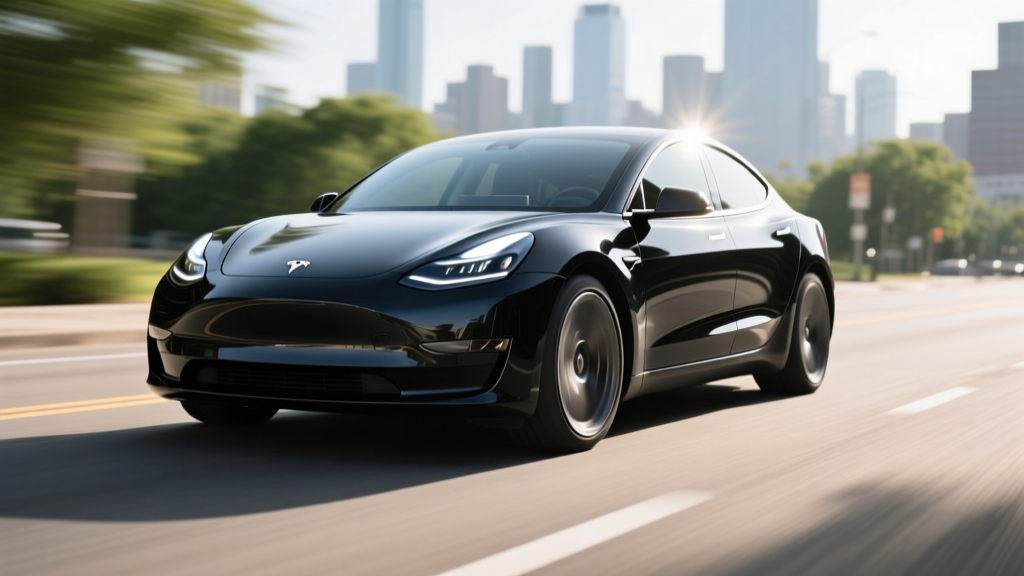
The 2020 Tesla Model 3 remains one of the most sought-after used electric vehicles on the market. As Tesla's first mass-market sedan, it combined accessible pricing with performance figures that embarrassed sports cars costing three times as much. For buyers researching the 2020 Tesla Model 3 0-60 times and overall capability, this generation represents a critical inflection point: Tesla had ironed out early build-quality issues, introduced the heat pump (on some builds), and solidified the Supercharger network advantage that still defines the ownership experience.
In this deep-dive review, written from a 2026 perspective with six years of real-world degradation data now available, we break down every trim's acceleration specs, EPA range versus what you'll actually see on the road, charging speeds across DC fast-charging and home Level 2 setups, and whether this five-year-old EV still holds up against newer competitors like the Hyundai Ioniq 6, BMW i4, and refreshed Tesla Model 3 Highland.
2020 Tesla Model 3 Trims and 0-60 MPH Performance
The 2020 Model 3 was offered in three primary trims, each with distinct powertrain configurations and acceleration profiles. Tesla famously tweaked software and motor mappings throughout production runs, so your exact 0-60 time may vary by a tenth or two depending on build month and subsequent over-the-air updates.
| Specification | Standard Range Plus (RWD) | Long Range AWD | Performance |
|---|---|---|---|
| 0-60 mph | 5.3 seconds | 4.4 seconds | 3.2 seconds |
| Horsepower (est.) | ~283 hp | ~384 hp | ~450 hp |
| Drivetrain | Rear-Wheel Drive (single motor) | Dual-Motor AWD | Dual-Motor AWD |
| Top Speed | 140 mph | 145 mph | 162 mph |
| Battery (usable, approx.) | 50 kWh (LFP on later builds) / 55 kWh (NMC) | 75 kWh (NMC) | 75 kWh (NMC) |
| EPA Range | 250 mi (SR+) / 263 mi (late 2020) | 322 mi | 299 mi |
| MPGe (combined) | 141 MPGe | 134 MPGe | 116 MPGe |
| kWh/100 mi | 24 kWh | 25 kWh | 29 kWh |
The Performance trim's 3.2-second 0-60 time was extraordinary for a $56,000 sedan in 2020 and remains quick by 2026 standards. What makes the Model 3's acceleration especially useful is the instant torque delivery — there's no turbo lag, no transmission downshift. You press the pedal and the car simply goes. Even the Standard Range Plus at 5.3 seconds feels quicker than the number suggests because electric torque hits at 0 rpm.
Real-world note: Tesla's published 0-60 times typically reflect ideal conditions — flat surface, preconditioned battery, low state of charge (which paradoxically can help peak power delivery on some configurations), and warm tires. Expect 0.2-0.5 seconds slower in everyday conditions with cold tires or a battery below 50% SoC. Track Mode on the Performance trim also adjusts torque distribution for better launch consistency.
Real-World Range: EPA Estimates vs. What You'll Actually Get
Long Range AWD: EPA 322 miles | Real-world highway (70-75 mph): ~265-285 miles | Cold-weather highway (30°F): ~220-250 miles
Performance: EPA 299 miles | Real-world highway: ~240-265 miles | Cold-weather highway: ~200-225 miles
Standard Range Plus: EPA 250-263 miles | Real-world highway: ~200-220 miles | Cold-weather highway: ~170-190 miles
The 2020 Model 3 Long Range's 322-mile EPA rating was class-leading at the time, and the car's efficiency remains impressive in 2026. The Model 3's aerodynamic drag coefficient of 0.23 Cd and relatively low curb weight (~4,000 lbs for the Long Range) are the primary reasons it sips electrons so frugally.
However, EPA range figures assume a mix of city and highway driving at moderate speeds. On sustained highway trips at 75 mph — the kind of driving that triggers range anxiety — expect to use roughly 80-85% of the EPA sticker. The Performance trim suffers more due to its stickier summer tires (higher rolling resistance) and more aggressive powertrain calibration.
Cold weather is the great equalizer. Lithium-ion batteries lose efficiency in cold temperatures, and cabin heating draws significant power. The 2020 Model 3 Long Range initially shipped without a heat pump (Tesla added it to some late-2020 builds and standard on the 2021 refresh). Without a heat pump, resistive cabin heating can reduce range by 25-35% in sub-freezing conditions. If you're buying a used 2020 Model 3 in a cold climate, checking whether your specific VIN has the heat pump is critical — it's the single biggest cold-weather efficiency differentiator.
Battery degradation at six years: Data aggregated from Tesla owner communities and fueleconomy.gov indicates that 2020 Model 3 NMC batteries typically retain 90-94% of original capacity after 80,000-100,000 miles. The LFP batteries in later Standard Range Plus builds show even less degradation — often 95%+ retention — because LFP chemistry tolerates regular 100% charging without accelerated wear. A 2020 Long Range with 80,000 miles might realistically deliver 290-300 miles EPA-equivalent when new, now offering around 265-285 miles at full charge.
Charging Speeds: DC Fast Charging and Home Level 2
Charging speed is where the 2020 Model 3 shows its age compared to 2025-2026 competitors with 800V architectures (like the Hyundai Ioniq 5/6 and Kia EV6, which can sustain 230+ kW). The Model 3 runs on a 400V architecture, which limits peak charge rates but still delivers practical road-trip performance.
| Charging Method | Max Rate | Speed (Miles per Hour of Charging) | Notes |
|---|---|---|---|
| Level 1 (120V household) | ~1.4 kW | ~3-5 mi/hr | Emergency/trickle only |
| Level 2 (240V, 32A Mobile Connector) | 7.7 kW | ~30 mi/hr | Standard Tesla Mobile Connector |
| Level 2 (240V, 48A Wall Connector) | 11.5 kW | ~44 mi/hr | Requires 60A circuit; onboard charger max |
| DC Fast Charge (V2 Supercharger) | 150 kW (peak) | ~170 mi/hr at peak | 10-80% in ~35-40 min |
| DC Fast Charge (V3 Supercharger) | 250 kW (peak, Long Range/Perf) | ~200+ mi/hr at peak | 10-80% in ~25-30 min; SR+ capped at 170 kW |
Understanding the charge curve: The 250 kW peak rate on V3 Superchargers is only sustained between roughly 10-30% state of charge. The Model 3's charge curve tapers progressively — dropping to ~150 kW by 50% SoC, ~100 kW by 65%, and ~60 kW by 80%. This is why Tesla (and every honest EV reviewer) quotes 10-80% times rather than peak kW figures. A realistic V3 Supercharger session from 10-80% takes about 25-30 minutes for the Long Range and Performance trims.
The Standard Range Plus charges at a maximum of ~170 kW on V3 Superchargers due to its smaller battery pack (the cells simply can't accept charge as quickly). Expect 10-80% in roughly 30-35 minutes.
Home charging is where the Model 3 excels. With a Tesla Wall Connector on a 60-amp circuit, the onboard 11.5 kW charger adds about 44 miles of range per hour. An overnight charge from 20% to 80% takes roughly 5-6 hours — plenty for daily driving. Most owners plug in every night and wake up with a full battery, making public charging irrelevant for daily use.
Connector note for 2026 buyers: The 2020 Model 3 uses Tesla's proprietary connector (now standardized as NACS). As of 2025, most major automakers have adopted NACS, and Tesla Superchargers have begun opening to non-Tesla EVs via Magic Dock adapters. For a 2020 Model 3 owner, this means the Supercharger network advantage is narrowing — but the network still has the most reliable, best-maintained fast chargers in the US, according to NHTSA infrastructure reports and independent surveys.
Interior, Cargo, and Technology
The 2020 Model 3's interior is famously minimalist — a single 15-inch touchscreen handles virtually all vehicle functions, from climate control to mirror adjustment. This polarizes buyers: some find it refreshingly clean, others find it frustrating to adjust fan speed through a menu while driving.
Passenger space:
- Front headroom: 40.3 inches
- Front legroom: 42.7 inches
- Rear headroom: 37.8 inches
- Rear legroom: 35.2 inches
Rear-seat space is adequate for adults on shorter trips but tight for anyone over 6 feet tall on longer journeys. The floor-mounted battery creates a flat floor, which helps foot room, but the seat cushion is positioned relatively low.
Cargo capacity:
- Trunk: 15 cubic feet
- Front trunk (frunk): 3.1 cubic feet
- Total: ~18.1 cubic feet
- With 60/40 rear seats folded: sufficient for long items, though no hatchback opening limits bulky cargo
The sedan trunk (rather than a liftback like the Model S) is a practical limitation. You can fit two large suitcases and a few carry-ons, but the narrow trunk opening makes loading awkward items difficult.
Technology highlights:
- 15-inch center touchscreen with over-the-air updates (the car has gained features since 2020 via OTA)
- Autopilot basic (lane centering + adaptive cruise) included; Full Self-Driving Capability was a $7,000 option (now called FSD Supervised)
- Sentry Mode dashcam recording, Dog Mode climate control, and theater mode for streaming
- Phone-as-key via Bluetooth (no physical key fob included)
- 8-camera surround vision system
Important Autopilot/FSD clarification: Tesla's Autopilot and FSD (Supervised) are SAE Level 2 driver-assistance systems. They require continuous driver attention and hands-on-wheel (or eyes-on-road with cabin camera monitoring). They are not autonomous driving systems. Only Level 4 services like Waymo operate without a human driver. Do not purchase FSD on a used 2020 Model 3 expecting hands-free, eyes-off capability — it does not provide that.
Pricing, Tax Credits, and Used-Buyer Economics
Since the 2020 Model 3 is no longer sold new, federal §30D new-vehicle tax credits do not apply. However, used buyers may qualify for the Used Clean Vehicle Credit (also under IRS §30D provisions), which offers up to $4,000 or 30% of the sale price (whichever is less) on qualifying pre-owned EVs.
| Item | Details |
|---|---|
| Original MSRP (2020) | SR+: ~$37,990 | Long Range: ~$46,990 | Performance: ~$54,990 |
| Typical used price (2026, 50-80K mi) | SR+: $18,000-$22,000 | Long Range: $23,000-$28,000 | Performance: $27,000-$33,000 |
| Used EV tax credit (max) | $4,000 (30% of sale price, capped) |
| Income cap (used credit) | $75K single / $112,500 HOH / $150K MFJ (modified AGI) |
| Dealer requirement | Must purchase from a licensed dealer (private-party sales excluded) |
| Vehicle price cap | Sale price must be $25,000 or less to qualify |
| Model year eligibility | Must be at least 2 model years old (2020 qualifies in 2026) |
Key used-credit caveat: The $25,000 sale-price cap means most 2020 Long Range and Performance examples will exceed the threshold and not qualify. Standard Range Plus models priced under $25,000 from a licensed dealer are your best bet for capturing the $4,000 credit. Always verify current IRS rules before purchasing, as credit provisions can change. The credit can be transferred to the dealer at point of sale as an immediate price reduction.
Who Should Buy a Used 2020 Tesla Model 3?
- You want a proven, efficient EV with access to the most reliable DC fast-charging network
- Daily commuting under 60 miles round-trip is your primary use case
- You value over-the-air updates that have added features since delivery
- You want sedan handling with sports-car acceleration (Performance trim)
- You can charge at home (Level 2) and want to virtually eliminate fuel costs
- You need substantial rear-seat space or cargo versatility (consider Model Y or Ioniq 5)
- You live in an extreme cold climate and the specific VIN lacks a heat pump
- You want the latest 800V ultra-fast charging (Ioniq 6, EV6 charge faster)
- You prefer physical buttons and a traditional instrument cluster
- You need towing capability (Model 3 is not rated for towing in the US)
Best competitor comparisons:
- vs. Hyundai Ioniq 6 (2024-2026): Ioniq 6 offers 800V charging (~18 min 10-80%), more rear space, and a more conventional interior. Model 3 wins on driving dynamics, Supercharger access, and software ecosystem.
- vs. BMW i4 (2022-2026): i4 offers superior build quality and a more premium cabin but costs significantly more used. Model 3 is more efficient (lower kWh/100mi).
- vs. 2024+ Tesla Model 3 Highland: The refreshed Model 3 adds a heat pump standard, ventilated seats, rear touchscreen, and improved ride quality. If budget allows, the Highland is the better car — but costs $10,000-$15,000 more used.
Warranty and Long-Term Ownership
Tesla's warranty coverage on the 2020 Model 3 was competitive at delivery, but as a five-to-six-year-old vehicle, much of that coverage is expiring or has expired.
- Basic Vehicle Limited Warranty: 4 years / 50,000 miles — expired on all 2020 models
- Battery & Drive Unit Warranty (Long Range/Performance): 8 years / 120,000 miles, whichever comes first, with minimum 70% capacity retention
- Battery & Drive Unit Warranty (Standard Range Plus): 8 years / 100,000 miles, whichever comes first, with minimum 70% capacity retention
This means a 2020 Long Range with under 120,000 miles still has battery and drive unit warranty coverage through 2028. That's a significant safety net. If the battery drops below 70% of its original capacity within the warranty period, Tesla will repair or replace it. In practice, very few 2020 Model 3 batteries have required warranty replacement — the NMC and LFP packs have proven durable.
Out-of-warranty battery replacement cost: If you're outside the warranty window or buy a high-mileage example, a Model 3 battery replacement runs approximately $12,000-$16,000 at a Tesla Service Center as of 2026 pricing. Third-party EV repair shops are beginning to offer cell-level repairs for $5,000-$8,000, though availability varies by region.
Pros, Cons, and Final Verdict
- Class-leading efficiency (24-29 kWh/100mi depending on trim)
- Supercharger network access remains the gold standard for road trips
- Performance trim 0-60 in 3.2s is still thrilling
- Over-the-air updates keep the car evolving
- Strong battery longevity data at 6+ years
- Low used prices relative to new EVs; potential $4,000 used credit
- Minimal maintenance (no oil, no transmission fluid, regenerative braking saves brake pads)
- Basic warranty has expired; out-of-pocket repairs possible
- Early-2020 builds may lack heat pump (cold-weather range penalty)
- Rear seat space is tight for tall adults
- Sedan trunk opening limits cargo versatility
- 400V architecture charges slower than 800V competitors
- Touchscreen-only controls frustrate some drivers
- FSD purchase does not transfer reliably on all used sales — verify before buying
Bottom line: The 2020 Tesla Model 3 is one of the best-value used EVs you can buy in 2026. The Long Range AWD at $23,000-$28,000 delivers 300+ mile capability, dual-motor all-weather traction, and Supercharger access at a price that undercuts most new EVs by $15,000 or more. The Performance trim at $27,000-$33,000 is a genuine sports sedan bargain. Just verify the build specifics (heat pump, FSD transferability, battery health via the in-car display), confirm used-credit eligibility with your dealer and tax professional, and you're looking at a compelling entry into electric ownership.
Frequently Asked Questions
What is the real-world range of a 2020 Tesla Model 3 Long Range?
Expect approximately 265-285 miles on highway trips at 70-75 mph in moderate temperatures, versus the EPA sticker of 322 miles. In cold weather (below freezing), plan for 220-250 miles. City driving with regenerative braking can approach or slightly exceed the EPA figure. A six-year-old battery with 80,000 miles may have lost 6-10% of original capacity, reducing these figures proportionally.
How fast does the 2020 Model 3 charge at home and on road trips?
At home with a Tesla Wall Connector (48A, 240V), the Model 3 charges at up to 11.5 kW, adding about 44 miles of range per hour. A full overnight charge is standard. On V3 Superchargers, the Long Range and Performance peak at 250 kW, achieving a 10-80% charge in about 25-30 minutes. The Standard Range Plus peaks at ~170 kW, taking 30-35 minutes for the same session.
Does a used 2020 Tesla Model 3 qualify for any federal tax credit?
Yes, potentially. The Used Clean Vehicle Credit offers up to $4,000 (or 30% of sale price, whichever is less) if you meet income requirements ($75K single / $150K married filing jointly), purchase from a licensed dealer, and the sale price is $25,000 or less. This effectively limits eligibility to Standard Range Plus models. Always check current IRS guidelines and consult a tax professional, as rules may change.
Is the 2020 Model 3 Performance really a 3.2-second car?
Yes, under ideal conditions. Tesla's 3.2-second claim was independently verified by multiple outlets including Motor Trend and Car and Driver at the time of release. In real-world conditions (public roads, ambient temperature variation, tire condition), expect 3.3-3.6 seconds. The instant torque delivery makes it feel even quicker than the number suggests in everyday driving.
Should I buy a 2020 Model 3 or wait for a newer used EV?
If your budget is $20,000-$30,000 and you want a proven, efficient sedan with the best fast-charging network, the 2020 Model 3 is hard to beat. If you need more cargo space, look at a used Model Y. If you want 800V ultra-fast charging, consider a used Ioniq 5 or EV6 (though you'll sacrifice some Supercharger convenience). If budget allows $35,000+, a 2024 Model 3 Highland offers meaningful upgrades including a standard heat pump, better ride quality, and rear ventilation.
How do I check battery health on a used 2020 Model 3?
Navigate to the car's touchscreen and check the displayed estimated range at 100% charge. Compare this to the original EPA rating for the trim. You can also request a battery health report from a Tesla Service Center. Third-party tools like TeslaFi or Scan My Tesla (via OBD-II adapter) can provide more granular State of Health (SoH) data. Look for less than 10% degradation at 80,000 miles as a healthy benchmark.