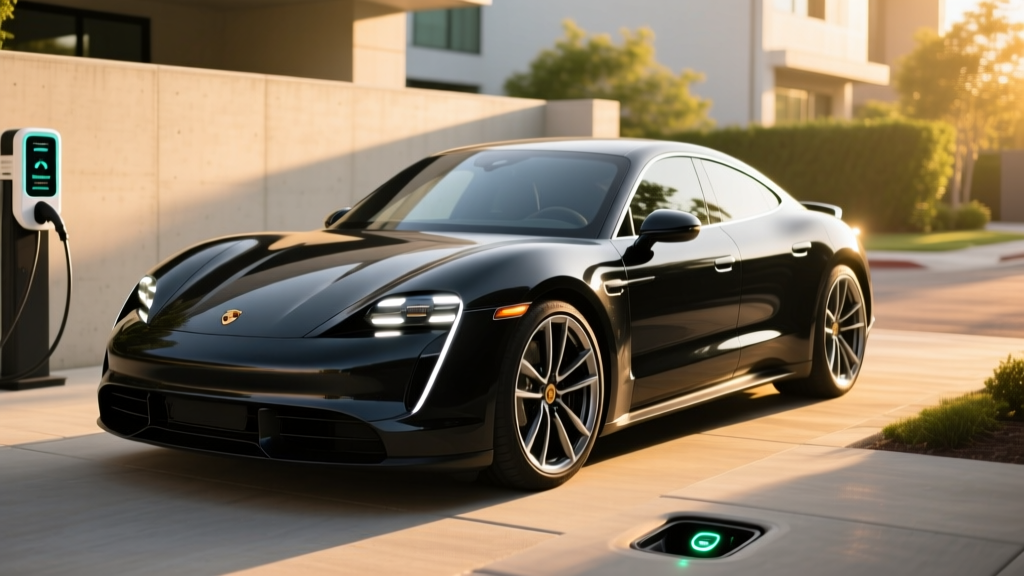
The 2020 Porsche Taycan Turbo S launched as the brand's first all-electric vehicle, and even six years later, its 800-volt architecture and sustained fast-charging performance remain benchmarks in the luxury EV sedan segment. For used-EV shoppers in 2026, the Turbo S represents a compelling proposition: supercar-level acceleration, class-leading charge speeds, and Porsche build quality — but with an EPA range figure that trails newer competitors. Here's exactly what to expect from ownership.
Quick Verdict: Who Should Buy the 2020 Taycan Turbo S
The 2020 Taycan Turbo S is best suited for driving enthusiasts who prioritize acceleration, handling, and charging speed over maximum range. It's a commuter and weekend-canyon car first, a road-tripper second. If your daily drive is under 120 miles round-trip and you have access to DC fast charging or home Level 2, the Turbo S delivers an experience that few EVs at any price can match. If you need 300+ miles of range for frequent long-distance travel, look at the Lucid Air or Tesla Model S instead.
| Specification | 2020 Porsche Taycan Turbo S |
|---|---|
| EPA Range | 192 miles |
| Battery (Usable / Gross) | 83.7 kWh / 93.4 kWh (NMC) |
| Drivetrain | Dual-motor AWD |
| Horsepower (Launch Control) | 750 hp |
| Torque | 774 lb-ft |
| 0-60 mph | 2.6 seconds |
| Top Speed | 161 mph |
| MPGe (Combined) | 68 MPGe |
| Efficiency | 49 kWh/100 mi |
| Max DC Fast Charge | 270 kW (peak) |
| 10-80% DCFC Time | ~22.5 minutes |
| Level 2 Charge Rate | 9.6 kW (onboard charger) |
| Cargo (Trunk + Frunk) | 14.3 cu ft rear + 2.8 cu ft front |
| Rear Legroom | 32.7 inches |
| Battery Warranty | 8 years / 100,000 miles |
| Original Base MSRP | $185,000 |
Range and Efficiency: The Real-World Picture
EPA Range: 192 miles
Real-World Expectation: 160-180 miles highway (70-80 mph); 185-200 miles mixed city driving. In freezing temperatures (below 32°F), expect a 20-30% reduction, bringing effective range to roughly 130-155 miles on the highway.
The 2020 Taycan Turbo S carries a 93.4 kWh gross battery pack (83.7 kWh usable) using LG Chem NMC (nickel-manganese-cobalt) pouch cells. Porsche deliberately reserves a larger buffer than some competitors — roughly 10.4 kWh split between top and bottom — to protect long-term battery health and ensure consistent power delivery even at low state of charge.
At 49 kWh per 100 miles (68 MPGe combined per fueleconomy.gov), the Turbo S is not efficient compared to lighter or more aerodynamic EVs. The Tesla Model S Plaid, for comparison, achieves roughly 33 kWh/100mi. The Taycan's weight (5,132 lbs) and performance-oriented drivetrain calibration trade efficiency for responsiveness and thermal headroom.
On a real-world highway loop at 75 mph in moderate temperatures (65-75°F), independent testing has consistently shown the Turbo S delivering between 160 and 180 miles before reaching 10% SoC. City driving with regenerative braking extends that closer to the EPA figure. The Taycan's two-speed rear transmission helps highway efficiency slightly compared to single-speed EVs, but the gains are modest given the car's mass and tire width.
Charging Speed: 800-Volt Architecture Still Impresses
The Taycan was the first production EV with an 800-volt battery architecture, and its charging performance remains a standout in 2026. Here's the breakdown:
| Charging Level | Power | Rate / Time | Notes |
|---|---|---|---|
| Level 1 (120V) | ~1.4 kW | ~3-4 miles per hour | Emergency/trickle only |
| Level 2 (240V, 40A) | 9.6 kW | ~22-25 miles per hour; full charge ~10 hrs | Standard home charging |
| DC Fast Charge (peak) | 270 kW | 10-80% in ~22.5 min | Requires 350 kW-class charger |
| DC Fast Charge (50 kW) | 50 kW | 10-80% in ~90 min | Older CCS stations |
Understanding the charge curve: The Taycan Turbo S peaks at 270 kW only when the battery is preconditioned and between roughly 5-27% state of charge. From 27-55% SoC, it sustains approximately 180-200 kW. Above 55%, power tapers progressively, dropping to around 100 kW near 70% and below 50 kW past 85%. This means the advertised 22.5-minute 10-80% time is achievable at a properly rated Electrify America or equivalent 350 kW station, but charging to 100% adds significant time — plan to unplug at 80-85% on road trips.
The Taycan uses the CCS1 connector standard. As of 2026, Porsche has not offered a NACS retrofit adapter for 2020 models, so Tesla Supercharger access requires checking for CCS-equipped stations or third-party adapter solutions. Always verify station compatibility before relying on a specific network.
For home charging, the 9.6 kW onboard charger adds roughly 22-25 miles of range per hour, meaning a full overnight charge from 20% to 100% takes about 8-10 hours on a dedicated 40-amp Level 2 circuit. A panel upgrade to 200A service may be necessary in older homes — budget $1,500-$3,000 for a licensed electrician to install a NEMA 14-50 outlet or hardwired EVSE.
Performance: Supercar Acceleration, Daily-Drivable Composure
The numbers are staggering: 750 horsepower and 774 lb-ft of torque (with Launch Control engaged) propel the 5,132-pound sedan to 60 mph in 2.6 seconds. Even without Launch Control, the Turbo S delivers 616 hp — more than enough for any real-world scenario. The two-speed rear axle (a first in production EVs) gives the Taycan a mechanical advantage in both launch grip and highway passing that single-speed competitors can't replicate.
What the numbers don't capture is the repeatability. Thanks to the 800V system's thermal management, the Turbo S can perform multiple consecutive hard launches without power derating — something early Tesla Model S P100D owners will recognize as a significant advantage. The liquid-cooled battery and stator cooling keep temperatures in check even under track use.
The adaptive air suspension, rear-axle steering (optional on Turbo S, standard on some trims), and torque vectoring give the Taycan handling dynamics closer to a Panamera than a typical EV sedan. Steering feel is communicative, and brake pedal modulation — always a challenge in regenerative-braking EVs — is among the best in the industry thanks to Porsche's blended braking calibration.
Interior, Cargo, and Technology
The 2020 Taycan's cabin is driver-focused and premium, with a 16.8-inch curved digital instrument cluster, an 10.9-inch central touchscreen, and an optional 8.4-inch haptic-control lower screen for climate and handwriting input. A front-passenger display was available as an option. Apple CarPlay is standard; Android Auto was not available on the 2020 model year (added in 2022+ models).
Practicality is the Taycan's weakest suit. The rear trunk offers 14.3 cubic feet — adequate for two carry-on bags or a week's groceries, but shallow compared to a Model S (26.3 cu ft behind rear seats). The front trunk (frunk) adds 2.8 cubic feet, enough for a charging cable bag and small soft duffel. Rear legroom at 32.7 inches is tight for adults over six feet on longer trips.
Driver-assistance technology includes adaptive cruise control, lane-keeping assist, and night vision (optional). This is SAE Level 2 driver assistance — Porsche's InnoDrive system requires hands on the wheel and does not offer hands-free driving like GM's Super Cruise or Ford's BlueCruise. It's competent for highway commuting but not class-leading in autonomous capability.
Pricing and Federal Tax Credit Eligibility
| Item | Amount |
|---|---|
| Original 2020 Base MSRP (Turbo S) | $185,000 |
| Typical 2026 Used Market Price | $85,000 - $110,000 |
| Federal Used EV Tax Credit (§25E) | Up to $4,000 (30% of sale price, capped) |
| Federal New EV Credit (§30D) | Not applicable (used vehicle purchase) |
| Estimated Price After Used EV Credit | $81,000 - $106,000 |
As a used vehicle in 2026, the 2020 Taycan Turbo S is not eligible for the new-vehicle §30D credit (which requires a new vehicle purchase with MSRP caps of $55,000 for sedans — far below the Taycan's original sticker). However, it may qualify for the §25E used clean vehicle credit, which offers 30% of the sale price up to $4,000, subject to these requirements:
- Sale price must be $25,000 or less — the Taycan Turbo S does not meet this threshold, effectively disqualifying it from the used EV credit in nearly all cases.
- Buyer income caps: $75,000 single / $150,000 married filing jointly.
- Vehicle must be at least two model years old (met).
- Must be purchased from a licensed dealer.
Realistically, the 2020 Taycan Turbo S's used market price of $85,000+ places it well above the $25,000 sale-price cap for the §25E credit. Buyers should not factor any federal tax credit into their purchase budget. Consult a tax professional to confirm eligibility based on your specific situation.
Battery Longevity, Warranty, and Degradation
Porsche warrants the Taycan's high-voltage battery for 8 years or 100,000 miles, whichever comes first, against defects and capacity loss below 70% of original capacity. For a 2020 model, that factory warranty extends through the 2028 model year or until the odometer hits 100,000 miles.
Real-world degradation data from European and North American Taycan owners suggests the 93.4 kWh NMC pack loses approximately 5-8% capacity over the first 100,000 miles under normal use. The large top-and-bottom buffer means usable range loss is less noticeable than in EVs with smaller buffers. Porsche's Battery Care program recommends keeping the charge limit at 85% for daily use and only charging to 100% before long trips — following this guidance helps preserve long-term State of Health (SoH).
Out-of-warranty battery replacement is estimated at $25,000-$35,000 based on current Porsche dealer pricing, though individual module replacement (if only certain cells degrade) may cost significantly less. Before purchasing a used 2020 Taycan Turbo S, request a battery health report from a Porsche dealer showing current SoH percentage.
Pros, Cons, and Competitor Comparison
Pros
- Sustained 270 kW peak charging; 10-80% in ~22 min at 350 kW stations
- 2.6-second 0-60 mph with repeatable performance (no thermal derating)
- 800V architecture provides superior thermal management
- Best-in-class steering feel and brake modulation for an EV
- Porsche build quality and dealer service network
- Two-speed rear transmission aids highway passing and efficiency
Cons
- 192-mile EPA range trails competitors (Model S: 405 mi; Lucid Air: 516 mi)
- Tight rear seat and limited cargo space
- No Android Auto on 2020 model year
- CCS-only charging; no native NACS/Supercharger access
- High insurance premiums (typical $3,500-$5,000/year)
- No federal tax credit applicability at current used prices
- 49 kWh/100mi efficiency means higher charging costs per mile
Versus the 2020 Tesla Model S Performance: The Model S offers more than double the range (402 miles EPA), faster software updates, Supercharger network access, and more cargo space — but cannot match the Taycan's build quality, steering feedback, or sustained charge rate. The Taycan is the driver's car; the Model S is the practical tech sedan.
Versus the 2020 Audi e-tron GT (platform sibling): The e-tron GT shares the J1 platform and 800V architecture but was not available in the US until 2022. For 2020 models specifically, the Taycan Turbo S stands alone in its segment.
Frequently Asked Questions
What is the real-world range of the 2020 Taycan Turbo S?
Expect 160-180 miles on the highway at 70-80 mph in moderate weather, and up to 195 miles in mixed city driving. Cold weather (below freezing) reduces range by 20-30%, yielding roughly 130-155 miles highway. The EPA sticker reads 192 miles, but plan trips around 160 miles of usable range for a safety margin.
How fast does the 2020 Taycan Turbo S charge?
At a 350 kW DC fast charger with battery preconditioning, the Turbo S peaks at 270 kW and charges from 10-80% in approximately 22.5 minutes. On a home Level 2 charger at 9.6 kW, a full charge takes about 8-10 hours, adding roughly 22-25 miles of range per hour. Always precondition the battery via the PCM navigation system before DC fast charging to achieve peak rates.
Does the 2020 Taycan Turbo S qualify for any federal EV tax credit?
Not realistically. The new-vehicle §30D credit doesn't apply to used purchases, and the used-vehicle §25E credit requires a sale price of $25,000 or less. With used Taycan Turbo S prices typically between $85,000-$110,000 in 2026, the vehicle far exceeds this cap. Some states offer separate EV incentives — check your state's energy office for details.
Is the 2020 Taycan Turbo S worth buying in 2026?
If you value driving dynamics, build quality, and fast charging over maximum range, yes. At $85,000-$110,000 on the used market, the Turbo S delivers an experience that newer EVs still struggle to match in terms of steering feel, brake modulation, and launch repeatability. However, if you regularly drive more than 160 miles between charges or need rear-seat practicality, the Tesla Model S, Lucid Air, or even the Taycan 4S (slightly more range, lower price) are better fits.
What's the biggest risk of buying a used 2020 Taycan Turbo S?
Battery degradation is modest (5-8% over 100K miles based on owner data), but the primary risk is the cost of out-of-warranty repairs after the 8-year/100,000-mile battery warranty expires in 2028. A full battery replacement runs $25,000-$35,000. Purchase a pre-purchase inspection from a Porsche dealer, including a battery SoH report, and consider an extended warranty if the vehicle has high mileage.
Can I charge a 2020 Taycan at Tesla Superchargers?
Not natively. The 2020 Taycan uses the CCS1 connector, and Tesla's Supercharger network was primarily NACS-only for non-Tesla vehicles as of early 2026, with limited CCS-equipped stations in select markets. Check the Tesla app for "Charge Your Non-Tesl" station availability in your area, and carry a CCS-to-NACS adapter if one becomes certified for the Taycan's 800V system.
Sources: EPA fueleconomy.gov, IRS §25E Used Clean Vehicle Credit, Porsche USA specifications archive.