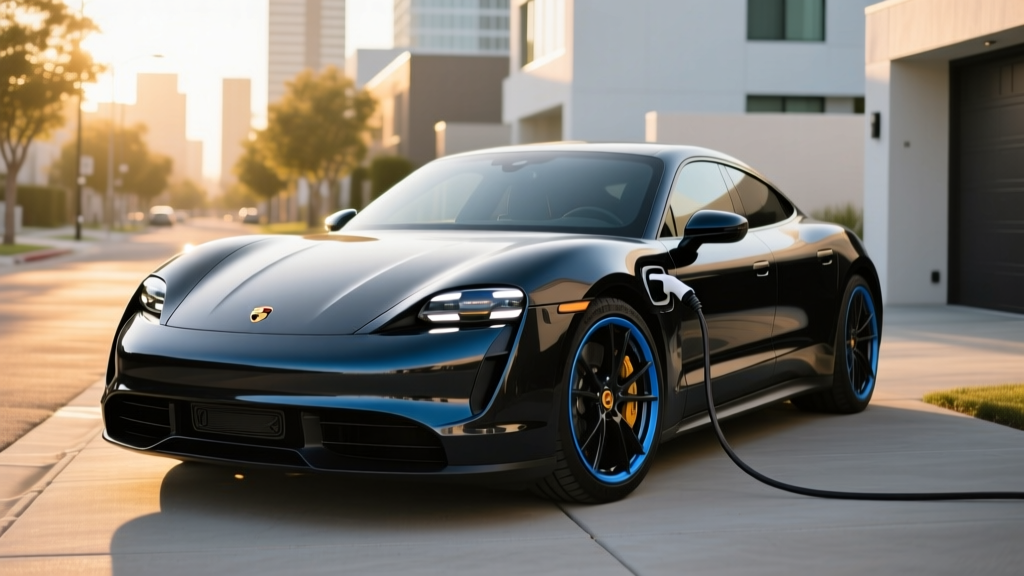
The 2020 Porsche Taycan 4S was the first electric vehicle to prove that a battery-powered car could carry the Porsche crest without compromise. Launching as Porsche's debut EV, the Taycan 4S paired an 800-volt architecture with a two-speed rear axle transmission — engineering choices that still set it apart in 2026's crowded performance-EV market. For used-EV shoppers researching the 2020 Taycan 4S 0-60 time, real-world range, and long-term ownership viability, this profile covers every number that matters.
Range Reality Check
EPA Estimated Range: 203 miles (Performance Battery Plus / 93.4 kWh pack)
Real-World Expectation: Plan for 170–185 miles in mixed highway driving at 70+ mph. In cold weather (below 32°F / 0°C), expect 140–160 miles. The Taycan's heat pump and thermal management help, but the 800V system's performance focus trades some efficiency for sustained power delivery.
2020 Taycan 4S 0-60 and Performance Specs
The headline number that draws most shoppers to the 2020 Taycan 4S is its launch performance. With the Performance Battery Plus (93.4 kWh gross / 83.7 kWh usable), the Taycan 4S produces up to 562 horsepower in overboost mode with Launch Control engaged (463 hp in standard driving). Porsche officially rates the 2020 Taycan 4S 0-60 mph time at 3.8 seconds — and independent tests by Car and Driver have recorded times as low as 3.4 seconds, thanks to the car's exceptional traction and two-speed rear transmission that optimizes both launch grip and top-end efficiency.
| Spec | Value |
|---|---|
| Drivetrain | Dual-motor AWD |
| Standard Horsepower | 463 hp (320 kW) |
| Overboost HP (Launch Control) | 562 hp (420 kW) |
| 0-60 mph | 3.8 seconds (EPA); 3.4s (independent tests) |
| Top Speed | 155 mph (electronically limited) |
| Battery (Gross / Usable) | 93.4 kWh / 83.7 kWh (NMC chemistry) |
| Architecture | 800-volt nominal |
| Curb Weight | ~5,100 lbs |
The two-speed transmission on the rear axle is a key differentiator. First gear multiplies torque for explosive launches, while second gear improves efficiency at highway speeds. This is why the Taycan 4S sustains its acceleration past 60 mph better than single-speed rivals — you'll feel a subtle shift around 60–65 mph, but the surge continues linearly toward its 155-mph limiter.
Charging Speed: 800V Architecture in Practice
The Taycan's 800-volt electrical architecture was a first for production EVs in 2020, and it remains a significant advantage for DC fast charging in 2026. Here's the complete charging picture:
| Charging Level | Power / Rate | Time / Notes |
|---|---|---|
| Level 1 (120V, 12A) | ~1.4 kW | ~2–3 miles per hour — emergency only |
| Level 2 (240V, 48A) | 9.6 kW | ~27 miles per hour; full charge in ~9.5 hours |
| DC Fast Charge (Peak) | 270 kW (800V station) | 10–80% in ~22 minutes |
| DC Fast Charge (400V station) | ~135 kW (via onboard step-up) | 10–80% in ~35–40 minutes |
Charging curve reality: The Taycan 4S peaks at 270 kW only when connected to an 800V-capable DC fast charger (such as Electrify America's 350 kW stalls or Ionity stations in Europe). On these chargers, the car sustains above 200 kW from roughly 10% to 50% state of charge, then tapers progressively. The 10–80% sprint takes approximately 22 minutes under ideal conditions (battery preconditioned, moderate ambient temperature).
At a standard 400V DC fast charger (most older ChargePoint or EVgo stalls), the Taycan's onboard voltage step-up converter enables charging at roughly 135 kW — still respectable, but noticeably slower. If you road-trip frequently, prioritize 800V-compatible networks for the best experience.
Home charging: The onboard AC charger accepts up to 9.6 kW on Level 2 (240V, 48A). With a properly installed home wall connector on a 60-amp circuit, you'll recover roughly 27 miles of range per hour of charging. An overnight charge (8–10 hours) easily replenishes the battery from near-empty to full. Porsche recommends preconditioning the battery via the infotainment system or app when you've scheduled a DC fast-charge stop — this warms the pack to the optimal temperature window and ensures you hit peak charge rates upon arrival.
Efficiency and Real-World Energy Consumption
The EPA rates the 2020 Taycan 4S (Performance Battery Plus) at 68 MPGe combined, which translates to roughly 49 kWh per 100 miles — making it one of the least efficient EVs in its class. For comparison, the Tesla Model S Long Range of the same era achieved around 111 MPGe (30 kWh/100mi).
This efficiency gap is the direct trade-off for the Taycan's performance engineering: the heavy 800V power electronics, two-speed gearbox, and performance-tuned thermal management all consume energy. In real-world driving:
- City / mild conditions: 42–46 kWh/100mi (~180–200 miles range)
- Highway at 70–75 mph: 50–55 kWh/100mi (~150–170 miles range)
- Cold weather (below freezing): 55–65 kWh/100mi (~130–155 miles range)
At the 2026 U.S. average electricity rate of roughly $0.17/kWh, "fueling" the Taycan 4S costs approximately $0.083 per mile at its combined EPA rate — still less than half the cost of fueling a comparable gasoline Porsche Panamera, but noticeably higher than a Tesla Model S or Lucid Air on a per-mile basis.
Interior, Cargo, and Technology
The Taycan's cabin is a masterclass in Porsche design, but it prioritizes sportiness over practicality. Key dimensions:
- Front legroom: 41.5 inches
- Rear legroom: 32.7 inches (tight for adults on long trips)
- Trunk (rear cargo): 14.3 cubic feet
- Frunk (front trunk): 2.8 cubic feet (enough for a charging cable bag and small duffel)
- Seating: 4 passengers standard; optional rear middle seat makes it a 4+1 (but the center position is best for children only)
Infotainment: The 2020 Taycan runs a dual-screen setup — a curved 16.8-inch digital instrument cluster and a 10.9-inch central touchscreen (with an optional 8.4-inch lower touch panel for climate and handwriting input). Apple CarPlay is standard (wired only on the 2020 model year; wireless CarPlay arrived in 2022). Android Auto was not available on the 2020 model — a notable omission. The PCM (Porsche Communication Management) system is responsive but has a learning curve, with many functions buried in submenus.
Driver assistance: The 2020 Taycan 4S offers Porsche InnoDrive (adaptive cruise control with predictive speed adjustment based on navigation data and road signs), lane-keeping assist, and night vision with pedestrian detection. This is SAE Level 2 driver assistance — the driver must remain fully engaged with hands on the wheel and eyes on the road. Porsche's InnoDrive is smooth and confidence-inspiring on highways, but it does not offer hands-free driving like GM's Super Cruise or Ford's BlueCruise.
2020 Taycan 4S Pricing, Tax Credits, and Used-EV Value
The 2020 Taycan 4S originally started at a base MSRP of $103,800 (before destination). Well-optioned examples with the Performance Battery Plus, Premium Package, adaptive air suspension, and Sport Chrono Package commonly stickered between $115,000 and $130,000.
As of early 2026, used 2020 Taycan 4S models are trading in the $52,000–$72,000 range depending on mileage, condition, and options — a significant depreciation from original MSRP, which makes the used market the smart entry point.
Federal Used-EV Tax Credit (§25E)
Under IRS §25E, qualifying used EVs priced at $25,000 or below may be eligible for a credit of up to $4,000 (30% of sale price, capped at $4,000), subject to buyer income limits ($75K single / $150K married filing jointly). However, the Taycan 4S at $52K+ does not qualify for the used-EV credit because it far exceeds the $25,000 sale-price cap.
The new-EV §30D credit of up to $7,500 does not apply to used purchases, and even at original MSRP, the Taycan 4S exceeded the §30D MSRP cap of $55,000 for sedans. See IRS §30D guidelines for current rules.
Ownership Cost Reality
Without tax-credit assistance, the Taycan 4S ownership equation relies on depreciation already being absorbed by the first owner. A $60,000 used example with 30,000 miles has already shed roughly 45–50% of its original value — and Porsche's build quality suggests the second owner gets the better end of the deal, provided the battery health checks out.
Battery Health, Warranty, and Long-Term Outlook
The 2020 Taycan 4S uses an NMC (nickel manganese cobalt) lithium-ion battery pack manufactured by LG Energy Solution. Porsche engineered the 93.4 kWh gross pack with a generous buffer — only 83.7 kWh is usable — to protect long-term health by preventing the cells from operating at extreme states of charge.
Battery warranty: Porsche covers the high-voltage battery for 8 years or 100,000 miles, whichever comes first, guaranteeing a minimum of 70% capacity retention. For a 2020 model, this factory warranty remains in effect through the 2028 model year or until the odometer hits 100,000 miles. If you're buying a 2020 Taycan 4S in 2026 with under 60,000 miles, you likely still have 2+ years of battery warranty coverage remaining.
Real-world degradation data: Early Taycan owners and fleet data suggest the NMC pack holds up well. Most 2020 Taycans at 50,000–70,000 miles show 5–8% degradation (State of Health around 92–95%), well within Porsche's 70% warranty threshold. The 800V system's advanced thermal management — liquid cooling with dedicated battery coolant loops — appears to be a key factor in longevity. Always request a battery health report (SoH percentage) from a Porsche dealer before purchasing used.
Powertrain warranty: The electric motors, power electronics, and two-speed transmission are covered under Porsche's standard 4-year/50,000-mile new-vehicle limited warranty, which has expired for all 2020 models. Extended warranty (Porsche Approved CPO or third-party) is strongly recommended for the drive units and the complex rear transmission.
Taycan 4S vs. Key Competitors
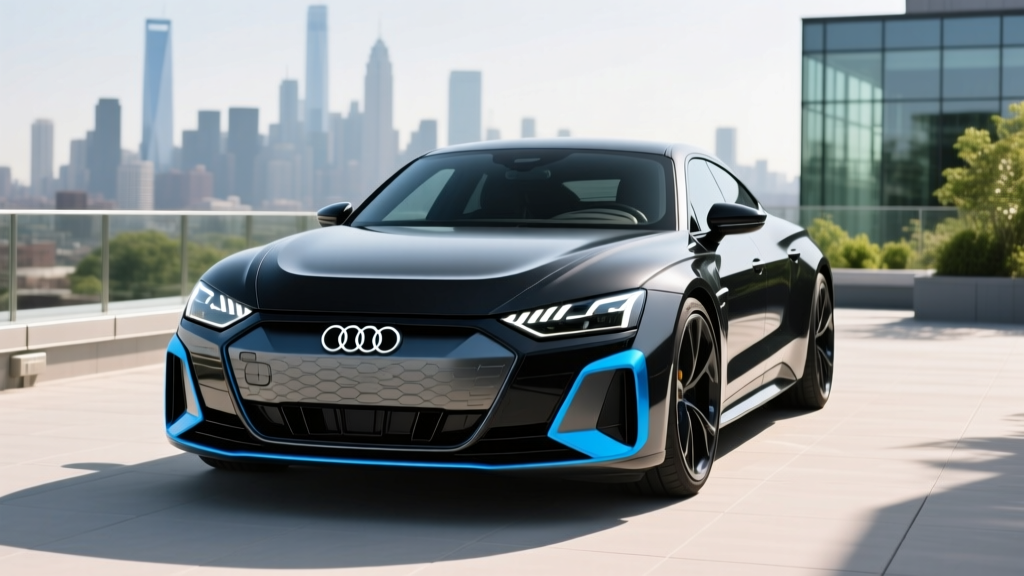
| Spec | 2020 Porsche Taycan 4S | 2020 Tesla Model S Performance | 2021 Audi e-tron GT |
|---|---|---|---|
| 0-60 mph | 3.8s (3.4s tested) | 2.3s (Raven) | 3.9s (3.6s tested) |
| EPA Range | 203 mi | 348 mi | 238 mi |
| Peak DC Charge | 270 kW | 200 kW | 270 kW |
| Efficiency (MPGe) | 68 | 111 | 82 |
| Cargo (total) | 17.1 cu ft | 28.0 cu ft | 15.9 cu ft |
| Used Price (2026) | $52K–$72K | $38K–$55K | $48K–$65K |
| Build Quality | Exceptional | Improved but variable | Excellent (shared platform) |
The Taycan 4S loses to the Model S on range and efficiency, decisively. But it wins on build quality, driving dynamics, braking feel, and the satisfaction of its mechanical engineering. The Audi e-tron GT shares the Taycan's J1 platform and 800V architecture but with a more comfort-oriented tune. If you prioritize driving engagement and Porsche's dealer/service experience, the Taycan 4S is the pick. If range is your top concern, the Model S or a 2022+ Lucid Air are stronger choices.
Who Should Buy the 2020 Taycan 4S?
Choose the Taycan 4S if:
- You value driving dynamics, steering feel, and build quality above all else
- Your daily commute is under 120 miles round-trip with home Level 2 charging
- You want Porsche badge prestige and dealer service at a used-EV price
- You road-trip 2–4 times per year and can plan around 270 kW DC fast chargers
Look elsewhere if:
- You need 300+ miles of range for frequent long-distance travel
- Rear-seat space for adults is a priority (the Taycan's rear legroom is tight)
- You want the lowest cost per mile — the Taycan's 49 kWh/100mi is expensive to "fuel"
- Cargo versatility matters — the 14.3 cu ft trunk is small for a car in this price class
Frequently Asked Questions
What is the real-world range of the 2020 Taycan 4S?
With the Performance Battery Plus (93.4 kWh), the EPA rates it at 203 miles. In real-world mixed driving, expect 170–185 miles. Highway-only at 75+ mph drops that to 150–170 miles. In freezing temperatures, plan for 130–155 miles. The smaller 79.2 kWh Performance Battery (base model) drops EPA range to 201 miles due to slightly different tuning — the difference is minimal.
How fast does the 2020 Taycan 4S charge?
On an 800V DC fast charger (like Electrify America 350 kW stalls), the Taycan 4S peaks at 270 kW and charges from 10–80% in approximately 22 minutes when the battery is preconditioned. On a standard 400V DC fast charger, expect roughly 135 kW and 35–40 minutes for the same 10–80% session. At home on Level 2 (9.6 kW), a full charge takes about 9.5 hours.
Does the 2020 Taycan 4S qualify for any federal EV tax credit?
No. For new purchases, the Taycan 4S exceeded the §30D sedan MSRP cap of $55,000, making it ineligible. For used purchases under §25E, the $25,000 sale-price cap eliminates the Taycan 4S at its current $52,000–$72,000 used market value. State and local incentives may still apply — check IRS §25E guidelines and your state's energy office for details.
Is the 2020 Taycan 4S reliable as a used EV?
Porsche's build quality and the Taycan's over-engineered thermal management system are strong reliability indicators. Battery degradation at 50,000–70,000 miles averages 5–8%, and the 8-year/100,000-mile battery warranty (70% SoH threshold) remains active through 2028. The main risk areas are the complex rear two-speed transmission and the multi-screen infotainment electronics — a pre-purchase inspection and extended warranty are strongly advised. Check NHTSA recall data for any open campaigns on your specific VIN.
How does the Taycan 4S compare to the Taycan Turbo?
The 2020 Taycan Turbo produces 670 hp in overboost and hits 0-60 in 3.0 seconds, but costs significantly more on the used market ($65K–$85K). The 4S at 562 hp and 3.8 seconds is the value sweet spot — you sacrifice 0.8 seconds to 60 but save $10,000–$15,000. The Turbo S (750 hp, 2.6s 0-60) is the enthusiast's pick if budget allows.
What should I check before buying a used 2020 Taycan 4S?
Request a battery State of Health (SoH) report from a Porsche dealer — aim for 90%+ on a 2020 model. Verify remaining battery warranty coverage (8yr/100K mi from original in-service date). Check for open recalls, confirm the Performance Battery Plus is equipped (vs. the smaller standard pack), and inspect the rear transmission for smooth shifting. A Porsche CPO (Certified Pre-Owned) example adds a 2-year unlimited-mileage warranty on top of remaining factory coverage — worth the premium.