Quick Verdict: The Benchmark EV Sports Sedan, With Caveats
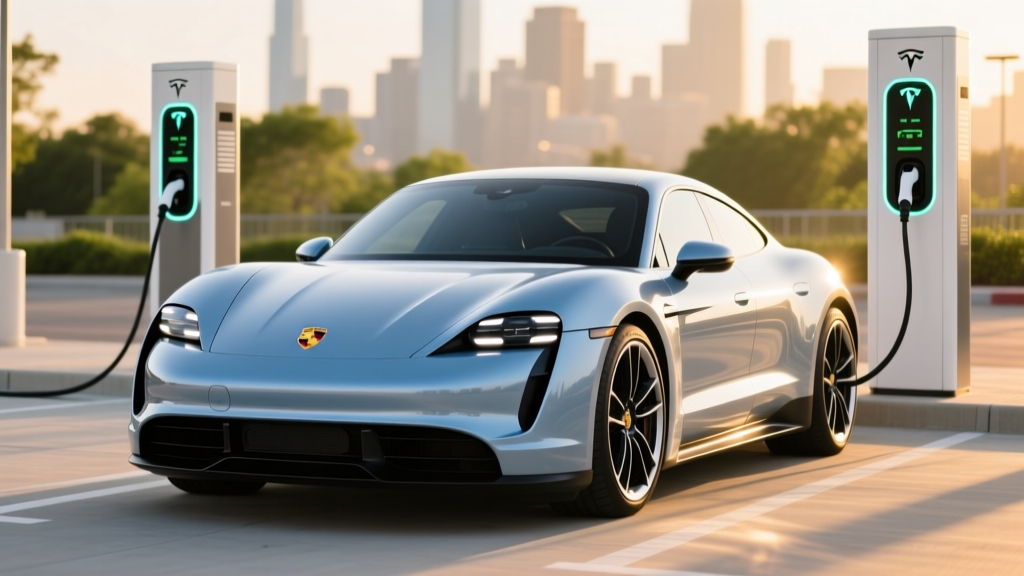
The 2020 Porsche Taycan Turbo S remains one of the most dynamically accomplished electric vehicles ever built. Even six years after its debut, its 800-volt architecture, sustained launch performance, and chassis tuning set a standard that newer rivals still chase. But if you're evaluating one on the used market in 2026, you need clear-eyed data: its 201-mile EPA range is modest by modern standards, its infotainment shows its age, and it does not qualify for the federal EV tax credit as a used purchase unless specific conditions are met. This review breaks down exactly what ownership looks like today.
| Attribute | Value |
|---|---|
| EPA Range | 201 miles (Performance Battery Plus) |
| Battery (usable / gross) | 83.7 kWh usable / 93.4 kWh gross — NMC lithium-ion |
| Drivetrain | Dual-motor AWD with 2-speed rear transmission |
| Peak Horsepower (Launch Control) | 750 hp (overboost) |
| 0–60 mph | 2.4 seconds (manufacturer, with Launch Control) |
| Top Speed | 161 mph |
| Max DC Fast Charge Rate | 270 kW (800V architecture) |
| 10–80% DC Fast Charge | ~22.5 minutes (ideal conditions) |
| Level 2 Home Charging | 9.6 kW onboard charger (~33 mi/hr) |
| EPA Efficiency | 68 MPGe combined / 49 kWh/100 mi |
| Cargo (rear trunk + frunk) | 14.3 cu ft rear + 2.9 cu ft front = 17.2 cu ft total |
| Rear Legroom | 32.7 inches |
| Curb Weight | 5,132 lbs |
| Battery/Powertrain Warranty (original) | 8 years / 100,000 miles |
| Original Base MSRP | $185,000 |
Real-World Range: What 201 EPA Miles Actually Means
EPA Sticker: 201 miles (Turbo S with Performance Battery Plus, 20-inch wheels)
Real-World Expectation: 170–190 miles in mixed driving; 150–165 miles at sustained 75+ mph highway speeds; 130–150 miles in sub-30°F winter conditions.
The Taycan Turbo S's EPA range was a compromise from day one. Porsche prioritized sustained performance, thermal headroom, and a large usable buffer over maximizing sticker range. According to fueleconomy.gov, the 2020 Taycan Turbo S achieves 68 MPGe combined — efficient for a 5,100-lb performance sedan but well behind the Tesla Model S Plaid's 120 MPGe.
In real-world testing by multiple outlets, the Taycan Turbo S has occasionally exceeded its EPA rating in mild city driving at moderate speeds, thanks to Porsche's conservative testing methodology and strong regenerative braking (up to 265 kW of regen). However, highway road trips tell a different story. At 75–80 mph on flat terrain, expect roughly 170 miles before you'll want to find a charger. In cold weather (below freezing), the NMC chemistry loses 15–25% of its effective capacity, and the Taycan's heat pump — standard on later models but an option or absent on some early 2020 builds — becomes critical. Without preconditioning, winter range can dip below 150 miles.
Ownership reality: This is a vehicle for daily commutes under 80 miles round-trip, with road trips requiring deliberate DC fast-charging stops every 150–170 miles. If your lifestyle demands 300+ mile legs between stops, this is not your EV.
Charging: 800-Volt Architecture Still Impressive in 2026
| Charging Level | Power / Rate | Time or Miles Added |
|---|---|---|
| Level 1 (120V household) | ~1.4 kW | ~5 miles per hour |
| Level 2 (240V, 40A circuit) | 9.6 kW (onboard charger limit) | ~33 miles per hour; full charge in ~9.5 hours |
| DC Fast Charge (peak) | 270 kW (CCS1) | 10–80% in ~22.5 min (ideal) |
| DC Fast Charge (sustained avg) | ~180–200 kW average to 80% | 10–80% in ~25–28 min (real-world) |
| DC Fast Charge (5-minute burst) | ~270 kW peak | ~62 miles added in 5 min (Porsche claim) |
The Taycan's 800-volt architecture was revolutionary in 2020 and remains a genuine advantage. While most competitors still ran 400V systems, the Taycan could accept up to 270 kW at a CCS1 DC fast charger — and critically, it sustains high charge rates longer than many rivals. Where some EVs spike to a peak kW and immediately taper, the Taycan's thermal management holds near-peak rates through a wide state-of-charge window (roughly 10–55% SoC), then gradually tapers.
Charge curve reality: Expect 270 kW from ~10–30% SoC, tapering to ~200 kW through 55%, then ~150 kW to 70%, and dropping sharply above 80%. Charging from 80–100% at a DC fast charger is painfully slow — plan your stops around 10–80% windows. At home on a Level 2 charger, the 9.6 kW onboard charger replenishes the 83.7 kWh usable battery in roughly 9.5 hours, easily manageable with overnight charging.
One note for 2026 buyers: the 2020 Taycan uses CCS1. If you're a Tesla Supercharger user, you'll need a NACS-to-CCS adapter (now widely available) to access V3 Superchargers that support non-Tesla vehicles via the Magic Dock or open network initiative. Electrify America remains the most reliable high-power CCS network in the U.S.
Performance: The Numbers That Define This Car
The Taycan Turbo S exists to deliver supercar acceleration with sedan practicality. With Launch Control engaged, the dual-motor AWD system produces 750 hp (overboost, temporarily available for 20-second bursts) and rockets the car to 60 mph in 2.4 seconds — a figure independently verified by multiple testers. The two-speed transmission on the rear axle is unique among EVs: first gear provides explosive off-the-line acceleration, while second gear optimizes high-speed efficiency and top-speed runs (electronically limited to 161 mph).
Beyond straight-line speed, the Taycan Turbo S's handling is its true differentiator. Rear-axle steering (standard on the Turbo S), Porsche Active Suspension Management (PASM), and Porsche Dynamic Chassis Control (PDCC, electromechanical anti-roll bars) combine to deliver a level of body control and steering feel that no other EV sedan matches. The car weighs 5,132 lbs but disguises it remarkably well through corners.
Regenerative braking: The Taycan offers up to 265 kW of regen, among the highest of any production EV. However, Porsche's approach differs from Tesla's one-pedal driving — the Taycan does not come to a complete stop via regen alone (unless you enable the auto-regen setting, which uses the front radar to modulate braking). Many owners prefer this coasting-capable behavior; others find it less intuitive than full one-pedal mode.
Interior, Tech & Daily Livability
The 2020 Taycan's cabin is unmistakably Porsche: premium materials, excellent front-seat comfort, and a driver-focused layout. The curved 16.8-inch digital instrument cluster is beautiful and legible. However, the dual-touchscreen center console (10.9-inch upper infotainment + 8.4-inch lower climate/handwriting panel) drew criticism for requiring too many taps for basic functions and generating fingerprints. Apple CarPlay is wired only — wireless CarPlay arrived in the 2022 refresh.
Driver assistance: The 2020 Taycan offers Porsche InnoDrive with adaptive cruise control and lane-keeping assist. This is a SAE Level 2 system — the driver must remain fully engaged with hands on the wheel. It is competent for highway cruising but not class-leading; it lacks the lane-change automation of GM's Super Cruise or Ford's BlueCruise. Night Vision Assist (infrared camera) was an option worth seeking on used examples.
Pros
- Best-in-class driving dynamics and steering feel among EV sedans
- Repeatable launch performance — no thermal derating after multiple runs
- 800V charging sustains high kW longer than most competitors
- Premium build quality, materials, and fit-and-finish
- Strong regenerative braking (265 kW) reduces brake wear
- Distinctive, timeless design that hasn't aged since 2020
Cons
- 201-mile EPA range is below average for a 2026-used EV at this price
- Rear seat legroom (32.7 in) is tight for adults on long trips
- Dual-touchscreen interface is fussy; no wireless CarPlay
- CCS1 port requires adapter for Tesla Supercharger access
- No frunk cargo net or organization; frunk is small (2.9 cu ft)
- Insurance premiums remain high ($3,500–$5,000/yr typical)
- Does not qualify for new-vehicle §30D credit (production ended); used credit limited
Pricing, Depreciation & Tax Credit Eligibility in 2026
| Item | Value |
|---|---|
| Original Base MSRP (2020) | $185,000 |
| Typical As-Tested Price (2020, w/ options) | $195,000–$210,000 |
| Estimated 2026 Used Price (30k–50k mi) | $75,000–$95,000 |
| Used EV Tax Credit (§25E, max $4,000) | Potentially eligible — see rules below |
| New-Vehicle §30D Credit ($7,500) | NOT eligible — vehicle is no longer sold new |
The Taycan Turbo S has experienced significant depreciation — a 55–65% drop from its original MSRP is typical for 2020 examples in 2026. This makes it one of the more compelling high-performance EV bargains on the used market, provided you accept the range and charging-network realities.
Tax credit rules (critical): The IRS §25E Used Clean Vehicle Credit offers up to $4,000 (or 30% of the sale price, whichever is less) for qualifying used EVs. To claim it on a 2020 Taycan Turbo S purchase in 2026:
- The sale price must be $25,000 or less — the Taycan Turbo S does NOT meet this threshold at current market values of $75,000–$95,000.
- The buyer's modified AGI must not exceed $75,000 (single) / $150,000 (joint).
- The vehicle must be purchased from a licensed dealer (private-party sales excluded).
- The vehicle must be at least two model years old (2020 qualifies in 2026).
Bottom line: The 2020 Taycan Turbo S effectively does not qualify for any federal EV tax credit at current used-market pricing. Budget accordingly. Always consult a tax professional and verify current IRS rules before purchase.
Warranty, Battery Longevity & Ownership Costs
Porsche's original battery and powertrain warranty covers 8 years or 100,000 miles (whichever comes first), with a capacity-retention guarantee of 70% over that period. For a 2020 model, this warranty remains active through 2028 or 100,000 miles — a meaningful safety net for used buyers.
The 93.4 kWh (gross) NMC battery uses LG Chem cells in a pouch format. Real-world degradation data from early Taycan owners suggests approximately 5–8% capacity loss over the first 100,000 miles — well within Porsche's warranty threshold. The 800V architecture's sophisticated thermal management (liquid cooling with dedicated chiller circuits) is a key factor in preserving battery health. If you're buying used, request a battery health report from a Porsche dealer showing current State of Health (SoH) percentage.
5-year ownership cost estimate (2026 purchase, 50,000 miles driven):
| Cost Category | Estimated 5-Year Total |
|---|---|
| Purchase price (used, ~40k mi) | $85,000 |
| Electricity (home + DCFC, 50k mi) | $4,500–$6,000 |
| Insurance | $18,000–$25,000 |
| Maintenance (tires, cabin filter, brake fluid) | $3,500–$5,000 |
| Estimated depreciation (5yr from used) | $25,000–$35,000 |
| Total estimated 5-year cost | $136,000–$156,000 |
Who Should Buy the 2020 Taycan Turbo S in 2026?
This EV is ideal for: Driving enthusiasts who prioritize handling, acceleration, and build quality above range. It excels as a daily commuter with home charging (sub-80-mile round trips), a weekend canyon carver, and a statement-of-intent garage piece. The used-market depreciation makes it accessible at roughly the price of a new BMW i4 M50.
Look elsewhere if: You need 300+ miles of range for frequent road trips, require spacious rear seating for family duty, want cutting-edge ADAS features, or depend on Tesla Supercharger convenience without adapters. The Lucid Air, Tesla Model S (2021+ refresh), or even the Porsche Taycan 4S (slightly more range, lower price) may better suit those needs.
Choose the 2020 Taycan Turbo S if: You value driving dynamics above all else in an EV, have reliable home Level 2 charging, your daily drive is under 80 miles round-trip, and you can absorb $85k+ without a tax credit.
Choose a competitor if: Range is your priority (Lucid Air: 400+ mi), you want Supercharger-native access (Tesla Model S), or you need rear-seat space and a modern infotainment system (BMW i7, Mercedes EQS).
Frequently Asked Questions
What is the real-world range of the 2020 Porsche Taycan Turbo S?
The EPA rates it at 201 miles, but real-world mixed driving yields 170–190 miles. Highway driving at 75+ mph drops this to 150–165 miles, and cold weather (below 30°F) can reduce it further to 130–150 miles. Preconditioning the battery before driving and using the heat pump (if equipped) help mitigate winter losses.
How fast does the Taycan Turbo S charge at home and on the road?
At home on a Level 2 (240V) charger, the 9.6 kW onboard charger adds roughly 33 miles of range per hour, filling the battery in about 9.5 hours. On a DC fast charger (CCS1, 350 kW-capable station), the Taycan peaks at 270 kW and charges from 10–80% in approximately 22–28 minutes depending on battery temperature and station capability.
Does the 2020 Taycan Turbo S qualify for the federal EV tax credit?
Not as a new vehicle — it's no longer in production. Under the IRS §25E used-EV credit, it could theoretically qualify for up to $4,000, but only if the sale price is $25,000 or less. At current 2026 used-market values of $75,000–$95,000, the Taycan Turbo S does not meet this price cap. Consult IRS guidance and a tax professional.
Is the Taycan Turbo S worth buying vs. the Tesla Model S or Lucid Air?
It depends on your priorities. The Taycan Turbo S wins on driving dynamics, build quality, and repeatable performance. The Lucid Air wins decisively on range (400+ miles EPA) and interior space. The Tesla Model S offers Supercharger access, more range (405 mi EPA), and over-the-air updates but trails in interior material quality. At ~$85k used, the Taycan Turbo S is the enthusiast's choice; the Lucid and Tesla are the pragmatist's.
What is the biggest concern buying a used 2020 Taycan Turbo S?
Beyond range limitations, the primary concerns are: (1) verifying battery State of Health (SoH) via a Porsche dealer diagnostic, (2) confirming whether the specific vehicle has a heat pump (improves cold-weather range and efficiency), (3) ensuring the 8-year/100,000-mile battery warranty remains intact and transferable, and (4) budgeting for premium tire replacement (21-inch Michelin Pilot Sport EV tires run $400+ each, and the car is heavy on rubber).
How does the 2-speed rear transmission work?
The Taycan Turbo S uses a unique two-speed gearbox on the rear axle — a first in a production EV. First gear provides maximum acceleration off the line (contributing to the 2.4-second 0–60 time). The car automatically shifts to second gear at roughly 55–60 mph for improved high-speed efficiency and top-speed capability. The front motor uses a single-speed reduction gear. The shift is nearly imperceptible to the driver.