Quick Verdict: The Performance EV That Sacrificed Range for Drive Quality
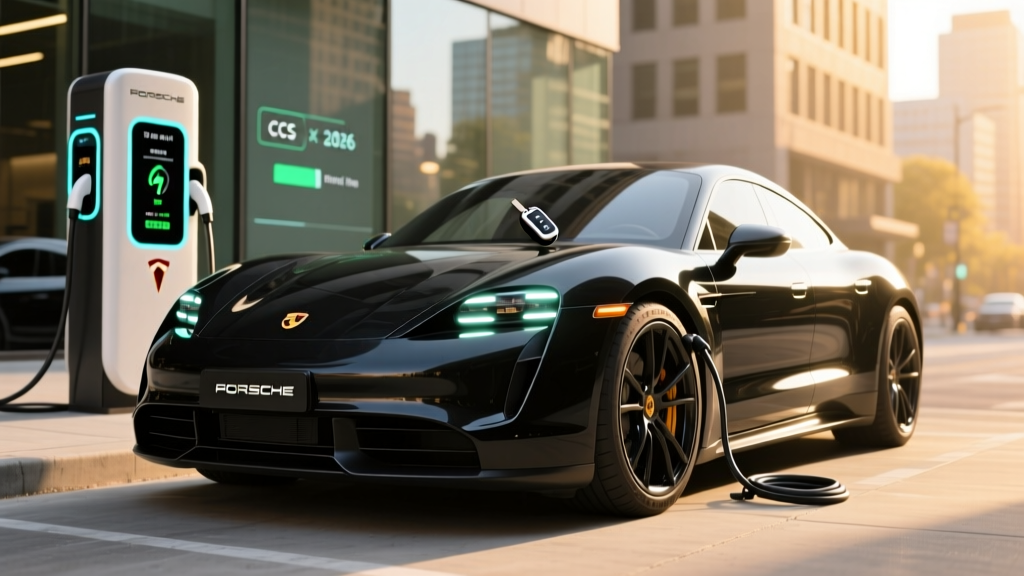
The 2020 Porsche Taycan Turbo was Porsche's first all-electric production car, and it arrived with a clear mandate: prioritize driving dynamics over maximum range. With a 93.4 kWh gross battery (83.7 kWh usable, NMC chemistry), an EPA-estimated 201 miles of range, and a 270 kW DC fast-charging architecture that was class-leading in 2020, the Taycan Turbo trades efficiency for the kind of sustained performance and ride refinement that no Tesla Model S could match at launch.
Now in 2026, the Taycan Turbo is strictly a used-market proposition. Porsche discontinued the Turbo trim after the 2021 model year, replacing it with the Turbo S and later the refreshed 2025+ Taycan lineup with larger batteries and improved range. But for buyers hunting a luxury performance EV on the pre-owned market, the 2020 Turbo still offers a compelling — if range-limited — package. Here's exactly what you're getting.
Range and Efficiency: EPA vs. the Real World
Real-World Expectation: 170–190 miles highway at 70 mph; 150–165 miles in cold weather (below 40°F); up to 210 miles in city driving with regen
Efficiency: 68 MPGe combined / 49 kWh per 100 miles
The Taycan Turbo's 201-mile EPA rating was controversial at launch — significantly behind the Tesla Model S Long Range's 370+ miles and even the base Taycan 4S's 203 miles. The Turbo's higher output and standard 20-inch wheels with wider rear tires increase rolling resistance and reduce efficiency.
In real-world highway testing at sustained 70–75 mph speeds, expect to see approximately 170–190 miles before hitting 10% state of charge. Cold weather compounds this: at 30°F, lithium-ion internal resistance increases and cabin heating draws from the 93.4 kWh pack, dropping usable range to roughly 150–165 miles. The Taycan does include a heat pump (standard on Turbo trims), which mitigates some cold-weather HVAC energy draw compared to resistive heaters, but the physics of a heavy performance sedan in winter are unavoidable.
City driving with frequent regenerative braking events can push range slightly above the EPA sticker — up to 210 miles — because the Taycan's regen system recovers up to 265 kW of braking energy, one of the highest regen recovery rates in production.
| Metric | Value |
|---|---|
| EPA Range (combined) | 201 miles |
| EPA City / Highway | 195 / 208 miles |
| MPGe (combined) | 68 MPGe |
| Energy Consumption | 49 kWh / 100 mi |
| Real-World Highway (70 mph) | ~170–190 miles |
| Real-World Cold Weather (30°F) | ~150–165 miles |
| Regen Recovery (max) | 265 kW |
Source: EPA / fueleconomy.gov
Charging Speed: 800-Volt Architecture Still Impressive in 2026
The Taycan was the first production EV to use an 800-volt electrical architecture (most competitors in 2020 used 400V), and this remains a genuine advantage for DC fast charging. The 2020 Turbo supports a peak charge rate of 270 kW on a compatible CCS1 DC fast charger.
| Level | Power / Rate | Time / Range Added |
|---|---|---|
| Level 1 (120V, 12A) | ~1.4 kW | ~4 miles per hour |
| Level 2 (240V, 48A) | 11.5 kW (onboard charger max: 19.2 kW with optional charger) | ~37 miles per hour (standard) / ~62 miles per hour (optional 19.2 kW charger) |
| DC Fast Charge (CCS1) | Peak 270 kW | 10–80% in ~22.5 minutes |
| DC Fast Charge (50 kW adapter) | 50 kW | 10–80% in ~90 minutes |
Charge curve reality: The Taycan Turbo sustains near-peak power longer than most 400V competitors. It holds above 200 kW from approximately 10% to 45% state of charge, then tapers gradually through the 50–70% range, and drops significantly above 80%. The 10–80% time of roughly 22.5 minutes is achievable at a 350 kW Electrify America or similar station. On a 150 kW charger (more common in many areas), expect 10–80% in approximately 35–40 minutes.
For home Level 2 charging, the standard onboard charger is 11.5 kW (adding roughly 37 miles per hour of charging). Porsche offered an optional 19.2 kW onboard charger ($1,680 when new), which cuts a full 10–100% charge to roughly 5.5 hours vs. 9 hours. If you're buying used, check the window sticker or door jamb label to confirm which onboard charger is equipped — it significantly affects daily charging convenience.
Connector note: The 2020 Taycan uses the CCS1 connector standard. With the industry shifting to NACS (Tesla's connector) by 2025–2026, Porsche now offers a NACS adapter, and Electrify America is adding NACS cables to new stations. CCS1 chargers remain widely available at Electrify America, EVgo, and ChargePoint networks through 2026, so charging access is not a concern.
Performance: 616 HP and the 2-Speed Transmission
| Spec | Value |
|---|---|
| Drivetrain | Dual-motor AWD |
| Horsepower (Launch Control) | 616 hp (overboost) / 562 hp (standard) |
| Torque | 626 lb-ft |
| 0–60 mph | 3.0 seconds (with Launch Control) |
| Top Speed | 161 mph |
| Transmission | 2-speed automatic (rear) / 1-speed (front) |
| Curb Weight | 5,121 lbs |
The Taycan Turbo's dual-motor all-wheel-drive system produces 562 hp in normal driving and 616 hp with Launch Control engaged (a temporary overboost mode). The 3.0-second 0–60 mph time was verified by multiple independent tests, though Porsche's own conservative rating was 3.0 seconds — and several outlets recorded 2.8–2.9 seconds on prepped surfaces.
What distinguishes the Taycan from single- or dual-motor competitors is the 2-speed transmission on the rear axle. First gear provides aggressive launch acceleration, while second gear optimizes high-speed efficiency and sustained top-speed runs. This engineering choice gives the Taycan Turbo a noticeably stronger pull from 60–100 mph than most single-speed EVs, which tend to lose steam above highway speeds.
The 5,121-pound curb weight is substantial, but Porsche's rear-axle steering (standard on Turbo), adaptive air suspension, and torque vectoring mask the mass effectively. In real-world canyon and track driving, the Taycan Turbo feels more like a 4,000-pound sports sedan than a 5,100-pound EV.
Battery, Warranty, and Long-Term Degradation
| Spec | Value |
|---|---|
| Battery Chemistry | NMC (Nickel Manganese Cobalt) |
| Gross Capacity | 93.4 kWh |
| Usable Capacity | 83.7 kWh |
| Battery Warranty | 8 years / 100,000 miles |
| Warranty Capacity Threshold | 70% state of health (SoH) |
| Powertrain Warranty | 8 years / 100,000 miles |
| Bumper-to-Bumper | 4 years / 50,000 miles |
The 2020 Taycan Turbo uses an NMC (nickel manganese cobalt) lithium-ion pack manufactured by LG Chem. NMC chemistry offers higher energy density than LFP (lithium iron phosphate) — necessary to fit 93.4 kWh gross into the Taycan's sedan form factor — but is more sensitive to sustained high state of charge and extreme temperatures over the long term.
Porsche's battery warranty guarantees that the pack will retain at least 70% of its original capacity (state of health, or SoH) for 8 years or 100,000 miles, whichever comes first. For a 2020 model, that factory warranty expires in 2028 or at 100,000 miles. Real-world degradation data from early Taycan owners (6+ years in service as of 2026) suggests typical SoH loss of approximately 5–8% over the first 60,000 miles with normal charging habits — well within the warranty threshold.
Used-buyer tip: Before purchasing a 2020 Taycan Turbo, request a battery health report from a Porsche dealer or use the MyPorsche app to check current SoH. A pack reading below 90% SoH at 40,000–50,000 miles may indicate frequent DC fast charging without preconditioning or regular 100% charge storage — both of which accelerate NMC degradation.
Pricing, Tax Credits, and Used-Market Value
The 2020 Porsche Taycan Turbo launched with a base MSRP of $150,900 (before destination). Well-optioned examples with the Premium Plus package, Sport Chrono, Burmester audio, and the 19.2 kW onboard charger regularly exceeded $175,000–$185,000 as-tested.
| Item | Amount |
|---|---|
| Original Base MSRP | $150,900 |
| Typical As-Tested (2020) | $170,000–$185,000 |
| Used Market (2026, 30k–50k mi) | $65,000–$90,000 |
| Federal Used EV Tax Credit (§25E) | Up to $4,000 (30% of sale price, max $4,000) |
| New-Vehicle §30D Credit (when new) | Not eligible (exceeded $55,000 sedan MSRP cap) |
Federal tax credit reality: When new, the Taycan Turbo did not qualify for the §30D new clean vehicle credit because its MSRP far exceeded the $55,000 sedan cap established under the Inflation Reduction Act. As a used purchase in 2026, the Taycan Turbo may qualify for the §25E Previously-Owned Clean Vehicle Credit, which provides 30% of the sale price up to a maximum of $4,000. Eligibility requires: the sale price must be $25,000 or less (which most Taycan Turbos will not meet at current used prices), the buyer must have income below $75,000 single / $150,000 joint, and the vehicle must be purchased from a licensed dealer. At $65,000+ used prices, the §25E credit is effectively unavailable for the Taycan Turbo.
This means buyers should budget the full used-market price — typically $65,000–$90,000 depending on mileage, condition, and options — with no federal credit offset. Some states offer additional used-EV rebates; check your state energy office for current programs.
Interior, Tech, and Practicality
The Taycan Turbo's cabin was a showcase of Porsche's digital-first approach in 2020, with up to four screens: an 11.6-inch curved driver instrument cluster, a 10.9-inch central infotainment display, an optional 10.9-inch front-passenger screen, and an 8.4-inch haptic-touch center console panel for climate and handwriting input.
Cargo and passenger space:
- Rear trunk: 14.3 cubic feet
- Front trunk (frunk): 2.8 cubic feet
- Total cargo: 17.1 cubic feet
- Rear legroom: 32.7 inches
- Front legroom: 41.3 inches
- Seating: 4 passengers standard (optional 4+1 with narrow center seat)
The rear seat is the Taycan's most significant practicality weakness. At 32.7 inches of rear legroom, it trails the Tesla Model S (35.4 inches) and is tight for adults on longer trips. The frunk is small (2.8 cu ft) due to the front motor and power electronics packaging. Total cargo volume of 17.1 cubic feet is adequate for weekend luggage for two but not competitive with crossover SUVs.
Driver assistance: The 2020 Taycan Turbo includes Porsche InnoDrive (adaptive cruise control with predictive speed adjustment based on navigation data and road-sign recognition), lane-keeping assist, and parking assist with surround-view cameras. This is an SAE Level 2 driver-assist system — the driver must remain fully engaged with hands on the wheel and eyes on the road at all times. It is not autonomous driving.
Pros and Cons
- Class-leading ride quality and handling for a 5,100-lb EV
- 270 kW DC fast charging with excellent charge-curve sustain
- 2-speed rear transmission delivers strong 60–100 mph pull
- Premium interior build quality with minimal panel gaps
- Heat pump standard for cold-weather efficiency
- 265 kW regen recovery reduces brake wear significantly
- Rear-axle steering standard on Turbo for tight turning radius
- 201-mile EPA range is below average even for 2020
- Rear seat legroom (32.7 in) is tight for adults
- Small frunk (2.8 cu ft) limits front storage
- No federal tax credit eligibility (new or used at current prices)
- Infotainment system lacks native Apple Maps integration
- Touch-sensitive center console panel prone to fingerprints
- High insurance premiums (performance EV classification)
- Out-of-warranty battery replacement estimated at $25,000–$30,000+
Who Should Buy the 2020 Taycan Turbo in 2026?
- You prioritize driving dynamics, ride quality, and build precision over maximum range
- Your daily commute is under 120 miles round-trip with home Level 2 charging
- You value 800V fast charging for occasional road trips (22.5 min 10–80%)
- You want a luxury performance sedan that depreciated into a relative bargain
- You rarely carry rear-seat passengers on long trips
- You need 300+ miles of range for frequent long-distance travel (consider a used Tesla Model S Long Range or 2022+ Lucid Air)
- You regularly carry adults in the rear seat (consider the Mercedes EQS or BMW i7)
- You need cargo versatility (consider the Porsche Taycan Cross Turismo wagon variant or an EV SUV)
- You want the latest infotainment and ADAS features (2025+ Taycan refresh has updated tech)
Frequently Asked Questions
What is the real-world range of the 2020 Porsche Taycan Turbo?
The EPA rates the Taycan Turbo at 201 miles combined. In real-world highway driving at 70 mph, expect 170–190 miles. In cold weather (below 40°F), range drops to approximately 150–165 miles due to battery chemistry limitations and cabin heating demand. City driving with regenerative braking can extend range to around 210 miles.
How fast does the 2020 Taycan Turbo charge?
On a 350 kW CCS1 DC fast charger, the Taycan Turbo peaks at 270 kW and charges from 10–80% in approximately 22.5 minutes. On a 150 kW charger, expect 35–40 minutes. At home on a Level 2 (240V, 48A) connection with the standard 11.5 kW onboard charger, it adds about 37 miles per hour. The optional 19.2 kW onboard charger increases this to roughly 62 miles per hour.
Does the 2020 Taycan Turbo qualify for any federal EV tax credit?
Not at current used-market prices. The §25E used-EV credit requires a sale price of $25,000 or less, and 2020 Taycan Turbos sell for $65,000–$90,000 as of 2026. When new, it exceeded the §30D MSRP cap for sedans ($55,000). No federal credit applies. Check your state for local incentives.
Is the 2020 Taycan Turbo worth buying vs. a Tesla Model S or Audi e-tron GT?
The Taycan Turbo wins on ride quality, build precision, and sustained high-speed performance. The Tesla Model S Long Range (used) offers roughly double the range (370+ miles EPA) and access to the Supercharger network natively. The Audi e-tron GT shares the Taycan's J1 platform and 800V architecture but with slightly different tuning. If range is your top priority, the Model S wins. If driving engagement and build quality matter most, the Taycan Turbo is the stronger choice at similar used pricing.
How long will the Taycan Turbo's battery last?
Porsche warrants the 93.4 kWh NMC battery for 8 years / 100,000 miles with a 70% state-of-health floor. Real-world data from 2020–2021 Taycans suggests approximately 5–8% degradation over the first 60,000 miles with normal charging. For a 2020 model, the factory battery warranty remains active until 2028 or 100,000 miles. Out-of-warranty replacement is estimated at $25,000–$30,000+ based on current Porsche service pricing.
What's the biggest thing to check when buying a used 2020 Taycan Turbo?
Request a battery state-of-health report from a Porsche dealer. Verify whether the optional 19.2 kW onboard charger is equipped (it significantly improves home charging speed). Check for any outstanding recalls via NHTSA. Inspect the 2-speed rear transmission for smooth shifting. Confirm the vehicle was not regularly stored at 100% state of charge, which accelerates NMC degradation.