The 2020 Porsche Taycan at a Glance in 2026
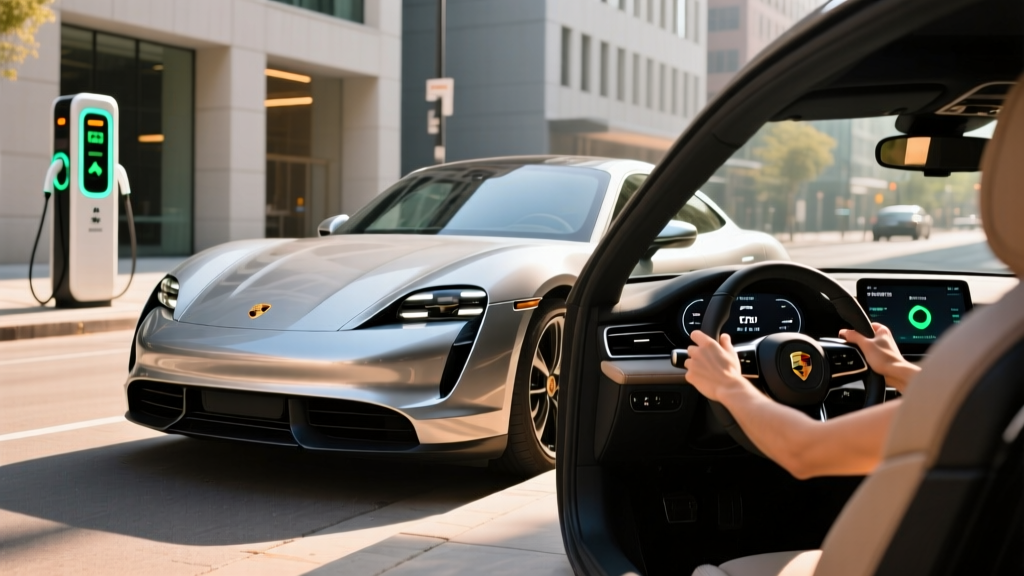
The 2020 Porsche Taycan was the vehicle that forced Tesla to take traditional automakers seriously. As Porsche's first battery-electric production car, it arrived with an 800-volt architecture, a two-speed rear transmission, and driving dynamics that no EV had matched before. Six years later, the 2020 Taycan remains one of the most engaging electric sedans on the used market — but its EPA range figures and cargo limitations demand honest evaluation before you sign a check.
For 2026 buyers, the 2020 Taycan presents a compelling value proposition on the pre-owned market. Depreciation has softened the original $103,800+ starting price substantially, and qualified buyers may capture a up to $4,000 used-EV federal tax credit under IRS §25E rules. But this is not a practical family hauler or a road-trip champion. It is a driver's EV — precise, fast, and thrilling — with trade-offs you need to understand upfront.
| Spec | Taycan 4S | Taycan Turbo | Taycan Turbo S |
|---|---|---|---|
| EPA Range | 203 mi (Performance Battery Plus) | 201 mi | 192 mi |
| Battery (usable / gross) | 83.7 / 93.4 kWh (NMC) | 83.7 / 93.4 kWh (NMC) | 83.7 / 93.4 kWh (NMC) |
| Peak DC Fast Charge | 270 kW | 270 kW | 270 kW |
| 10–80% DCFC Time | ~22.5 min | ~22.5 min | ~22.5 min |
| Level 2 Home Charge | 9.6 kW (32 mi/hr) | 9.6 kW (32 mi/hr) | 9.6 kW (32 mi/hr) |
| 0–60 mph | 3.8 sec | 3.0 sec | 2.6 sec |
| Horsepower (Launch Control) | 522 hp | 670 hp | 750 hp |
| Drivetrain | AWD (dual motor) | AWD (dual motor) | AWD (dual motor) |
| EPA Efficiency | 69 MPGe (49 kWh/100mi) | 68 MPGe (49 kWh/100mi) | 68 MPGe (50 kWh/100mi) |
| Original Base MSRP | $103,800 | $150,900 | $185,000 |
| Battery Warranty | 8 years / 100,000 miles (70% capacity retention) | ||
Note: A base rear-wheel-drive Taycan was introduced for the 2021 model year and was not available in the 2020 lineup. All 2020 models are AWD. Source: EPA fueleconomy.gov
Real-World Range: What the EPA Sticker Doesn't Tell You
EPA Estimate: 192–227 miles (depending on trim and battery pack)
Real-World Expectation: 170–200 miles highway; 140–165 miles in cold weather (below 32°F)
The 2020 Taycan's EPA range numbers look modest compared to a Tesla Model S Long Range (405 miles) or even a Lucid Air. But the Taycan's range story is more nuanced than the sticker suggests, and Porsche's engineering choices explain why.
Porsche prioritized sustained performance and battery longevity over maximum range. The Taycan uses a nickel-manganese-cobalt (NMC) lithium-ion battery with a substantial buffer — roughly 9.7 kWh of the 93.4 kWh gross capacity is reserved as a buffer to protect long-term cell health. This means you're working with 83.7 kWh of usable energy, which is less than some competitors with similarly sized packs.
The Taycan's two-speed transmission on the rear axle is designed for high-speed efficiency and explosive acceleration, not hypermiling. In real-world highway testing at 70–75 mph, expect consumption around 50–55 kWh/100 miles, translating to roughly 170–200 miles before you're hunting for a charger. City driving with regenerative braking (up to 265 kW of regen) can push real-world range closer to or slightly above the EPA estimate.
Cold-weather impact is significant. NMC chemistry loses efficiency in freezing temperatures, and the Taycan's thermal management system, while capable, draws power to keep the battery in its optimal operating window. In sustained sub-32°F conditions, plan for 25–30% range reduction — roughly 140–165 miles from a full charge. Preconditioning the battery while plugged in mitigates this somewhat, but the loss is unavoidable physics.
For context, fueleconomy.gov lists the Taycan Turbo S at 68 MPGe combined (50 kWh/100mi). That efficiency figure is honest — the Taycan is a heavy, powerful performance sedan, not an efficiency leader.
Charging: 800-Volt Architecture Still Impressive in 2026
The 2020 Taycan was the first production EV with an 800-volt electrical architecture, and this remains one of its strongest ownership advantages. Here's what the numbers mean for your daily routine:
| Charging Level | Power (kW) | Speed (miles/hr) | Notes |
|---|---|---|---|
| Level 1 (120V household) | ~1.4 kW | ~3 mi/hr | Emergency/trickle only; 65+ hours for full charge |
| Level 2 (240V home) | 9.6 kW (40A) / 19.2 kW (80A optional) | ~32 mi/hr (9.6 kW) / ~62 mi/hr (19.2 kW) | Full charge overnight at 9.6 kW (~9 hours) |
| DC Fast Charge (CCS) | Peak 270 kW (800V station) | ~10–80% in 22.5 min | Requires 800V-capable charger; tapers sharply above 80% |
| DC Fast Charge (50 kW CCS) | 50 kW | ~10–80% in ~90 min | Typical older public station speed |
Understanding the charge curve: The Taycan's 270 kW peak rate is only achievable at 800V DC fast chargers (like Electrify America's 350 kW stalls) and only at low state of charge (roughly 5–35% SoC). Above 50%, the rate tapers to roughly 150 kW, and above 80%, it drops further to protect the NMC cells. A realistic 10–80% session at a modern 350 kW station takes about 22–25 minutes. At a 150 kW station, expect 35–40 minutes.
The optional 19.2 kW onboard AC charger is a worthwhile find on the used market — it cuts Level 2 home charging time nearly in half, filling the pack in about 5 hours instead of 9. Most 2020 Taycans shipped with the standard 9.6 kW unit.
Connector note: The 2020 Taycan uses a CCS1 connector for DC fast charging and a J1772 inlet for Level 2 AC. With Tesla opening its Supercharger network to non-Tesla EVs via the Magic Dock adapter (available at select stations), Taycan owners have expanding access — though CCS-native networks like Electrify America remain the primary fast-charging option.
Performance: Where the Taycan Justifies Its Badge
This is why people buy a Taycan. The performance envelope is extraordinary, and unlike some EVs that deliver one blistering launch before thermal management intervenes, the Taycan is engineered for repeatable performance.
The Turbo S produces 750 horsepower with Launch Control engaged (616 hp in standard driving) and hits 60 mph in 2.6 seconds — a figure that was independently verified by multiple publications at 2.4–2.6 seconds. The Taycan 4S, the volume seller, delivers 522 hp on launch and a 3.8-second 0–60, which is firmly supercar territory from just a few years ago.
The two-speed rear transmission is the engineering centerpiece. First gear provides explosive off-the-line acceleration; second gear engages at roughly 55–60 mph for high-speed efficiency and passing power. You can feel the shift — it's subtle but perceptible — and it gives the Taycan a mechanical character that single-speed EVs lack.
Handling is where Porsche's decades of chassis tuning show. The Taycan weighs over 5,100 pounds, but its low center of gravity, rear-wheel steering (optional), and adaptive air suspension deliver cornering composure that defies its mass. The steering is communicative by EV standards, and the brake pedal feel — critical in a heavy EV blending regen and friction brakes — is among the best in the industry.
Interior, Cargo, and Daily Practicality
The Taycan's cabin is undeniably premium — leather, Alcantara, and a curved digital instrument cluster that faces the driver. The 10.9-inch central touchscreen runs Porsche Communication Management (PCM), and an optional passenger-side display was available in 2020. Apple CarPlay is wired (not wireless in the 2020 model year), and Android Auto was not offered.
Where the Taycan struggles is space:
- Front trunk (frunk): 2.9 cu ft — enough for a charging cable and a small bag
- Rear trunk: 14.3 cu ft — smaller than a Honda Civic sedan's trunk
- Rear legroom: 32.5 inches — tight for adults on longer trips
- Total cargo: 17.2 cu ft combined — significantly less than a Tesla Model S (28 cu ft trunk + frunk)
The Taycan is a four-seat grand tourer, not a family sedan. If you regularly carry rear-seat passengers or need cargo flexibility, this is a meaningful limitation. The Sport Turismo wagon body style (introduced for 2022) improved cargo space, but the 2020 sedan is what it is.
Pricing, Tax Credits, and 2026 Used Market Value
| Trim | Original MSRP | Est. 2026 Used Price | Max §25E Used-EV Credit | Net Cost After Credit |
|---|---|---|---|---|
| Taycan 4S | $103,800 | $52,000–$62,000 | $4,000 | $48,000–$58,000 |
| Taycan Turbo | $150,900 | $68,000–$82,000 | $4,000 | $64,000–$78,000 |
| Taycan Turbo S | $185,000 | $82,000–$100,000 | $4,000 | $78,000–$96,000 |
Federal tax credit details (2026 rules): As a used vehicle, the 2020 Taycan does not qualify for the new-vehicle §30D credit (up to $7,500). Instead, it may qualify for the §25E used clean vehicle credit, which provides 30% of the sale price up to a maximum of $4,000. Key eligibility requirements per IRS.gov:
- Sale price must be $25,000 or less — this disqualifies most 2020 Taycans, as even base 4S models typically sell above this threshold
- Buyer income caps: $75,000 single / $112,500 head of household / $150,000 married filing jointly (modified AGI)
- Vehicle must be at least 2 model years old (2020 qualifies in 2026)
- Must be purchased from a licensed dealer (private-party sales excluded)
- Credit is non-refundable and can only be claimed once per vehicle
Reality check: The $25,000 sale price cap effectively excludes nearly all 2020 Taycans from the used-EV credit in 2026. Unless you find an exceptionally high-mileage or damaged example below $25,000, plan your budget without the federal credit. Some states offer additional incentives — check your state's energy office for current programs.
Ownership Costs and Long-Term Outlook
Battery warranty: Porsche covers the high-voltage battery for 8 years or 100,000 miles, guaranteeing at least 70% capacity retention. For a 2020 model, this means original warranty coverage extends through 2028. NMC batteries in the Taycan have shown strong degradation data — real-world reports suggest roughly 5–8% capacity loss over the first 100,000 miles, well within the warranty threshold.
Battery replacement cost: Out of warranty, a Taycan battery pack replacement is estimated at $25,000–$35,000 including labor. This is a worst-case scenario and rare, but it's a figure every used-EV buyer should know.
Insurance: The Taycan carries higher premiums than average — expect $2,500–$4,000 annually depending on trim, location, and driving record. The Turbo S sits at the top of that range.
Maintenance: EV maintenance costs are lower than ICE vehicles (no oil changes, fewer brake replacements thanks to regen), but Porsche dealer labor rates are premium. Budget $800–$1,500 annually for tire rotations, cabin air filters, brake fluid checks, and software updates. The Taycan's Michelin Pilot Sport EV tires are roughly $350–$450 each and may need replacement every 20,000–30,000 miles given the vehicle's weight and torque.
Pros, Cons, and Who Should Buy
Pros
- Class-leading driving dynamics and steering feel
- 800V architecture enables 270 kW DC fast charging
- Repeatable launch performance without thermal derating
- Premium build quality and interior materials
- Strong battery degradation data (5–8% over 100k mi)
- Two-speed transmission adds mechanical character
Cons
- EPA range of 192–227 mi trails competitors significantly
- Cargo space (17.2 cu ft total) is cramped for the class
- Rear seat legroom (32.5 in) is tight for adults
- No Android Auto; Apple CarPlay is wired only (2020)
- Used prices still high; §25E credit effectively unavailable
- Insurance premiums are above average
- CCS charging only — no native NACS access without adapter
Who the 2020 Taycan suits best: Driving enthusiasts who prioritize handling, build quality, and badge prestige over maximum range and practicality. It's ideal as a commuter with home charging, a weekend canyon carver, or a second vehicle in a multi-car household. It is not the right choice for families needing rear-seat space, frequent 300+ mile road-trippers, or buyers on a strict budget.
Who should look elsewhere: If range is your top priority, a used Tesla Model S or Model 3 Long Range offers significantly more miles per charge. If you need cargo and passenger space, a used Audi e-tron or the Taycan's platform-mate, the Audi e-tron GT (introduced for 2022), may serve better — though the e-tron GT shares similar range limitations.
Frequently Asked Questions
What is the real-world range of the 2020 Porsche Taycan?
Expect 170–200 miles on the highway and up to 220+ miles in city driving with regenerative braking. In cold weather (below 32°F), plan for 140–165 miles. The EPA rates the Taycan Turbo S at 192 miles and the 4S at 203 miles with the larger Performance Battery Plus pack.
How fast does the 2020 Taycan charge?
At an 800V-capable DC fast charger (350 kW station), the Taycan peaks at 270 kW and charges from 10–80% in approximately 22.5 minutes. At home on a Level 2 (240V, 40A) charger, it adds about 32 miles per hour, fully charging in roughly 9 hours. The optional 19.2 kW onboard charger cuts that to about 5 hours.
Does the 2020 Porsche Taycan qualify for a federal tax credit?
Not for most buyers. The §25E used-EV credit offers up to $4,000, but the vehicle must sell for $25,000 or less — a threshold virtually no 2020 Taycan meets in 2026. The new-vehicle §30D credit no longer applies to used purchases. Check IRS.gov for current rules and consult a tax professional.
Is the 2020 Taycan worth buying vs. a Tesla Model S?
It depends on priorities. The Taycan wins on build quality, driving dynamics, steering feel, and interior materials. The Model S wins decisively on range (405 mi EPA), cargo space, Supercharger network access, and over-the-air software updates. If driving engagement matters most, the Taycan is the choice. If practicality and range dominate your decision, the Model S is hard to beat.
What is the Taycan's battery chemistry, and how long will it last?
The 2020 Taycan uses NMC (nickel-manganese-cobalt) lithium-ion cells. Real-world data shows approximately 5–8% degradation over 100,000 miles. Porsche warranties the battery for 8 years/100,000 miles with a 70% capacity retention guarantee. For a 2020 model, factory coverage extends through 2028.
Can the 2020 Taycan use Tesla Superchargers?
Only at select Supercharger stations equipped with Tesla's Magic Dock (a built-in CCS adapter). The Taycan uses a CCS1 connector natively. As of 2026, Magic Dock availability is growing but not universal. For reliable road-trip charging, plan around Electrify America and other CCS networks.