Quick Verdict: A Driver's EV That Still Holds Up
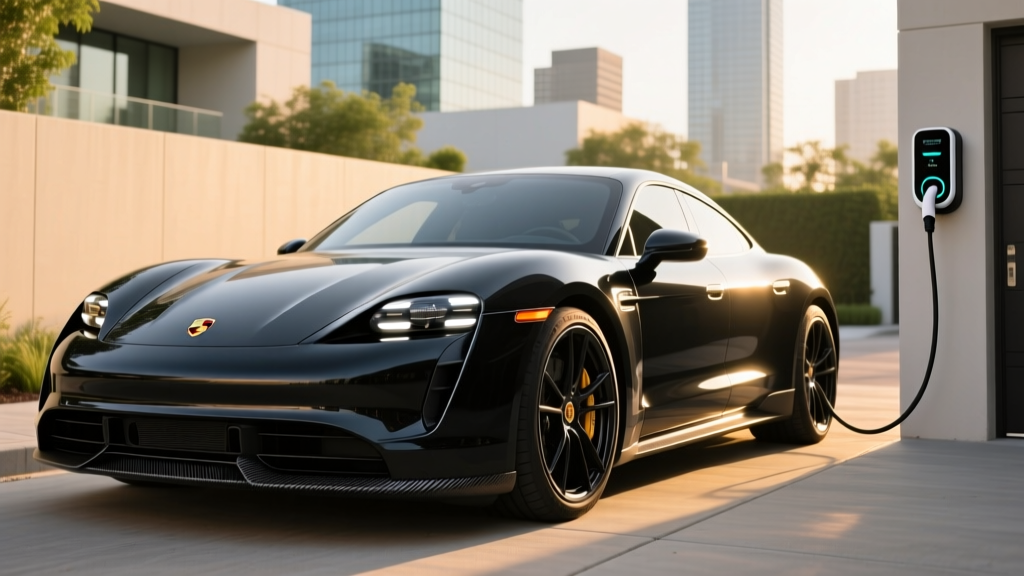
The 2020 Porsche Taycan 4S was the first serious electric sports sedan to challenge Tesla's dominance in the performance-EV space. Built on Porsche's J1 800-volt architecture, it delivers genuine sports-car dynamics with usable daily range and class-leading DC fast-charging capability. In 2026, the Taycan 4S remains a compelling used-EV proposition — particularly for buyers who value chassis tuning, build quality, and sustained highway performance over maximum range-per-dollar.
As a used vehicle in 2026, the Taycan 4S qualifies for the federal used-EV tax credit (IRC §25E), which offers up to $4,000 or 30% of the sale price (whichever is lower) — subject to income caps, a $25,000 maximum sale price, and dealer registration requirements. This is distinct from the new-vehicle §30D credit and has its own eligibility rules, which we detail below.
| Spec | Value |
|---|---|
| EPA Range | 203 mi (Performance Battery) / 203 mi (Performance Battery Plus) |
| Usable Battery Capacity | 71.0 kWh (Std) / 83.7 kWh (Plus) |
| Battery Chemistry | NMC (Nickel Manganese Cobalt) — LG Chem pouch cells |
| Drivetrain | Dual-motor AWD (permanent magnet synchronous) |
| Horsepower | 482 hp (Std) / 562 hp (Plus) w/ Launch Control |
| 0–60 mph | 3.8 s (Std) / 3.6 s (Plus) |
| Top Speed | 155 mph |
| Max DC Fast Charge | 225 kW (Std) / 270 kW (Plus) |
| 10–80% DC Charge Time | ~22.5 minutes (peak conditions) |
| Level 2 AC Charge Rate | 9.6 kW (onboard charger) |
| MPGe (Combined) | 68 MPGe (Performance Battery Plus) |
| Efficiency | 49 kWh/100 mi |
| Cargo (Rear Trunk + Frunk) | 14.3 cu ft total (rear 12.9 + frunk 2.8) |
| Rear Legroom | 32.7 in |
| Battery Warranty | 8 years / 100,000 miles |
| Original MSRP (2020) | $103,800 (base) / ~$130,000+ as-tested |
Range and Efficiency: The Real-World Picture
Real-World Expectation: ~170–190 mi highway (70–80 mph); ~195–210 mi mixed city/highway; ~140–160 mi in freezing temperatures with cabin heat. The Taycan 4S prioritizes performance over efficiency — expect 2.0–2.5 mi/kWh in spirited driving versus the EPA-rated ~2.04 mi/kWh.
The Taycan 4S's 203-mile EPA rating drew criticism at launch, and it remains modest by 2026 standards. For context, the 2024 Tesla Model S Long Range achieves 402 miles EPA, and even the Hyundai Ioniq 6 SE reaches 361 miles. Porsche optimized the Taycan for sustained high-speed performance and thermal management rather than maximizing range.
The 800-volt architecture does yield efficiency benefits under load. Unlike 400-volt systems that experience greater resistive losses at high power, the Taycan's dual-voltage design (800V battery with 400V motor inverters) maintains consistent power delivery. On fueleconomy.gov, the Taycan 4S with the Performance Battery Plus is rated at 68 MPGe combined (68 city / 68 highway).
In real-world highway testing at 75 mph in moderate temperatures (65–75°F), owners consistently report 175–190 miles before reaching 10% SoC. Cold weather (below 32°F) with resistive heating engaged drops that to roughly 140–160 miles. The Taycan does use a heat pump, which mitigates cold-weather losses compared to resistive-only systems, but the battery's thermal conditioning still draws energy in extreme cold.
Charging: Where the 800-Volt Architecture Shines
| Charge Level | Power | Speed | Notes |
|---|---|---|---|
| Level 1 (120V) | 1.2–1.4 kW | ~3–4 mi/hr | Emergency/trickle only |
| Level 2 (240V) | 9.6 kW (max) | ~22–25 mi/hr | Full charge in ~9–10 hours |
| DC Fast (50 kW) | 50 kW | ~110–120 mi/hr | Common at older stations |
| DC Fast (150 kW) | 150 kW | ~200–220 mi/hr | Electrify America standard |
| DC Fast (270 kW peak) | 270 kW | ~280–300 mi/hr (peak) | Requires 350 kW+ station |
The Taycan's 800-volt system was a significant differentiator in 2020 and remains competitive in 2026. The Performance Battery Plus model can accept up to 270 kW at a DC fast charger — a figure that few 2020-era EVs could match. At a 350 kW Electrify America or Ionity station, the Taycan 4S can charge from 10% to 80% in approximately 22.5 minutes under optimal conditions (battery preconditioned, ambient temperature 60–80°F).
Charging curve reality check: The 270 kW figure is a peak, not a sustained rate. The Taycan's charge curve holds near-peak power from roughly 10–40% SoC, then tapers progressively. From 80–100%, charging slows dramatically to protect battery health — expect 40+ minutes to go from 80% to full. For road trips, plan 10–80% stops; don't wait for a full charge.
The onboard AC charger is 9.6 kW, which is standard for the segment. At home on a Level 2 charger (240V/40A), a full charge from empty takes roughly 9–10 hours. Porsche includes a Mobile Charger Connect with the vehicle, which can deliver up to 9.6 kW on a NEMA 14-50 outlet.
Connector note: The 2020 Taycan uses the CCS1 connector for DC fast charging and the J1772 connector for Level 2 AC. In 2026, with the industry shifting to NACS (Tesla's connector), Taycan owners may need a CCS-to-NACS adapter at some newer Tesla Supercharger stations that have opened to non-Tesla vehicles. Porsche has not issued a retrofit NACS port for 2020 models, so adapter compatibility is essential for accessing the full Supercharger network.
Performance and Driving Dynamics
The Taycan 4S delivers on Porsche's performance promise. With the Performance Battery Plus, the dual-motor AWD system produces 562 horsepower and 479 lb-ft of torque when Launch Control is engaged (482 hp / 457 lb-ft with the standard Performance Battery). The 2-speed transmission on the rear axle — a unique feature among production EVs — provides a short first gear for explosive launches and a tall second gear for efficient highway cruising.
Porsche quotes 0–60 mph in 3.6 seconds for the Plus battery variant. Independent testing by Car and Driver has recorded times as low as 3.5 seconds, with consistent repeatability thanks to the Taycan's thermal management. Unlike some EVs that derate after consecutive launches, the Taycan 4S can perform multiple back-to-back 0–60 runs without significant power reduction.
The chassis is where the Taycan distinguishes itself from competitors. The 4S trim includes adaptive air suspension with Porsche Active Suspension Management (PASM), rear-axle steering (optional), and Porsche Torque Vectoring Plus (optional). The result is a sedan that corners with sports-car precision while maintaining ride compliance. The steering feel — electric but well-weighted — is consistently praised as superior to Tesla's offerings.
Regenerative braking in the Taycan is notably different from Tesla's one-pedal driving. Porsche's regen is relatively mild by default (up to 0.3g of deceleration), and the car coasts freely when you lift off the accelerator. You can enable stronger regen via the steering-wheel button or by engaging the brake pedal, which blends regen and friction braking. Some EV drivers accustomed to aggressive one-pedal driving find the Taycan's approach takes adjustment, but it yields a more natural driving experience.
Interior, Tech, and Practicality
The Taycan's interior reflects Porsche's build-quality standards: materials, fit-and-finish, and noise isolation are a step above the Tesla Model S. The cabin features multiple screens — an 11-inch curved instrument cluster, a 10.9-inch central infotainment touchscreen, and an optional 8.4-inch lower touchscreen for climate and handwriting input. An optional passenger-side 10.9-inch screen was available.
The infotainment system uses Porsche Communication Management (PCM), which supports Apple CarPlay but notably lacks Android Auto in the 2020 model year (Android Auto was added for 2022). Voice control and navigation are competent but not class-leading. Over-the-air updates are limited compared to Tesla's frequent OTA cadence.
Driver assistance includes adaptive cruise control, lane-keeping assist, and automatic emergency braking. These are SAE Level 2 driver-assist features — the driver must remain engaged and hands-on-wheel at all times. Porsche's system is competent but conservative; it does not attempt the aggressive lane-change automation of Tesla's Autopilot or GM's Super Cruise.
Practicality is the Taycan's weakest area. Rear legroom at 32.7 inches is tight for tall adults, and the rear seat is best suited for children or shorter trips. The rear trunk offers 12.9 cu ft, with an additional 2.8 cu ft frunk. Total cargo capacity of 14.3 cu ft is significantly less than the Tesla Model S (28 cu ft behind rear seats) or Model 3 (23 cu ft). The Taycan is a sports sedan, not a family hauler.
Pricing, Used Market Value, and Tax Credits
| Item | Amount |
|---|---|
| Original 2020 MSRP (base) | $103,800 |
| Original MSRP (typical as-tested) | $125,000–$140,000 |
| 2026 Used Market Range (est.) | $55,000–$75,000 (depending on mileage, condition, battery health) |
| Federal Used-EV Credit (§25E) | Up to $4,000 or 30% of sale price (whichever is less) |
| Credit-Adjusted Price (example: $25,000 sale) | ~$21,000 after credit (if all criteria met) |
Critical tax credit note: As a used vehicle in 2026, the Taycan 4S is ineligible for the new-vehicle federal tax credit (IRC §30D). Instead, it may qualify for the IRC §25E used-EV credit, which provides up to $4,000 or 30% of the sale price (whichever is lower). Per IRS guidelines, eligibility requires:
- Sale price cap: The vehicle must sell for $25,000 or less. Given the Taycan 4S's used market value of $55,000–$75,000 in 2026, most examples will exceed this cap and be ineligible.
- Buyer income limits: AGI must not exceed $75,000 (single), $112,500 (head of household), or $150,000 (joint filers).
- Vehicle age: Must be at least 2 model years old (2020 qualifies).
- Dealer requirement: Must be purchased from a licensed dealer who reports the sale to the IRS.
- Prior credit history: The same vehicle cannot have been used to claim the §25E credit more than once since 2022.
Practical reality: Unless you find a high-mileage or damaged Taycan 4S selling at or below $25,000 (unlikely given the market), the used-EV credit will not apply. Budget accordingly and do not factor the credit into your purchase decision for this model.
Warranty and Long-Term Ownership
Porsche provides an 8-year / 100,000-mile warranty on the high-voltage battery, guaranteeing a minimum of 70% capacity retention over that period. This is competitive with industry standards (Tesla offers 8 years / 120,000–150,000 miles depending on model, with a similar 70% threshold).
The basic vehicle warranty is 4 years / 50,000 miles, which has expired for all 2020 models by 2026. The powertrain warranty is also 4 years / 50,000 miles. For a 2020 Taycan 4S in 2026, the high-voltage battery warranty is the only remaining factory coverage, and it will expire in 2028 or at 100,000 miles — whichever comes first.
NMC battery degradation in the Taycan has been modest based on owner reports. Most 2020 models with 40,000–70,000 miles show 5–10% capacity loss, well within the 70% warranty threshold. Porsche's conservative battery buffer (the car reserves roughly 6 kWh of the 93.4 kWh gross capacity as a buffer) and robust thermal management contribute to longevity. However, buyers should request a battery health report (State of Health, or SoH) from a Porsche dealer before purchasing.
Maintenance costs are lower than ICE Porsche models (no oil changes, no spark plugs, reduced brake wear due to regen), but Porsche dealer labor rates are high. Budget $800–$1,500 annually for cabin air filters, brake fluid checks, tire rotations, and software updates. Tires are a significant expense — the Taycan wears through rear tires every 15,000–25,000 miles under normal driving, and Porsche-specific EV tires (with foam noise insulation) cost $300–$450 each.
Pros and Cons
Pros
- Class-leading driving dynamics and chassis tuning
- 800V architecture enables 270 kW DC fast charging (10–80% in ~22 min)
- Consistent performance without thermal derating
- Premium build quality and cabin materials
- 2-speed rear transmission for launch and efficiency
- Quiet, refined ride with excellent NVH isolation
Cons
- 203-mile EPA range is low for the price and 2026 standards
- Rear seat legroom (32.7 in) is tight for adults
- Limited cargo space (14.3 cu ft total)
- No Android Auto in 2020 model year
- Infotainment and OTA updates lag Tesla
- Used-EV tax credit unlikely to apply due to $25K price cap
- CCS connector may require adapter for NACS Superchargers
Competitor Comparison: Is the Taycan 4S Worth It?
For 2026 used-EV buyers, the Taycan 4S competes primarily with the Tesla Model S (2020–2022), Audi e-tron GT (2022+), and Mercedes EQS (2022+). Each offers a different value proposition:
- Tesla Model S Long Range (2020): 402-mile EPA range, 3.1-second 0–60, Supercharger access, superior infotainment and OTA. But the Model S's build quality, ride refinement, and steering feel are noticeably inferior to the Taycan. Used prices overlap at $55,000–$70,000.
- Audi e-tron GT (2022): Shares the Taycan's J1 platform and 800V architecture, with 238-mile EPA range and similar charging speeds. More rear-seat space and a more modern infotainment system. Used prices are higher ($70,000–$90,000) due to newer model year.
- Mercedes EQS 450+ (2022): 350-mile EPA range, luxurious interior, rear-wheel drive. Less engaging to drive than the Taycan but far more practical. Used prices around $60,000–$75,000.
Choose the Taycan 4S if: You prioritize driving dynamics, build quality, and fast-charging capability over maximum range. You don't need rear-seat space for adults. You value Porsche's brand cachet and dealer experience.
Choose the Model S if: Range is your top priority. You want Supercharger network access without adapters. You value Tesla's software, OTA updates, and Autopilot capability.
Frequently Asked Questions
What is the real-world range of the 2020 Porsche Taycan 4S?
The EPA rates the Taycan 4S at 203 miles for both battery options. In real-world highway driving at 70–80 mph in moderate temperatures, expect 175–190 miles. In city driving with regenerative braking, you may see 200–210 miles. In freezing temperatures (below 32°F) with cabin heat, range drops to approximately 140–160 miles.
How fast does the 2020 Taycan 4S charge?
On DC fast charging, the Performance Battery Plus model peaks at 270 kW, achieving 10–80% in approximately 22.5 minutes at a 350 kW station. On Level 2 AC (240V), the 9.6 kW onboard charger adds roughly 22–25 miles per hour, requiring 9–10 hours for a full charge from empty.
Does the 2020 Porsche Taycan 4S qualify for the federal EV tax credit?
As a used vehicle in 2026, the Taycan 4S is ineligible for the new-vehicle §30D credit. It may qualify for the §25E used-EV credit (up to $4,000), but only if the sale price is $25,000 or less — which is unlikely given the Taycan's used market value of $55,000–$75,000. Buyer income caps also apply. Consult a tax professional and review IRS guidance before purchase.
Is the 2020 Taycan 4S worth buying vs. the Tesla Model S?
If you prioritize driving dynamics, build quality, and charging speed, the Taycan 4S is the better choice. If range, infotainment, and Supercharger access are more important, the Model S is superior. The Taycan's 203-mile range is a significant limitation for road trips compared to the Model S's 402 miles.
What are the biggest ownership costs for a used Taycan 4S?
Beyond the purchase price, budget for: tires ($1,200–$1,800 every 15,000–25,000 miles), annual maintenance ($800–$1,500), insurance (typically $2,500–$4,000/year depending on location and driving record), and potential out-of-warranty repairs after the battery warranty expires in 2028. Home charging installation may cost $1,000–$3,000 if you need a 240V outlet or hardwired Level 2 charger.
Does the 2020 Taycan 4S have one-pedal driving?
Not in the Tesla sense. The Taycan's regenerative braking is mild by default (up to 0.3g), and the car coasts freely when you lift off the accelerator. You can increase regen via a steering-wheel button or by using the brake pedal, which blends regen and friction braking. Drivers accustomed to strong one-pedal driving will need an adjustment period.