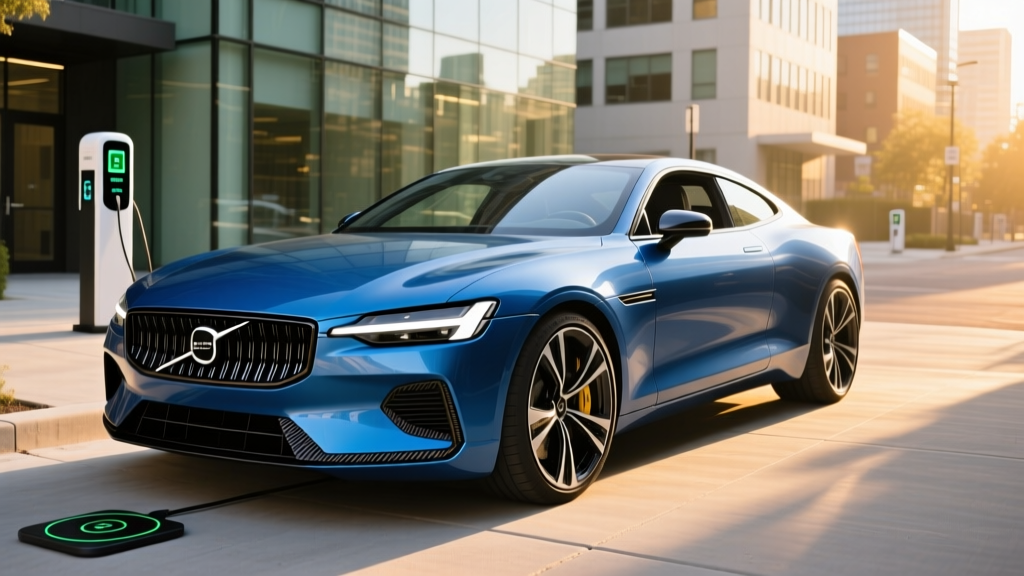
The 2020 Polestar 1 occupies a strange and fascinating corner of the electrified car world. Built as a limited-run halo grand tourer — only 1,500 units were produced globally across its 2020–2021 production run — this plug-in hybrid coupe pairs a turbocharged and supercharged 2.0-liter four-cylinder engine with two rear-axle electric motors to produce a combined 619 horsepower and 738 lb-ft of torque. It was Polestar's opening statement as an independent brand, and it arrived with a jaw-dropping $156,500 MSRP that positioned it firmly against exotic machinery rather than mainstream EVs.
In 2026, the Polestar 1 exists exclusively on the used and collector market. If you're considering one, you're likely weighing its striking carbon-fiber body, genuine electric-only commuting capability, and grand-touring comfort against its age, limited production numbers, and the rapid evolution of pure EVs around it. This review breaks down exactly what the 2020 Polestar 1 delivers — and where it falls short — with the real numbers that matter.
Powertrain, Battery, and Electric-Only Range
The Polestar 1 is a plug-in hybrid electric vehicle (PHEV), not a battery-electric vehicle. Understanding this distinction is critical to evaluating its capabilities. The powertrain combines:
- Front axle: A 2.0-liter turbocharged and supercharged inline-four producing 326 hp, driving the front wheels through an 8-speed automatic transmission
- Rear axle: Two independent electric motors (one per rear wheel) producing a combined 232 hp, enabling torque vectoring
- Combined system output: 619 hp and 738 lb-ft of torque
The traction battery is a 34 kWh lithium-ion pack using NMC (nickel manganese cobalt) chemistry, mounted in a T-shape along the center tunnel and behind the rear seats. Of that 34 kWh, approximately 27–29 kWh is usable, with the remainder serving as a buffer to protect long-term battery health.
| Spec | Value |
|---|---|
| Drivetrain | AWD (ICE front / dual electric motor rear) |
| Combined Output | 619 hp / 738 lb-ft |
| Battery Capacity | 34 kWh total (NMC chemistry) |
| EPA Electric-Only Range | 52 miles |
| EPA Combined MPGe (electric + gas) | 26 MPGe |
| Gas-Only Combined MPG | 26 MPG |
| Fuel Tank | 15.8 gallons |
| Total Range (electric + gas) | ~520 miles |
| 0–60 mph | 4.0 seconds (est.) |
| Curb Weight | 5,184 lbs |
| Body Material | Carbon fiber reinforced polymer (CFRP) |
The EPA rates the 2020 Polestar 1 at 52 miles of electric-only range. In real-world driving, expect approximately 40–48 miles of electric range during mixed city/highway commuting in moderate temperatures. On pure highway driving at 70+ mph, that figure drops to roughly 35–40 miles. In cold weather (below freezing), NMC chemistry loses efficiency and cabin heating draws significant power — expect electric-only range to fall to 30–38 miles. For most owners with a daily commute under 40 miles round-trip, the Polestar 1 can function as a pure EV on weekdays, with the gas engine reserved for longer trips.
According to fueleconomy.gov, the Polestar 1 achieves 26 MPGe combined when factoring in both electric and gasoline operation. Once the battery is depleted, the gas engine alone delivers 26 MPG combined — respectable for a 5,184-pound grand tourer, but not class-leading efficiency.
Charging Speeds: DC Fast Charging and Home Level 2
Charging infrastructure compatibility is where the Polestar 1 shows its 2020-vintage engineering. The vehicle uses a CCS1 (Combined Charging System) connector, which was the standard for non-Tesla EVs sold in North America at the time. Note that the industry has since shifted toward NACS (Tesla's connector), though CCS1 adapters are widely available for Tesla Supercharger access in 2026.
| Charging Level | Power / Rate | Time / Notes |
|---|---|---|
| Level 1 (120V household) | ~1.4 kW | ~20+ hours for full charge; ~4 mi/hr added |
| Level 2 (240V home/public) | Up to 7.2 kW (32A) | ~5 hours 0–100%; ~22 mi/hr of electric range added |
| DC Fast Charge (CCS1) | Peak ~50 kW | 10–80% in approximately 45–50 minutes |
The DC fast-charging capability is the Polestar 1's most significant charging limitation by 2026 standards. A peak rate of roughly 50 kW means that a 10–80% session takes close to 45–50 minutes — far slower than modern EVs like the Hyundai Ioniq 5 (which peaks at 240 kW) or the Porsche Taycan (270 kW+). The charge curve also tapers significantly above 70% state of charge, so the final portion of a DC session slows considerably.
For daily use, most Polestar 1 owners will rely on Level 2 home charging. At 7.2 kW, the 34 kWh battery refills from empty in roughly 5 hours, which is easily accomplished overnight. A standard 240V/32A home charger (such as a ChargePoint Home Flex or Emporia Level 2) is ideal. Installation costs for a Level 2 home charger typically run $800–$2,500 depending on electrical panel capacity and conduit distance — consult a licensed electrician for a site-specific quote.
The Polestar 1's CCS1 port is compatible with Electrify America, EVgo, and ChargePoint DC fast chargers natively. For Tesla Supercharger access (now open to non-Tesla vehicles with adapters), you'll need a CCS1-to-NACS adapter (~$150–$250). Confirm adapter compatibility before purchasing, as some early CCS1 implementations have handshake quirks with certain adapter models.
Performance and Driving Dynamics
The dual-motor rear axle with torque vectoring is the Polestar 1's engineering party trick. By independently controlling power to each rear wheel, the system can push the car through corners with a poise that belies its 5,184-pound curb weight. The Öhlins adjustable dampers (manually adjustable, with 22 settings) and Akebono six-piston front brake calipers underline the car's GT credentials.
Polestar never published an official 0–60 mph time, but independent testing and the car's power-to-weight ratio place it at approximately 4.0 seconds. That's quick, but not supercar-quick — a Tesla Model S Plaid or even a Porsche Taycan 4S will leave it behind in a straight line. The Polestar 1 was never designed as a drag-strip car; its character is that of a grand tourer meant for sustained high-speed cruising with electric efficiency around town.
The driving experience is a tale of two cars. In Pure mode (electric-only, rear-wheel drive), it's a serene, silent commuter. In Power mode (full hybrid), the gas engine and electric motors combine for urgent acceleration and an engaging, if somewhat heavy, driving feel. The 8-speed automatic can feel hesitant in hybrid mode during low-speed transitions between electric and gas power — a common PHEV calibration challenge that Polestar partially addressed through software updates during the car's production run.
Interior, Cargo, and Technology
The Polestar 1's cabin borrows heavily from Volvo's design language — unsurprising given Polestar's origins as Volvo's performance sub-brand. The interior features bridge-of-weave leather, Bowers & Wilkins premium audio (14 speakers), and a vertically oriented 9-inch Sensus touchscreen infotainment system.
Key interior and technology details:
- Front legroom: 42.3 inches
- Rear legroom: 29.7 inches (best suited for children or short trips)
- Cargo volume: 14.3 cubic feet (trunk); no rear seat fold-down
- Infotainment: 9-inch Sensus touchscreen with Apple CarPlay, Android Auto, navigation
- Instrument cluster: 12.3-inch digital driver display
- Driver assists: Pilot Assist (adaptive cruise + lane centering, SAE Level 2), blind-spot monitoring, 360-degree camera, run-off-road protection
- Unique features: Carbon fiber body panels, Öhlins adjustable suspension, Akebono brakes, gold seatbelts and brake calipers
The rear seats are the Polestar 1's most obvious practicality compromise. With just 29.7 inches of legroom, they're suitable only for small children or very short adults. Cargo space at 14.3 cubic feet is adequate for a weekend trip for two but can't match a sedan or SUV. There is no frunk (front trunk), as the engine occupies the entire front compartment.
The Sensus infotainment system, while functional, feels dated by 2026 standards. It lacks the responsiveness, voice-command sophistication, and over-the-air update capabilities of newer systems from Tesla, Rivian, or even Polestar's own Android Automotive OS found in the Polestar 2 and later models. Pilot Assist is a competent SAE Level 2 driver-assistance system — it is not self-driving and requires continuous driver supervision — but it performs reliably for highway cruising.
Polestar's Pilot Assist is classified as SAE Level 2 automation. It combines adaptive cruise control with lane-centering assistance, but the driver must keep hands on the wheel and eyes on the road at all times. This is the same automation level as Tesla Autopilot, GM Super Cruise, and Ford BlueCruise. Only fully driverless robotaxi services like Waymo operate at Level 4.
Pricing, Used Market Value, and Tax Credit Eligibility
The 2020 Polestar 1 launched with an MSRP of $156,500 (including destination), with no trim-level variations — every car was identically specified, differing only in exterior color and optional matte or gloss finish. Approximately 1,500 units were built worldwide, with an estimated 400–500 delivered to the U.S. market.
| Item | Value |
|---|---|
| Original MSRP (2020) | $156,500 |
| Used Market Range (2026) | $85,000 – $140,000 (mileage/condition dependent) |
| Federal Used EV Tax Credit (§25E) | Up to $4,000 (if eligible — see below) |
| Federal New EV Tax Credit (§30D) | Not applicable (discontinued model; no new inventory) |
As a discontinued model available only on the used market in 2026, the Polestar 1 does not qualify for the §30D new clean vehicle credit. However, buyers may be eligible for the §25E previously owned clean vehicle credit, which provides up to $4,000 (or 30% of the sale price, whichever is less) on qualifying used EVs and PHEVs. Eligibility requirements for §25E include:
- Sale price must be $25,000 or less (the Polestar 1 far exceeds this — making it ineligible for §25E in practice)
- Buyer income caps: $75,000 single / $112,500 head of household / $150,000 married filing jointly
- Vehicle must be purchased from a licensed dealer
- Vehicle model year must be at least two years older than the calendar year of purchase
Because the Polestar 1's used-market prices range from $85,000 to $140,000, it does not qualify for either the new or used federal EV tax credit. Check current IRS guidance for the latest rules, and consult a tax professional for your specific situation.
Battery Warranty, Longevity, and Maintenance Considerations
When the Polestar 1 was new, it carried an 8-year/100,000-mile battery and powertrain warranty, consistent with Volvo/Polestar's coverage terms. For a 2020 model, that factory warranty extends through 2028 or 100,000 miles — whichever comes first. If you're purchasing one in 2026 with under 100,000 miles, some factory coverage may still apply.
NMC battery chemistry offers strong energy density (which is why Polestar could fit 34 kWh into the car's T-shaped tunnel) but is somewhat more susceptible to long-term degradation than LFP (lithium iron phosphate) chemistry. Expect approximately 10–15% capacity loss over 8–10 years under normal use, which would reduce electric-only range from 52 miles to roughly 44–47 miles over that period. Keeping the battery between 20–80% state of charge for daily use and avoiding repeated DC fast-charging sessions will help preserve longevity.
Maintenance considerations unique to the Polestar 1 include:
- Carbon fiber body repair: CFRP panels require specialized repair facilities. Not all body shops can work with carbon fiber, and replacement panels may be scarce given the car's limited production.
- Öhlins suspension: The manually adjustable dampers are high-performance components. Servicing or replacement is more expensive than conventional dampers.
- Hybrid system complexity: You're maintaining both a full ICE powertrain (oil changes, spark plugs, transmission fluid) and an electric drivetrain. Long-term maintenance costs will exceed those of a pure EV.
- Parts availability: With only ~500 U.S.-spec cars, some replacement parts (especially cosmetic and body components) may require extended lead times or sourcing from European markets.
Pros and Cons: The 2020 Polestar 1 in 2026
- Stunning carbon-fiber GT design — one of the most beautiful cars of the 2020s
- 52 miles EPA electric-only range is genuinely useful for daily commuting
- 619 hp with torque-vectoring rear axle delivers engaging GT dynamics
- Exclusivity — only ~500 U.S. examples; potential future collector value
- Factory warranty may still apply (through 2028/100,000 mi)
- Premium interior with B&W audio, Öhlins suspension, Akebono brakes
- 50 kW DC fast charging is painfully slow by 2026 standards
- $85K–$140K used pricing with no federal tax credit eligibility
- Rear seats nearly unusable for adults; limited cargo space
- Sensus infotainment feels outdated; no Android Automotive OS
- PHEV complexity means maintaining both gas and electric systems
- Carbon fiber repair is expensive and requires specialists
- CCS1 connector may need adapter for Tesla Supercharger access
Who Should Buy the 2020 Polestar 1?
The 2020 Polestar 1 is not a rational daily-driver purchase for most EV shoppers. It makes sense for a very specific buyer:
- Collector/enthusiast: You appreciate limited-production GT cars, carbon-fiber construction, and the historical significance of Polestar's debut vehicle. You're buying it as much for its design and exclusivity as its powertrain.
- Commuter with a second car: Your daily commute is under 45 miles round-trip, you have Level 2 home charging, and you want a striking coupe that runs on electricity during the week and gasoline for weekend grand touring.
- Design-first buyer: You prioritize aesthetics, craftsmanship, and exclusivity over cutting-edge tech, maximum range, or practicality.
The Polestar 1 is not the right choice if you want maximum electric range, the latest infotainment technology, fast DC charging for road trips, rear-seat practicality, or low maintenance costs. In those categories, a used Tesla Model S, Porsche Taycan, or even a Polestar 2 will serve you better.
Frequently Asked Questions
What is the real-world electric range of the 2020 Polestar 1?
The EPA rates it at 52 miles electric-only. Real-world results are typically 40–48 miles in mixed driving, 35–40 miles on the highway, and 30–38 miles in freezing temperatures. The gas engine extends total range to approximately 520 miles.
How fast does the Polestar 1 charge?
DC fast charging peaks at roughly 50 kW, with a 10–80% session taking about 45–50 minutes via CCS1. Level 2 home charging at 7.2 kW refills the battery in approximately 5 hours. Level 1 (120V) adds about 4 miles of electric range per hour.
Does the 2020 Polestar 1 qualify for any federal tax credit?
No. The §30D new vehicle credit doesn't apply because the model is discontinued. The §25E used vehicle credit requires a sale price of $25,000 or less, which the Polestar 1 far exceeds. State-level incentives vary — check your local DMV or energy office for details.
Is the Polestar 1 worth buying over a Tesla Model S or Porsche Taycan?
It depends on your priorities. If you value exclusivity, GT design, carbon-fiber construction, and PHEV flexibility, the Polestar 1 is unique. If you prioritize range, charging speed, technology, practicality, or value, a used Model S Long Range or Taycan 4S is a more capable daily driver. The Polestar 1 competes more with the BMW i8 (also discontinued) than with pure EVs.
What's the biggest risk of buying a used Polestar 1?
Parts scarcity and carbon-fiber repair costs. With only ~500 U.S. examples, body panels and model-specific components may be difficult to source. Any collision damage involving the CFRP body requires a certified carbon-fiber repair facility, which can be expensive and hard to find. Additionally, the PHEV powertrain adds mechanical complexity compared to a pure EV.
Can the Polestar 1 charge at Tesla Superchargers?
Not natively — the Polestar 1 uses a CCS1 connector. However, Tesla has opened many Supercharger stalls to non-Tesla EVs via adapters. A CCS1-to-NACS adapter ($150–$250) may enable access, but confirm compatibility before relying on this for travel. The 50 kW charge rate means you won't benefit from the Supercharger network's full speed regardless.