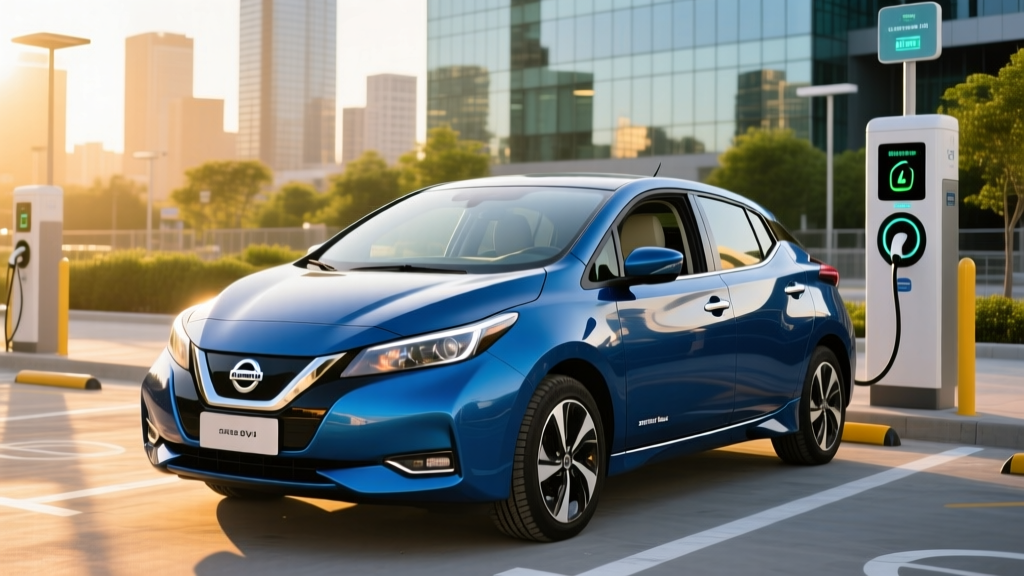
The 2020 Nissan Leaf SV Plus occupies a specific niche in the used EV market of 2026: it's one of the most affordable ways to get over 200 miles of EPA-rated range in a practical hatchback. With a 62 kWh battery pack, 214 horsepower, and a starting MSRP that was competitive when new, the SV Plus trim represents the sweet spot of the second-generation Leaf lineup. But the Leaf's CHAdeMO connector, passive battery cooling, and aging infotainment demand a clear-eyed assessment before you sign the paperwork.
This review breaks down the exact numbers — range, charging speeds, efficiency, cargo space, and what the used-EV tax credit actually means for a 2020 model in 2026 — so you can decide whether this Leaf earns a spot in your driveway or gets passed over for a newer rival.
Spec Sheet: 2020 Nissan Leaf SV Plus at a Glance
| Specification | Value |
|---|---|
| EPA Range | 226 miles |
| Battery (Usable) | 62 kWh, NMC (lithium-ion, laminated cells) |
| Motor Output | 160 kW / 214 hp, 250 lb-ft torque |
| Drivetrain | Front-wheel drive (single motor) |
| 0-60 mph | ~6.5 seconds |
| EPA Efficiency | 108 MPGe combined (31 kWh/100 mi) |
| DC Fast Charge (Peak) | 100 kW (CHAdeMO) |
| Level 2 Charge Rate | 7.2 kW (onboard charger) |
| Cargo Volume | 23.6 cu ft (rear seats up) / 30.0 cu ft (folded) |
| Rear Legroom | 33.5 inches |
| Battery Warranty (Original) | 8 years / 100,000 miles (capacity loss coverage) |
| Original Base MSRP | $38,220 (before incentives) |
Real-World Range: What 226 EPA Miles Actually Means
Real-World Expectation: 190–210 miles in mixed driving; 160–180 miles sustained highway at 70+ mph; 140–160 miles in freezing temperatures with cabin heat.
The 226-mile EPA rating for the SV Plus was a significant upgrade over the base Leaf's 40 kWh pack (149 miles EPA). In temperate, city-heavy commuting — where regenerative braking recaptures energy and speeds stay moderate — owners routinely report achieving 210–225 miles on a full charge. The Leaf's efficiency of 31 kWh per 100 miles is respectable for a compact hatchback of its era.
However, the Leaf's passive air-cooled battery thermal management system is its most consequential engineering limitation. Unlike the active liquid cooling in a Chevrolet Bolt EV or Hyundai Kona Electric, the Leaf relies on ambient airflow to manage cell temperature. On hot days with repeated DC fast charging, or during sustained highway driving in summer heat, the battery warms up and the car may throttle charging speeds or reduce power output to protect the cells. Nissan calls this "Rapidgate" mitigation, but the underlying thermal constraint remains.
In cold weather (below 32°F), expect a 25–35% range reduction. The Leaf SV Plus does include a battery heater (standard on Plus trims) and a heat pump is not equipped — cabin heat draws directly from the traction battery via a resistive PTC heater, which is energy-intensive. If your commute is 60 miles round-trip in a northern winter, the Leaf SV Plus can handle it, but you'll want to precondition while plugged in to preserve range.
Charging Speeds: CHAdeMO's Declining Network
| Charging Level | Power | Time / Rate | Connector |
|---|---|---|---|
| Level 1 (120V household) | ~1.4 kW | ~4 miles per hour | J1772 |
| Level 2 (240V home/public) | 7.2 kW (max onboard) | ~23 miles per hour; full charge in ~9.5 hours | J1772 |
| DC Fast Charge | 100 kW peak | 10–80% in ~45 minutes | CHAdeMO |
The 2020 Leaf SV Plus upgraded to a 7.2 kW onboard charger (the base S and SV trims with the 40 kWh pack were limited to 6.6 kW). At a Level 2 home charger, a full 0–100% charge takes roughly 9.5 hours — fine for overnight replenishment. Most owners installing a 32-amp or 40-amp Level 2 unit at home will find this entirely adequate for daily use.
DC fast charging is where the Leaf's CHAdeMO connector becomes a serious concern in 2026. The CHAdeMO standard has been effectively abandoned by nearly every automaker outside of Nissan and Mitsubishi. Electrify America, the largest US DC fast-charging network, has stopped expanding CHAdeMO stalls, and many newer stations are NACS-only or CCS-only with no CHAdeMO cable. According to fueleconomy.gov, CHAdeMO infrastructure continues to shrink relative to CCS and NACS.
The 100 kW peak charge rate sounds reasonable, but real-world charging curves tell a different story. The Leaf's passive thermal management means that as the battery warms during a DC fast-charge session, the car aggressively tapers power. Expect to see 100 kW only briefly at low state-of-charge (10–20%), with sustained rates closer to 50–70 kW through the mid-range, and a steep taper above 80%. A 10–80% session typically takes 40–50 minutes depending on ambient temperature — considerably slower than a Bolt EUV or ID.4 on a 150+ kW charger.
Practical takeaway: If you can charge at home overnight and rarely road-trip, the CHAdeMO limitation is manageable. If you rely on public DC fast charging or plan regular highway trips, the shrinking CHAdeMO network is a genuine ownership risk.
Performance and Driving Dynamics
The SV Plus's 160 kW (214 hp) front-mounted AC synchronous motor delivers 250 lb-ft of instant torque to the front wheels. The 0–60 mph time of approximately 6.5 seconds is brisk for a compact hatchback — noticeably quicker than the base 40 kWh Leaf's 147 hp / 7.3-second sprint. Merging onto highways and passing maneuvers feel confident and immediate, as is typical of single-motor EVs with front-wheel drive.
Ride quality is compliant and tuned for comfort rather than sportiness. The Leaf's low center of gravity (battery pack under the floor) gives it stable handling, though the steering is numb and the chassis isn't engaging on back roads. Road noise at highway speeds is noticeable — Nissan's insulation in this generation isn't up to the standard of the Volkswagen ID.4 or Tesla Model 3.
One-pedal driving via Nissan's e-Pedal mode is well-implemented, providing strong regenerative deceleration that can bring the car to a full stop without touching the brake pedal. The system holds the car at a stop on inclines, making city and stop-and-go driving effortless. However, e-Pedal's regen strength is fixed — there's no adjustable regen paddle as in the Bolt or Kona, which some drivers prefer for fine-tuning deceleration.
Interior, Tech, and Cargo Practicality
The 2020 Leaf SV Plus uses an 8-inch touchscreen infotainment system with Apple CarPlay and Android Auto (wired, not wireless). The interface is functional but dated by 2026 standards — the resolution is low, response times lag behind modern competitors, and the navigation software (if equipped) is inferior to phone-based maps. A 360-degree Around View Monitor is available on the SV Plus with the Technology Package, which is genuinely useful for parking.
Nissan's ProPILOT Assist is standard on the SV Plus trim. This is an SAE Level 2 driver-assistance system combining adaptive cruise control with lane-centering steering. It works well on well-marked highways but requires continuous driver supervision — hands must remain on the wheel, and the system will issue warnings and disengage if it detects inattention. ProPILOT is competent for its era but lacks the lane-change assistance and mapping capabilities of Ford BlueCruise or GM Super Cruise.
Cargo space is a genuine strength: 23.6 cubic feet behind the rear seats and 30.0 cubic feet with the 60/40 split rear seats folded. That's competitive with a Honda HR-V or Mazda CX-30 and significantly more than a Tesla Model 3's trunk. The hatchback design makes loading bulky items straightforward. Rear-seat legroom of 33.5 inches is adequate for adults on shorter trips but tight for taller passengers on longer drives. Front seats are comfortable with decent bolstering, and the SV Plus includes heated front seats and a heated steering wheel.
Pricing, Used Market Value, and Tax Credit Eligibility
When new, the 2020 Leaf SV Plus carried a base MSRP of $38,220 (including destination). With the Technology Package (ProPILOT, LED headlights, 360-degree camera, Bose audio), the as-tested price climbed to approximately $40,700. The federal $7,500 tax credit under the pre-2023 rules was available to buyers with tax liability, making the effective price roughly $30,700–$33,200 for eligible buyers at the time.
In the 2026 used-EV market, a 2020 Leaf SV Plus with 40,000–60,000 miles typically lists between $14,000 and $18,000 depending on condition, battery health, and region. This positions it as one of the least expensive 200+ mile EVs available used.
| Cost Item | Amount |
|---|---|
| Typical Used Price (2026 market) | $14,000–$18,000 |
| Federal Used EV Tax Credit (§25E) | Up to $4,000 (30% of sale price, max $4,000) |
| Price After Federal Credit | $10,000–$14,000 (estimated) |
| Income Cap (§25E) | $75K single / $112.5K head of household / $150K joint |
| Vehicle Price Cap (§25E) | $25,000 or less sale price |
Critical tax credit note: The 2020 Leaf SV Plus is not eligible for the new-vehicle §30D credit (which has battery-sourcing and MSRP caps that apply to new purchases). However, it may qualify for the §25E Used Clean Vehicle Credit — up to $4,000 or 30% of the sale price, whichever is less. Key eligibility requirements include: the sale price must be $25,000 or less, the buyer must fall within income caps, the vehicle must be purchased from a licensed dealer (not private party), and the credit can only be claimed once per vehicle (check whether the original buyer or a prior used buyer already claimed it). Consult a tax professional before relying on this credit. State and local incentives vary — check your state's energy office or AFDC for current programs.
Battery Health, Degradation, and Warranty
The 62 kWh pack in the SV Plus uses Nissan's laminated lithium-ion cells with NMC (nickel manganese cobalt) chemistry. Nissan's original battery warranty covers 8 years or 100,000 miles against capacity loss below 9 bars out of 12 on the battery health display (roughly 66% capacity retention). For a 2020 model, this factory warranty remains active through the 2028 model year or until 100,000 miles — meaning a 2026 buyer still has approximately two years of battery warranty coverage remaining, assuming the odometer is under 100,000 miles.
Real-world degradation data for the second-generation Leaf is mixed. The passive air-cooling system accelerates capacity loss in hot climates compared to liquid-cooled competitors. Owners in the southwestern US have reported 10–15% degradation over 4–5 years and 50,000–60,000 miles, while those in cooler climates often see 5–8% loss over the same period. Before purchasing, request a LeafSpy Pro readout (a third-party OBD-II diagnostic tool) to check the actual battery State of Health (SoH) — the dashboard bar display is imprecise.
If the battery eventually needs replacement outside of warranty, Nissan dealer replacement packs for the 62 kWh variant have been reported in the $6,500–$9,000 range (parts and labor), though availability and pricing should be confirmed with a local dealer. Third-party refurbished packs may offer lower-cost alternatives in some markets.
2020 Leaf SV Plus vs. Key Used-EV Competitors
| Attribute | 2020 Nissan Leaf SV Plus | 2020 Chevrolet Bolt EV | 2020 Hyundai Kona Electric |
|---|---|---|---|
| EPA Range | 226 mi | 259 mi | 258 mi |
| Battery | 62 kWh NMC | 66 kWh NMC | 64 kWh NMC |
| DC Fast Connector | CHAdeMO | CCS | CCS |
| Peak DC Charge | 100 kW | 55 kW | 77 kW |
| Thermal Management | Passive (air) | Active (liquid) | Active (liquid) |
| 0-60 mph | ~6.5 sec | ~6.5 sec | ~6.4 sec |
| Cargo (seats up) | 23.6 cu ft | 16.9 cu ft | 19.2 cu ft |
| Typical Used Price (2026) | $14K–$18K | $15K–$19K | $16K–$20K |
The Bolt EV and Kona Electric both use CCS connectors (compatible with the growing NACS/CCS network via adapters on newer vehicles, and directly compatible with most current public chargers), have active liquid battery cooling, and deliver 258–259 miles of range. The Leaf SV Plus counters with significantly more cargo space, a more comfortable ride, and a slightly lower entry price. If DC fast-charging access and long-term battery health in warm climates are priorities, the Bolt or Kona are the stronger picks. If you primarily charge at home and value cargo practicality, the Leaf makes a compelling case.
Pros and Cons
- 226-mile EPA range is adequate for most commutes
- Strong cargo space (23.6 cu ft) for a compact EV
- Comfortable ride and quiet city driving
- ProPILOT Assist is capable for highway cruising
- e-Pedal one-pedal driving is intuitive
- Low used-EV pricing with potential $4,000 tax credit
- Remaining factory battery warranty through 2028
- CHAdeMO connector — shrinking public charging network
- Passive air cooling limits fast-charge speed and battery longevity in heat
- Dated infotainment with no wireless CarPlay/Android Auto
- Slow DC fast charging vs. CCS/NACS competitors (~45 min 10–80%)
- No heat pump — cold-weather range loss is significant
- Rear seat legroom is tight for tall adults
- Not eligible for the new-vehicle $7,500 §30D credit
Who Should Buy the 2020 Leaf SV Plus?
Best for: Budget-conscious commuters who charge at home, drive under 100 miles per day, live in moderate climates, and value hatchback cargo flexibility. At $10,000–$14,000 after the potential used-EV credit, it's an exceptional value for reliable daily transportation with zero tailpipe emissions.
Look elsewhere if: You rely on public DC fast charging for road trips, live in a hot climate where passive cooling accelerates degradation, need rear-seat space for adult passengers regularly, or want a modern infotainment experience. In those cases, the used Bolt EV, Kona Electric, or a newer ID.4 better serve your needs.
Frequently Asked Questions
What is the real-world range of the 2020 Nissan Leaf SV Plus?
Expect 190–210 miles in mixed driving at moderate temperatures. Highway driving at 70+ mph drops this to roughly 160–180 miles. In freezing weather with cabin heat, plan for 140–160 miles. Preconditioning while plugged in helps preserve range in cold weather.
How fast does the 2020 Leaf SV Plus charge?
On a Level 2 home charger (7.2 kW), it adds about 23 miles of range per hour, with a full charge in roughly 9.5 hours. On DC fast charge (CHAdeMO), it peaks at 100 kW but tapers significantly due to passive thermal management — a 10–80% session takes approximately 40–50 minutes.
Does the 2020 Leaf SV Plus qualify for any federal tax credit in 2026?
Not the new-vehicle §30D credit. It may qualify for the §25E Used Clean Vehicle Credit — up to $4,000 or 30% of the sale price (whichever is less) — if purchased from a dealer at or below $25,000, the buyer meets income caps, and the credit hasn't previously been claimed on this specific VIN. Confirm with a tax professional.
Is the CHAdeMO connector a dealbreaker?
It depends on your charging habits. If you charge at home 95% of the time, CHAdeMO is irrelevant to daily life. If you take regular road trips or lack home charging and depend on public DC fast stations, the declining CHAdeMO infrastructure is a genuine problem. The CCS and NACS ecosystems have far broader coverage in 2026.
How long will the 2020 Leaf SV Plus battery last?
Nissan's warranty covers capacity loss below 9/12 bars through 8 years or 100,000 miles (through 2028 for a 2020 model). Real-world degradation varies: 5–8% in cool climates, 10–15% in hot climates over 5 years. A LeafSpy Pro diagnostic before purchase is strongly recommended to check actual State of Health.
Is the 2020 Leaf SV Plus worth buying in 2026?
For the right buyer — a home-charging commuter on a budget — it's one of the best values in the used EV market. The combination of 226-mile range, practical cargo space, and potential sub-$14,000 net price is hard to beat. For road-trippers or hot-climate buyers, the Bolt EV or Kona Electric with CCS charging and liquid cooling are wiser investments.