Quick Verdict: A Budget Commuter EV With Caveats
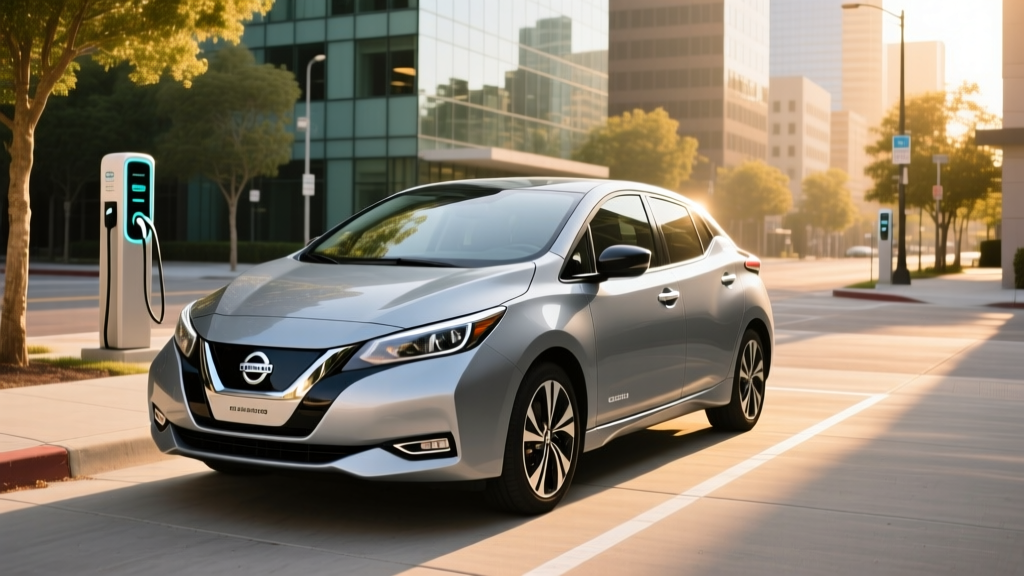
The 2020 Nissan Leaf remains one of the most accessible used electric vehicles on the market in 2026, with examples regularly selling between $12,000 and $20,000 depending on trim, mileage, and battery health. It offers a comfortable ride, practical hatchback cargo space, and — in Leaf Plus form — enough range for daily commuting and moderate road trips. But its CHAdeMO fast-charging connector, passive battery thermal management, and aging infotainment platform are real compromises that buyers must weigh against the low entry price.
If you're shopping for a 2020 Nissan Leaf on the used market today, this review covers the exact specs, real-world range expectations, charging realities, and tax-credit math you need to make an informed decision.
Range, Battery, and Real-World Efficiency
The 2020 Leaf comes in two battery configurations, and the difference is substantial:
| Spec | Leaf S / SV (Standard) | Leaf Plus (SL / SV Plus) |
|---|---|---|
| Battery Capacity (usable) | 40 kWh | 62 kWh |
| Battery Chemistry | NMC (nickel manganese cobalt) | NMC (nickel manganese cobalt) |
| EPA Estimated Range | 149 miles (S); 151 miles (SV) | 215 miles (SL); 226 miles (SV Plus) |
| EPA Efficiency | 111 MPGe (30 kWh/100mi) | 104 MPGe (32 kWh/100mi) |
| Motor Output | 110 kW (147 hp) | 160 kW (214 hp) |
| Drivetrain | FWD | FWD |
| 0–60 mph | ~7.9 seconds | ~6.5 seconds |
Real-World Range: What to Actually Expect
EPA sticker: 149 mi (40 kWh) / 226 mi (62 kWh Plus)
Real-world highway (70 mph, moderate temps): ~120–130 mi (40 kWh) / ~180–195 mi (62 kWh)
Cold weather (below 32°F, cabin heat on): Expect 25–35% range loss. A 40 kWh Leaf can drop to ~95–100 miles; a 62 kWh Plus to ~145–165 miles.
The Leaf uses passive air cooling for its battery pack rather than the active liquid thermal management found in competitors like the Chevrolet Bolt or Hyundai Kona Electric. This means sustained highway driving in hot weather or repeated DC fast-charging sessions will cause the battery to heat-soak, triggering power throttling (sometimes called "Rapidgate") and accelerated range loss. In cold climates, the lack of a heat pump (resistive heater only) further reduces winter range.
Charging: CHAdeMO, Speeds, and the Connector Problem
Charging is the 2020 Leaf's most significant ownership friction point in 2026. The Leaf uses the CHAdeMO DC fast-charging standard, which has been largely abandoned by the North American charging infrastructure in favor of CCS1 and the Tesla NACS connector. While CHAdeMO chargers still exist at some Electrify America, EVgo, and older ChargePoint stations, the network is shrinking — not growing.
| Charging Level | Leaf (40 kWh) | Leaf Plus (62 kWh) |
|---|---|---|
| Level 1 (120V, 1.4 kW) | ~4 mi/hr added | ~5 mi/hr added |
| Level 2 (240V, 6.6 kW onboard) | ~22 mi/hr; full charge in ~7.5 hr | ~22 mi/hr; full charge in ~11.5 hr |
| DC Fast Charge (max peak) | 50 kW (CHAdeMO) | 100 kW (CHAdeMO) |
| 10–80% DC Fast Time | ~40 minutes | ~45 minutes (tapers heavily above 60%) |
Key charging insight: The standard Leaf's 50 kW DC cap is painfully slow by 2026 standards — most modern compact EVs accept 150–250 kW. The Leaf Plus's 100 kW peak is more usable but rarely sustained: the passive cooling system causes the charge curve to taper aggressively above 60% state of charge (SoC) and during warm weather. On a hot day after highway driving, you may see peak rates closer to 40–60 kW even on a 100 kW-capable charger.
For home charging, the 6.6 kW onboard charger is adequate. A full overnight charge on a Level 2 wallbox is practical for both battery sizes. Installation of a 240V / 40A circuit typically costs $500–$1,500 depending on panel proximity and local permitting, on top of $300–$600 for the charging equipment itself.
Interior, Cargo, and Technology
The 2020 Leaf is a compact five-door hatchback with surprisingly generous interior volume. Nissan packaged the battery low and flat, preserving cabin and cargo space.
- Passenger volume: 92.4 cu ft
- Cargo volume (rear seats up): 23.6 cu ft
- Cargo volume (rear seats folded): 30.0 cu ft
- Front legroom: 42.1 inches
- Rear legroom: 33.5 inches
The cargo area is competitive with the Chevrolet Bolt EV (23.8 cu ft) and significantly larger than the MINI Cooper SE (8.7 cu ft). It falls short of the Hyundai Kona Electric (25.8 cu ft) but the difference is marginal for daily use.
Infotainment and Driver Assists
Every 2020 Leaf comes with an 8-inch touchscreen, Apple CarPlay, Android Auto, and a 4-speaker audio system (SV and SL trims add a 6-speaker Bose system on Plus models). The interface is functional but dated — no wireless CarPlay, no over-the-air updates, and the navigation system relies on older map data unless you use your phone.
Nissan ProPILOT Assist is available on SV and standard on SL trims. It provides adaptive cruise control with stop-and-go and lane-centering steering assist. This is an SAE Level 2 driver-assistance system: the driver must keep hands on the wheel and eyes on the road at all times. It works well on highways but is not hands-free and does not handle complex merges or construction zones autonomously.
Additional standard safety tech includes automatic emergency braking with pedestrian detection, lane departure warning, blind-spot monitoring (SV/SL), and rear cross-traffic alert. The 2020 Leaf earned a 5-star overall NHTSA safety rating.
Pricing, Trims, and the Used-EV Tax Credit
The 2020 Leaf is no longer sold new, so all purchases are on the used market. Here's the original MSRP context alongside current 2026 used-market pricing:
| Trim | Original MSRP (2020) | Typical Used Price (2026) | Federal Used EV Credit (§25E) |
|---|---|---|---|
| S (40 kWh) | $31,620 | $12,000–$14,500 | Up to $4,000 (30% of sale price) |
| SV (40 kWh) | $34,190 | $13,500–$16,000 | Up to $4,000 |
| SV Plus (62 kWh) | $38,220 | $15,500–$18,500 | Up to $4,000 |
| SL Plus (62 kWh) | $43,900 | $17,000–$20,000 | Up to $4,000 |
Federal Used EV Tax Credit (§25E) — Key Rules for 2026
The new-vehicle §30D tax credit (up to $7,500) does not apply to a 2020 Leaf purchased used in 2026. Instead, buyers may qualify for the §25E Used Clean Vehicle Credit, which provides 30% of the sale price, up to $4,000. Eligibility requirements include:
- Sale price must be $25,000 or less — virtually every used 2020 Leaf qualifies.
- Buyer income caps: $75,000 single / $112,500 head of household / $150,000 married filing jointly (modified AGI).
- Vehicle age: Must be at least 2 model years old (a 2020 Leaf qualifies in 2026).
- Dealer requirement: Must be purchased from a licensed dealer (private-party sales do not qualify).
- One credit per buyer per year.
At a $14,000 sale price for a Leaf SV, the credit would be $4,000 (30% of $14,000 = $4,200, capped at $4,000), bringing the effective cost to ~$10,000. That makes the 2020 Leaf one of the cheapest ways into EV ownership in 2026 — but consult a tax professional to confirm your personal eligibility.
Battery Health, Warranty, and Longevity
Nissan provides an 8-year/100,000-mile lithium-ion battery capacity warranty on the 2020 Leaf. The warranty guarantees the battery will retain at least 9 bars out of 12 on the dashboard capacity gauge (roughly 66% of original capacity). If degradation drops below that threshold within the warranty period, Nissan will repair or replace the battery to restore it above 9 bars.
Real-world degradation data: The 40 kWh pack has shown 10–15% capacity loss at 60,000–80,000 miles in moderate climates, based on owner reports aggregated by EV communities. The 62 kWh Plus pack, introduced for the 2019 model year, has less long-term data but appears to degrade at a similar or slightly slower rate thanks to its larger buffer. Hot-climate owners (Arizona, Texas, Southern California) report faster degradation — 15–20% loss at 60,000 miles — consistent with the passive cooling system's limitations.
Replacement cost: If you're outside warranty, a refurbished 40 kWh replacement battery from Nissan runs approximately $6,500–$9,000 installed. The 62 kWh pack is more expensive, estimated at $9,000–$14,000 installed. Third-party refurbishment services are emerging but vary in quality.
Pre-purchase tip: Always check the battery capacity bars on the dashboard before buying a used Leaf. A 2020 model in 2026 should still show 11 or 12 bars. Anything at 10 bars or below suggests heavy degradation and potential future cost. A Leaf Spy OBD-II dongle ($30–$50) can read the precise state of health (SoH) percentage and is strongly recommended for any pre-purchase inspection.
How the 2020 Leaf Stacks Up Against Key Competitors
The 2020 Leaf competes in the used market against several other compact EVs from the same era. Here's how the critical specs compare:
| Spec | 2020 Nissan Leaf Plus | 2020 Chevrolet Bolt EV | 2020 Hyundai Kona Electric |
|---|---|---|---|
| EPA Range | 226 mi | 259 mi | 258 mi |
| Battery (usable) | 62 kWh, NMC | 66 kWh, NMC | 64 kWh, NMC |
| DC Fast-Charge Standard | CHAdeMO (100 kW) | CCS1 (55 kW) | CCS1 (75 kW) |
| 10–80% DC Time | ~45 min | ~60 min | ~50 min |
| Thermal Management | Passive (air) | Active (liquid) | Active (liquid) |
| 0–60 mph | ~6.5 sec | ~6.5 sec | ~6.4 sec |
| Cargo (seats up) | 23.6 cu ft | 23.8 cu ft | 25.8 cu ft |
| Typical 2026 Used Price | $15,500–$20,000 | $14,000–$18,000 | $16,000–$21,000 |
The Bolt EV and Kona Electric both use CCS1, which has far broader charging-network support in 2026 than CHAdeMO. They also feature active liquid battery cooling, making them more resilient to hot-climate degradation and repeated fast-charging. The Bolt EV's 259-mile range and often-lower used pricing make it the strongest overall competitor. The Kona Electric offers slightly more cargo space and similar range.
The Leaf Plus's advantage is interior roominess (more rear legroom than the Bolt), a smoother ride quality, and the availability of ProPILOT Assist at lower trim levels. If your daily driving is under 100 miles and you have reliable home charging, the CHAdeMO limitation matters far less.
Pros and Cons
Pros
- Very affordable on the used market — often under $15K after the §25E credit
- Comfortable ride and quiet cabin for the class
- Spacious hatchback cargo area (23.6 cu ft)
- Leaf Plus offers 226 miles EPA — adequate for most commutes and day trips
- ProPILOT Assist is a competent Level 2 highway aid
- Low running costs: ~$0.04–$0.06/mile on home electricity
- Strong NHTSA 5-star safety rating
Cons
- CHAdeMO fast-charging connector — declining infrastructure support in 2026
- Passive air-cooled battery — prone to heat-soak and accelerated degradation in hot climates
- Slow DC fast charging by modern standards (50 kW standard, 100 kW Plus)
- No active battery preconditioning for fast charging
- Dated infotainment — no wireless CarPlay, no OTA updates
- Resistive cabin heater (no heat pump) reduces winter range significantly
- e-Pedal regenerative braking does not bring the car to a complete hold at stoplights
Who Should Buy the 2020 Nissan Leaf?
Choose the 2020 Leaf if:
- You need an affordable daily commuter EV and have reliable Level 2 home charging.
- Your daily round-trip is under 80–100 miles (40 kWh) or under 140 miles (62 kWh Plus).
- You live in a moderate climate where passive battery cooling won't cause excessive degradation.
- You value interior space and ride comfort over cutting-edge tech or road-trip charging speed.
- You qualify for the §25E used-EV credit, bringing effective cost below $12,000.
Look elsewhere if:
- You regularly road-trip and need reliable, fast DC charging on the CCS or NACS network.
- You live in a hot climate (Phoenix, Las Vegas, Houston) where passive cooling accelerates battery degradation.
- You need more than 150 miles of real-world highway range in winter.
- You want modern infotainment, OTA updates, or hands-free Level 2 driving features.
Frequently Asked Questions
What is the real-world range of the 2020 Nissan Leaf?
The 40 kWh Leaf delivers approximately 120–130 miles on the highway in moderate temperatures and around 95–110 miles in freezing weather. The 62 kWh Leaf Plus manages roughly 180–195 highway miles in fair conditions and 145–165 miles in cold weather. City driving with regenerative braking can exceed EPA estimates slightly.
How fast does the 2020 Leaf charge at home and on DC fast chargers?
On a 240V Level 2 home charger (6.6 kW), the Leaf adds about 22 miles of range per hour — a full charge takes 7.5 hours (40 kWh) or 11.5 hours (62 kWh). On DC fast chargers, the standard Leaf peaks at 50 kW (~40 minutes 10–80%) and the Plus at 100 kW (~45 minutes 10–80%), though passive cooling causes significant tapering in warm weather.
Does the 2020 Nissan Leaf qualify for any federal tax credit?
Not the §30D new-vehicle credit. However, it qualifies for the §25E Used Clean Vehicle Credit when purchased from a dealer for $25,000 or less. The credit is 30% of the sale price up to $4,000, subject to buyer income limits ($75K single / $150K married filing jointly). Always confirm eligibility with a tax professional and verify current IRS guidance.
Is the CHAdeMO connector a dealbreaker in 2026?
It depends on your use case. If you charge primarily at home and take few road trips, CHAdeMO is a manageable inconvenience. If you rely on public DC fast charging, the shrinking CHAdeMO network is a real concern — most new chargers installed since 2023 are CCS1 or NACS only. Some CHAdeMO-to-CCS adapters exist but add cost and potential reliability risk.
How long will the 2020 Leaf battery last?
Nissan's warranty covers the battery for 8 years/100,000 miles at a minimum of 9 capacity bars (~66% SoH). In moderate climates, most 40 kWh packs retain 85–90% capacity at 60,000 miles. Hot-climate degradation can be steeper. With proper care (avoiding frequent 100% charges and DC fast charging in heat), the pack should remain functional well past 100,000 miles, albeit with reduced range.
Is the 2020 Leaf worth buying vs. a used Bolt EV or Kona Electric?
The Leaf Plus is competitive on range and interior space, and often slightly cheaper than the Kona Electric. However, the Chevrolet Bolt EV typically offers more range (259 mi), active liquid battery cooling, and CCS1 charging for a similar or lower used price. If you find a well-maintained Leaf Plus at a strong price and your driving fits its profile, it's a solid buy. If road-trip flexibility and long-term battery resilience are priorities, the Bolt EV or Kona Electric are stronger choices.
What should I check before buying a used 2020 Leaf?
Check the battery capacity bars on the dash (12 is ideal, 11 is acceptable, 10 or below is a red flag). Use a Leaf Spy OBD-II adapter to read exact SoH percentage. Verify the charging port is undamaged and that both Level 2 and DC fast charging work. Check for any open recalls on NHTSA.gov. Review service records for any battery-related warranty claims.