Quick Verdict: Does the 2020 Model 3 Performance Still Deliver?
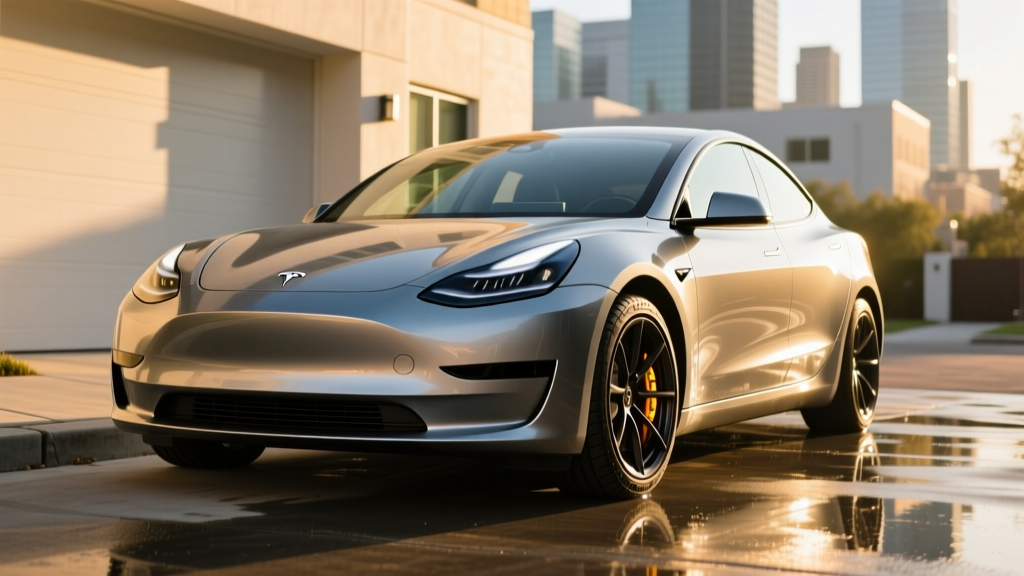
The 2020 Tesla Model 3 Performance remains one of the most compelling used electric vehicles on the market in 2026. With a factory-rated 3.1-second 0-60 mph time, dual-motor all-wheel drive, and access to Tesla's Supercharger network, it bridges the gap between sports-car thrills and daily-driver practicality. But as a six-year-old EV, battery health, charging hardware limitations, and evolving competition demand a closer look before you sign the paperwork.
| Spec | Value |
|---|---|
| EPA Range | 310 miles |
| Battery (usable) | ~75 kWh (NMC/NCA) |
| Drivetrain | Dual-Motor AWD |
| Horsepower | 456 hp (combined) |
| 0-60 mph | 3.1 seconds |
| Top Speed | 162 mph |
| MPGe (combined) | 116 MPGe |
| kWh/100 mi | 29 kWh |
| Max DC Fast Charge | 250 kW (V3 Supercharger) |
| 10-80% DCFC Time | ~27 minutes |
| Level 2 Charge Rate | 11.5 kW (~44 mi/hr) |
| Cargo Volume | 15 cu ft trunk + 3.1 cu ft frunk |
| Rear Legroom | 35.2 inches |
| Battery Warranty (original) | 8 years / 120,000 miles |
| Original MSRP | $56,990 (before incentives) |
Range and Efficiency: EPA Sticker vs. Reality
The EPA rated the 2020 Model 3 Performance at 310 miles of combined range. That figure was achieved on Tesla's older NMC (nickel manganese cobalt) battery pack, which prioritized energy density over the LFP (lithium iron phosphate) chemistry Tesla later adopted for Standard Range models. The result is a pack that delivers strong range in a relatively compact form factor, but one that is more sensitive to sustained high-state-of-charge storage and extreme temperatures than LFP.
- EPA sticker: 310 miles
- Highway driving (70-75 mph, mild weather): ~265-285 miles
- City/suburban mixed driving: ~290-310 miles
- Cold weather (below 32°F, highway): ~210-240 miles (30-35% reduction)
- Aged battery (2026, ~60,000 mi): Expect 5-10% degradation; ~280-295 miles when new-equivalent
The Model 3's heat pump was not standard on the 2020 model year — it arrived with the 2021 refresh. Without it, cabin heating in winter draws directly from the battery via resistive elements, which is a major contributor to cold-weather range loss. If you live in a cold climate, budget for 200-220 usable miles on a full charge during January.
Efficiency is rated at 116 MPGe combined, which translates to 29 kWh per 100 miles. That's slightly thirstier than the Long Range AWD variant (121 MPGe) due to the Performance model's stickier tires, sportier tuning, and the energy cost of its more aggressive power delivery. For comparison, the 2026 Hyundai Ioniq 6 SE achieves 140 MPGe — a reminder that efficiency benchmarks have moved significantly in six years.
Charging Speed: Supercharger Network Advantage
The 2020 Model 3 Performance supports up to 250 kW on Tesla's V3 Superchargers, which was class-leading at the time. However, real-world charging sessions rarely sustain peak rates for long due to the battery's charge curve. Here's what to expect:
| Charging Level | Power | Speed / Time |
|---|---|---|
| Level 1 (120V outlet) | ~1.4 kW | ~5 miles per hour |
| Level 2 (240V, 48A) | 11.5 kW | ~44 miles per hour |
| DC Fast (V3 Supercharger) | Up to 250 kW | 10-80% in ~27 min |
| DC Fast (50 kW public) | 50 kW | 10-80% in ~75 min |
The critical detail: the 250 kW peak only holds between roughly 10-30% state of charge. From 30-60%, the rate tapers to approximately 150-170 kW, and above 80% it drops sharply to protect battery health. On a road trip, plan your stops around the 10-80% window — that's where you'll add roughly 200 miles in under 30 minutes. Pushing past 80% at a Supercharger adds very little range for a lot of extra time.
One 2026 consideration: Tesla opened the Supercharger network to non-Tesla EVs via the NACS connector starting in 2024. While this increases competition for stalls at busy stations, Tesla owners still benefit from native integration — no adapter needed, automatic billing, and battery preconditioning that starts when you navigate to a Supercharger. This preconditioning warms the battery to optimal temperature, which can shave 5-8 minutes off a cold-weather fast-charge session.
At home on a Level 2 Wall Connector (48 amps / 11.5 kW), a full charge from 10% takes roughly 7-8 hours. Most owners plug in nightly and wake up with a full battery, making daily range limitations largely irrelevant for commuters with home charging access.
Performance: The 0-60 Time That Defined a Generation
The headline number is 3.1 seconds to 60 mph — a figure that embarrassed supercars costing three times as much when the Model 3 Performance launched. In 2026, it remains genuinely quick. The dual-motor setup provides instant torque to all four wheels, and Tesla's traction management software is among the best at deploying power without wheelspin.
The Performance model received several mechanical upgrades over the Long Range variant: larger front and rear brakes, a lowered sport suspension, 20-inch Überturbine wheels (on most examples), and Track Mode — a software feature that allows adjustable torque distribution and regenerative braking intensity for closed-course driving. Track Mode also enables a "drift" bias that sends more torque to the rear axle.
However, the 2020 Model 3 predates Tesla's structural battery pack and the refreshed "Highland" interior. You're getting the older, firmer-riding chassis with more road noise than the 2024+ models. The steering is precise but numb — a common Tesla criticism. And while 456 hp sounds muscular, the 2026 Model 3 Performance (Highland) produces a similar figure with better refinement, an 82-kWh pack, and a slightly quicker 2.9-second 0-60.
Interior, Tech, and Driver Assistance
The 2020 Model 3's minimalist interior is polarizing. Everything routes through a single 15-inch center touchscreen — there are no physical gauges, no head-up display, and no traditional stalks for wipers or turn signals (those remain on the column, unlike the later Model S/X). Build quality on 2020 Fremont-built cars is inconsistent; panel gaps, rattling trim, and misaligned seats were common complaints. By 2026, any used example you inspect should be evaluated carefully for these issues.
Technology highlights include:
- Over-the-air updates: Tesla continues to push software updates to 2020 models, including UI improvements and efficiency tweaks, though hardware-limited features (like the newer camera-based FSD stack) may not fully apply.
- Autopilot (standard): Adaptive cruise control and lane-keeping. This is SAE Level 2 — you must keep your hands on the wheel and eyes on the road.
- Full Self-Driving (FSD) Supervised: Available as a paid upgrade ($8,000 at time of sale, now $8,000 or $99/month). Despite the name, FSD is also SAE Level 2. It handles highway interchanges, traffic lights, and some city streets, but requires constant driver supervision. Do not treat it as autonomous.
- Sentry Mode: Uses the car's cameras to record activity around the vehicle when parked — useful but drains roughly 1 mile of range per hour.
- Dashcam: Built-in, records from front/rear/side cameras to a USB drive.
Cargo, Passenger Space, and Practicality
The Model 3 is a compact sedan, and it shows in rear-seat dimensions. Front legroom is generous at 42.7 inches, but rear legroom is just 35.2 inches — tight for adults on long trips. The rear seat is best suited for children or shorter passengers. Headroom in the back is also limited by the sloping roofline; taller passengers will notice the glass roof pressing close.
Cargo capacity totals 15 cubic feet in the trunk (a conventional sedan lid, not a hatchback — limiting bulk loading) plus a 3.1-cubic-foot frunk. The trunk is deep but the opening is narrow. For comparison, the 2026 Hyundai Ioniq 5 offers 27.2 cu ft behind its rear seats with a proper hatchback design. If you regularly haul gear, the Model 3's trunk shape will frustrate you.
The Model 3 Performance does not have a tow rating. If you need towing capability, look at the Model Y (3,500-lb capacity) or a truck-based EV.
Pricing, Tax Credits, and Used EV Value in 2026
When new, the 2020 Model 3 Performance started at $56,990 before any incentives. In the used market as of early 2026, examples with 40,000-70,000 miles typically trade between $24,000 and $32,000 depending on condition, color, FSD transfer status, and battery health.
| Item | Amount |
|---|---|
| Original MSRP (2020) | $56,990 |
| Typical used price (50k mi) | $26,000 - $30,000 |
| Federal Used EV Credit (§25E) | Up to $4,000 (30% of sale price, capped) |
| Estimated price after credit | $22,000 - $26,000 |
Critical tax credit note: The original $7,500 new-vehicle credit (§30D) no longer applies to a 2020 purchase. However, the IRS §25E Used Clean Vehicle Credit may apply. This credit offers 30% of the sale price, up to $4,000, for qualifying used EVs. Requirements include:
- Sale price must be $25,000 or less
- Buyer income caps: $75,000 single / $112,500 head of household / $150,000 joint
- Vehicle must be at least two model years old (a 2020 qualifies in 2026)
- Must purchase from a licensed dealer (private-party sales do not qualify)
- Credit is non-refundable unless transferred at point of sale
Always confirm eligibility with a tax professional and verify current IRS rules at irs.gov, as incentive structures can change.
Battery Health and Warranty Remaining
Tesla warranties the 2020 Model 3 Performance battery and drive unit for 8 years or 120,000 miles, whichever comes first, with a minimum 70% capacity retention threshold. In 2026, a 2020 model is six years into that window. If you buy one with 55,000 miles, you still have two years and 65,000 miles of battery/drive-unit warranty remaining — meaningful coverage.
Tesla's NMC packs from this era have shown moderate degradation: industry data from fueleconomy.gov and owner surveys suggest 8-12% capacity loss at 60,000 miles. That's roughly 25-35 miles of range lost. The degradation curve tends to flatten after the initial 20,000-30,000 miles, so a 2020 example with documented Supercharger history and moderate charge habits (not routinely stored at 100%) should retain usable range in the mid-to-high 270s.
Before purchasing, request a battery health reading via the Tesla app or a third-party diagnostic. Some owners report that a "Battery Health Test" can be initiated at a Tesla Service Center for a fee.
- 3.1-sec 0-60 remains thrilling in 2026
- Supercharger network access (native, no adapter)
- Over-the-air updates still arriving
- Strong safety ratings (IIHS Top Safety Pick+, 5-star NHTSA)
- Low running costs vs. comparable gas sports sedans
- Track Mode for enthusiast driving
- No heat pump (cold-weather range suffers)
- Firm ride, noticeable road noise vs. newer EVs
- Cramped rear seat and small trunk opening
- Build quality inconsistency on Fremont-built 2020 cars
- Camera-only Autopilot (no radar) — less robust in bad weather
- 250 kW max charge rate trails newer 800V platforms (350 kW+)
Competitor Check: What Else Can You Get for $25-30K?
The used-EV market in 2026 offers several alternatives at similar price points:
- 2021-2022 Ford Mustang Mach-E GT: More spacious, hatchback practicality, 3.5-sec 0-60. But Ford's charging network access (via adapter to NACS) is less seamless, and real-world range trails the Model 3.
- 2022 Hyundai Ioniq 5 Limited AWD: 800V architecture enables 350 kW charging (10-80% in ~18 min). More comfortable ride, better rear seat. Slightly slower 0-60 (5.1 sec).
- 2021 BMW i4 M50: Premium interior, 3.3-sec 0-60, but smaller Supercharger-incompatible network and higher maintenance costs.
- 2022 Tesla Model 3 Long Range: Same platform, 322-mile EPA, 4.2-sec 0-60, often cheaper. If you don't need Track Mode, the Long Range is the smarter buy for most drivers.
The Model 3 Performance wins on raw acceleration, Supercharger convenience, and software integration. It loses on interior refinement, rear-seat comfort, and charging speed versus 800V competitors.
Frequently Asked Questions
What is the real-world range of a 2020 Model 3 Performance in 2026?
Expect 265-285 miles on the highway in mild weather, and as little as 210-240 miles in freezing temperatures. A six-year-old battery with moderate degradation may reduce these figures by 5-10%. City driving with regenerative braking recovers more energy, yielding closer to the 310-mile EPA figure.
How fast does the 2020 Model 3 Performance charge?
On a V3 Supercharger (250 kW max), 10-80% takes approximately 27 minutes. At home on a 48-amp Level 2 charger, you'll add roughly 44 miles of range per hour, or a full charge overnight in 7-8 hours. The car uses Tesla's proprietary NACS connector natively — no adapter needed at Superchargers.
Does the 2020 Model 3 Performance qualify for any tax credit in 2026?
Not the $7,500 new-vehicle credit. However, if you buy from a licensed dealer for $25,000 or less and meet income requirements, you may qualify for the IRS §25E Used Clean Vehicle Credit of up to $4,000. Check IRS guidelines and consult a tax professional.
Is the 2020 Model 3 Performance still worth buying over newer EVs?
Yes, if performance and Supercharger access are your priorities and you accept the older interior, lack of heat pump, and 250 kW charge ceiling. For buyers who value comfort, rear-seat space, or the fastest possible charging, a used Ioniq 5 or a newer Model 3 Highland may be better choices.
What should I check before buying a used 2020 Model 3 Performance?
Prioritize: (1) battery health percentage via Tesla diagnostic, (2) remaining warranty (8yr/120k battery), (3) service history for drive-unit or suspension work, (4) panel gap and interior build quality, (5) whether FSD is transferred with the sale, and (6) tire condition — the 20-inch Performance tires are expensive to replace ($300-400 each).
Does the 2020 Model 3 have a heat pump?
No. Tesla introduced the heat pump with the 2021 Model 3 refresh. The 2020 model uses resistive heating, which is significantly less efficient and contributes to greater cold-weather range loss. This is one of the most impactful differences between the 2020 and 2021+ model years.