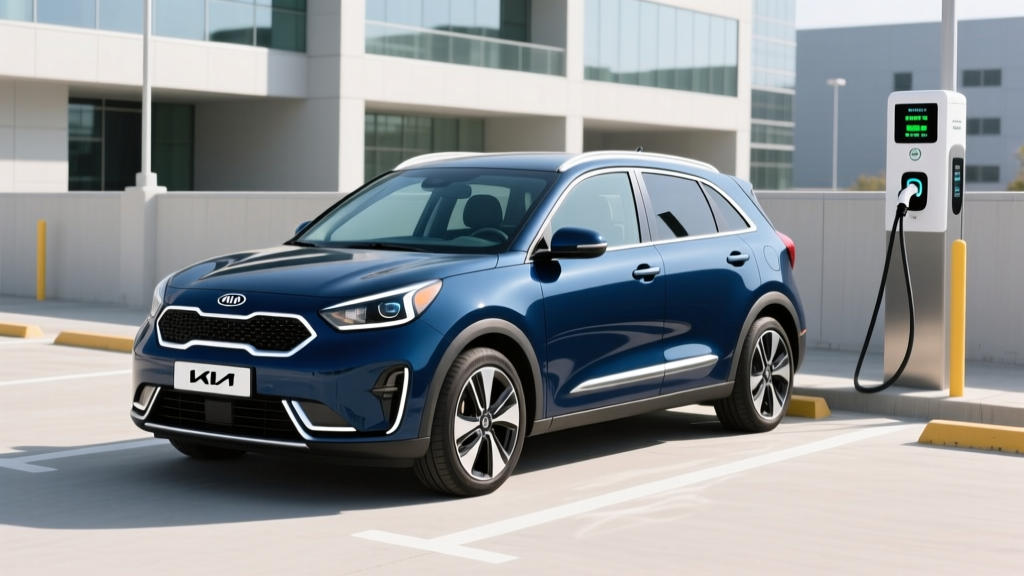
If you're considering a used 2020 Kia Niro EV, here's the quick answer: it remains one of the most practical entry points into electric ownership in 2026. With a 64 kWh battery, 239 miles of EPA range, and a comfortable crossover body, it handles daily commuting and moderate road trips well — provided you have reliable home charging access. Expect to pay between $14,000 and $20,000 on the used market depending on mileage and condition, and factor in the potential $4,000 federal used-EV tax credit if you qualify.
Range, Battery, and Efficiency: What the Numbers Actually Mean
The 2020 Kia Niro EV carries a 64 kWh usable lithium-ion NMC battery pack (nickel-manganese-cobalt chemistry). The EPA rates it at 239 miles of combined range, with an efficiency rating of 112 MPGe combined (28 kWh/100 miles). Those are strong numbers for a 2020 model-year vehicle and still competitive in 2026.
But EPA estimates assume mixed driving at moderate temperatures. Here's what to expect in real conditions:
- City/suburban, mild weather: 230–245 miles (can exceed EPA with regen braking)
- Highway at 70 mph, mild weather: 200–220 miles
- Highway at 70 mph, cold weather (below 32°F): 160–185 miles (25–35% loss is typical for EVs without a heat pump)
- Mixed driving, moderate climate: 210–230 miles
The Niro EV does not have a heat pump — it uses resistive cabin heating, which draws significantly more energy in winter. If you live in the upper Midwest or Northeast, budget for meaningful range loss from December through February. Preconditioning the cabin while plugged in at home mitigates this, but on cold road trips, you'll need to plan charging stops more carefully.
According to fueleconomy.gov, the 2020 Niro EV achieves 120 MPGe city / 102 MPGe highway / 112 MPGe combined. The city-biased rating is typical for EVs, which benefit heavily from regenerative braking in stop-and-go traffic.
Charging Speeds: Home and DC Fast Charging
Understanding the difference between kW (power, or charge rate) and kWh (energy, or battery capacity) is essential. The Niro EV's battery holds 64 kWh of energy. How fast you refill it depends on the charger's kW output.
| Level | Power (kW) | Miles Added per Hour | 10–80% Time | Where You'll Find It |
|---|---|---|---|---|
| Level 1 (120V) | ~1.4 kW | ~4 mi/hr | ~45+ hours | Standard household outlet |
| Level 2 (240V) | 7.2 kW (max onboard) | ~24 mi/hr | ~9 hours (full) | Home wallbox, public Level 2 |
| DC Fast Charge (CCS) | 77 kW peak | ~200+ mi/hr (peak) | ~54 minutes | Electrify America, EVgo, ChargePoint DC |
The Niro EV's 77 kW peak DC fast-charging rate is its most notable limitation in 2026. Many newer EVs charge at 150–250 kW or higher. On a 150 kW or 350 kW station, the Niro will still only pull up to 77 kW — and that peak rate only holds between roughly 10% and 40% state of charge. Above 60%, the charge curve tapers significantly, dropping to 40 kW and eventually below 20 kW as it approaches 80%.
For daily use, this is mostly irrelevant. Plug in at home overnight on Level 2, and you'll wake up to a full battery every morning. The 77 kW cap matters on road trips: plan for roughly one hour of charging time per stop rather than the 20–25 minutes newer 800V architectures allow.
The 2020 Niro EV uses a CCS1 (Combined Charging System) connector for DC fast charging and a J1772 connector for Level 2 AC. It does not have a NACS (Tesla-style) port, though CCS-to-NACS adapters are increasingly available if you want access to Tesla Superchargers that support non-Tesla vehicles.
Used Pricing, Tax Credits, and Total Cost Breakdown
As of early 2026, the 2020 Kia Niro EV trades on the used market between $14,000 and $20,000, depending on mileage, trim (EX Premium or EX), condition, and region. The original MSRP was approximately $39,990 (EX) to $44,990 (EX Premium) before the federal credit, meaning depreciation has been significant — good news for used buyers.
Federal Used-EV Tax Credit (§25E)
The 2020 Niro EV may qualify for the §25E Previously Owned Clean Vehicle Credit, which provides up to $4,000 or 30% of the sale price (whichever is less). Key requirements from the IRS:
- Sale price must be $25,000 or less (most used Niro EVs qualify)
- Buyer's modified adjusted gross income: ≤$75,000 (single), ≤$112,500 (head of household), ≤$150,000 (joint)
- Vehicle must be at least two model years old (2020 qualifies)
- Must purchase from a licensed dealer (private-party sales do not qualify)
- Credit is non-refundable and can only be claimed once per vehicle in its lifetime
- Point-of-sale transfer is available — the dealer applies the credit as a price reduction at purchase
On a $16,000 purchase, 30% equals $4,800, but the cap is $4,000 — so you'd effectively pay $12,000 after the credit. That's an exceptional value for a 239-mile-range EV.
Charging Cost vs. Gas: The Ongoing Savings
| Metric | Niro EV | Niro Gas (33 MPG combined) | Niro Hybrid (50 MPG combined) |
|---|---|---|---|
| Energy/Fuel Cost | $0.14/kWh (home avg) | $3.40/gallon | $3.40/gallon |
| Energy Used per Year | 4,200 kWh | 455 gallons | 300 gallons |
| Annual Cost | ~$588 | ~$1,547 | ~$1,020 |
| Cost per Mile | ~$0.039 | ~$0.103 | ~$0.068 |
| 5-Year Fuel Cost | ~$2,940 | ~$7,735 | ~$5,100 |
Over five years, the Niro EV saves roughly $4,795 vs. the gas model and $2,160 vs. the hybrid in fuel costs alone (assuming home charging at the national average of $0.14/kWh). Public DC fast charging is more expensive — typically $0.35–$0.55/kWh — so if you rely exclusively on public charging, your per-mile cost rises to $0.10–$0.15, narrowing the advantage significantly.
Maintenance Savings
The Niro EV has no engine oil, no transmission fluid, no spark plugs, no exhaust system, and no timing belt. Brake wear is minimal thanks to regenerative braking — many EV owners report original brake pads at 80,000+ miles. Expect annual maintenance of $100–$200 (cabin air filter, wiper blades, tire rotation) vs. $400–$700 for the gas Niro.
Insurance Considerations
EV insurance premiums tend to run 10–20% higher than equivalent gas vehicles due to higher repair costs and battery replacement risk. For a 2020 Niro EV, expect $1,400–$2,000/year depending on your profile, location, and coverage level. Shop multiple quotes — some insurers now offer EV-specific discounts.
Battery Longevity, Warranty, and Degradation
Kia backs the 2020 Niro EV's battery with a 10-year/100,000-mile warranty against defects and excessive capacity loss (below 70% of original capacity). This is one of the strongest battery warranties in the industry, and for a 2020 model, coverage extends through 2030 or 100,000 miles — meaning most used buyers still have substantial protection remaining.
NMC battery degradation data for Kia/Hyundai's 64 kWh pack shows:
- Year 1–2: ~2–4% capacity loss (initial settling)
- Year 3–5: ~1–2% per year
- Typical at 100,000 miles: 88–93% state of health (SoH)
Real-world reports from high-mileage Niro EV owners are generally positive, with most seeing less than 10% degradation at 80,000 miles. The battery has an active liquid thermal management system, which helps protect against heat-related degradation — a significant advantage over older passively cooled EVs.
Tips to maximize battery life:
- Set daily charge limit to 80% (use the car's built-in charge limiter)
- Avoid leaving the car at 100% SoC for extended periods
- Minimize repeated DC fast charging in extreme heat
- Precondition the battery in cold weather before fast charging
Performance, Interior, and Daily Driving
The 2020 Niro EV's electric motor produces 201 horsepower and 291 lb-ft of torque, driving the front wheels. The 0–60 mph time is approximately 7.8 seconds — not sports-car quick, but the instant torque delivery makes it feel punchy in city driving and confident for highway merging.
Inside, you get an 8-inch touchscreen (EX) or 10.25-inch navigation display (EX Premium), Apple CarPlay/Android Auto, heated front seats, and a surprisingly spacious cabin for a compact crossover. Cargo volume is 18.5 cubic feet behind the rear seats (53 cu ft folded) — adequate for groceries, luggage, and daily hauling, though less than some competitors.
Standard safety features include forward collision-avoidance assist, lane keeping assist, blind-spot monitoring, and rear cross-traffic alert. The IIHS gave the 2020 Niro good ratings in most crash tests.
The driver-assistance suite is SAE Level 1–2: it can maintain speed, follow distance, and provide lane centering, but you must keep your hands on the wheel and remain fully engaged. This is not autonomous driving.
Decision Framework: Is the 2020 Niro EV Right for You?
- You have access to Level 2 home charging (garage, driveway, or workplace)
- Your daily round-trip commute is under 120 miles
- You want a low-cost entry into EV ownership (under $16K after credit)
- You value a tall-riding crossover seating position with easy entry/exit
- You want remaining factory battery warranty coverage
- You primarily drive in mild-to-moderate climates
- You cannot charge at home or work (apartment without charging, no workplace charger)
- You regularly drive 200+ miles one-way in cold weather
- You need fast DC charging for frequent road trips (77 kW is slow by 2026 standards)
- You need AWD or significant towing capacity
- You want the latest infotainment, OTA updates, or ADAS features
Common Misconceptions About the 2020 Niro EV
| Misconception | Reality |
|---|---|
| "The battery will need replacing soon and cost $20,000." | Kia's 10-year/100K-mile warranty still applies. NMC packs in this generation show ~7–12% degradation at 100K miles. Full replacement (rarely needed) runs $8,000–$12,000, not $20K. |
| "239 miles of range isn't enough." | The average American drives 37 miles/day (FHWA data). Even with real-world losses, you'd charge every 4–5 days on average. |
| "It charges at 77 kW, so a 150 kW charger is pointless." | You can still use 150+ kW chargers — the car simply draws its max of 77 kW. The stations are backward compatible. |
| "Used EVs are risky with no warranty." | The battery/powertrain warranty transfers to subsequent owners. A 2020 model is covered through 2030 or 100K miles. |
| "I need a special electrical panel upgrade." | Most homes with a 200-amp panel can add a 40-amp Level 2 circuit for $500–$1,500. Only older 100-amp panels may need upgrading ($1,500–$3,000). Get a quote from a licensed electrician. |
Frequently Asked Questions
Can I charge a 2020 Niro EV at Tesla Superchargers?
Not natively. The Niro EV uses a CCS1 connector. However, Tesla has opened select Superchargers to non-Tesla EVs via the Tesla app, and CCS-to-NACS adapters are available. Check Tesla's Supercharger map for NACS-compatible CCS stations near you.
What's the real cost to install a home Level 2 charger?
A quality Level 2 wallbox (Emporia, ChargePoint, Grizzl-E) costs $300–$600. Professional installation by a licensed electrician typically runs $500–$1,500 for a straightforward run from a 200-amp panel. Total: $800–$2,100. If your panel needs upgrading, add $1,500–$3,000. Some utilities offer rebates of $200–$500 for charger installation.
How does the Niro EV compare to the Niro Hybrid or PHEV?
The gas Niro gets 50 MPG combined (hybrid) or 33 MPG (gas). The PHEV offers 26 miles of electric range before the gas engine kicks in. If you can't charge at home, the hybrid is a better fit. If you can charge at home and want to eliminate gas entirely, the EV saves more long-term and delivers a smoother, quieter drive.
What should I check when buying a used 2020 Niro EV?
Request a battery state-of-health (SoH) reading from a Kia dealer — aim for 90%+ on a 5–6-year-old vehicle. Check service records for recall completion (there was a 2023 recall for certain battery modules). Inspect tires (EVs wear tires faster due to weight and instant torque). Verify the original charging cable and CCS adapter are included.
Is the 2020 Niro EV still a good buy compared to newer EVs?
At $12,000–$16,000 after the used-EV credit, it offers value that newer EVs (starting at $30,000+) can't match. You sacrifice charging speed (77 kW vs. 150+ kW), some tech features, and a bit of range. But if your needs are daily commuting and you can charge at home, the savings are substantial and the remaining warranty provides peace of mind.