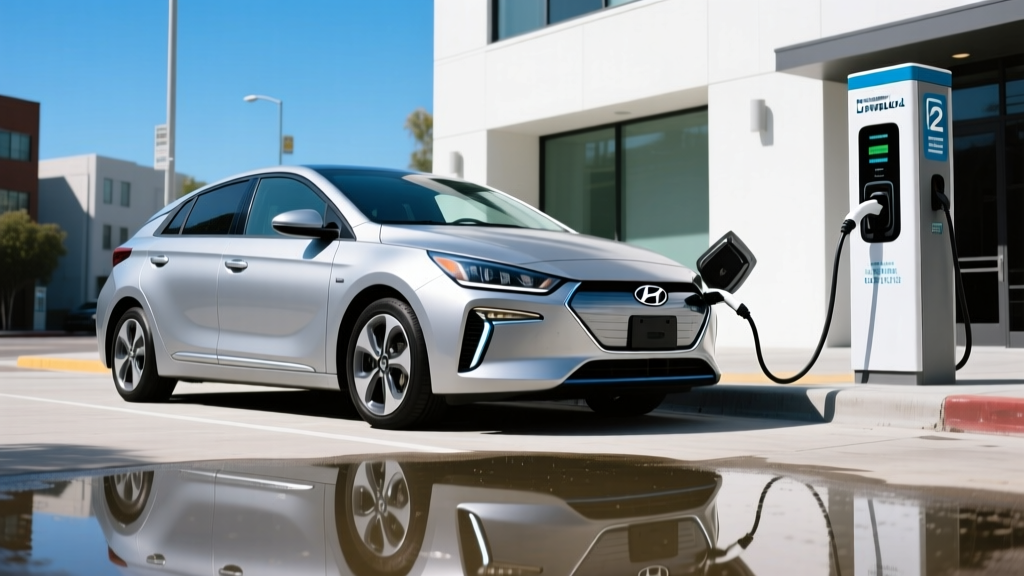
The 2020 Hyundai Ioniq Electric occupies a unique space in the used EV market. Discontinued after the 2021 model year and replaced by the Ioniq 5, this compact hatchback was Hyundai's bridge between the original 28-kWh Ioniq Electric and the modern E-GMP era. For 2020, Hyundai bumped the battery to 38.3 kWh, pushing the EPA-estimated range to 170 miles — a meaningful upgrade that transformed it from a strict city commuter into a viable regional daily driver.
Now available exclusively on the used market, the 2020 Ioniq Electric appeals to budget-conscious buyers who want Hyundai's industry-leading warranty coverage, exceptional efficiency, and a proven powertrain — without paying new-EV premiums. But with DC fast-charging speeds that lag behind modern rivals and a rear seat that's tighter than today's crossovers, it's not for everyone. Here's everything you need to know before buying one in 2026.
Spec Sheet: 2020 Hyundai Ioniq Electric at a Glance
| Specification | Value |
|---|---|
| EPA Range | 170 miles |
| Battery (Usable) | 38.3 kWh (NMC lithium-ion) |
| Efficiency | 133 MPGe combined / 25 kWh/100 mi |
| Motor Output | 134 hp (100 kW) / 218 lb-ft torque |
| Drivetrain | Front-wheel drive (single motor) |
| 0–60 mph | ~9.7 seconds |
| DC Fast Charge Peak | 100 kW (CCS1) |
| 10–80% DC Time | ~54 minutes |
| Level 2 Charge Rate | 7.2 kW onboard charger |
| Cargo Volume | 23.0 cu ft (rear seats up) / 55.0 cu ft (folded) |
| Original Base MSRP | $33,045 (SE) / $36,395 (Limited) |
| Battery Warranty | 8 years / 100,000 miles (10 yrs/100k in CA) |
| Vehicle Warranty | 5 years / 60,000 miles (new-vehicle limited) |
Real-World Range: What 170 EPA Miles Actually Means
The 2020 Ioniq Electric's 133 MPGe combined rating made it one of the most efficient EVs on sale when new, and it remains competitive today. That efficiency is the car's secret weapon: because it uses so little energy per mile (25 kWh per 100 miles on the EPA's fueleconomy.gov listing), even its modest 38.3 kWh battery delivers practical range.
However, the physics of a small battery can't be ignored. On a 75°F day with mixed driving, owners consistently report 155–170 miles before needing a charge. Push the speed to 75 mph on the interstate and that drops to roughly 145–155 miles. In freezing temperatures with the cabin heater running, plan for 120–140 miles. The Ioniq Electric uses a resistive PTC heater rather than a heat pump, which draws significant energy from the battery in cold weather.
For a commuter covering 40–60 miles round-trip with home charging, 170 miles is more than adequate with a comfortable buffer. For road trips, you'll be stopping every 120–140 miles — workable on corridors with reliable DC fast chargers, but requiring patience.
Charging Speed: The Ioniq Electric's Biggest Limitation
Charging is where the 2020 Ioniq Electric shows its age most clearly. While Hyundai rated the DC fast-charge capability at up to 100 kW via its CCS1 connector, real-world charge curves tell a different story.
| Charging Method | Power / Rate | Time / Miles Added |
|---|---|---|
| Level 1 (120V household) | ~1.2 kW | ~5 miles per hour of charging |
| Level 2 (240V home/public) | 7.2 kW max | ~28 miles per hour; full charge in ~6 hours |
| DC Fast Charge (CCS1) | Peak ~70–75 kW sustained (100 kW burst only) | 10–80% in ~54 minutes |
The 100 kW peak figure is misleading. In practice, the Ioniq Electric's battery thermal management system — which relies on passive air cooling rather than active liquid cooling — causes the charge rate to taper aggressively. You might see 70–75 kW briefly at a low state of charge, but the rate drops substantially as the battery warms and fills. A 10–80% session typically takes 50–54 minutes at a 150 kW or higher station.
For home charging, the 7.2 kW onboard charger is perfectly adequate. Plugging into a Level 2 wallbox or outlet overnight adds roughly 28 miles of range per hour, meaning a depleted battery reaches full in about six hours. Most owners will wake up to a full charge every morning, which is the ideal EV ownership experience.
The critical takeaway: this is an EV optimized for home charging. If your routine depends on frequent DC fast charging for road trips or because you lack home charging access, the slow charge curve will frustrate. Modern EVs with liquid-cooled batteries and 150–250 kW sustained charging have left this behind.
Performance and Driving Impressions
The single front-mounted motor produces 134 horsepower and 218 lb-ft of torque. That torque figure is the relevant one for daily driving — the Ioniq Electric launches from stops with the instant, smooth pull that defines the EV experience. The 0–60 mph time of approximately 9.7 seconds won't thrill enthusiasts, but it's adequate for merging and passing.
Where the Ioniq Electric excels is refinement. The cabin is quiet at speed, the ride is compliant without being floaty, and the low center of gravity from the under-floor battery gives it surprisingly planted handling for an economy hatchback. The regenerative braking system offers adjustable levels via steering-wheel paddles, from minimal coasting to near one-pedal driving at the strongest setting.
Hyundai equipped the 2020 model with its SmartSense suite of driver-assistance features, including:
- Forward collision-avoidance assist with pedestrian detection
- Lane keeping assist and lane following assist
- Blind-spot collision warning (Limited trim)
- Adaptive cruise control with stop-and-go (Limited trim)
- Rear cross-traffic collision avoidance
These are SAE Level 1–2 driver-assist features, not autonomous driving. The driver must remain fully engaged with hands on the wheel and eyes on the road at all times.
Interior, Cargo, and Daily Practicality
The Ioniq Electric is a compact five-door hatchback, and its interior reflects its economy-car roots. Materials are durable hard plastics with soft-touch accents on higher trims. The 8-inch touchscreen infotainment system (standard on SE, upgraded on Limited) supports Apple CarPlay and Android Auto, which remains the most practical way to get modern navigation and music streaming.
Front-seat comfort is good, with adequate legroom (44.7 inches) and supportive seats. The rear seat is where compromises show: at 35.7 inches of rear legroom, it's tight for adults on longer trips. Two adults will fit; three is a squeeze. Headroom is adequate thanks to the hatchback roofline.
Cargo capacity is a strong point for the segment. With the rear seats upright, you get 23.0 cubic feet — more than many compact crossovers. Fold the 60/40 split rear seats and that expands to 55.0 cubic feet. The liftgate opening is wide and the load floor is flat, making it practical for groceries, luggage, or a week's worth of commuting gear.
Used Pricing and Federal Tax Credit Eligibility
The 2020 Hyundai Ioniq Electric is available only on the used market in 2026. Original MSRP ranged from $33,045 for the SE trim to $36,395 for the Limited. Used prices in early 2026 typically fall between $16,000 and $23,000 depending on mileage, condition, and trim level.
This used-EV credit is a significant value multiplier. A $20,000 Ioniq Electric that qualifies for the full $4,000 credit effectively costs $16,000 — making it one of the most affordable entry points into EV ownership available. The credit can be transferred to the dealer at the point of sale, reducing your out-of-pocket cost immediately.
| Cost Factor | Estimated Amount |
|---|---|
| Typical Used Price (2026) | $16,000 – $23,000 |
| Federal Used EV Credit (§25E) | Up to $4,000 (30% of sale price, max $4k) |
| Effective Price After Credit | $12,000 – $19,000 |
| Annual Electricity Cost (12,000 mi/yr) | ~$420 (at $0.14/kWh national avg) |
| Comparable Gas Car Fuel Cost | ~$1,440/yr (at 30 MPG, $3.60/gal) |
| Annual Fuel Savings | ~$1,020 |
Battery Health, Warranty, and Longevity
The 2020 Ioniq Electric uses a 38.3 kWh NMC (nickel-manganese-cobalt) lithium-ion battery pack. NMC chemistry offers good energy density but is more sensitive to sustained high temperatures and frequent 100% charging than LFP alternatives.
Hyundai's battery warranty is a standout: 8 years or 100,000 miles (10 years / 100,000 miles in California and states adopting CARB standards). The warranty covers capacity loss below 70% of original capacity. For a 2020 model, that factory warranty extends through the 2028 model year or until the odometer hits 100,000 miles — meaning many used examples still carry meaningful battery coverage.
Real-world degradation data from owner forums and fleet studies suggests the Ioniq Electric's battery holds up well under normal use. Most owners report 3–5% capacity loss over the first three years, which is within the industry norm for NMC packs with passive thermal management. To maximize longevity:
- Avoid routinely charging to 100% — set the charge limit to 80–90% for daily use
- Minimize repeated DC fast charging in hot weather (the passive cooling system struggles to shed heat)
- Use the built-in charge scheduler to avoid the battery sitting at high SoC for extended periods
If the battery does need replacement outside of warranty, expect costs in the $8,000–$14,000 range based on current Hyundai EV battery pricing — a significant expense relative to the vehicle's used value.
How It Compares: Ioniq Electric vs. Key Rivals
| Feature | 2020 Ioniq Electric | 2020 Chevy Bolt EV | 2020 Nissan Leaf SV+ |
|---|---|---|---|
| EPA Range | 170 mi | 259 mi | 215 mi |
| Battery | 38.3 kWh (NMC) | 66 kWh (NMC) | 62 kWh (NMC) |
| DC Fast Charge | 100 kW (CCS1) | 55 kW (CCS1) | 100 kW (CHAdeMO) |
| 10–80% Time | ~54 min | ~93 min | ~60 min |
| Efficiency | 133 MPGe | 118 MPGe | 108 MPGe |
| 0–60 mph | 9.7 sec | 6.5 sec | 7.9 sec |
| Cargo (seats up) | 23.0 cu ft | 16.9 cu ft | 23.6 cu ft |
| Battery Cooling | Passive air | Active liquid | Passive air |
The Chevy Bolt EV dominates on range (259 miles EPA) and acceleration, and its liquid-cooled battery handles repeated fast charging and hot climates better. But the Bolt's 55 kW DC charge rate is painfully slow — nearly twice the time to charge on road trips.
The Nissan Leaf SV+ offers more range and a roomier cabin, but its CHAdeMO connector is being phased out in favor of CCS and NACS, meaning public charging access will shrink over time. The Leaf also lacks active battery thermal management.
The Ioniq Electric wins on efficiency — nothing in this group matches 133 MPGe — and has the fastest DC charging of the three in practice. If your daily commute is under 80 miles round-trip and you charge at home, the Ioniq's lower range is a non-issue, and you'll spend less on electricity per mile than either rival.
Pros, Cons, and the Final Verdict
- Best-in-class efficiency (133 MPGe)
- Fastest DC charging in its used-price segment
- Strong Hyundai battery warranty (8yr/100k mi)
- Practical hatchback cargo (23 cu ft)
- Comprehensive SmartSense safety suite
- Eligible for up to $4,000 used-EV tax credit
- Low annual operating cost (~$420/yr electricity)
- 170-mile EPA range limits road-trip utility
- Passive battery cooling — poor hot-weather fast charging
- Resistive heater (no heat pump) hurts winter range
- Tight rear-seat legroom (35.7 in)
- CCS1 connector — NACS adapter needed for Tesla Superchargers
- Modest 134 hp; not a performance EV
- Discontinued — no new examples or OTA updates
This car is ideal for: budget-conscious commuters who drive under 80 miles round-trip, have reliable home Level 2 charging, and want maximum efficiency per dollar. It's also a strong choice as a second car for a household that already owns a longer-range vehicle for road trips.
Look elsewhere if: you need 200+ miles of range, frequently road-trip in hot climates, need rear-seat space for adults, or lack access to home charging and must rely on public DC fast chargers.
Frequently Asked Questions
What is the real-world range of the 2020 Hyundai Ioniq Electric?
Expect 145–170 miles in mixed driving at moderate temperatures. Highway driving at 70+ mph yields roughly 145–160 miles. In freezing conditions with the heater on, plan for 120–140 miles. City driving with regenerative braking in mild weather can exceed 180 miles.
How fast does the 2020 Ioniq Electric charge?
On a Level 2 home charger (7.2 kW), it adds about 28 miles of range per hour and fully charges in roughly 6 hours. On DC fast chargers, it peaks around 70–75 kW but tapers quickly due to passive battery cooling — a 10–80% session takes approximately 54 minutes.
Does the 2020 Ioniq Electric qualify for the federal EV tax credit?
Not the new-vehicle §30D credit (the car is discontinued). However, it can qualify for the §25E used clean vehicle credit of up to $4,000 if the dealer sale price is $25,000 or less and the buyer meets income limits ($75,000 single / $150,000 joint AGI). The credit is 30% of the sale price, capped at $4,000. Confirm eligibility at irs.gov before purchasing.
Is the 2020 Ioniq Electric worth buying over a Chevy Bolt or Nissan Leaf?
It depends on your priorities. Choose the Ioniq Electric for maximum efficiency, the fastest DC charging in its price class, and the lowest operating cost per mile. Choose the Bolt if you need 259 miles of range and stronger acceleration. Choose the Leaf if you need more rear-seat room — but note that CHAdeMO charging infrastructure is declining.
What's the biggest risk of buying a used 2020 Ioniq Electric?
The passive battery cooling system is the main concern. In hot climates with frequent DC fast charging, the battery may degrade faster than liquid-cooled competitors. Check the battery state of health (SoH) via the dashboard or a dealer diagnostic before purchasing, and verify how much of the 8-year/100,000-mile battery warranty remains.
Can I charge the Ioniq Electric at Tesla Superchargers?
The 2020 Ioniq Electric uses a CCS1 connector. As Tesla opens Supercharger stalls to non-Tesla EVs, you can access them using a NACS-to-CCS adapter (available from Hyundai and third parties) at Supercharger locations equipped with the Magic Dock or through the Tesla app at adapter-compatible stalls. Verify station compatibility before relying on this for travel.