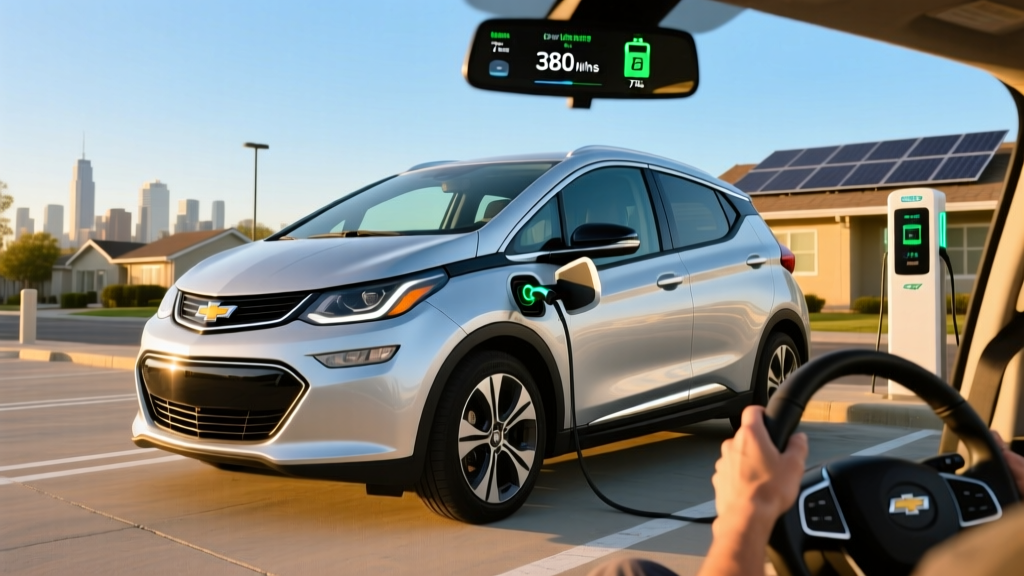
Quick Verdict: The Budget Long-Range EV That Still Holds Up
The 2020 Chevrolet Bolt EV LT remains one of the most practical used electric vehicles on the market in 2026. With an EPA-estimated 259 miles of range, a proven 66 kWh LG Chem NMC battery pack, and a spacious hatchback body, it delivers real daily usability at a fraction of its original $37,495 MSRP. For buyers navigating the used-EV market, the Bolt EV LT's combination of efficiency, interior room, and potential eligibility for the up-to-$4,000 federal used-EV tax credit (IRS §25E) makes it a compelling commuter car — provided you understand its DC charging limitations.
This review covers everything a 2026 buyer needs: real-world range expectations, charging speeds, battery health considerations, ownership costs, and how the Bolt EV LT stacks up against competitors like the Nissan Leaf Plus and Hyundai Kona Electric.
2020 Chevrolet Bolt EV LT Specifications
| Specification | Value |
|---|---|
| EPA Range | 259 miles |
| Battery (usable) | 66 kWh, LG Chem NMC (nickel-manganese-cobalt) |
| Motor / Drivetrain | Single front-mounted AC permanent-magnet motor, FWD |
| Horsepower / Torque | 200 hp / 266 lb-ft |
| 0–60 mph | ~6.5 seconds |
| EPA Efficiency | 118 MPGe combined (28 kWh/100 mi) |
| Max DC Fast Charge | 55 kW (CCS1) |
| DC 10–80% Time | ~60 minutes (at 50+ kW charger) |
| Level 2 Charge Rate | 7.2 kW onboard charger (~25 mi/hr) |
| Cargo Volume (rear seats up / down) | 16.9 / 56.6 cu ft |
| Rear Legroom | 36.5 inches |
| Battery Warranty (original) | 8 years / 100,000 miles (60% capacity retention) |
| Original Base MSRP (LT) | $37,495 (before incentives) |
Range and Efficiency: EPA vs. Real World
Real-World Expectation: 220–240 miles highway (70 mph); 190–210 miles in freezing temperatures; 250–265 miles in mild city/suburban driving with regen.
The 2020 Bolt EV LT's 259-mile EPA estimate was class-leading when it launched and remains highly competitive among used EVs in 2026. According to fueleconomy.gov, the Bolt EV LT achieves 118 MPGe combined, translating to roughly 28 kWh per 100 miles — excellent efficiency that keeps charging costs low.
In real-world driving, range varies predictably with conditions. Highway driving at 70–75 mph typically yields 220–240 miles before the low-battery warning, because aerodynamic drag penalizes the Bolt's relatively tall hatchback profile. In cold weather (below 32°F), expect a 15–25% range reduction, putting realistic winter range at 190–215 miles. The Bolt EV lacks a heat pump — it uses resistive cabin heating, which draws significantly more energy than a heat-pump system in winter conditions.
City and suburban driving is where the Bolt EV shines. Its aggressive regenerative braking (selectable via the steering-wheel paddle or "L" mode) enables near one-pedal driving and can push real-world range to 260+ miles in stop-and-go traffic. Owners who commute primarily in urban environments consistently report exceeding the EPA sticker.
Charging Speeds: The Bolt's Known Limitation
DC fast charging is the 2020 Bolt EV LT's most significant weakness relative to modern EVs. The battery pack's thermal management system limits peak DC charge rate to 55 kW, and sustained charging often hovers closer to 40–46 kW once the battery warms up during a session.
| Charging Level | Power | Miles Added per Hour | Notes |
|---|---|---|---|
| Level 1 (120V household) | ~1.2 kW | ~4 mi/hr | Emergency/trickle only; 65+ hours for full charge |
| Level 2 (240V home/public) | 7.2 kW | ~25 mi/hr | Full charge in ~9.5 hours; ideal for overnight |
| DC Fast Charge (CCS1) | 55 kW peak | ~150–200 mi/hr (initial) | 10–80% in ~60 min; tapers significantly above 80% |
On a 150 kW or 350 kW Electrify America or EVgo station, the Bolt EV LT will only pull what its BMS allows — roughly 55 kW at peak, tapering to the mid-30s kW by 65% state of charge and dropping further above 80%. A 10–80% session takes approximately 60 minutes under optimal conditions (warm battery, low state of charge at plug-in). In cold weather without preconditioning — the 2020 model has no battery preconditioning feature for DC charging — expect that time to stretch to 75–90 minutes.
For home Level 2 charging, the 7.2 kW onboard charger is adequate. Plugged into a 240V/32A circuit, you'll add roughly 25 miles of range per hour, meaning a depleted battery recharges fully overnight in about 9–10 hours. This is the primary charging method most Bolt EV owners rely on, and it works well for daily commuting.
The Bolt uses the CCS1 connector for DC fast charging and the J1772 connector for Level 1/Level 2 AC charging. As the industry shifts toward NACS (Tesla's connector), CCS1 adapters are available, and most public networks still support CCS1 natively in 2026.
Performance and Driving Dynamics
The Bolt EV LT's single front-mounted motor produces 200 horsepower and 266 lb-ft of torque, routing power to the front wheels. The 0–60 mph sprint takes approximately 6.5 seconds — quick enough for confident highway merging and passing. Instant torque delivery makes the Bolt feel punchier than its numbers suggest, especially from 0–30 mph in city driving.
Ride quality is firm but composed. The 960-pound battery pack sits low in the chassis, giving the Bolt a planted feel through corners with minimal body roll. The steering is light and numb — fine for commuting, less engaging on back roads. Road noise at highway speeds is noticeable; Chevrolet added minimal sound deadening to keep weight and cost down.
The Bolt EV LT comes equipped with Chevy Safety Assist as standard, which includes:
- Automatic Emergency Braking with pedestrian detection
- Lane Keep Assist with Lane Departure Warning
- Forward Collision Alert
- Following Distance Indicator
- IntelliBeam automatic high beams
Note: these are SAE Level 1 driver-assist features. The Bolt EV LT does not offer adaptive cruise control or any hands-free driving system. The driver remains fully responsible for steering, braking, and situational awareness at all times.
Interior, Cargo, and Technology
Despite its compact exterior footprint (164 inches long), the Bolt EV LT's interior is surprisingly spacious. The tall roofline and flat floor (enabled by the under-floor battery) create generous headroom and a comfortable seating position. Rear-seat legroom measures 36.5 inches — adequate for adults on shorter trips, though the seat cushion sits low, creating a knees-up posture on longer rides.
Cargo volume is a standout: 16.9 cubic feet behind the rear seats and 56.6 cubic feet with the 60/40 split rear seats folded. That's competitive with compact crossovers and significantly more than most EV sedans. The hatchback opening is wide and practical for groceries, luggage, or bulky items.
The infotainment system centers on a 10.2-inch touchscreen running Chevrolet's Infotainment 3 system with Apple CarPlay and Android Auto (wired, not wireless). A 8-inch digital driver information cluster replaces traditional gauges, showing range, energy flow, and regen levels. The system is responsive and intuitive, though the screen resolution shows its 2020 vintage compared to modern displays.
LT trim includes heated front seats and a heated steering wheel — important for winter comfort given the energy cost of resistive cabin heating. Cloth seating surfaces are standard; leather is reserved for the Premier trim.
Pricing, Tax Credits, and Used-EV Value in 2026
The 2020 Bolt EV LT originally stickered at $37,495 (including destination). The higher-trim Premier started at $41,895. Both trims qualified for the full $7,500 federal tax credit when new under the pre-2023 rules, since GM had not yet hit the 200,000-vehicle manufacturer cap at that time.
In the 2026 used-EV market, expect to find a 2020 Bolt EV LT priced between $13,000 and $18,000 depending on mileage, condition, and battery state of health. Higher-mileage examples (80,000+ miles) can dip below $12,000.
Buyers purchasing a qualifying used 2020 Bolt EV LT from a licensed dealer may be eligible for up to $4,000 (30% of the sale price, capped at $4,000) under the IRS §25E used clean vehicle credit. Key requirements:
- Sale price must be $25,000 or less
- Buyer income caps: $75,000 single / $112,500 head of household / $150,000 joint
- Vehicle must be purchased from a licensed dealer (private sales do not qualify)
- The vehicle's original MSRP when new must have been under $80,000 (the Bolt EV qualifies)
- Credit is non-refundable and can only be claimed once per vehicle (check if a prior owner claimed it)
- Point-of-sale transfer may be available, reducing the purchase price directly at the dealer
At a $15,000 purchase price with the full $4,000 credit applied, effective cost drops to roughly $11,000 — making the Bolt EV LT one of the most affordable long-range EVs available in 2026.
Battery Health, Degradation, and Warranty
The 2020 Bolt EV LT uses a 66 kWh (usable) LG Chem NMC (nickel-manganese-cobalt) battery pack. NMC chemistry offers high energy density, which is how Chevrolet packed 259 miles of range into a compact hatchback. However, NMC degrades slightly faster than LFP (lithium iron phosphate) chemistry over time and with repeated high-state-of-charge cycling.
Based on owner-reported data and fleet analyses, 2020 Bolt EV batteries typically show 5–10% capacity loss after 5–6 years of normal use. A 2020 model in 2026 might realistically retain 90–95% of its original capacity, translating to roughly 235–246 miles of range at full charge. Units exposed to extreme heat (Arizona, Texas) or frequently DC-fast-charged may show higher degradation.
Chevrolet's original battery warranty covers 8 years / 100,000 miles with a capacity retention threshold of 60%. This means a 2020 Bolt EV LT remains under factory battery warranty until 2028 or 100,000 miles — a significant safety net for used buyers. If the battery falls below 60% capacity within that window, Chevrolet covers replacement or repair.
Battery replacement cost (out of warranty) is estimated at $14,000–$18,000 including labor as of 2026, though this is rare for packs showing normal degradation. Always request a battery state-of-health (SoH) report from the dealer or use an OBD-II scanner with EV-compatible software to check capacity before purchasing.
Pros and Cons
Pros
- 259-mile EPA range remains excellent for a used EV
- Spacious hatchback with 56.6 cu ft max cargo
- Strong 200 hp motor with instant torque
- 118 MPGe combined — very low running costs
- Under factory battery warranty until 2028/100K mi
- Potential $4,000 federal used-EV credit
- Aggressive regen enables one-pedal city driving
Cons
- Slow DC fast charging (55 kW peak, ~60 min 10–80%)
- No battery preconditioning for DC charging
- No heat pump — significant winter range loss
- Firm ride and noticeable highway road noise
- Rear seat cushion sits low (knees-up posture)
- No adaptive cruise control available
- CCS1 connector as NACS adoption accelerates
Who Should Buy the 2020 Bolt EV LT?
Not ideal for: Frequent long-distance travelers (the 55 kW DC charge rate adds significant stop time), cold-climate drivers without garage parking (no heat pump, significant winter range loss), or those who need AWD or towing capability.
The 2020 Bolt EV LT excels as a commuter and errand-runner. If 90% of your driving is within a 60-mile daily round trip and you can charge at home overnight, the Bolt's DC charging limitation becomes irrelevant — you'll rarely need a fast charger. The 259-mile range provides a comfortable buffer for occasional longer trips, and the hatchback cargo area handles everything from Costco runs to weekend getaways.
Compared to the Nissan Leaf Plus (226-mile EPA range, CHAdeMO connector, passive air-cooled battery), the Bolt EV LT offers more range, liquid-cooled battery thermal management (better long-term degradation), and a more practical CCS1 connector. The Leaf's slightly lower used pricing doesn't offset these advantages for most buyers.
Against the Hyundai Kona Electric (258-mile EPA range, 64 kWh battery, 75 kW DC charging), the Bolt EV LT trades slightly slower charging for more interior and cargo space and a lower used-market price. Both are strong choices; the Bolt wins on value and practicality, the Kona on charging speed.
Frequently Asked Questions
What is the real-world range of the 2020 Chevrolet Bolt EV LT?
Expect 220–240 miles on the highway at 70 mph, 250–265 miles in city/suburban driving with regenerative braking, and 190–215 miles in freezing temperatures. The EPA sticker is 259 miles, but real-world results depend heavily on speed, temperature, and terrain.
How fast does the 2020 Bolt EV LT charge?
On a DC fast charger, the Bolt peaks at 55 kW, taking approximately 60 minutes from 10–80% under optimal conditions. At home on a Level 2 (240V) charger, the 7.2 kW onboard charger adds about 25 miles per hour, fully recharging overnight in roughly 9–10 hours. Level 1 (120V) trickle charging adds about 4 miles per hour.
Does the 2020 Bolt EV LT qualify for any tax credits in 2026?
It does not qualify for the new-vehicle §30D credit (the vehicle is used). However, buyers purchasing from a licensed dealer may qualify for the §25E used clean vehicle credit of up to $4,000, subject to income caps ($75K single / $150K joint), a $25,000 maximum sale price, and the credit not having been previously claimed on this specific VIN. Consult a tax professional and verify with the IRS §25E guidelines.
Is the 2020 Bolt EV LT worth buying vs. competitors?
Yes, for the right buyer. At $13,000–$18,000 on the used market (potentially $11,000–$14,000 after the §25E credit), it offers more range and cargo space than almost any EV at this price point. Its main drawback — slow DC charging — matters primarily for road-trippers. For commuters who charge at home, it's one of the best values in the used-EV market.
How long will the 2020 Bolt EV battery last?
NMC batteries in the Bolt EV typically lose 5–10% capacity over 5–6 years. The factory battery warranty covers 8 years / 100,000 miles (through 2028 for a 2020 model) with a 60% capacity retention floor. Many Bolt EV batteries are expected to last 150,000–200,000+ miles before dropping below 70% original capacity, based on owner data.
What connector does the 2020 Bolt EV LT use?
It uses CCS1 for DC fast charging and J1772 for Level 1/Level 2 AC charging. As of 2026, most public DC fast-charging networks still support CCS1 natively. NACS-to-CCS1 adapters are also available for use at Tesla Supercharger stations that have opened to non-Tesla vehicles.