Quick Verdict: The Quirky Urban EV That Still Has Legs
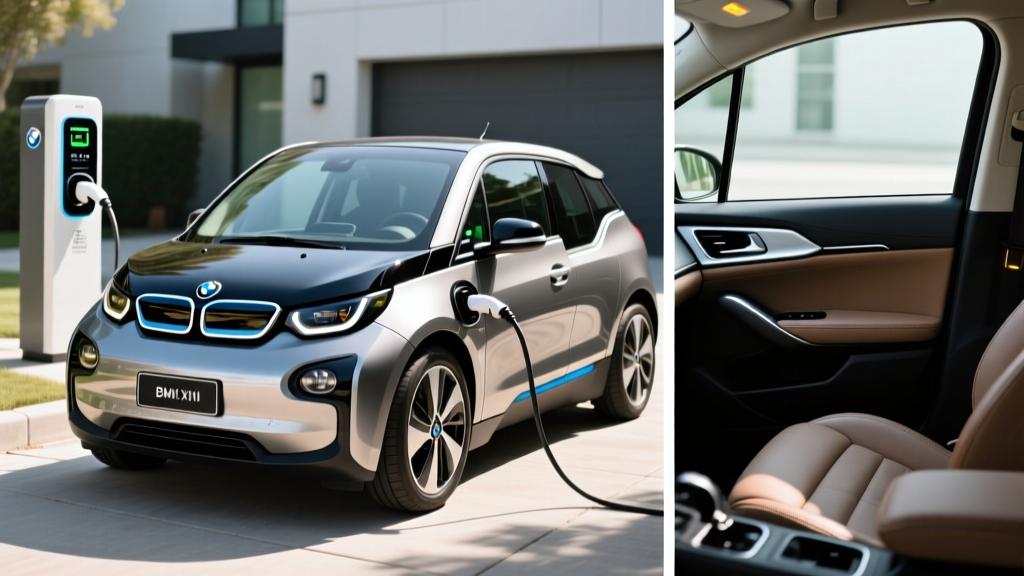
The 2020 BMW i3 was discontinued years ago, but on the used EV market in 2026, it remains one of the most distinctive and purpose-built electric city cars ever sold. With its carbon-fiber-reinforced plastic (CFRP) passenger cell, sustainable interior materials, and tight 24-foot turning circle, the i3 was engineered from the ground up as an electric vehicle — not a gas car with batteries bolted in.
For 2026 used-EV shoppers, the 2020 model year is the sweet spot: it carries the larger 42.2 kWh battery pack (introduced for the 2019 refresh), delivering an EPA-estimated 153 miles of range. That's enough for most commutes and city errands, though it falls short for road-trip duty. Used pricing has settled into the $14,000–$22,000 range depending on mileage and condition, and the federal used-EV tax credit (§25E) can knock up to $4,000 off the purchase price from a licensed dealer.
But the i3 is not without compromises. DC fast charging tops out at just 50 kW, the rear-hinged "coach doors" limit practicality, and highway comfort is merely adequate. This is an EV with a very specific mission — and it nails that mission.
2020 BMW i3 Full Specification Table
| Specification | Value |
|---|---|
| EPA Range (BEV) | 153 miles |
| EPA Range (with Range Extender) | 126 mi electric + ~74 mi gas (200 mi combined) |
| Battery Capacity (Gross / Usable) | 42.2 kWh / ~37.9 kWh |
| Battery Chemistry | NMC (Nickel Manganese Cobalt) — Samsung SDI cells |
| MPGe (Combined) | 113 MPGe (BEV); 100 MPGe (REx electric portion) |
| Energy Consumption | 30 kWh/100 mi (BEV) |
| DC Fast Charge (Peak) | 50 kW (CCS Combo 1) |
| DC 10–80% Charge Time | ~42 minutes |
| Level 2 AC Charge Rate | 7.4 kW (onboard charger) |
| Level 2 Full Charge Time | ~5.5 hours (0–100%) |
| Motor Output | 170 hp / 184 lb-ft torque |
| Drivetrain | Rear-wheel drive (single motor) |
| 0–60 mph | 6.9 seconds (BEV); 7.5 seconds (REx) |
| Top Speed | 93 mph (electronically limited) |
| Cargo Volume (behind rear seats) | 15.1 cu ft |
| Cargo Volume (rear seats folded) | 39.2 cu ft |
| Front Headroom / Legroom | 39.6 in / 40.5 in |
| Rear Headroom / Legroom | 37.2 in / 31.9 in |
| Curb Weight | ~2,961 lbs (BEV); ~3,234 lbs (REx) |
| Battery Warranty (original) | 8 years / 100,000 miles (70% capacity retention) |
| Original MSRP (BEV base) | $44,450 |
| Original MSRP (REx base) | $48,300 |
Sources: fueleconomy.gov, BMW USA press archives.
Range and Efficiency: EPA Numbers vs. Real-World Driving
EPA Estimated: 153 miles (BEV)
Real-World Expectation: 120–140 miles in mixed driving; 100–115 miles at sustained 70 mph highway speeds; 90–110 miles in cold weather (below 32°F) with cabin heating.
REx Model: 126 miles electric + approximately 74 miles on the 2.4-gallon gasoline range-extender tank (~200 miles total).
The 2020 i3's 42.2 kWh gross battery (approximately 37.9 kWh usable, thanks to a conservative buffer to protect long-term cell health) delivers its best efficiency in stop-and-go city traffic, where regenerative braking recovers energy constantly. BMW's single-pedal driving implementation is excellent — lift off the accelerator and the i3 decelerates briskly, often eliminating the need for the friction brakes entirely.
On the highway, the story changes. The i3's tall, narrow body and relatively skinny 155/70 R19 tires are optimized for low rolling resistance, not high-speed stability. At 70 mph, expect energy consumption to climb to roughly 34–38 kWh/100 mi, cutting effective range to around 100–115 miles. In winter conditions, the i3 does come equipped with a heat pump on many trims (standard on the i3s, optional on the base i3), which mitigates some cold-weather range loss compared to resistive heating — but you'll still see a 20–35% reduction in below-freezing temperatures.
For context, the i3's 113 MPGe combined rating was competitive in 2020, but newer EVs like the Chevrolet Bolt EV (120 MPGe) and Hyundai Kona Electric (120 MPGe) edge it out slightly. The i3's lightweight CFRP construction helps it stay efficient, but its aerodynamic profile (Cd of 0.29) isn't as slippery as more modern designs.
Charging: DC Fast, Level 2, and the 50 kW Ceiling
| Charging Level | Power (kW) | Rate / Time | Connector |
|---|---|---|---|
| Level 1 (120V household) | ~1.4 kW | ~5 miles per hour | J1772 |
| Level 2 (240V home/public) | 7.4 kW | ~25 miles per hour; 0–100% in ~5.5 hrs | J1772 |
| DC Fast Charge | 50 kW (peak) | 10–80% in ~42 minutes | CCS Combo 1 |
The 2020 i3's charging capability is its most significant limitation by 2026 standards. The 50 kW peak DC fast-charge rate was adequate when the car launched but is now substantially outpaced by modern EVs that charge at 150–250 kW. On a 50 kW station, the i3 will reach 80% state of charge in roughly 42 minutes — fine for a planned stop, but noticeably slow on longer trips.
The charge curve is relatively flat up to about 60% SoC, then tapers progressively. Above 80%, charging slows to roughly 20 kW and continues to decrease, making the final 20% a lengthy affair. Preconditioning the battery — available through the iDrive navigation system's "Preconditioning for Departure" feature — warms the cells to an optimal temperature and can improve charge acceptance, particularly in cold weather. Always precondition before a DC fast-charge stop in winter.
At home, the 7.4 kW onboard Level 2 charger is the i3's sweet spot. A full charge from empty takes about 5.5 hours on a 32-amp Level 2 wallbox, meaning overnight charging easily replenishes a day's driving. Most i3 owners will find that Level 2 home charging is all they need, given the car's urban-oriented range. Installation of a 240V Level 2 circuit typically costs $500–$2,000 depending on panel capacity and wiring run distance — consult a licensed electrician for your specific setup.
The i3 uses the CCS Combo 1 connector for DC fast charging and J1772 for AC. In 2026, with the industry shifting toward NACS (Tesla's connector), CCS remains widely supported at Electrify America, EVgo, and ChargePoint stations, though long-term connector availability is worth monitoring. Adapters from CCS to NACS are available from third-party manufacturers if you need access to Tesla Superchargers that have opened to non-Tesla vehicles.
Performance and Driving Dynamics
The 2020 i3 comes in two flavors: the standard i3 (170 hp, 184 lb-ft) and the sportier i3s (184 hp, 199 lb-ft). Both send power to the rear wheels through a single-speed reduction gear. The standard i3 hits 60 mph in 6.9 seconds — brisk enough for confident highway merging and genuinely quick off the line in city traffic, where instant electric torque shines.
The i3s adds a slightly wider track, lower suspension, 20-inch wheels, and a retuned stability control system. It trims the 0–60 time to approximately 6.4 seconds. The trade-off is a firmer ride that transmits more road imperfections into the cabin.
What truly distinguishes the i3 on the road is its featherweight construction. At roughly 2,961 pounds (BEV), it's nearly 1,000 pounds lighter than many modern EVs. That low mass means less tire wear, shorter braking distances, and a nimble, tossable feel through corners. The 24.3-foot turning circle is absurdly tight — the i3 executes U-turns on streets where other cars need three-point turns.
The Range Extender (REx) variant adds a 647cc two-cylinder BMW motorcycle engine that acts solely as a generator. It never drives the wheels directly. When the battery drops to approximately 6% SoC, the engine fires up to maintain charge, extending total range to roughly 200 miles. The trade-off: the REx adds about 270 pounds, slightly reduces electric range (EPA 126 miles), and requires periodic oil changes and fuel-system maintenance for the small engine.
Interior, Cargo, and Technology
The i3's interior was genuinely forward-thinking when it launched and still feels fresh. The dashboard uses eucalyptus wood and recycled plastic-fiber trim, the seats are upholstered in a wool-blend or Sensatec synthetic leather, and the overall aesthetic is more Scandinavian-modern than traditional BMW. The elevated seating position (the battery pack sits beneath the floor) provides good outward visibility, though the thick rear C-pillars create blind spots.
Practicality is the interior's weak point. The rear-hinged "coach doors" require the front door to be open before the rear door can open — a genuine hassle when loading passengers in tight parking spots. Rear legroom at 31.9 inches is tight for adults on longer trips. Cargo space behind the rear seats is 15.1 cubic feet, expanding to 39.2 cubic feet with the 50/50-split rear seats folded — adequate for groceries and luggage but not for large items.
The 2020 i3 runs BMW's iDrive 6.0 infotainment system on a 10.25-inch widescreen display. Apple CarPlay is standard (wireless); Android Auto was not available on the 2020 i3 — a notable omission. Navigation includes real-time traffic and the useful "range assistant" that projects your remaining range on the map based on terrain and driving style. The available Driving Assistant Plus package adds adaptive cruise control, lane-keeping assist, and traffic jam assist — all SAE Level 2 driver-assist features that require the driver to remain fully engaged and attentive.
Used Pricing and Federal Tax Credit Eligibility
| Item | Amount |
|---|---|
| Original MSRP (base BEV) | $44,450 |
| Original MSRP (base REx) | $48,300 |
| Typical Used Price (2026, 30k–50k mi) | $14,000 – $22,000 |
| Federal Used EV Credit (§25E) — Max | $4,000 (30% of sale price, capped) |
| Estimated Price After Max Credit | $10,000 – $18,000 |
The 2020 BMW i3 is no longer eligible for the new-vehicle federal tax credit (§30D), as it is discontinued and was only available new through the 2021 model year. However, buyers purchasing from a licensed dealer may qualify for the §25E Previously Owned Clean Vehicle Credit, which provides up to $4,000 (30% of the sale price, capped at $4,000). Key eligibility requirements per IRS guidelines:
- Sale price cap: The dealer sale price must be $25,000 or less.
- Buyer income limits (2026): Modified AGI cannot exceed $75,000 (single), $112,500 (head of household), or $150,000 (married filing jointly).
- Vehicle requirements: Must be a qualified plug-in EV with at least 7 kWh battery capacity (the i3's 42.2 kWh pack qualifies easily). Must be at least two model years old (2020 qualifies).
- Dealer requirement: Must be purchased from a licensed dealer who reports the sale to the IRS. Private-party sales do not qualify.
- One-time use: Each buyer can claim the used-EV credit once every three years.
At typical 2026 used prices of $14,000–$22,000, most i3 purchases will fall under the $25,000 cap. A $18,000 purchase would yield a $4,000 credit (30% of $18,000 exceeds the $4,000 cap, so you get the full $4,000). Always verify your eligibility with a tax professional, as IRS rules are subject to change and individual circumstances vary.
Battery Health, Warranty, and Longevity
The 2020 i3's Samsung SDI NMC cells have proven reasonably durable. BMW's original battery warranty covers 8 years or 100,000 miles against capacity loss below 70% of original capacity. For a 2020 model, that factory warranty extends through the 2028 model year or 100,000 miles — meaning many 2020 i3s on the used market in 2026 still have residual battery warranty coverage.
Real-world degradation data from i3 owner communities suggests typical capacity loss of approximately 8–12% over the first five years and 50,000–70,000 miles. The i3's generous buffer (roughly 4.3 kWh between gross and usable capacity) helps mask early degradation — the car's displayed range may not drop noticeably until the buffer is substantially consumed. When buying used, request a battery state-of-health (SoH) reading from a BMW dealer or use an OBD-II reader with an app like BimmerLink to check capacity retention. A healthy 2020 i3 should show 88–95% SoH.
If the battery does need replacement out of warranty, BMW quotes approximately $16,000–$20,000 for a new pack — a significant expense relative to the car's used value. Third-party refurbishment and module-level repair options exist for roughly $4,000–$8,000, depending on the number of failed modules. This is a risk factor to budget for if purchasing a high-mileage example.
Who Should Buy the 2020 BMW i3?
- You need a city commuter or second car for errands and short trips under 80 miles round-trip.
- You want a distinctive, well-built EV with premium materials and BMW driving dynamics at a used-EV bargain price.
- You have reliable Level 2 home charging and rarely need DC fast charging.
- You value an extremely tight turning circle for urban parking.
- You want to qualify for the $4,000 used-EV tax credit on a sub-$25,000 purchase.
- You regularly drive more than 120 miles in a day or need road-trip capability.
- You need practical rear-seat access (coach doors are genuinely inconvenient).
- You want Android Auto (not available on the 2020 model year).
- You live in a region with extreme cold and no garage charging (range drops significantly).
- You need more than 15 cu ft of cargo space with rear seats up.
Strong alternatives in the used EV market include the Chevrolet Bolt EV (259 miles EPA, more cargo room, similar used pricing), the Hyundai Kona Electric (258 miles EPA, more conventional styling), and the Nissan Leaf Plus (226 miles EPA, though it uses the CHAdeMO connector, which is increasingly rare at new DC fast-charge stations).
Pros and Cons
- Unique CFRP construction — lightweight, corrosion-resistant
- Excellent city efficiency and one-pedal driving
- Premium interior with sustainable materials
- Tight 24.3-ft turning circle
- Heat pump available (reduces cold-weather range loss)
- Strong residual battery warranty coverage through 2028
- Qualifies for up to $4,000 §25E used-EV credit
- Only 153 miles EPA range (BEV)
- 50 kW DC fast charging is slow by 2026 standards
- Coach doors limit rear-seat practicality
- No Android Auto support
- Limited cargo space (15.1 cu ft behind rear seats)
- Highway ride can feel unsettled in crosswinds
- Battery replacement cost ($16k–$20k) is steep relative to car value
- CCS connector may face long-term support questions vs. NACS
Frequently Asked Questions
What is the real-world range of the 2020 BMW i3?
Expect 120–140 miles in mixed city/highway driving in moderate temperatures. Highway driving at 70 mph reduces this to roughly 100–115 miles, and cold weather (below 32°F) can push range down to 90–110 miles even with the heat pump. The Range Extender (REx) model adds a gasoline generator for approximately 200 miles of total range.
How fast does the 2020 BMW i3 charge?
On a DC fast charger, the i3 peaks at 50 kW and charges from 10–80% in approximately 42 minutes. At home on a 240V Level 2 charger (7.4 kW), a full charge takes about 5.5 hours. On a standard 120V outlet (Level 1), expect roughly 5 miles of range per hour of charging.
Does the 2020 BMW i3 qualify for any federal tax credit?
Not the new-vehicle §30D credit — the i3 is discontinued. However, the §25E Previously Owned Clean Vehicle Credit offers up to $4,000 when purchased from a licensed dealer for $25,000 or less, subject to buyer income limits ($75k single / $150k joint). Verify eligibility at IRS.gov or with a tax professional.
Is the 2020 BMW i3 worth buying vs. a Chevrolet Bolt EV?
It depends on your priorities. The Bolt EV offers 259 miles of EPA range (106 more than the i3), more cargo space, and a lower used price. The i3 counters with premium build quality, a unique lightweight structure, a tighter turning circle, and a more distinctive design. If range is your top concern, the Bolt wins. If you value driving feel and interior quality for short urban commutes, the i3 is compelling.
How long will the 2020 BMW i3 battery last?
BMW's original battery warranty covers 8 years/100,000 miles with a 70% capacity retention threshold — meaning many 2020 models still carry warranty coverage through 2028. Real-world data suggests approximately 8–12% degradation over five years. With proper care (avoiding frequent 100% charges, using preconditioning for DC fast charging), the battery should provide reliable service well past 100,000 miles.
Can I charge a 2020 BMW i3 at Tesla Superchargers?
Not natively. The i3 uses CCS Combo 1 for DC fast charging, while Tesla Superchargers use NACS. Some Tesla Supercharger stations now offer a "Magic Dock" CCS adapter for non-Tesla vehicles — check the Tesla app for station compatibility. Third-party CCS-to-NACS adapters are also available, though compatibility and warranty implications should be verified with the adapter manufacturer.