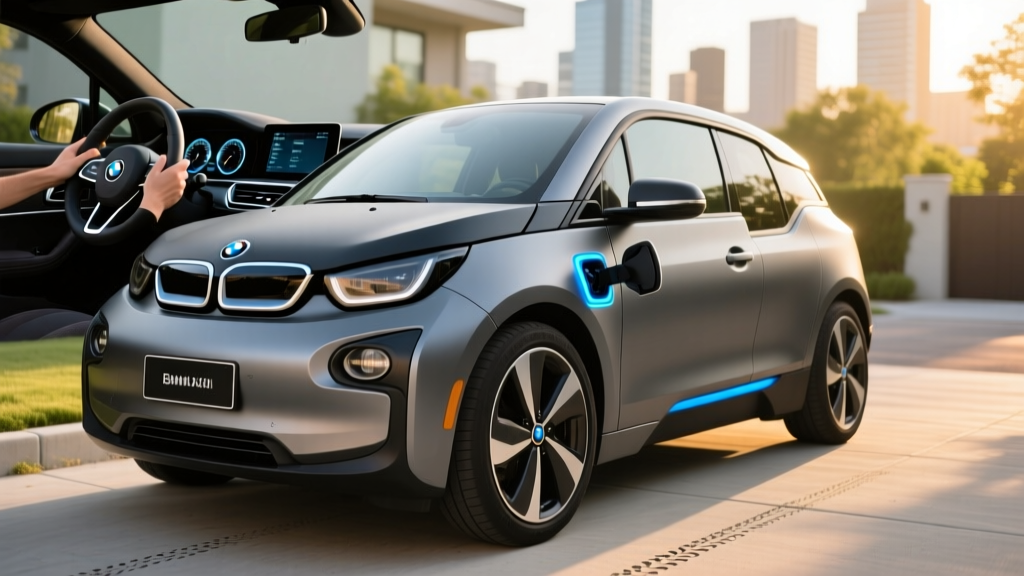
The 2020 BMW i3 remains one of the most distinctive electric vehicles ever mass-produced. With its carbon-fiber-reinforced plastic (CFRP) passenger cell, suicide-hinge rear doors, and optionally available range-extender engine, the i3 carved out a niche that no mainstream EV has replicated. Discontinued after the 2021 model year, the 2020 variant represents the i3's most mature iteration—equipped with the larger 42.2 kWh battery pack and a usable capacity of 37.9 kWh. For 2026 used-EV shoppers, it's a compelling urban commuter at the right price, provided you understand its range ceiling and charging limitations.
Real-World Expectation: 125–140 miles highway at 70 mph; 100–115 miles in sub-30°F winter conditions. City driving with regen braking can push 155+ miles in mild weather.
2020 BMW i3 Specifications at a Glance
| Specification | 2020 BMW i3 BEV | 2020 BMW i3 REx |
|---|---|---|
| EPA Electric Range | 153 miles | 126 miles (EV) + ~80 mi gas |
| Battery (Gross / Usable) | 42.2 kWh / 37.9 kWh | 42.2 kWh / 37.9 kWh |
| Battery Chemistry | NMC (Samsung SDI) | NMC (Samsung SDI) |
| Motor Output | 170 hp / 184 lb-ft | 170 hp / 184 lb-ft |
| Drivetrain | Rear-Wheel Drive (RWD) | Rear-Wheel Drive (RWD) |
| 0–60 mph | 6.9 seconds | 7.5 seconds |
| Top Speed | 93 mph (electronically limited) | 93 mph |
| DC Fast Charge (max) | 50 kW (CCS) | 50 kW (CCS) |
| 10–80% DC Charge | ~42 minutes | ~42 minutes |
| Level 2 Onboard Charger | 7.4 kW (AC) | 7.4 kW (AC) |
| EPA Efficiency | 113 MPGe (combined) | 100 MPGe (combined EV) |
| kWh/100 mi | 30 kWh/100 mi | 34 kWh/100 mi |
| Cargo Volume (rear seats up / folded) | 15.1 / 36.0 cu ft | 15.1 / 36.0 cu ft |
| Original MSRP (base) | $45,400 | $49,300 |
| Battery Warranty (original) | 8 yr / 80,000 mi | 8 yr / 80,000 mi |
Range, Efficiency, and the Real-World Commute
The 153-mile EPA figure on the pure BEV i3 is accurate for mixed suburban driving in temperate weather. The i3's efficiency is genuinely excellent—30 kWh per 100 miles is among the best of any EV sold in the U.S., thanks to the car's featherweight 2,976-pound curb weight and skinny 155/70R19 low-rolling-resistance tires. That efficiency translates directly into lower charging costs: at the national average of $0.16/kWh, a full charge costs roughly $6.05.
However, the i3's small frontal area and tall, narrow body generate substantial drag at highway speeds. Sustained 75–80 mph interstate driving drops range to approximately 120–130 miles. In freezing temperatures (below 30°F), expect a 20–30% reduction due to battery resistance and cabin heating demands—bringing real-world range to 100–120 miles on the BEV. The i3 does include a heat pump on most U.S. trims (standard from 2019 onward), which mitigates some cold-weather loss compared to resistive-only heaters.
The Range Extender (REx) variant sacrifices 27 miles of electric range to carry a 647cc two-cylinder BMW motorcycle engine that acts as a generator, extending total range to roughly 200 miles. The REx is ideal for drivers who occasionally need to exceed the battery's range but want electric propulsion for daily commuting. Note that the REx cannot be plugged in for gasoline-only long trips at full power—the engine maintains battery state of charge rather than directly driving the wheels.
Charging Speed and Infrastructure
The i3's charging capabilities reflect its 2013-era platform architecture, and this is where 2026 buyers need realistic expectations.
| Charging Level | Power | Time / Rate | Notes |
|---|---|---|---|
| Level 1 (120V household) | ~1.4 kW | ~3.5 miles per hour | Full charge in ~28 hours |
| Level 2 (240V, 32A) | 7.4 kW | ~25 miles per hour; 0–100% in ~5 hours | Standard onboard charger |
| DC Fast Charge (CCS) | 50 kW peak | 10–80% in ~42 minutes | Tapers significantly above 80% |
The 50 kW DC fast-charge ceiling is the i3's most significant limitation for road-trip use. While modern EVs routinely accept 150–350 kW, the i3's Samsung SDI cells and thermal management system cap charge rate at 50 kW. The charge curve is relatively flat from 10% to about 65% state of charge (SoC), then tapers to ~30 kW through 80%, and further drops to under 15 kW for the final 20%. Plan on 50–55 minutes for a practical 10–85% stop.
For daily use, Level 2 home charging is where the i3 shines. The 7.4 kW onboard charger replenishes the battery fully overnight on a standard 240V/32A home station. At 25 miles of range per hour of charging, a typical 40-mile daily commute is recovered in under two hours. Installation of a Level 2 home charger typically costs $800–$2,000 depending on panel proximity and local permitting, per U.S. Department of Energy guidance.
Connector note: The 2020 i3 uses a CCS1 connector for DC fast charging and a J1772 inlet for Level 1/Level 2 AC. As BMW has transitioned to NACS for its newer models, i3 owners will need a CCS-to-NACS adapter to access Tesla Supercharger V2 stations (which supply 150 kW but will be limited by the i3's 50 kW acceptance). Tesla's adapter is available for approximately $250.
Driving Dynamics, Performance, and Tech
The i3's 170-horsepower rear-mounted synchronous motor delivers brisk city acceleration. The 0–60 mph time of 6.9 seconds (BEV) feels quicker than the number suggests because the 184 lb-ft of torque is available from zero RPM. The i3's ultra-light CFRP structure means there's simply less mass to move, and the car darts through urban traffic with a go-kart eagerness that heavier EVs can't match.
Handling is a mixed bag. The narrow tires prioritize efficiency over grip, and the tall body generates noticeable lean in corners. However, the low center of gravity (battery pack under the floor) keeps things stable, and the turning radius of 32.8 feet makes the i3 phenomenally maneuverable in tight parking situations.
The i3's regenerative braking is aggressive enough for true one-pedal driving—lift off the accelerator and the car decelerates firmly to a full stop without touching the brake pedal. This was a standout feature in 2020 and remains intuitive for daily commuting.
Interior and Technology
The i3's cabin uses sustainable materials extensively: eucalyptus wood dashboard trim, recycled-plastic upholstery, and kenaf-fiber door panels. The 10.25-inch iDrive infotainment screen runs BMW's iDrive 6.0 system with navigation, Apple CarPlay (wired), and Bluetooth. Android Auto was not offered on the 2020 i3.
Driver-assistance features include forward collision warning, automatic emergency braking, and lane departure warning. Adaptive cruise control and blind-spot monitoring were not available. This is a notable gap versus competitors like the Chevrolet Bolt EV and Nissan Leaf, which offered more comprehensive ADAS suites by 2020.
The rear-hinged "coach doors" provide decent rear-seat access but require the front doors to be open first—a practical annoyance in tight parking spaces. Rear legroom measures 31.9 inches, adequate for adults on short trips but tight for long journeys. Cargo space behind the rear seats is 15.1 cubic feet; folding the 50/50 rear bench opens up 36.0 cubic feet.
Pricing, Tax Credits, and Used Market Value
As a discontinued model, the 2020 BMW i3 is only available on the used market in 2026. Typical asking prices range from $18,000 to $26,000 depending on mileage, condition, and trim (Mega World, Giga World, or Tera World).
| Scenario | Estimated Price | Federal Credit | Net Cost |
|---|---|---|---|
| Used 2020 i3 BEV (dealer, ~30k mi) | $22,000 | $4,000 (used EV credit) | ~$18,000 |
| Used 2020 i3 REx (dealer, ~25k mi) | $25,000 | $4,000 (used EV credit) | ~$21,000 |
| Private-party purchase | $19,000–$21,000 | Not eligible | $19,000–$21,000 |
Federal Tax Credit for Used EVs (§25E)
The 2020 i3 does not qualify for the new-EV §30D credit (the car is no longer sold new). However, it may qualify for the §25E Previously Owned Clean Vehicle Credit, which provides up to $4,000 or 30% of the sale price (whichever is less) when purchased from a licensed dealer. Per IRS guidelines, eligibility requires:
- Sale price must be $25,000 or less
- Buyer's modified AGI must not exceed $75,000 (single), $112,500 (head of household), or $150,000 (joint)
- Vehicle must be purchased from a licensed dealer (not private party)
- Vehicle model year must be at least two years old (2020 qualifies in 2026)
- Buyer cannot have claimed the used-EV credit in the prior three years
- Credit can be transferred to the dealer at point of sale as an immediate price reduction
At a $22,000 sale price, 30% equals $6,600, but the credit caps at $4,000. Most qualifying buyers purchasing from a dealer will receive the full $4,000 as a point-of-sale reduction. Consult a tax professional to confirm your individual eligibility.
Who Should Buy the 2020 BMW i3?
- Your daily commute is under 60 miles round-trip and you can charge at home
- You want a premium-brand EV with unique design and sustainable materials
- You value one-pedal driving and urban maneuverability over highway cruising
- You're buying a second car or city runabout, not a primary family vehicle
- You want a sub-$20,000 EV after the used credit
- You regularly drive more than 100 miles in a day without charging access
- You need fast DC charging for road trips (50 kW is slow by 2026 standards)
- You require modern ADAS features like adaptive cruise or blind-spot monitoring
- You need seating for more than four or significant cargo capacity
The i3 is fundamentally an urban specialist. Its combination of efficiency, tight turning radius, and premium interior make it a superb city car. But its limited range, modest fast-charging speed, and lack of advanced driver assists mean it struggles as a sole vehicle for households that regularly take longer trips.
Pros and Cons
- Exceptional efficiency: 113 MPGe / 30 kWh per 100 mi
- Ultra-light CFRP construction delivers nimble city handling
- True one-pedal driving with strong regenerative braking
- Premium, sustainable interior materials unlike any other EV
- Qualifies for up to $4,000 used-EV federal tax credit
- Unique design stands out in any parking lot
- Tight 32.8-ft turning radius for effortless parking
- 153-mile EPA range is limiting for road trips
- 50 kW max DC fast charge is slow (42 min for 10–80%)
- No adaptive cruise control or blind-spot monitoring
- Rear coach doors are impractical in tight spaces
- Thin tires compromise wet-weather and snow grip
- No Android Auto support
- High insurance costs relative to vehicle value
- BMW has discontinued the model — long-term parts availability uncertain
How the 2020 BMW i3 Compares
Against the 2020 Chevrolet Bolt EV (259-mile EPA range, 55 kW DC fast charge), the i3 gives up over 100 miles of range but wins on efficiency, interior quality, and urban maneuverability. The Bolt is the more practical sole vehicle.
The 2020 Nissan Leaf SV Plus offers 226 miles of range and a more spacious cabin, but uses a CHAdeMO connector (a declining standard) and lacks the i3's premium materials and one-pedal refinement.
The 2020 Hyundai Kona Electric (258-mile range, 75 kW DC charge) is a more well-rounded used-EV pick for buyers who need versatility, but it lacks the i3's distinctive character and city-car agility.
For a buyer who specifically needs a compact, efficient, premium city commuter—and can charge at home—the i3 occupies a niche none of these competitors fill as stylishly.
Battery Health and Long-Term Ownership
The i3's 42.2 kWh Samsung SDI NMC battery has demonstrated solid longevity in real-world use. Data from i3 owner communities and fleet studies show typical degradation of 8–12% over the first 100,000 miles, meaning a 2020 i3 with 40,000 miles should still deliver roughly 135–145 miles of real-world range.
BMW's original battery warranty covers 8 years or 80,000 miles against capacity loss below 70% of original. For a 2020 model, this warranty remains in effect through the 2028 model year or 80,000 miles—valuable coverage for a used-EV purchase. If the battery does require replacement out of warranty, expect costs of $12,000–$16,000 at a BMW dealer, though independent EV shops are increasingly offering refurbished pack options for $7,000–$10,000.
Per fueleconomy.gov, NMC batteries benefit from avoiding repeated 100% charges for daily use. Setting the i3's charge limit to 80–85% for routine commuting and reserving 100% for longer trips will maximize long-term battery health. The i3's active thermal management system (liquid cooling/heating) helps protect the pack in extreme temperatures, though it is less sophisticated than the systems in newer EVs like the Tesla Model 3 or Hyundai Ioniq 5.
Frequently Asked Questions
What is the real-world range of the 2020 BMW i3?
The EPA rates the BEV at 153 miles, but expect 125–140 miles on the highway at 70 mph and as low as 100–115 miles in freezing winter conditions. City driving with regenerative braking can exceed the EPA figure in mild weather, reaching 155+ miles. The REx variant provides 126 electric miles plus approximately 80 additional miles from the range-extender engine.
How fast does the 2020 BMW i3 charge?
On a DC fast charger, the i3 peaks at 50 kW and takes approximately 42 minutes to go from 10% to 80% state of charge. At home on a Level 2 (240V, 32A) charger, the 7.4 kW onboard charger adds about 25 miles of range per hour, fully replenishing the battery in roughly 5 hours. Level 1 (120V) trickle charging adds about 3.5 miles per hour.
Does the 2020 BMW i3 qualify for the federal EV tax credit?
Not the new-EV §30D credit, since the car is discontinued. However, it may qualify for the §25E used-EV credit of up to $4,000 when purchased from a licensed dealer for $25,000 or less, subject to buyer income caps ($75,000 single / $150,000 joint). The credit can be applied at point of sale as an immediate price reduction.
Is the 2020 BMW i3 worth buying in 2026?
For the right buyer—someone with a short commute, home charging access, and a desire for a premium, unique city car—the i3 is a strong value at $18,000–$22,000 after the used-EV credit. Its efficiency, one-pedal driving, and lightweight construction remain genuinely enjoyable. However, if you need 200+ miles of range, fast road-trip charging, or modern ADAS features, a used Chevrolet Bolt EV or Hyundai Kona Electric is a better fit.
What are the biggest maintenance concerns with a used i3?
The electric powertrain is largely maintenance-free beyond cabin air filter changes and brake fluid flushes. The 155/70R19 tires are a specialty size and cost $200–$300 each to replace. The REx variant requires periodic oil changes and maintenance on the range-extender engine. Check for any software update recalls via BMW's VIN lookup tool before purchasing.
Can I use Tesla Superchargers with the 2020 BMW i3?
Yes, with a CCS-to-NACS adapter (approximately $250 from Tesla or third-party suppliers). However, the i3's 50 kW charge-rate cap means you won't benefit from the Supercharger network's higher speeds—you'll still charge at 50 kW maximum. The primary benefit is access to Tesla's extensive and reliable charging locations.