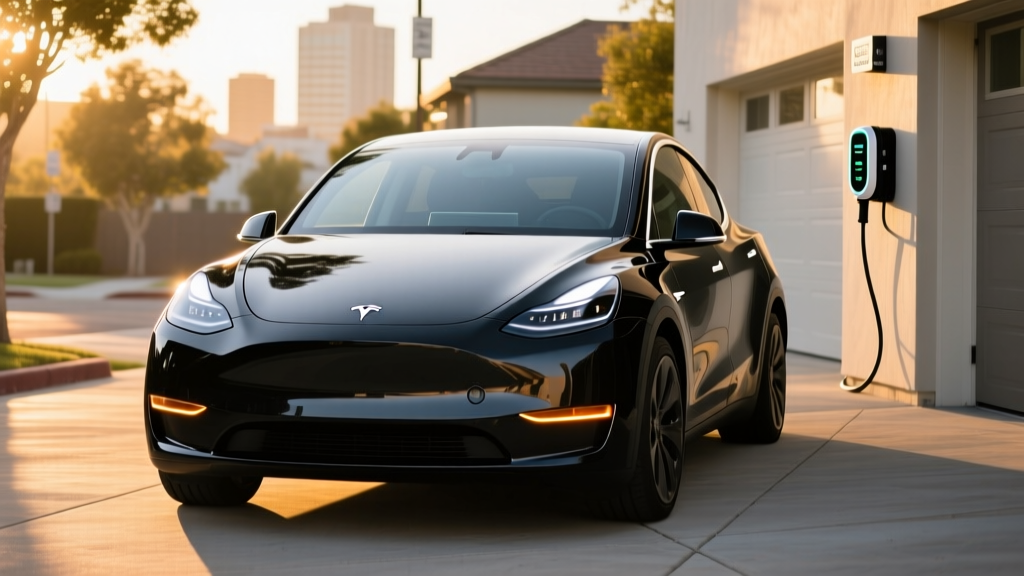
The Tesla Model Y launched in early 2020 as a 2020 model-year vehicle, but the earliest VINs and reservation-holder deliveries date to March 2020, meaning many buyers searching for a "2019 Tesla Model Y" are actually encountering the first wave of Model Y Long Range Dual Motor units built on the Fremont line in early 2020. If you are evaluating one of these earliest-production Model Y vehicles on the used market today, this guide covers the exact specs, real-world range expectations, charging behavior, and ownership economics you need to make an informed decision.
This is not a new-vehicle review. The earliest Model Y units are now six years old, and buying one on the used market in 2026 requires a different lens than evaluating a fresh showroom model. Battery degradation, warranty remaining, software updates, and used-EV tax credit eligibility all come into play.
Model Y Long Range AWD: Core Specifications
The first Model Y variant delivered was the Long Range All-Wheel Drive (Dual Motor). A Performance variant followed shortly after. Here is the spec sheet for the Long Range AWD, which represents the vast majority of early Model Y units on the used market.
| Spec | Value |
|---|---|
| EPA Range | 316 miles |
| Battery (usable) | ~75 kWh (NMC/NCA, Panasonic 2170 cells) |
| Drivetrain | Dual Motor AWD |
| Horsepower | ~384 hp (combined) |
| 0–60 mph | 4.8 seconds |
| EPA Efficiency | 121 MPGe combined (28 kWh/100 mi) |
| Max DC Fast Charge | 250 kW (V3 Supercharger) |
| 10–80% DC Charge | ~27 minutes |
| Level 2 Home Charge | 11.5 kW (~44 mi/hr) |
| Cargo (rear seats up) | 30.2 cu ft |
| Cargo (rear seats folded) | 76.2 cu ft |
| Rear Legroom | 35.6 in |
| Battery Warranty | 8 yr / 120,000 mi (70% retention) |
| Original MSRP | $52,990 (before incentives) |
Sources: EPA Fueleconomy.gov, Tesla owner's manual.
Real-World Range: What the EPA Sticker Doesn't Tell You
EPA Sticker: 316 miles
Real-World Highway (70 mph, mild weather): ~260–280 miles
Real-World City/Suburban: ~290–310 miles
Cold Weather (below 32°F, highway): ~210–240 miles
Cold Weather + Cabin Heat (worst case): ~190–220 miles
The 316-mile EPA figure was class-leading at launch and remains competitive today. However, real-world range in a used Model Y depends heavily on three factors: driving style, ambient temperature, and battery degradation.
On highway road trips at 70–75 mph in 60–80°F weather, expect to see roughly 260–280 miles before needing to charge. The Model Y's aerodynamic crossover profile helps, but sustained highway speeds consume energy faster than the EPA mixed cycle suggests. In city driving with frequent regenerative braking opportunities, you can approach or even match the EPA number.
Cold weather is the great equalizer for all EVs. The early Model Y uses a resistive PTC heater rather than the heat pump Tesla introduced in the 2021 refresh (the "Project Highland"-adjacent thermal system). This means cabin heating draws directly from the traction battery, and in sub-freezing temperatures you can lose 25–35% of your usable range. Preconditioning the battery while plugged in mitigates this, but unplugged cold-soak starts will hit your range hard.
Battery degradation note: A 2020 Model Y with 60,000–80,000 miles will typically show 5–10% degradation on the NMC pack, meaning your effective full-charge range might be 285–300 miles (EPA adjusted). Check the vehicle's energy graph and compare displayed range at 100% SoC against the original 316-mile figure. Tesla's warranty guarantees 70% capacity retention for 8 years or 120,000 miles — so an early 2020 Model Y's battery warranty expires around March 2028.
Charging Speed: DC Fast and Home Level 2
The early Model Y supports Tesla's V3 Supercharger architecture at up to 250 kW peak. That number requires context, because peak charge rate is not sustained charge rate.
| Charging Level | Power (kW) | Speed | Notes |
|---|---|---|---|
| Level 1 (120V household) | ~1.4 kW | ~5 mi/hr | Emergency/trickle only |
| Level 2 (240V, 48A) | 11.5 kW | ~44 mi/hr | Home Wall Connector; full charge ~7–8 hrs |
| Level 2 (240V, 32A) | 7.7 kW | ~30 mi/hr | Common portable/mobile connector setup |
| DC Fast (V3 Supercharger) | 250 kW peak | 10–80% in ~27 min | Tapers significantly above 60% SoC |
| DC Fast (V2 Supercharger) | 150 kW peak | 10–80% in ~38 min | Older Supercharger stalls |
| DC Fast (CCS adapter, non-Tesla) | Up to 150 kW | Varies | Requires Tesla CCS adapter (sold separately) |
Charging curve reality: The 250 kW peak only holds from roughly 10–30% State of Charge. By 50% SoC, the rate drops to approximately 150 kW. By 80%, it falls below 50 kW. This is why Tesla (and all EV makers) quote 10–80% times rather than 0–100%. If you arrive at a Supercharger at 10% and charge to 80%, expect about 27 minutes. If you need to push from 80–100%, add another 25–30 minutes — it's rarely worth the wait on a road trip.
Preconditioning matters. Navigate to a Supercharger using the car's built-in navigation, and the battery will begin warming automatically, preparing the pack to accept peak charge rates upon arrival. If you drive to a charger without preconditioning (especially in cold weather), your initial charge rate may be dramatically lower — sometimes under 50 kW until the pack warms up.
For home charging, installing a Tesla Wall Connector on a 60-amp circuit (48A continuous) delivers 11.5 kW, adding roughly 44 miles of range per hour. An overnight charge from 20–80% takes about 4 hours. This is the most practical and cost-effective way to own any EV.
Performance, Ride, and Daily Driving
The Dual Motor Long Range Model Y delivers 384 combined horsepower and a 4.8-second 0–60 mph time — quick by any measure, and more than adequate for highway merging and passing. The Performance variant (3.5-second 0–60) is rarer on the used market and commands a premium.
Ride quality on the early Model Y is firm. The pre-refresh suspension tuning transmits road imperfections more than competitors like the Ford Mustang Mach-E or Hyundai Ioniq 5. This was one of the most common owner complaints, and Tesla addressed it in later model years with revised dampers and bushings. If ride comfort is a priority, budget for an aftermarket suspension solution or test-drive carefully on rough roads.
Regenerative braking is strong and enables genuine one-pedal driving in most conditions. The early Model Y does not offer adjustable regen strength — it's full regen or nothing, which is a departure from the blended braking some EV newcomers prefer.
Tech, Interior, and Driver Assistance
The Model Y interior is defined by its 15-inch center touchscreen, which handles all vehicle controls, navigation, media, and climate. There are no physical buttons for climate or audio — everything routes through the screen. This is polarizing: some owners love the clean aesthetic, others find it distracting while driving.
Autopilot (standard): The base Autopilot package includes Traffic-Aware Cruise Control and Autosteer (lane-centering). This is an SAE Level 2 driver-assist system — not self-driving. You must keep your hands on the wheel and eyes on the road at all times. The system is competent for highway use but requires active supervision.
Tesla Autopilot and Full Self-Driving (Supervised) are Level 2 driver-assistance systems. The driver must remain fully engaged, monitor the road, and be prepared to take over at any moment. These systems do not make the vehicle autonomous.
Full Self-Driving (FSD) capability: Some early Model Y units were purchased with the FSD package ($7,000–$12,000 at various points). FSD (Supervised) adds automatic lane changes, Navigate on Autopilot, traffic light and stop sign recognition, and Autopark. It remains a Level 2 system. FSD transfers with the vehicle on the used market, which adds value — but verify the FSD license is attached to the car (not a subscription that lapses) before purchasing.
Over-the-air updates: Tesla's OTA software updates continue to reach early Model Y vehicles in 2026, adding features and refinements years after purchase. This is a genuine advantage over legacy automakers whose infotainment systems are frozen at the time of sale.
Used Pricing, Tax Credits, and Ownership Cost
The early Model Y Long Range AWD originally stickered at $52,990 (before the $1,200 destination fee). In 2026, used examples with 50,000–80,000 miles typically sell for $22,000–$30,000 depending on condition, mileage, and whether FSD is included.
The early Model Y may qualify for the federal used-EV tax credit of up to $4,000 (30% of the sale price, capped at $4,000) under IRS §25E. Requirements include:
• Vehicle sale price must be $25,000 or less
• Buyer income must not exceed $75,000 (single) / $150,000 (joint) modified AGI
• Vehicle must be at least 2 model years old (qualifies)
• Must purchase from a licensed dealer (private-party sales do not qualify)
• Credit can be transferred to the dealer at point of sale as a price reduction
Source: IRS.gov — Used Clean Vehicle Credit. Tax eligibility varies; consult a tax professional.
This means a $24,000 used Model Y purchased from a dealer could net you $4,000 back (or an immediate price reduction), bringing effective cost to ~$20,000 — remarkable value for a 316-mile-range AWD electric crossover. However, many used Model Y units list above $25,000, which disqualifies them from the credit entirely. Negotiate with the dealer to price at or below $25,000 if the credit is important to your purchase decision.
Note on the new-vehicle §30D credit: The $7,500 federal new-EV tax credit does not apply to used vehicle purchases. The §30D credit has its own MSRP caps ($55,000 for SUVs), income limits, and critical-mineral/battery-component sourcing requirements. It is only relevant if you are buying a new Tesla, not a used 2020 model.
| Category | Estimated Cost |
|---|---|
| Purchase price (dealer, after credit) | $20,000–$26,000 |
| Home Level 2 charger install | $800–$2,000 |
| Electricity (15,000 mi/yr, $0.14/kWh avg) | $4,200 (5 yr) |
| Insurance (avg, varies by state/driver) | $9,000–$12,000 (5 yr) |
| Maintenance (tires, cabin filter, wipers) | $1,500–$2,500 (5 yr) |
| Estimated 5-yr total | $35,500–$46,700 |
Electricity costs vary enormously by region and whether you charge at home vs. public Superchargers. Home charging at $0.14/kWh yields roughly $0.04/mile. Supercharging at $0.25–$0.35/kWh pushes that to $0.07–$0.10/mile. Both remain cheaper than gasoline at current prices.
Pros and Cons of the Early Model Y
- 316-mile EPA range remains competitive in 2026
- 250 kW DC fast charging on V3 Superchargers
- Access to Tesla Supercharger network (most reliable in the US)
- Spacious cargo area (76.2 cu ft with seats folded)
- Strong OTA software update support continues
- Eligible for up to $4,000 used-EV tax credit (if priced ≤$25K)
- Dual motor AWD provides excellent traction
- Low maintenance costs vs. ICE vehicles
- Firm ride quality on pre-refresh suspension
- No heat pump — cold-weather range loss is significant
- Touchscreen-only controls can distract while driving
- Rear seat comfort and headroom tight for tall passengers
- Battery warranty expires ~2028 on earliest units
- Insurance premiums tend to be above segment average
- No Apple CarPlay or Android Auto support
- Build quality inconsistency on early Fremont production
Who Should Buy a Used Early Model Y?
- Daily commuters with home charging access who want a 300+ mile buffer
- Small families needing cargo space for strollers, groceries, and road-trip luggage
- Tech-forward buyers who value OTA updates and Tesla's software ecosystem
- Budget-conscious EV shoppers who can capture the $4,000 used-EV credit
- You live in a very cold climate and want a heat pump for winter range preservation
- You need a third row or maximum passenger space (look at the Model X or Kia EV9)
- You prefer physical buttons and traditional infotainment (Ford Mach-E, Hyundai Ioniq 5)
- You plan to tow — the early Model Y is rated for 3,500 lbs but real-world range while towing drops dramatically
Frequently Asked Questions
What is the real-world range of the early Model Y?
Expect 260–280 miles on the highway in mild weather, 290–310 in city driving, and 210–240 in freezing temperatures. A used example with battery degradation may lose another 5–10% from these figures.
How fast does the Model Y charge at home and on the road?
On a V3 Supercharger, 10–80% takes about 27 minutes (250 kW peak). At home on a 48-amp Level 2 Wall Connector, you add roughly 44 miles per hour, and a full charge takes 7–8 hours. On a standard 120V outlet, expect only ~5 miles per hour — suitable only for overnight top-ups.
Does a used Model Y qualify for any federal tax credit?
Yes — the IRS §25E used clean vehicle credit offers up to $4,000 (30% of sale price, capped) if the vehicle sells for $25,000 or less, you buy from a licensed dealer, and your income is under $75,000 (single) or $150,000 (joint). The new-vehicle §30D credit of $7,500 does not apply to used purchases.
Is the early Model Y worth buying vs. newer used EVs?
It depends on price and priorities. The early Model Y offers range, charging speed, and Supercharger network access that still compete well. But a used 2022+ Model Y refresh includes a heat pump, improved suspension, and a more recent battery with longer warranty remaining. If the early model is priced under $25,000 (qualifying for the used-EV credit), it represents strong value. If it's priced above $28,000, newer alternatives like the Ford Mustang Mach-E or Hyundai Ioniq 5 may offer better ride quality and features.
What are the biggest risks of buying an early Model Y?
The primary risks are battery degradation approaching the warranty expiration (~2028), the lack of a heat pump for cold-climate buyers, and early-production build quality issues (panel gaps, trim rattles). Always request a pre-purchase inspection and check the battery health readout before committing.
Can I use non-Tesla chargers with the early Model Y?
Yes, with a Tesla-to-CCS adapter (available from Tesla and third parties for ~$150–$250). The early Model Y uses Tesla's proprietary connector (now called NACS). With the adapter, you can access Electrify America, EVgo, and other CCS-equipped networks. As of 2026, most new public chargers include NACS connectors, but the adapter remains useful for older CCS-only stations.
Disclaimer: Specifications reflect the earliest 2020 model-year Model Y Long Range AWD as originally delivered. Used-market examples may vary based on software updates, modifications, and condition. Tax credit eligibility depends on individual circumstances — consult IRS.gov and a qualified tax professional before relying on credit availability.