The 2019 Tesla Model S P100D occupies a unique space in the used electric-vehicle market. Once the flagship performance sedan that defined what a luxury EV could be, it now trades on the secondary market at a fraction of its original $135,000+ sticker — and for buyers willing to accept its aging hardware, it remains one of the quickest four-door sedans ever built. But buying a seven-year-old flagship EV requires clear eyes on battery health, charging realities, and ownership costs. Here's everything you need to know.
2019 Tesla Model S P100D Quick Specs
| Specification | Value |
|---|---|
| EPA Range | 315 miles |
| Battery Capacity (Usable) | ~100 kWh (NMC chemistry) |
| Drivetrain | Dual-Motor AWD |
| Horsepower | ~762 hp (Ludicrous mode) |
| 0-60 mph | 2.4 seconds |
| Max DC Fast Charge | ~120 kW (V2 Supercharger) |
| 10-80% DC Charge Time | ~45 minutes |
| Level 2 Home Charge Rate | 16.5 kW (52 mi/hr) |
| MPGe (Combined) | 98 MPGe |
| Energy Consumption | 34 kWh/100 mi |
| Cargo Volume | 26.3 cu ft (rear) + 5.3 cu ft (frunk) |
| Original Base MSRP | $135,000 |
| 2026 Used Market Range | $32,000 – $48,000 |
| Battery Warranty | 8 years / 150,000 miles |
Real-World Range: What to Actually Expect
EPA Sticker: 315 miles
Real-World Highway (70 mph, mild weather): ~255–275 miles
Cold Weather (below 32°F, highway): ~200–230 miles
City / Mixed Commuting: ~280–300 miles
The P100D's 100 kWh battery pack uses NMC (nickel manganese cobalt) chemistry, which offers high energy density but is more susceptible to calendar degradation than the LFP packs Tesla later adopted in standard-range models. According to fueleconomy.gov, the combined efficiency rating sits at 98 MPGe (34 kWh per 100 miles).
In practice, a 2019 P100D with moderate mileage (60,000–90,000 miles) will likely show 5–12% battery degradation on the instrument cluster. That means your "100%" charge may read closer to 280–295 miles rather than the original 315. Highway driving at 75+ mph pushes consumption to 38–42 kWh/100 mi, cutting range sharply. Cold weather compounds this: resistive cabin heating (no heat pump on the 2019 Model S) and reduced battery chemical efficiency can drop usable range by 25–35%.
Before purchasing, request a battery health screenshot showing current State of Health (SoH). Tesla's onboard diagnostics display projected range at 100% SoC, which you can cross-reference against the original 315-mile EPA figure to estimate degradation percentage.
Charging Speed and Infrastructure
| Charging Level | Power (kW) | Miles Added per Hour | Notes |
|---|---|---|---|
| Level 1 (120V) | ~1.4 kW | ~3–4 mi/hr | Emergency/trickle only |
| Level 2 (240V, 48A) | 11.5 kW | ~34 mi/hr | Standard Wall Connector |
| Level 2 (240V, 72A) | 16.5 kW | ~52 mi/hr | High-Amperage charger (optional) |
| DC Fast (V2 Supercharger) | ~120 kW peak | ~300+ mi/hr (peak) | 10-80% in ~45 min |
| DC Fast (V3 Supercharger) | ~120 kW (capped) | ~300+ mi/hr (peak) | Model S pre-2020 cannot use full 250 kW |
The 2019 P100D charges on Tesla's proprietary connector (now called NACS). It can access the entire Supercharger network — an enormous advantage as Tesla opened its network to non-Tesla EVs with adapters, but Tesla owners still enjoy the most seamless plug-and-charge experience.
Here's where the age shows: the P100D's peak DC charge rate is approximately 120 kW. While V3 Superchargers can deliver up to 250 kW, the P100D's older battery management system and cell architecture cap the intake well below that. Expect a 10–80% session to take roughly 40–50 minutes at a V2 or V3 Supercharger. The charge curve tapers significantly above 60% SoC, with the final 20% (80–100%) taking nearly as long as the first 70%.
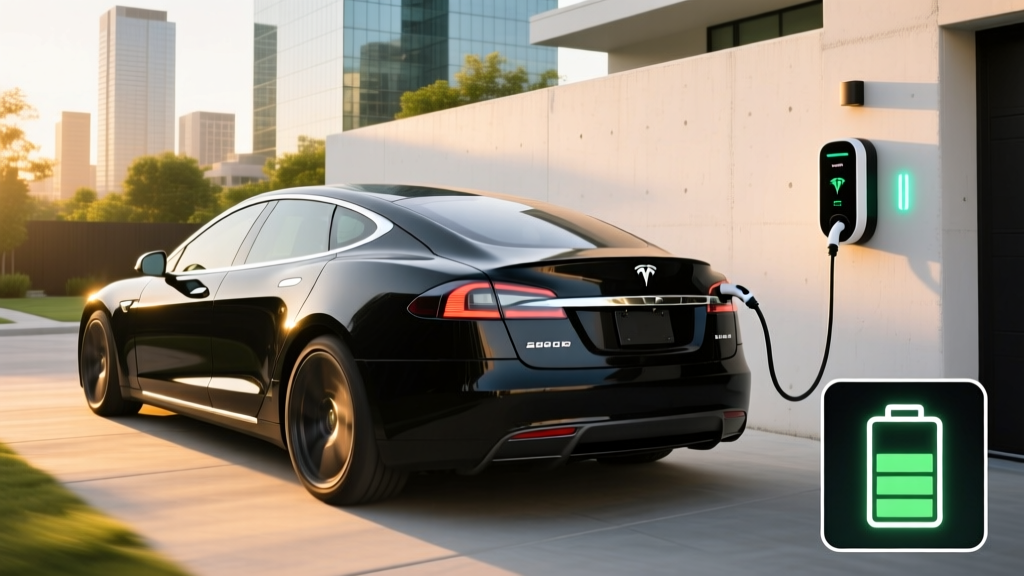
For home charging, the dual onboard chargers (if equipped with the optional high-amperage package) accept up to 16.5 kW on a 72-amp Level 2 circuit. Most units shipped with the standard 48-amp onboard charger, capping at 11.5 kW. A full overnight charge from 10% to 100% takes approximately 7–9 hours at 11.5 kW — perfectly adequate for daily use.
Performance: Still a Benchmark
The P100D's dual-motor all-wheel-drive powertrain produces approximately 762 horsepower in Ludicrous mode. The 2.4-second 0–60 mph time was verified by multiple independent testers in 2017–2019 and remains competitive with 2026 performance EVs like the Porsche Taycan Turbo S and Lucid Air Grand Touring.
What hasn't aged is the instant torque delivery. Unlike internal-combustion supercars that need rev-matching and launch control optimization, the P100D simply deploys maximum torque from zero RPM. Quarter-mile times hover around 10.5 seconds at 125 mph — figures that embarrass most six-figure sports cars.
However, the P100D's air suspension, while comfortable, doesn't match the chassis dynamics of a Porsche Taycan or even the refreshed 2021+ Model S Plaid. Body roll is noticeable in aggressive cornering, and the steering lacks the precision feedback of dedicated sports sedans. This is a brutally fast luxury cruiser, not a track weapon.
Interior, Cargo, and Technology
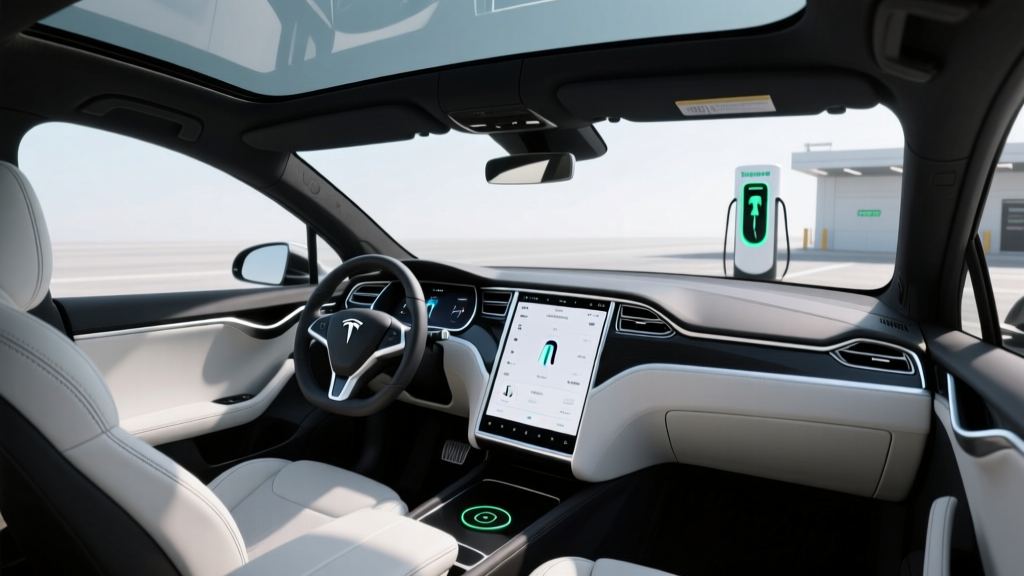
The 2019 Model S interior reflects Tesla's minimalist philosophy — though "minimalist" in 2019 meant fewer physical buttons rather than the ultra-stripped interiors of the 2021+ refresh. You get a 17-inch center touchscreen (vertical orientation), a 12.3-inch digital instrument cluster, and a small secondary display for rear passengers.
Passenger Space:
- Front headroom: 38.8 inches
- Front legroom: 42.7 inches
- Rear headroom: 35.4 inches
- Rear legroom: 35.4 inches
Cargo: 26.3 cubic feet behind the rear seats (expandable to 58.1 cu ft with seats folded), plus a 5.3 cu ft front trunk (frunk). The hatchback liftgate design makes loading bulky items far easier than a traditional sedan trunk.
Autopilot and Driver Assistance: The 2019 P100D came with Tesla's Enhanced Autopilot hardware (HW2.5). This supports Traffic-Aware Cruise Control, Autosteer (lane centering), Auto Lane Change, and Navigate on Autopilot. Per SAE classification, this is a Level 2 driver-assistance system — the driver must remain engaged, monitor the road, and keep hands on the wheel. It is not autonomous driving.
⚠️ Autopilot Limitation Notice: Tesla Autopilot and FSD (if retrofitted via software) require continuous driver supervision. They do not handle construction zones, unmapped roads, severe weather, or complex urban scenarios reliably. The driver is legally responsible for all vehicle actions at all times.
Notable tech drawbacks compared to 2026 EVs: no USB-C ports (USB-A only), no rear-seat entertainment screen (just climate controls), older MCU1 or early MCU2 infotainment hardware that may feel sluggish compared to current Tesla software, and no standard HEPA air filtration (the "Bioweapon Defense Mode" was optional).
Pricing and Federal Tax Credit Eligibility
| Cost Factor | Amount |
|---|---|
| Original 2019 MSRP (P100D) | $135,000 – $145,000 (with options) |
| 2026 Used Market (typical) | $32,000 – $48,000 |
| Federal Used EV Tax Credit (§25E) | Up to $4,000 or 30% of sale price (whichever is less) |
| Estimated Post-Credit Cost | $28,000 – $44,000 |
Tax Credit Details: As a used vehicle purchased in 2026, the 2019 Model S P100D is not eligible for the §30D New Clean Vehicle Credit. Instead, it may qualify for the §25E Previously-Owned Clean Vehicle Credit. Per IRS guidelines, the requirements include:
- Sale price must be $25,000 or less to qualify for the full $4,000 credit
- Buyer income caps: $75,000 (single), $112,500 (head of household), $150,000 (joint)
- Vehicle must be purchased from a licensed dealer (private-party sales excluded)
- Vehicle must be at least two model years old (2019 qualifies)
- Buyer must not have claimed the used-EV credit in the prior 3 years
At typical 2026 used prices of $32,000–$48,000, most P100D listings exceed the $25,000 sale-price cap. However, higher-mileage examples or those needing cosmetic work may list at or below $25,000 from a dealer, unlocking the $4,000 credit. Always verify eligibility with a tax professional before purchase, as IRS rules are subject to change.
Battery Warranty and Longevity
Tesla's battery and drive unit warranty for the 2019 Model S P100D covers 8 years or 150,000 miles (whichever comes first), with a guaranteed minimum 70% capacity retention. For a 2019 model, the warranty window closes in 2027 or at 150,000 miles — meaning most examples are still under warranty as of 2026, but the clock is ticking.
The 100 kWh NMC pack in the P100D has proven reasonably durable. Fleet data and owner surveys suggest average degradation of approximately 8–15% over 100,000 miles, depending on charging habits. Frequent DC fast charging to 100%, regular deep discharges below 10%, and sustained high-temperature exposure accelerate degradation. If the battery drops below 70% of original capacity while under warranty, Tesla will repair or replace it at no cost.
Out-of-warranty battery replacement for a Model S 100 kWh pack currently runs $15,000–$22,000 at Tesla service centers, including labor. Third-party EV battery shops may offer refurbishment for $10,000–$14,000. This is a critical cost to factor into any high-mileage purchase.
Pros, Cons, and Verdict
Pros
- 2.4-second 0–60 mph remains elite in 2026
- 315-mile EPA range (new) still competitive
- Full Supercharger network access with NACS
- Hatchback cargo versatility (26.3 cu ft + frunk)
- Over-the-air updates still supported
- Most examples still under battery warranty through 2027
Cons
- 120 kW peak DC charging is slow vs. 2026 EVs (250–350 kW)
- No heat pump — cold-weather range loss is significant
- Aging interior materials and older infotainment hardware
- Potential $15,000+ battery replacement cost post-warranty
- Insurance premiums remain high ($2,800–$4,500/year)
- Used prices often exceed the $25K cap for the §25E tax credit
Who Should Buy the 2019 P100D?
Choose the 2019 Model S P100D if:
- You want supercar-rivaling acceleration in a practical four-door sedan
- You have home Level 2 charging and mostly drive under 200 miles/day
- You value Tesla's Supercharger network for road trips
- You can find a well-maintained example under $40,000 with verified battery health
Look elsewhere if:
- You live in a cold climate and need maximum winter range (consider a 2021+ Model S with heat pump)
- You need the latest driver-assistance hardware (HW3/HW4)
- Road-trip charging speed is a priority (2023+ EVs charge 2x faster)
- You want a new-vehicle warranty and the full §30D $7,500 federal credit
The 2019 Tesla Model S P100D is a compelling used-EV proposition for performance enthusiasts who understand the trade-offs. Its straight-line speed remains extraordinary, its range is still practical for most daily use, and Tesla's Supercharger network gives it a road-trip advantage over used EVs from legacy automakers. But the slower charging speeds, aging tech, and looming out-of-warranty battery costs demand careful pre-purchase inspection and realistic budgeting.
Frequently Asked Questions
What is the real-world range of the 2019 Tesla Model S P100D?
Expect approximately 255–275 miles on the highway in mild weather, 280–300 miles in city/mixed driving, and 200–230 miles in cold weather (below 32°F). Battery degradation on a 2019 model will typically reduce these figures by 5–12% from the original 315-mile EPA rating.
How fast does the P100D charge at home and on the road?
At home on a 48-amp Level 2 charger, it adds roughly 34 miles per hour (11.5 kW). On Tesla V2/V3 Superchargers, it peaks at approximately 120 kW, completing a 10–80% charge in about 40–50 minutes. The 2019 Model S cannot utilize the full 250 kW that V3 Superchargers can deliver.
Does the 2019 Model S P100D qualify for a federal EV tax credit?
Not the new-vehicle §30D credit. It may qualify for the §25E Used Clean Vehicle Credit (up to $4,000) if purchased from a dealer for $25,000 or less, and the buyer meets income caps ($75K single / $150K joint). Most P100D listings exceed the $25,000 price cap, so qualifying deals are uncommon but possible on higher-mileage examples.
Is the P100D worth buying vs. a newer used Model S or Model 3?
The P100D wins on raw performance and cargo space. A used 2021+ Model S (Long Range or Plaid) offers a heat pump, HW3 Autopilot, faster 250 kW charging, and a refreshed interior — but costs $55,000+. A used Model 3 Performance is more affordable ($25,000–$35,000) with similar acceleration but less range and cargo room. Your choice depends on budget and priorities.
What should I check before buying a used 2019 P100D?
Request a battery health report showing current max range at 100% SoC (compare to 315-mile original). Verify remaining warranty coverage (8 yr / 150,000 mi). Check service history for drive unit replacements, suspension work (air struts can fail at 80,000+ miles), and 12V battery replacements. Inspect the MCU (media control unit) — early MCU1 units were subject to a recall for eMMC memory failure.