Quick Verdict: The 2019 Model 3 in 2026
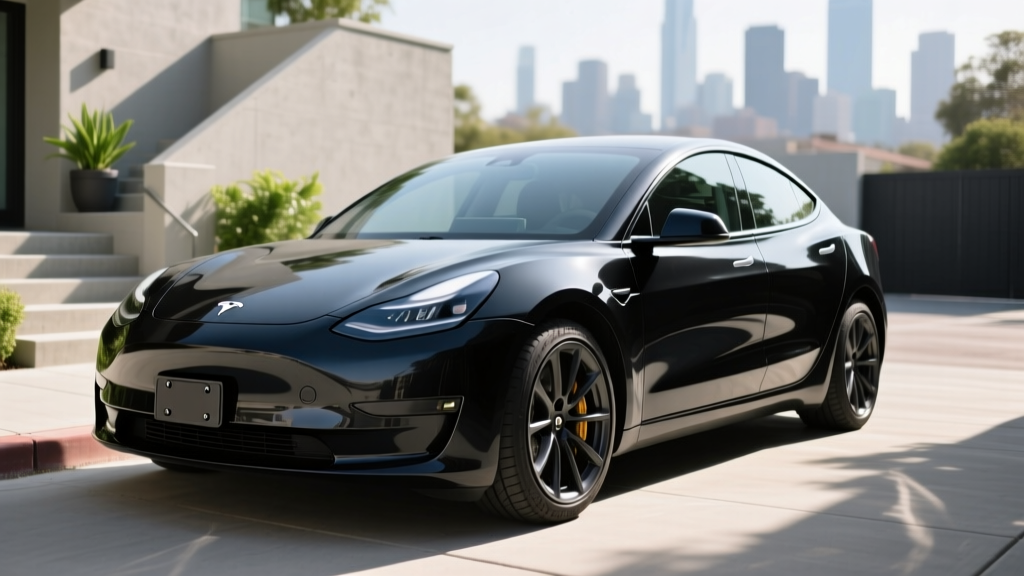
The 2019 Tesla Model 3 remains one of the most compelling used electric vehicles on the market in 2026. Whether you're eyeing the Standard Range Plus at ~$18,000 or a Long Range AWD near $24,000, this generation of the Model 3 delivers class-leading efficiency, access to the Supercharger network, and over-the-air updates that keep aging hardware relevant. But as a used EV purchase, battery health, warranty status, and the federal used-EV tax credit (IRS §25E, not §30D) demand careful evaluation. This review breaks down every spec that matters for a smart buy.
| Spec | Standard Range Plus (SR+) | Long Range RWD | Long Range AWD | Performance |
|---|---|---|---|---|
| EPA Range | 240 mi | 310 mi | 310 mi | 310 mi |
| Battery (usable) | ~50 kWh (NMC) | ~75 kWh (NMC) | ~75 kWh (NMC) | ~75 kWh (NMC) |
| MPGe (combined) | 134 MPGe | 130 MPGe | 120 MPGe | 116 MPGe |
| kWh/100 mi | 25 | 26 | 28 | 29 |
| 0-60 mph | 5.3 sec | 5.2 sec | 4.4 sec | 3.2 sec |
| Horsepower | 283 hp | 283 hp | 346 hp | 450 hp |
| Drivetrain | RWD | RWD | Dual-Motor AWD | Dual-Motor AWD |
| Top Speed | 140 mph | 140 mph | 135 mph | 162 mph |
| Peak DC Charge | 170 kW | 250 kW (V3) | 250 kW (V3) | 250 kW (V3) |
| 10-80% DCFC Time | ~30 min | ~28 min | ~28 min | ~28 min |
| Level 2 (240V/48A) | 11.5 kW / ~44 mi/hr | 11.5 kW / ~44 mi/hr | 11.5 kW / ~44 mi/hr | 11.5 kW / ~44 mi/hr |
| Cargo (trunk + frunk) | 15 + 3.1 cu ft | 15 + 3.1 cu ft | 15 + 3.1 cu ft | 15 + 3.1 cu ft |
| Rear Legroom | 35.2 in | 35.2 in | 35.2 in | 35.2 in |
| Battery Warranty | 8 yr / 100,000 mi | 8 yr / 120,000 mi | 8 yr / 120,000 mi | 8 yr / 120,000 mi |
| Orig. MSRP | $39,490 | $48,490 | $52,490 | $58,990 |
Sources: EPA fueleconomy.gov, Tesla 2019 owner's manual.
Real-World Range: What to Actually Expect
The 2019 Model 3 uses NMC (nickel manganese cobalt) battery chemistry across all trims — there was no LFP option in the US market until Tesla introduced the 2021 Standard Range with CATL cells. NMC packs deliver excellent energy density but degrade slightly faster than LFP when held at 100% SoC daily. For a used buyer, this means checking the vehicle's State of Health (SoH) is critical.
How to check battery health on a used 2019 Model 3:
- Navigate to Settings → Software → Additional Vehicle Information to see the battery's nominal full-charge range
- Compare the displayed range at 100% charge against the original EPA figure — anything under 90% retention signals meaningful degradation
- Request a Tesla Service battery health report (typically free at a Service Center)
- Check whether the vehicle has been consistently charged to 100% (an NMC no-no for daily use) or kept between 20-80%
The battery warranty on the SR+ covers 8 years/100,000 miles, while Long Range and Performance trims carry 8 years/120,000 miles. Tesla warrants that the battery will retain at least 70% of its original capacity during the warranty period. For a 2019 model, that warranty expires between 2027 and 2028 — meaning most used examples still carry 1-3 years of battery coverage in 2026. This is a significant value protector.
Charging: DC Fast, Level 2, and Supercharger Access
| Charging Method | Power (kW) | Miles Added per Hour | Notes |
|---|---|---|---|
| Level 1 (120V household) | ~1.2 kW | ~4-5 mi/hr | Emergency/trickle only |
| Level 2 (240V/32A Mobile Connector) | ~7.7 kW | ~30 mi/hr | Included adapter; NEMA 14-50 |
| Level 2 (240V/48A Wall Connector) | 11.5 kW | ~44 mi/hr | Optimal home setup |
| DC Fast (Tesla V3 Supercharger) | Peak 250 kW | ~170 mi in 15 min | LR/Perf only; tapers above 60% |
| DC Fast (Tesla V2 Supercharger) | Peak 150 kW | ~130 mi in 15 min | Older stations; still common |
| DC Fast (CCS via adapter) | Peak 150-175 kW | Varies by station | Tesla CCS adapter required (sold separately ~$250) |
Charging curve reality check: The 2019 Long Range and Performance models can peak at 250 kW on a V3 Supercharger, but only at low states of charge (roughly 10-30% SoC). The charge rate tapers progressively — by 60% SoC you're typically seeing 80-100 kW, and above 80% it drops below 40 kW. This is why Tesla quotes 10-80% in roughly 28 minutes rather than a full charge time. Plan road-trip stops around the 10-80% window for maximum efficiency.
The Standard Range Plus is limited to ~170 kW peak on DC fast charging, making its 10-80% session closer to 30-32 minutes. On Level 2, all trims accept up to 11.5 kW (48 amps), which fully replenishes even the 75 kWh pack in about 7-8 hours — ideal for overnight charging.
Supercharger access is a major 2019 Model 3 advantage. Unlike non-Tesla EVs from the same era that rely on the still-inconsistent Electrify America or EVgo networks, every 2019 Model 3 has native access to Tesla's Supercharger network, which remains the most reliable DC fast-charging infrastructure in North America. With a Tesla CCS adapter (~$250), you can also use third-party CCS stations, doubling your options on road trips.
Performance and Driving Dynamics
Even the base 2019 SR+ delivers brisk acceleration at 5.3 seconds to 60 mph — quicker than most gas-powered compact sedans of the era. The Long Range AWD drops that to 4.4 seconds with the security of dual-motor all-wheel drive, while the Performance variant hits 3.2 seconds with Track Mode for aggressive handling calibration.
All trims share the same low center of gravity thanks to the under-floor battery pack, yielding flat cornering and responsive steering. The regenerative braking system is strong enough for near one-pedal driving in most conditions, though unlike some competitors, the 2019 Model 3 does not offer adjustable regen levels — it's a single, fixed (and strong) setting.
Notable driving limitations:
- Ride quality on the 2019 model is firm, especially with the 19-inch Sport Wheels. The 18-inch Aero Wheels offer a noticeably more compliant ride.
- Road noise is above average for the segment — Tesla improved sound insulation in the 2021 refresh.
- The suspension lacks adaptive damping, so potholed urban roads transmit more impact than in a BMW 3 Series or Mercedes C-Class.
Interior, Tech, and Autopilot
The 2019 Model 3's interior is famously minimalist: a single 15-inch landscape touchscreen handles every function — climate, navigation, media, vehicle settings, and even the speedometer. There is no instrument cluster, no head-up display, and no physical buttons beyond the steering-wheel scroll wheels and hazard switch. This is either liberating or maddening depending on your tolerance for screen-based controls.
Infotainment and features:
- 15-inch touchscreen with responsive interface and regular OTA updates (2019 cars still receive updates in 2026)
- Premium audio: 14 speakers, 1 subwoofer, 2 amplifiers (Long Range/Performance); 8 speakers on SR+
- Navigation with real-time traffic and Supercharger routing
- Streaming services (Spotify, Tidal, podcasts) built in — requires Premium Connectivity subscription ($10/month in 2026)
- Sentry Mode (dashcam/surveillance), Dog Mode, and Summon (basic)
- Glass roof with excellent UV protection but significant solar heat gain in summer — a sunshade is recommended
Autopilot and driver assistance:
The 2019 Model 3 comes standard with Tesla's Basic Autopilot: adaptive cruise control and lane-centering assist on highways. The Enhanced Autopilot package ($6,000 at the time, now often bundled or transferable on used cars) adds Navigate on Autopilot (automatic highway interchanges), Auto Lane Change, Autopark, and Summon. The FSD package ($7,000-$10,000 depending on when purchased) adds traffic light and stop sign recognition and city-street autosteer — though FSD Supervised in 2026 still requires constant driver oversight and is not a replacement for attentive driving.
From a safety standpoint, the 2019 Model 3 earned a 5-star overall rating from NHTSA and a Top Safety Pick+ award from IIHS, with top marks in every crash-test category. The active safety systems remain competitive in 2026 thanks to continuous OTA improvements.
Pricing, Used Market Value, and Tax Credits
| Trim | Avg. Used Price (2026) | Federal Used EV Credit (§25E) | Net Cost After Credit |
|---|---|---|---|
| Standard Range Plus | $17,000 – $20,000 | Up to $4,000 (30% of sale price) | $13,000 – $16,000 |
| Long Range RWD | $20,000 – $23,000 | Up to $4,000 | $16,000 – $19,000 |
| Long Range AWD | $22,000 – $26,000 | Up to $4,000 | $18,000 – $22,000 |
| Performance | $24,000 – $29,000 | Up to $4,000 | $20,000 – $25,000 |
Critical tax credit clarification: The 2019 Tesla Model 3 is no longer eligible for the new-vehicle federal tax credit (IRS §30D). However, it may qualify for the Used Clean Vehicle Credit (IRS §25E), which provides up to $4,000 — calculated as 30% of the sale price, capped at $4,000. This credit has specific requirements:
- Sale price cap: Vehicle must sell for $25,000 or less
- Buyer income limits: AGI ≤ $75,000 (single), $112,500 (head of household), $150,000 (joint)
- Vehicle age: Must be at least 2 model years old (2019 qualifies in 2026)
- Dealer requirement: Must be purchased from a licensed dealer (private-party sales do not qualify)
- Battery capacity: Minimum 7 kWh (all Model 3 trims exceed this)
- First-time transfer: Credit can only be claimed once per vehicle; verify the previous owner did not already use this car for a §25E claim
- Point-of-sale: Credit can be transferred to the dealer at purchase for an immediate price reduction
Source: IRS.gov — Used Clean Vehicle Credit. Tax rules are subject to change. Consult a tax professional before relying on credit eligibility.
The $25,000 sale-price cap is the key constraint. Most 2019 SR+ and Long Range RWD examples fall under it. Long Range AWD models hover right at the boundary — you'll need to negotiate at or below $25,000 to qualify. Performance models often exceed the cap and will not be eligible.
Pros, Cons, and Who Should Buy
- Best-in-class efficiency (25-29 kWh/100 mi) keeps charging costs low
- Supercharger network access — the most reliable DCFC infrastructure in North America
- OTA updates still arriving in 2026 — features and UI continue to improve
- Top safety ratings (NHTSA 5-star, IIHS TSP+)
- Strong 0-60 performance across all trims
- Remaining battery warranty (1-3 years) on most examples
- Up to $4,000 federal used-EV tax credit when priced ≤ $25,000
- Low maintenance costs — no oil changes, minimal brake wear with regen
- Firm ride and notable road noise vs. luxury competitors
- No physical buttons — all controls via touchscreen (including glovebox and mirror adjustments)
- Rear seat is tight for adults on long trips (35.2" legroom vs. 38"+ in midsize sedans)
- Glass roof creates cabin heat in summer; aftermarket sunshade recommended
- 2019 hardware (HW3.0) limits some newer FSD features available on HW4.0+ vehicles
- No heat pump — resistive cabin heater reduces winter range significantly
- CCS adapter required for non-Tesla DCFC stations (~$250 extra)
- Insurance premiums remain above segment average
- Choose the SR+ if: You're a daily commuter driving under 40 miles round-trip with reliable home charging. You'll rarely need the full range, and the lower used price maximizes the §25E credit value.
- Choose the Long Range RWD if: You want maximum range without the AWD price premium and live in a mild-winter climate.
- Choose the Long Range AWD if: You need all-weather capability, take regular road trips (300+ miles), or live in a region with snow and ice. The dual-motor setup adds genuine traction security.
- Choose the Performance if: You prioritize acceleration and handling and don't mind paying above the §25E credit threshold. Best for enthusiasts who value 3.2-second 0-60 times and Track Mode.
- Look elsewhere if: You need a spacious family sedan (consider a used Model S or Model Y), prefer physical controls, or want the longest warranty runway (a 2022+ model offers more coverage).
2019 Model 3 vs. Key Used-EV Competitors
| Spec | 2019 Tesla Model 3 LR AWD | 2019 Chevy Bolt EV | 2020 Hyundai Kona Electric |
|---|---|---|---|
| EPA Range | 310 mi | 238 mi | 258 mi |
| Battery | ~75 kWh NMC | 60 kWh NMC | 64 kWh NMC |
| DC Fast Charge Peak | 250 kW | 55 kW | 77 kW |
| 10-80% DCFC | ~28 min | ~60 min | ~47 min |
| 0-60 mph | 4.4 sec | 6.5 sec | 6.4 sec |
| MPGe (combined) | 120 | 118 | 120 |
| Used Price (2026) | $22,000-$26,000 | $12,000-$15,000 | $14,000-$17,000 |
| DCFC Network | Supercharger + CCS | CCS only | CCS only |
The 2019 Model 3's primary advantages over the Bolt and Kona Electric are DC fast-charging speed and Supercharger access. The Bolt's 55 kW peak charge rate makes road trips genuinely painful — a 10-80% session takes over an hour. The Kona Electric is better but still can't match Tesla's infrastructure advantage. If you primarily drive locally, the Bolt offers excellent value at $12,000-$15,000. If road trips are part of your routine, the Model 3's charging ecosystem is worth the premium.
Ownership Costs: What to Budget in 2026
| Category | Estimated Cost | Notes |
|---|---|---|
| Purchase Price (after §25E) | $18,000 – $22,000 | If eligible for full $4,000 credit |
| Home Charging (Level 2 install) | $500 – $2,000 | One-time; varies by panel/permit |
| Electricity (12,000 mi/yr) | $2,400 – $4,200 total | $0.08-$0.14/kWh home rate; 28 kWh/100mi |
| Insurance (5 years) | $7,500 – $12,000 | Higher than ICE sedans; shop around |
| Maintenance (5 years) | $800 – $1,500 | Tire rotations, cabin filter, wiper fluid, brake fluid check |
| Tires (1 replacement set) | $800 – $1,400 | EVs wear tires faster due to weight + torque |
| Premium Connectivity | $600 | $10/mo × 60 months (optional) |
The 2019 Model 3's operating costs are dramatically lower than a comparable gas sedan. At $0.12/kWh and 28 kWh/100 miles, you're paying roughly $0.034 per mile for electricity — versus $0.12-$0.15 per mile for a 30 MPG gas car at $3.50/gallon. Over 60,000 miles, that's a fuel savings of $5,000-$7,000. Insurance remains the ownership pain point — expect premiums 20-40% above equivalent gas sedans due to higher repair costs and Tesla's aluminum/structural parts pricing.
Frequently Asked Questions
What is the real-world range of the 2019 Tesla Model 3?
The EPA rates the Long Range at 310 miles and the SR+ at 240 miles. In real-world highway driving at 70-75 mph, expect 260-280 miles (LR) and 190-210 miles (SR+). In freezing weather, subtract 20-35% due to the resistive cabin heater — the 2019 Model 3 does not have a heat pump, which was introduced in the 2021 refresh. Plan for 200-230 miles (LR) and 150-170 miles (SR+) in winter highway conditions.
How fast does the 2019 Model 3 charge at home and on the road?
At home on a 240V/48A Tesla Wall Connector, all trims charge at up to 11.5 kW, adding roughly 44 miles of range per hour. A full overnight charge (8 hours) restores the entire battery. On DC fast charging, the Long Range and Performance models peak at 250 kW on a V3 Supercharger, completing a 10-80% session in about 28 minutes. The SR+ peaks at ~170 kW, taking roughly 30-32 minutes for the same window.
Does the 2019 Model 3 qualify for any federal tax credit in 2026?
Not the new-vehicle §30D credit — that only applies to new purchases. However, it may qualify for the Used Clean Vehicle Credit (§25E), which provides up to $4,000 (30% of sale price, capped at $4,000). The vehicle must sell for $25,000 or less from a licensed dealer, and the buyer's AGI must fall under income limits ($75,000 single / $150,000 joint). Consult the IRS §25E guidelines and a tax professional before relying on this credit.
Is the 2019 Model 3 worth buying over a newer used EV?
It depends on your priorities. The 2019 Model 3 offers the best combination of range, charging speed, Supercharger access, and price in the sub-$25,000 used EV market. A 2021+ Model 3 adds a heat pump (better winter range), refreshed interior, and HW4.0 for improved FSD — but costs $28,000-$35,000 used. If you live in a mild climate and prioritize value, the 2019 is the sweet spot. If winter range loss is a major concern, the heat pump in a 2021+ model is worth the premium.
What are the biggest risks of buying a used 2019 Model 3?
Three main risks: (1) Battery degradation — check SoH before purchase; NMC chemistry degrades faster if routinely charged to 100%. (2) Expired or near-expiry battery warranty — the 8-year coverage started at the original sale date, so a 2019 car's warranty expires in 2027-2028. (3) Out-of-warranty repair costs — if the drive unit, touchscreen, or HVAC system fails after the 4-year/50,000-mile basic warranty, repairs can cost $2,000-$5,000+. Purchase from a dealer offering a supplemental warranty or budget for potential repairs.
Can I charge a 2019 Model 3 at non-Tesla charging stations?
Yes, but you'll need the Tesla CCS adapter (~$250 from Tesla's shop). The 2019 Model 3 uses Tesla's proprietary connector (which later became the NACS standard). With the CCS adapter, you can use Electrify America, EVgo, ChargePoint, and other CCS-equipped networks. Without it, you're limited to Tesla Superchargers and destination chargers. For road-trip flexibility, the adapter is an essential purchase.