Quick Verdict: The 2019 Model 3 in 2026
The 2019 Tesla Model 3 was a watershed vehicle — the first mass-market EV that proved electric sedans could deliver over 300 miles of range, access a proprietary fast-charging network, and receive meaningful software updates years after purchase. In 2026, it remains one of the most common used EVs on the market, with over 450,000 units sold in the U.S. alone during the 2018-2019 model years. For buyers considering a used 2019 Model 3 today, the value proposition is compelling: a well-equipped Long Range AWD model now trades between $18,000 and $24,000 depending on mileage and condition, and may qualify for the up-to-$4,000 used-EV federal tax credit under IRS §25E rules.
But a 7-year-old EV demands scrutiny. Battery degradation, outdated hardware, and evolving competition from the Hyundai Ioniq 6, Chevrolet Equinox EV, and even the refreshed Tesla Model 3 (2024+) mean buyers need hard data before committing. This review covers every spec that matters.
Range, Battery & Efficiency
The 2019 Model 3 was offered in three primary trims, each with a different battery and range profile:
| Trim | EPA Range | Battery (usable kWh) | Chemistry | MPGe (combined) | kWh/100 mi |
|---|---|---|---|---|---|
| Standard Range Plus (RWD) | 240 mi | ~50 kWh | NMC (2170 cells) | 141 MPGe | 24 |
| Long Range RWD | 310 mi | ~75 kWh | NMC (2170 cells) | 141 MPGe | 24 |
| Long Range AWD (Dual Motor) | 310 mi | ~75 kWh | NMC (2170 cells) | 133 MPGe | 25 |
| Performance AWD | 310 mi | ~75 kWh | NMC (2170 cells) | 125 MPGe | 27 |
Source: EPA fueleconomy.gov
EPA Sticker: 220-310 mi (depending on trim)
Highway driving (70-80 mph): Expect 240-265 mi on the Long Range models — roughly 15% below EPA in sustained highway use.
Cold weather (below 32°F): Range drops 20-35% depending on severity and cabin heating use. A Long Range AWD may deliver 200-230 mi in a 20°F winter commute.
Mixed city/highway (mild weather): 275-295 mi is achievable on the Long Range, close to EPA figures thanks to strong regenerative braking in stop-and-go traffic.
Note: 2019 Model 3 trims use NMC (nickel-manganese-cobalt) chemistry, not the LFP (lithium iron phosphate) batteries Tesla introduced in the Standard Range model starting in late 2021. NMC offers higher energy density but benefits from charging to 80-90% daily rather than 100% for longevity.
Battery Degradation in 2026
After seven years of service, 2019 Model 3 battery packs show measurable but generally manageable degradation. According to aggregated fleet data from Tesloop and Recurrent Auto, NMC-equipped Model 3 vehicles typically retain 88-93% of original capacity at 80,000-100,000 miles. Some units that were routinely charged to 100% and frequently DC fast-charged show retention closer to 85%. A Long Range that originally delivered 310 EPA miles may now realistically offer 265-285 miles at full charge.
The battery warranty for 2019 Long Range and Performance models is 8 years / 120,000 miles (whichever comes first), with a guaranteed minimum 70% capacity retention. Standard Range Plus models carry an 8-year / 100,000-mile battery warranty. Buyers in 2026 should check the remaining warranty window carefully — most 2019 models will have battery warranty coverage expiring in 2027.
Charging Speed & Infrastructure
Charging capability is where the 2019 Model 3 still competes well, though it falls short of Tesla's latest V4 Supercharger speeds and rival 800V architectures from Hyundai/Kia and Porsche.
| Charging Level | Power (kW) | Speed | Notes |
|---|---|---|---|
| Level 1 (120V outlet) | ~1.4 kW | ~3-4 mi/hr | Emergency/top-up only |
| Level 2 (240V home, 32A Mobile Connector) | 7.7 kW | ~30 mi/hr | Standard NEMA 14-50 or Wall Connector |
| Level 2 (240V, 48A Wall Connector) | 11.5 kW | ~44 mi/hr | Requires hardwired 60A circuit |
| DC Fast (V2 Supercharger) | 150 kW peak | 10-80% in ~30 min | Standard Range / older Long Range |
| DC Fast (V3 Supercharger) | 250 kW peak | 10-80% in ~25-28 min | Long Range & Performance (via 2019.8+ OTA update) |
Charging Curve Reality
The 2019 Model 3's peak DC fast-charge rate is not sustained. On a V3 Supercharger (250 kW capable), the Long Range model peaks at 250 kW only between roughly 10-20% state of charge, then tapers to ~150 kW by 40%, ~100 kW by 60%, and ~50 kW by 80%. The practical 10-80% session takes approximately 25-28 minutes — competitive with most 2026 EVs on 400V architectures, but slower than the 18-minute 10-80% times of 800V vehicles like the Hyundai Ioniq 5 or Kia EV6.
One significant advantage: the 2019 Model 3 uses Tesla's proprietary connector, granting seamless access to the Tesla Supercharger network — still the most reliable and extensive DC fast-charging network in North America. In 2024-2025, Tesla opened many Supercharger stalls to non-Tesla EVs via the NACS standard, but Tesla-connector vehicles retain the most frictionless plug-and-charge experience.
Home Charging Setup
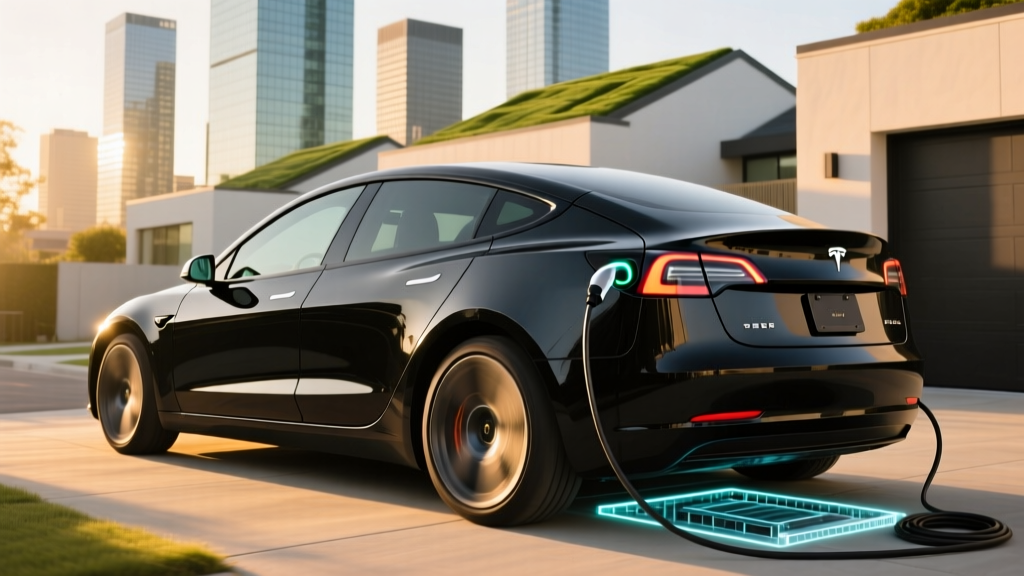
For daily home charging, most 2019 Model 3 owners install a Tesla Wall Connector on a 60-amp circuit, delivering up to 48 amps (11.5 kW) to the vehicle's onboard charger. This adds approximately 44 miles of range per hour of charging — enough to fully replenish a Long Range battery in roughly 7 hours. A NEMA 14-50 outlet on a 50-amp circuit delivers 32 amps (7.7 kW), adding about 30 miles per hour.
Performance & Driving Dynamics
The 2019 Model 3 lineup covers a wide performance spectrum:
- Standard Range Plus (RWD): 283 hp, 0-60 mph in 5.3 seconds, single rear motor
- Long Range RWD: 283 hp, 0-60 mph in 5.2 seconds, single rear motor
- Long Range AWD (Dual Motor): 346 hp, 0-60 mph in 4.4 seconds, dual motor all-wheel drive
- Performance AWD: 450 hp, 0-60 mph in 3.2 seconds, dual motor with track mode
All trims feature a low center of gravity from the floor-mounted battery pack, contributing to composed handling with minimal body roll. The Performance variant includes larger brakes, a lowered suspension, and 20-inch wheels. Steering is precise and quick across all trims, though some drivers find it artificially weighted — a common trait in electric power steering systems.
Regenerative braking is strong and configurable. In "Hold" mode, the 2019 Model 3 enables near-one-pedal driving, slowing the car to a complete stop without touching the brake pedal in most conditions. This reduces brake pad wear significantly — many owners report original brake pads lasting 80,000+ miles.
Interior, Cargo & Technology
The 2019 Model 3 interior is defined by minimalism. There is no traditional instrument cluster; all information — speed, navigation, media, climate — is displayed on a central 15-inch touchscreen. This design polarizes: some owners appreciate the clean aesthetic, while others miss physical controls for climate and mirrors (both adjusted via the touchscreen).
Cargo & Passenger Dimensions
- Rear trunk: 15.0 cu ft
- Front trunk (frunk): 3.1 cu ft
- Total cargo: 18.1 cu ft (with rear seats up)
- Rear legroom: 35.2 inches
- Front headroom: 40.3 inches (glass roof reduces perceived headroom slightly)
- Seating: 5 passengers (tight for 3-across in the rear)
Cargo capacity is competitive with compact sedans like the Honda Accord (16.7 cu ft trunk) but trails hatchback EVs like the Chevrolet Bolt EUV (58.1 cu ft with seats folded). The frunk adds useful space for charging cables or a small bag.
Standout Tech Features
- Over-the-air (OTA) updates: The 2019 Model 3 has received hundreds of software updates since delivery, including improved battery preconditioning, new UI layouts, Sentry Mode (dashcam surveillance), and entertainment apps
- Autopilot (standard): SAE Level 2 driver-assist with adaptive cruise control and lane centering. Capable on highways but requires continuous driver supervision — this is not self-driving
- Full Self-Driving Capability (optional, $5,000-$7,000 at purchase): Adds Navigate on Autopilot, auto lane change, Smart Summon, and traffic light/stop sign recognition. Still SAE Level 2 — the driver must remain fully engaged. FSD does not make the vehicle autonomous
- Sentry Mode: Records surroundings via external cameras when parked; acts as a deterrent and evidence tool
- Phone-as-key: Bluetooth-based keyless entry and start — no fob needed
Notable Drawbacks
- No physical instrument cluster or heads-up display
- Rear seat comfort is mediocre on long trips — cushion is short and floor is high due to the battery
- Build quality inconsistency on 2019 models: panel gaps, paint imperfections, and interior rattles were common (improved in later model years)
- Glass roof offers no shade; cabin can get hot in summer without aftermarket tinting or sunshade
- No Apple CarPlay or Android Auto — Tesla's proprietary infotainment only
Pricing, Tax Credits & Ownership Costs
The 2019 Model 3 is no longer sold new. Here is what the used market and incentive landscape look like in 2026:
| Trim | Original MSRP | Typical Used Price (2026) | Federal Used EV Credit (§25E) | Effective Price After Credit |
|---|---|---|---|---|
| Standard Range Plus | $39,490 | $14,000–$17,000 | Up to $4,000 (30% of sale price, max $4,000) | ~$10,000–$13,000 |
| Long Range RWD | $47,990 | $18,000–$21,000 | Up to $4,000 | ~$14,000–$17,000 |
| Long Range AWD | $50,990 | $19,000–$24,000 | Up to $4,000 | ~$15,000–$20,000 |
| Performance AWD | $57,990 | $22,000–$27,000 | Up to $4,000 | ~$18,000–$23,000 |
Federal Used EV Tax Credit — §25E Eligibility Rules
The IRS §25E credit provides up to $4,000 (30% of the sale price) for qualifying used EVs. Key requirements for the 2019 Model 3:
- Sale price must be $25,000 or less — most 2019 Model 3 trims qualify at current used prices, but low-mileage Performance models may exceed the cap
- Buyer income limits: Adjusted gross income must not exceed $75,000 (single), $112,500 (head of household), or $150,000 (joint filers)
- Vehicle must be at least 2 model years old — 2019 models qualify
- Must be purchased from a licensed dealer (private-party sales do not qualify)
- Buyer can claim the credit only once every 3 years
- Point-of-sale transfer: The credit can be applied at purchase, reducing the out-of-pocket price immediately
Note: The §25E credit is separate from the new-vehicle §30D credit and has its own rules. Always consult a tax professional and verify current IRS guidance before purchasing.
5-Year Ownership Cost Snapshot
Beyond the purchase price, 2019 Model 3 ownership in 2026 involves:
- Electricity cost: ~$0.14/kWh national average → ~$3.36 per 100 miles (vs. ~$12-15 per 100 miles for a 30 MPG gas sedan at $3.50/gal)
- Insurance: Higher than average for the segment — expect $1,800-$2,800/year depending on state, driving record, and coverage level. Tesla's own insurance product is available in some states
- Maintenance: Minimal — no oil changes, no spark plugs, reduced brake wear. Expect $300-$500/year for cabin air filter, wiper fluid, tire rotation
- Tires: EVs are heavier and produce instant torque; expect tire replacement every 25,000-40,000 miles at $800-$1,200 for a set of four
- Depreciation: 2019 Model 3 values have stabilized after steep 2022-2024 declines driven by Tesla's new-vehicle price cuts
Pros & Cons
- Best-in-class Supercharger network access — most reliable DC fast-charging in North America
- Excellent efficiency (24-27 kWh/100 mi) — goes further per kWh than most competitors
- Strong OTA update history — the car has improved materially since 2019
- Competitive performance even in base trims (5.3s 0-60)
- Low maintenance costs vs. ICE vehicles
- May qualify for up to $4,000 federal used-EV credit
- Sentry Mode and dashcam features add security
- No Apple CarPlay or Android Auto
- 2019 build quality issues (panel gaps, paint, rattles)
- Rear seat comfort and headroom are below class average
- Touchscreen-only controls for climate, mirrors, and glovebox
- Battery warranty expiring 2027 for most 2019 units
- Insurance premiums above segment average
- Glass roof heat in summer
- No heads-up display or traditional instrument cluster
2019 Model 3 vs. 2026 Competition
The used 2019 Model 3 competes against both newer used EVs and new budget EVs. Here is how it stacks up against key alternatives at similar price points:
- vs. 2021-2022 Chevrolet Bolt EV/EUV (used, ~$15,000-$19,000): The Bolt offers more cargo space (hatchback) and a comfortable ride but charges far slower on DC (55 kW peak vs. 250 kW). The Model 3 wins on range, charging speed, and highway capability.
- vs. 2024 Hyundai Ioniq 6 SE (new, ~$38,000 before credit): The Ioniq 6 offers 360 mi range, 800V fast charging (10-80% in 18 min), and CarPlay. But at nearly double the used Model 3 price, it targets a different buyer. If budget is the priority, the Model 3 wins.
- vs. 2024+ Tesla Model 3 Highland (new, ~$39,000 before credit): The refreshed Model 3 has a quieter cabin, ventilated seats, rear touchscreen, improved suspension, and slightly more range. Worth the premium if budget allows, but the 2019 model covers 85% of the experience at half the price.
- vs. 2023-2024 Tesla Model 3 (used, ~$25,000-$32,000): Newer used Model 3s have better build quality, the AMD Ryzen infotainment chip, and a heat pump (standard from 2021). If battery warranty longevity is a priority, a 2022+ model with remaining warranty is worth the premium.
Who Should Buy a 2019 Model 3 in 2026?
Choose the 2019 Model 3 if:
- You want the most affordable entry into the Tesla Supercharger ecosystem
- Your daily commute is under 80 miles round-trip (any trim covers this easily)
- You take 2-4 road trips per year and value reliable fast-charging infrastructure
- You qualify for the §25E used-EV credit and want to maximize value
- You appreciate OTA software improvements and tech-forward features
Look elsewhere if:
- You need a spacious rear seat for adults or child seats (consider a Model Y or Ioniq 5)
- You refuse to give up Apple CarPlay/Android Auto
- You want the longest possible remaining battery warranty (look at 2022+ models)
- You live in an extreme cold-weather climate and want a heat pump for winter efficiency (standard on 2021+ Model 3 only)
- You prioritize build quality and want tighter panel gaps (2022+ or the Highland refresh)
Frequently Asked Questions
What is the real-world range of the 2019 Tesla Model 3?
The EPA rates the Long Range at 310 miles and the Standard Range Plus at 240 miles. In real-world mixed driving in mild weather, expect 275-295 miles from the Long Range and 210-225 miles from the Standard Range Plus. Highway driving at 75+ mph reduces range by roughly 15%. In freezing temperatures, expect a 20-35% reduction. A 7-year-old battery with 90% health will proportionally reduce these figures.
How fast does the 2019 Model 3 charge?
On a Tesla V3 Supercharger, the Long Range and Performance models peak at 250 kW and charge from 10-80% in approximately 25-28 minutes. The Standard Range Plus peaks at around 150 kW with a 10-80% time of about 30-33 minutes. At home on a 48-amp Level 2 Wall Connector, expect about 44 miles of range per hour of charging, or a full charge in roughly 7 hours for the Long Range.
Does the 2019 Model 3 qualify for a federal tax credit?
Not the new-vehicle §30D credit — that applies only to new purchases. However, the 2019 Model 3 can qualify for the §25E used clean vehicle credit of up to $4,000 (30% of the sale price, capped at $4,000). Requirements include: sale price of $25,000 or less, purchase from a licensed dealer, buyer income below $75K/$112.5K/$150K thresholds (single/HOH/joint), and the buyer must not have claimed the used-EV credit in the past 3 years. See IRS §25E guidance for full details.
Is the 2019 Model 3 worth buying vs. competitors in 2026?
For the price ($14,000-$27,000 depending on trim), the 2019 Model 3 offers the best combination of range, charging speed, and Supercharger network access in the used EV market. Its main weaknesses are rear-seat comfort, build quality inconsistency, and the lack of Apple CarPlay. If those are dealbreakers, consider a used Chevrolet Bolt EUV (more space, slower charging) or save for a 2024+ Hyundai Ioniq 6 or refreshed Model 3.
What are the biggest pros and cons of the 2019 Model 3?
The biggest pros are Supercharger network access, strong efficiency (24-27 kWh/100 mi), excellent performance, continuous OTA updates, and low maintenance costs. The biggest cons are touchscreen-only controls, no CarPlay/Android Auto, 2019-era build quality issues, mediocre rear-seat comfort, and battery warranty that expires in 2027 for most units.
Does the 2019 Model 3 have a heat pump?
No. The 2019 Model 3 uses resistive (PTC) cabin heating, which draws significant energy from the battery in cold weather. Tesla introduced a heat pump in the Model 3 starting with the 2021 model year. This is one reason cold-weather range loss is more pronounced in the 2019 model compared to newer versions.
What should I check before buying a used 2019 Model 3?
Key items to verify: battery health (viewable in the Tesla app or via a third-party scan tool — look for 88%+ state of health), remaining battery warranty (8 years/120,000 miles from original in-service date for Long Range), tire condition (EVs wear tires faster), suspension noise (control arm bushings can wear by 80,000 miles), and whether the vehicle was in any accidents that may have affected the battery pack or structural integrity. A pre-purchase inspection at a Tesla Service Center or qualified EV mechanic is strongly recommended.
Warranty Summary
| Component | Coverage | 2026 Status |
|---|---|---|
| Basic Vehicle (bumper-to-bumper) | 4 years / 50,000 miles | Expired for all 2019 units |
| Battery & Drive Unit (Standard Range Plus) | 8 years / 100,000 miles (70% min retention) | Expires 2027 or at 100K miles |
| Battery & Drive Unit (Long Range / Performance) | 8 years / 120,000 miles (70% min retention) | Expires 2027 or at 120K miles |
| Restraint System | 5 years / 60,000 miles | Expired for most 2019 units |
| Corrosion (perforation) | 12 years / unlimited miles | Active through 2031 |
Safety ratings: The 2019 Tesla Model 3 earned a 5-star overall NHTSA safety rating and was an IIHS Top Safety Pick+ in applicable testing.
Disclaimer: Used vehicle prices, tax credit rules, and availability vary by location and time. Always verify current IRS rules at irs.gov, check vehicle history reports, and consult a tax professional before claiming any credits. Specifications based on EPA data and manufacturer records for the 2019 model year.