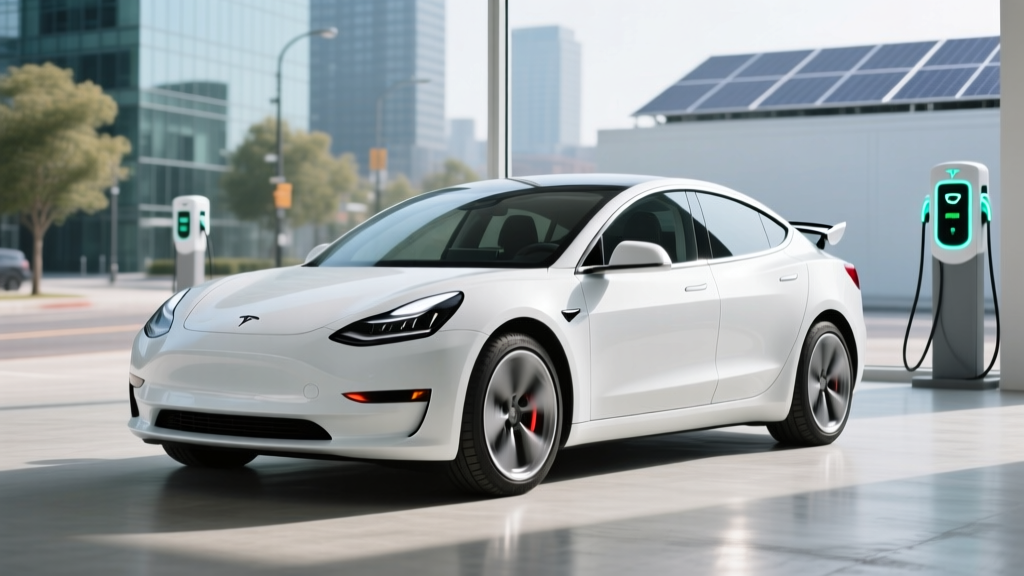
Quick Verdict: Still a Benchmark Used EV in 2026
Seven years after launch, the 2019 Tesla Model 3 remains one of the most searched used electric vehicles on the market — and for good reason. It set the template for the modern premium electric sedan: over 300 miles of EPA range (in Long Range trim), access to the Supercharger network, over-the-air updates, and acceleration that embarrassed sports cars costing three times as much. For 2026 used-EV shoppers, the 2019 Model 3 is a compelling value play, especially since pre-2022 examples may still qualify for the §25E used clean vehicle credit (up to $4,000) when purchased from a dealer, subject to income caps and a $25,000 maximum sale price.
This profile focuses on the specific trims, the 2019 Tesla Model 3 0-60 performance figures, real-world range expectations, and what ownership looks like in 2026 — battery health, charging infrastructure, and insurance realities included.
2019 Tesla Model 3 Trims, 0-60 Times, and Powertrain Specs
The 2019 Model 3 was sold in three distinct configurations. The 0-60 mph times below are Tesla's official claims, corroborated by independent testing from outlets like Car and Driver and Motor Trend.
| Trim | Drivetrain | 0-60 mph | Horsepower (est.) | Top Speed |
|---|---|---|---|---|
| Standard Range Plus (SR+) | Rear-Wheel Drive (RWD) | 5.3 seconds | ~283 hp | 140 mph |
| Long Range (LR) AWD | Dual-Motor AWD | 4.4 seconds | ~346 hp | 145 mph |
| Performance (LR AWD w/ Performance Upgrade) | Dual-Motor AWD | 3.2 seconds | ~450 hp | 162 mph |
The SR+ uses a single permanent-magnet synchronous reluctance motor on the rear axle. The Long Range and Performance trims add a front induction motor for all-wheel drive, torque vectoring, and redundancy. The Performance model's 3.2-second 0-60 time was achieved with the optional Performance Upgrade package (included Track Mode, larger brakes, 20-inch wheels, and lowered suspension).
Range, Efficiency, and Real-World Expectations
EPA range varied significantly by trim. Here are the official figures alongside what you should actually expect on the road in 2026, accounting for battery aging and real-world driving conditions.
| Trim | EPA Range | Battery (Usable) | Chemistry | Real-World (70°F, mixed) | Real-World (highway, 75 mph) | Cold Weather (20°F, mixed) |
|---|---|---|---|---|---|---|
| SR+ | 240 mi | ~50 kWh | NMC 2170 | ~210-225 mi | ~185-200 mi | ~160-180 mi |
| Long Range AWD | 310 mi | ~75 kWh | NMC 2170 | ~275-295 mi | ~245-265 mi | ~210-235 mi |
| Performance | 310 mi | ~75 kWh | NMC 2170 | ~260-285 mi | ~235-255 mi | ~200-225 mi |
Notes: Real-world figures assume a 2019 vehicle with 60,000-90,000 miles and ~8-12% battery degradation. Cold-weather estimates include cabin heating. Highway range drops ~15-20% vs. EPA due to aerodynamic drag at sustained speed.
All 2019 Model 3 variants use NMC (nickel-manganese-cobalt) chemistry in Tesla's 2170 cylindrical cell format, manufactured at the Gigafactory. NMC offers high energy density but is more sensitive to sustained 100% state-of-charge storage than LFP chemistry (which Tesla introduced in the SR+ for 2022). For a 2019 NMC pack, daily charging to 80-90% is recommended for longevity, reserving 100% for road trips.
Efficiency ratings from fueleconomy.gov list the 2019 Long Range AWD at 121 MPGe combined (28 kWh/100 mi), one of the most efficient AWD EVs of its era. The SR+ achieves 134 MPGe combined (25 kWh/100 mi).
Charging Speeds: DC Fast, Level 2, and Level 1
Charging capability is often the deciding factor for used-EV buyers. The 2019 Model 3 supports CCS1 charging via adapter (sold separately by Tesla for ~$175) in addition to its native NACS (Tesla) connector, giving you access to virtually every public network in North America as of 2026.
| Charging Level | Power / Voltage | Rate (mi/hr added) | Time (10-80%) | Notes |
|---|---|---|---|---|
| Level 1 (120V household) | ~1.4 kW | ~5 mi/hr | N/A (overnight only) | Emergency / trickle use |
| Level 2 (240V home, 48A) | 11.5 kW | ~44 mi/hr | ~7-8 hours (0-100%) | Requires NEMA 14-50 or hardwired Wall Connector |
| DC Fast (V3 Supercharger) | Peak 250 kW | Up to ~1,000 mi/hr peak | ~28-32 min (Long Range) | Peak sustained only to ~40% SoC; tapers significantly above 60% |
| DC Fast (V2 Supercharger) | Peak 150 kW | Up to ~600 mi/hr peak | ~38-45 min (Long Range) | Most common Supercharger type for 2019-era stations |
Charging-curve reality: The 2019 Model 3 Long Range peaks near 250 kW on a V3 Supercharger only when preconditioned and below ~30% SoC. By 50% SoC, the rate drops to ~120 kW. By 80%, it's around 50-60 kW. This is why the 10-80% time is ~28-32 minutes, not the "15 minutes" marketing sometimes implies. On V2 Superchargers (still widespread), expect 38-45 minutes for the same session.
For home charging, Tesla's Gen 2 Wall Connector (48 amps, hardwired to a 60A circuit) adds roughly 44 miles of range per hour. A full overnight charge from 20% to 80% takes about 6-7 hours for the Long Range. Installation costs for a home Level 2 setup typically range from $800-$2,500 depending on panel capacity and conduit run — budget for a potential $1,500-$3,000 panel upgrade if your home has a 100A service.
Pricing in 2026: Used Market and Tax Credits
The 2019 Model 3 was originally priced between $39,500 (SR+) and $57,990 (Performance). In the 2026 used market, expect the following approximate ranges based on mileage (50,000-90,000 mi) and condition:
| Trim | Original MSRP | 2026 Used Range | §25E Used Credit Eligible? | After Max Credit |
|---|---|---|---|---|
| Standard Range Plus | $39,500 | $17,000-$22,000 | Yes (if ≤$25,000 sale price, bought from dealer) | $13,000-$18,000 |
| Long Range AWD | $48,990 | $21,000-$27,000 | Partial (only units priced ≤$25,000 qualify) | $17,000-$27,000 |
| Performance | $57,990 | $24,000-$31,000 | Rarely (most above $25,000 cap) | $24,000-$31,000 |
The IRS §25E used clean vehicle credit provides up to $4,000 (or 30% of the sale price, whichever is lower) for qualifying used EVs. Key rules for 2019 Model 3 buyers:
- Sale price must be $25,000 or less — this primarily benefits SR+ and some Long Range examples.
- Buyer income caps: AGI ≤$75,000 (single), ≤$112,500 (head of household), ≤$150,000 (joint).
- Must be purchased from a licensed dealer — private-party sales do not qualify.
- Vehicle must be at least 2 model years old — a 2019 qualifies in 2026.
- Credit is non-refundable — you must have sufficient tax liability to claim it (point-of-sale transfer available through participating dealers).
Consult a tax professional to confirm eligibility, as IRS rules are subject to change and individual circumstances vary.
Interior, Tech, and Driver Assistance
The 2019 Model 3's cabin is famously minimalist: a single 15-inch landscape touchscreen handles navigation, media, climate, and vehicle settings. There are no physical gauges — speed and range appear in the upper-left corner of the screen. This is polarizing; some buyers love the clean aesthetic, others find it distracting.
Cargo and passenger space:
- Rear trunk: 15 cu ft
- Front trunk (frunk): 3.1 cu ft
- Total cargo: ~18.1 cu ft (less than a Toyota Camry's 15.1 cu ft trunk, but the Model 3's hatchback-style opening and fold-flat rear seats add utility)
- Rear legroom: 35.2 inches (tight for tall adults on long trips)
- Front headroom: 40.3 inches
Driver assistance: All 2019 Model 3s shipped with Tesla's Hardware 3 (HW3) Autopilot computer, supporting the current Autopilot suite (Traffic-Aware Cruise Control, Autosteer lane centering). Full Self-Driving (FSD) Capability was a $5,000-$7,000 add-on; in 2026, FSD (Supervised) remains a SAE Level 2 system — the driver must remain fully engaged, hands on or near the wheel, eyes on the road. It is not autonomous driving. Vehicles with FSD purchased outright transfer to the new owner; subscription-based FSD does not.
Standout tech:
- Over-the-air (OTA) software updates continue in 2026, adding features and refinements years after purchase.
- Sentry Mode (dashcam-based security recording) and Dog Mode (climate control for pets).
- Tesla app remote preconditioning, charging monitoring, and vehicle location.
- Supercharger network access — still the most reliable DC fast-charging network in North America, with NACS-native plug-and-charge simplicity.
Notable drawbacks:
- No Apple CarPlay or Android Auto — Tesla's proprietary infotainment only.
- Build quality inconsistency (panel gaps, paint defects) was a known issue for 2019 Fremont-built units.
- Rear seat comfort is below class average (short cushion, limited recline).
- No heads-up display; no physical buttons for climate or volume.
Warranty, Battery Longevity, and Maintenance
When buying a used 2019 Model 3, warranty coverage is critical. Tesla's original warranties:
| Component | SR+ (Standard Range) | Long Range / Performance |
|---|---|---|
| Basic Vehicle | 4 years / 50,000 mi | 4 years / 50,000 mi |
| Battery & Drive Unit | 8 years / 100,000 mi (70% min retention) | 8 years / 120,000 mi (70% min retention) |
In 2026, a 2019 Model 3's basic warranty has expired. However, the battery and drive unit warranty may still be active depending on mileage. A Long Range purchased in mid-2019 with 95,000 miles today would still have battery warranty coverage through 2027 or 120,000 miles — whichever comes first.
Battery degradation data: Aggregated fleet data (from sources like Recurrent Auto) shows the 2019 Model 3 NMC pack typically retains 88-92% capacity at 100,000 miles. Most degradation occurs in the first 20,000-30,000 miles, then stabilizes. A full battery replacement out of warranty costs approximately $12,000-$16,000 at a Tesla Service Center, though third-party repair shops now offer module-level repairs for $3,000-$6,000.
Maintenance: EVs eliminate oil changes, spark plugs, and transmission fluid. Expect to budget for cabin air filter replacement (~$50/yr), wiper fluid, brake fluid checks, and tire rotation. Regenerative braking extends pad life significantly — many Model 3 owners report original brake pads at 80,000 miles. Tires wear faster than on ICE vehicles due to instant torque and vehicle weight; budget $800-$1,400 for a set of four every 30,000-40,000 miles.
Who the 2019 Model 3 Suits Best
- You commute 30-80 miles daily and can charge at home (the LR AWD handles this effortlessly with range to spare).
- You want Supercharger access for road trips — still the gold standard for reliability and coverage in 2026.
- Performance matters: even the SR+ hits 0-60 in 5.3 seconds; the Performance trim's 3.2-second run is supercar territory.
- You value OTA updates that keep a 7-year-old car feeling current.
- You qualify for the §25E used credit, bringing the effective price under $15,000-$20,000.
- You need spacious rear seating for adults or car seats (the Model 3's rear is cramped; consider a Model Y or Hyundai Ioniq 5).
- You require Apple CarPlay/Android Auto — Tesla will never offer it.
- You live in a region with limited Supercharger or CCS infrastructure and cannot charge at home.
- Build quality and panel consistency are top priorities (2019 Fremont production had known variability).
- You want a warranty — the basic coverage has expired; only battery/drive unit may remain.
2019 Model 3 vs. Key 2026 Used-EV Competitors
At $18,000-$28,000, the 2019 Model 3 competes with several strong used EVs:
- 2019-2020 Chevrolet Bolt EV: 259 mi EPA, lower price (~$14,000-$18,000), but no DC fast charging upgrade on early models (50 kW max) and no Supercharger access.
- 2019 Hyundai Kona Electric: 258 mi EPA, good efficiency, but slower charging (75 kW peak) and limited public network reliability.
- 2020 Tesla Model Y (LR): More cargo and rear space, 316 mi EPA, but used prices start ~$28,000-$35,000.
- 2021 Volkswagen ID.4: 260 mi EPA, spacious crossover, CCS charging, but slower 0-60 (7.7 sec) and less Supercharger-equivalent infrastructure.
The Model 3's combination of range, charging speed, Supercharger network, and performance remains difficult to match at this price point.
Frequently Asked Questions
What is the real-world range of a 2019 Tesla Model 3 in 2026?
For a Long Range AWD with ~80,000 miles, expect 275-295 miles in mild mixed driving, 245-265 miles at sustained highway speeds, and 210-235 miles in cold weather (20°F). The SR+ delivers roughly 210-225 miles mixed. These figures account for 8-12% battery degradation typical at this age and mileage.
How fast does the 2019 Model 3 charge at home and on the road?
At home on a 48-amp Level 2 charger (11.5 kW), the Long Range adds ~44 miles per hour — a full overnight charge from 20-80% takes about 6-7 hours. On a V3 Supercharger (250 kW peak), a 10-80% session takes 28-32 minutes. On older V2 Superchargers (150 kW), expect 38-45 minutes. Note that charge speed tapers significantly above 60% SoC — this is normal lithium-ion behavior.
Does a used 2019 Model 3 qualify for any federal tax credit?
It does not qualify for the §30D new-vehicle credit (that applies only to new purchases). However, it may qualify for the §25E used clean vehicle credit — up to $4,000 or 30% of the sale price, whichever is less. The vehicle must be sold for $25,000 or less by a licensed dealer, and the buyer's AGI must fall within IRS income limits ($75K single / $150K joint). This credit primarily benefits SR+ and lower-priced Long Range examples.
Is the 2019 Model 3 Performance really a 3.2-second 0-60 car?
Yes — with the Performance Upgrade package (20-inch wheels, lowered suspension, Track Mode), Tesla's official claim is 3.2 seconds. Independent tests from Motor Trend and Car and Driver have confirmed 3.1-3.4 second runs depending on surface, temperature, and tire condition. This remains competitive with a Porsche 718 Cayman or BMW M2 in 2026.
Should I worry about battery replacement costs on a 2019 Model 3?
Battery failure before 120,000 miles is uncommon based on fleet data. Most 2019 packs retain 88-92% capacity at 100,000 miles. If the battery is still under the 8-year/120,000-mile warranty (Long Range/Performance), Tesla covers replacement if capacity drops below 70%. Out-of-warranty replacement runs $12,000-$16,000 at Tesla, or $3,000-$6,000 at third-party shops for module-level repair. Check the vehicle's battery health report in the Tesla app or service menu before purchasing.
Is Autopilot or FSD on a 2019 Model 3 actually self-driving?
No. Both Autopilot and FSD (Supervised) are SAE Level 2 driver-assistance systems. The driver must remain fully attentive, with hands on or near the steering wheel and eyes on the road at all times. FSD adds features like automatic lane changes, traffic light/stop sign recognition, and city street navigation, but it does not replace the driver. Only Level 4 services like Waymo operate without a human driver — and those are limited to specific geofenced areas.