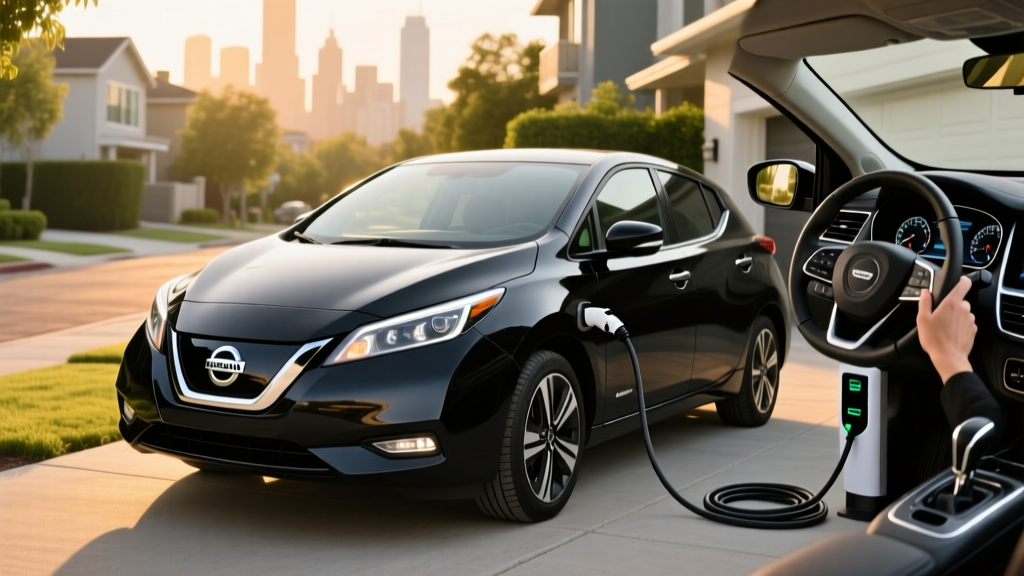
Quick Verdict: The 2019 Leaf SV as a Used EV in 2026
The 2019 Nissan Leaf SV occupies a specific niche in the used EV market: an affordable, practical commuter hatchback with enough range for daily driving and modest road trips. With the larger 40 kWh battery pack (introduced for the 2018 model year refresh), the Leaf SV delivers an EPA-estimated 150 miles of range — a meaningful jump from the older 24 kWh and 30 kWh packs that topped out at 84 and 107 miles, respectively.
In 2026, the 2019 Leaf SV is a used-vehicle purchase, typically trading between $9,000 and $14,000 depending on mileage, condition, and battery state of health (SoH). It's no longer eligible for the federal §30D new-vehicle tax credit, but buyers may qualify for the used EV tax credit (up to $4,000 or 30% of sale price, whichever is lower) if purchased from a licensed dealer and income caps are met. More on that below.
The Leaf SV is best understood as a value-oriented commuter — not a road-trip machine. Its CHAdeMO DC fast-charging connector is increasingly orphaned as the industry standardizes on NACS (Tesla's connector), and its air-cooled battery limits repeated fast-charging sessions. But for the right buyer — someone with home Level 2 charging, a sub-60-mile daily commute, and a tight budget — the 2019 Leaf SV remains a compelling entry point into EV ownership.
Range and Efficiency: EPA vs. the Real World
Real-World Expectation: 120–140 miles in mixed driving; 100–115 miles sustained highway at 70+ mph; 90–110 miles in freezing temperatures with cabin heat.
The 2019 Leaf SV's 40 kWh lithium-ion battery pack (NMC chemistry — nickel manganese cobalt) provides 150 miles of EPA-estimated range. On the EPA's fuel economy site, the Leaf is rated at 112 MPGe combined (123 city / 99 highway), translating to roughly 30 kWh per 100 miles.
Real-world range depends heavily on three factors:
- Speed: The Leaf's aerodynamics and single-speed reduction gear mean efficiency drops sharply above 65 mph. Expect 110–125 miles on a sustained 75 mph highway drive.
- Temperature: The Leaf uses resistive cabin heating (no heat pump), which is a significant energy draw. In sub-freezing conditions, range loss of 25–40% is typical. Owners in cold climates report winter ranges of 90–110 miles.
- Regenerative braking: The Leaf's e-Pedal mode and B-mode regen can recover meaningful energy in stop-and-go city driving, sometimes pushing real-world city range close to the EPA sticker.
One factor unique to the Leaf: its air-cooled (passive thermal management) battery. Unlike liquid-cooled packs in the Bolt EV or Model 3, the Leaf's battery cannot actively regulate temperature. This means range and charging speed both suffer in extreme heat or cold, and repeated DC fast-charging can trigger "Rapidgate" — Nissan's thermal-protection protocol that severely throttles charge rates when the battery gets warm.
Charging: CHAdeMO, Speeds, and the Connector Problem
| Level | Connector | Max Power | Rate | Time (0–100% or 10–80%) |
|---|---|---|---|---|
| Level 1 (120V) | J1772 | 1.4 kW | ~4 mi/hr | ~30+ hours (full) |
| Level 2 (240V) | J1772 | 6.6 kW | ~22 mi/hr | ~7 hours (full) |
| DC Fast | CHAdeMO | 50 kW | ~150 mi/hr (peak) | 10–80% in ~40–45 min |
The 2019 Leaf SV uses the CHAdeMO connector for DC fast charging and the standard J1772 inlet for Level 1 and Level 2 AC charging. This is the critical ownership consideration in 2026.
DC Fast Charging (50 kW peak): The Leaf's 50 kW CHAdeMO peak is modest by 2026 standards, where 150–350 kW CCS and NACS chargers are common. A 10–80% charge takes roughly 40–45 minutes under ideal conditions. However, the air-cooled battery means that on warm days or after highway driving, the car may throttle charging to 20–30 kW or even lower to protect the pack. This "Rapidgate" issue is well-documented among Leaf owners and makes the car unreliable for multi-stop road trips.
Level 2 Home Charging (6.6 kW): The onboard charger accepts up to 6.6 kW, meaning a full charge from empty takes about 7 hours on a 240V Level 2 station. This is perfectly adequate for overnight home charging — plug in when you get home, wake up to a full battery every morning. Most Leaf owners find Level 2 home charging completely sufficient for daily needs.
The CHAdeMO Problem: As of 2026, virtually every major automaker except Nissan (and Mitsubishi) has adopted or committed to the NACS (Tesla) connector. Electrify America, the largest US public charging network, has reduced CHAdeMO connector availability at newer stations. While CHAdeMO chargers still exist, the long-term trend is clear: CHAdeMO infrastructure will continue shrinking. CHAdeMO-to-NACS adapters exist but are expensive ($300–$500) and not universally reliable. This is the Leaf's biggest long-term ownership risk.
Performance and Drivetrain
The 2019 Leaf SV is a front-wheel-drive hatchback powered by a single AC synchronous electric motor producing 147 horsepower and 236 lb-ft of torque. Nissan rates the 0–60 mph time at approximately 7.9 seconds — adequate for merging and passing, though noticeably slower than rivals like the Chevrolet Bolt EV (200 hp, ~6.5 sec) or the Tesla Model 3 Standard Range.
The instant torque delivery (236 lb-ft from 0 rpm) makes the Leaf feel peppy around town, even if it runs out of breath at highway speeds. The single-pedal e-Pedal mode is well-implemented, allowing most drivers to avoid the friction brake pedal entirely in normal driving. Ride quality is comfortable and compliant, though the low-rolling-resistance tires prioritize efficiency over grip.
| Spec | 2019 Nissan Leaf SV |
|---|---|
| EPA Range | 150 miles |
| Battery (usable) | 40 kWh (NMC) |
| Motor | 147 hp / 236 lb-ft (FWD) |
| 0–60 mph | ~7.9 seconds |
| MPGe (combined) | 112 MPGe |
| DC Fast Charge | 50 kW (CHAdeMO) |
| Level 2 Charge | 6.6 kW (J1772) |
| Cargo Volume | 23.6 cu ft (rear seats up) / 30.0 cu ft (seats folded) |
| Seating | 5 passengers |
| Battery Warranty | 8 yr / 100,000 mi (capacity loss) |
Interior, Cargo, and Technology
The Leaf SV is the mid-level trim, sitting above the base S and below the top SL. SV-specific equipment includes:
- 8-inch touchscreen infotainment with Apple CarPlay and Android Auto
- NissanConnect EV telematics (remote charge status, climate pre-conditioning via app)
- ProPILOT Assist — Nissan's Level 2 driver-assistance suite (adaptive cruise + lane centering)
- Automatic Emergency Braking with pedestrian detection
- Blind Spot Warning and Rear Cross Traffic Alert
- Heated front seats and heated steering wheel (Cold Weather Package)
- LED headlights and fog lights
- Portable Level 1 charging cable (120V) included
Cargo space is generous for a compact hatchback: 23.6 cubic feet behind the rear seats and 30.0 cubic feet with the 60/40 rear seatbacks folded. The cargo area is flat and practical, though there is no frunk (front trunk) — the space under the hood houses the power electronics and onboard charger.
Notable drawbacks: The interior materials are hard-plastic-heavy, especially on the doors and lower dash. The infotainment system, while functional, looks dated compared to 2026-era EVs. The instrument cluster uses a mix of analog speedometer and a small digital display — serviceable but not modern. Rear legroom (33.5 inches) is adequate but tight for taller passengers on longer trips.
Pricing, Tax Credits, and Used Market Value
The 2019 Nissan Leaf SV originally carried an MSRP of approximately $33,030 (including destination). With the federal §30D tax credit of $7,500 available at the time, the effective new price was roughly $25,530 — a strong value proposition in 2019.
In the 2026 used market, the 2019 Leaf SV typically sells for $9,000–$14,000 from private sellers and licensed dealers, depending on mileage (common range: 40,000–80,000 miles), condition, geographic region, and battery health.
| Scenario | Estimated Cost |
|---|---|
| Used dealer price (avg.) | $11,000–$13,000 |
| Federal Used EV Credit (§25E) | Up to $4,000 (30% of sale price, max $4,000) |
| Effective price after credit | $7,000–$9,000 |
| Home Level 2 charger + install | $800–$2,000 (varies by panel/wiring) |
Used EV Tax Credit (§25E): As of 2026, the federal used clean vehicle credit provides up to $4,000 (or 30% of the sale price, whichever is less) for qualified used EVs purchased from a licensed dealer. Eligibility requirements per the IRS include:
- Vehicle must be at least 2 model years old (2019 qualifies)
- Sale price must be $25,000 or less (Leaf SV easily qualifies)
- Buyer AGI must not exceed $75,000 (single) / $112,500 (head of household) / $150,000 (joint)
- Vehicle must be purchased from a licensed dealer (private-party sales do not qualify)
- The credit can be transferred to the dealer at point of sale as a price reduction
This makes the 2019 Leaf SV one of the most affordable ways to enter EV ownership in 2026, with an effective price potentially under $9,000 after the credit.
Battery Health, Warranty, and Degradation
The 2019 Leaf SV's 40 kWh NMC battery pack carries Nissan's standard EV battery warranty: 8 years / 100,000 miles against capacity loss below 9 bars (out of 12) on the dashboard capacity gauge. A separate defect warranty covers 8 years / 100,000 miles.
Degradation reality: The air-cooled battery is the Leaf's Achilles heel for long-term health. Without active thermal management, the pack is more susceptible to heat-induced degradation, particularly in hot climates (Arizona, Texas, Southern California). Data from Leaf owners and fleet studies suggest average capacity loss of 10–20% over 5–7 years, though this varies widely by climate and charging habits. A 2019 Leaf in 2026 (7 years old) might show 85–92% state of health, translating to roughly 127–138 miles of current range.
Before purchasing a used Leaf, request a battery health report. The Leaf's dashboard displays a capacity bar gauge (out of 12 bars) — a car showing 12/12 bars at 60,000+ miles is in excellent shape. Third-party tools like Leaf Spy (via an OBD-II dongle) provide more granular SoH data. If the battery has dropped below 9 bars, it may be approaching warranty claim territory.
Replacement cost: Out of warranty, a 40 kWh Leaf battery replacement runs approximately $6,500–$9,000 (parts and labor) through Nissan dealerships, though third-party refurbishment options are emerging at lower prices.
Pros and Cons
Pros
- Very affordable used pricing ($9K–$14K), potentially under $9K after §25E credit
- Adequate 150-mile EPA range for most commutes
- Comfortable ride quality and easy-to-drive hatchback form factor
- Good cargo space (23.6 cu ft) for a compact
- ProPILOT Assist is a competent Level 2 highway aid
- Apple CarPlay / Android Auto standard on SV trim
- Low running costs: ~$0.04–$0.06 per mile on residential electricity
Cons
- CHAdeMO connector — shrinking public charging infrastructure
- Air-cooled battery — degraded fast-charging in heat, long-term SoH concerns
- 50 kW DC fast-charge peak is slow by 2026 standards
- No heat pump — significant winter range loss (25–40%)
- Modest 147 hp — adequate but not quick
- Dated interior materials and infotainment
- No frunk; limited front storage
Who Should Buy the 2019 Leaf SV?
Choose the 2019 Leaf SV if:
- You have reliable home Level 2 charging (garage or driveway with 240V access)
- Your daily round-trip commute is under 60 miles
- You live in a moderate climate (not extreme heat or prolonged sub-freezing winters)
- You want the lowest possible entry price into EV ownership
- You primarily drive in the city and suburbs, not long highway stretches
Look elsewhere if:
- You need reliable DC fast charging for road trips (get a Bolt EV, Model 3, or Ioniq 5 instead)
- You live in a hot climate and plan to keep the car 5+ years (battery degradation risk)
- You need more than 150 miles of real-world range
- You rely on public charging and your area has limited CHAdeMO infrastructure
Frequently Asked Questions
What is the real-world range of the 2019 Nissan Leaf SV?
The EPA rates the 2019 Leaf SV at 150 miles. In real-world mixed driving, expect 120–140 miles. Sustained highway driving at 70+ mph drops this to 100–125 miles. In freezing temperatures with cabin heat, plan for 90–115 miles. The air-cooled battery and lack of a heat pump are the primary factors limiting real-world range.
How fast does the 2019 Leaf SV charge?
On a Level 2 (240V) home charger, the Leaf accepts up to 6.6 kW, adding about 22 miles of range per hour — a full charge takes roughly 7 hours. On a CHAdeMO DC fast charger, it peaks at 50 kW, achieving a 10–80% charge in approximately 40–45 minutes under ideal conditions. However, the air-cooled battery may throttle charging speeds significantly in warm weather or after sustained driving.
Does the 2019 Leaf SV qualify for any tax credit in 2026?
The 2019 Leaf SV does not qualify for the new-vehicle §30D credit (it's a used purchase). However, it may qualify for the federal used EV tax credit (§25E) — up to $4,000 or 30% of the sale price, whichever is lower. Requirements include purchasing from a licensed dealer, a sale price under $25,000, and buyer income under $75K (single) / $150K (joint). Check the IRS used vehicle credit page for current rules and confirm with a tax professional.
Is the 2019 Leaf SV worth buying vs. competitors?
Compared to a used 2019 Chevrolet Bolt EV (238-mile range, CCS connector, liquid-cooled battery), the Leaf is cheaper but compromises on range, charging infrastructure, and battery thermal management. The Bolt is the better all-around used EV if you can find one in your budget ($12K–$17K). The Leaf wins on pure entry price and is a smart buy for budget-conscious commuters with home charging. Against a used Tesla Model 3 (2018–2019, ~$16K–$22K), the Leaf is far cheaper but lacks Supercharger access, range, and performance.
What should I check before buying a used 2019 Leaf?
Request a battery health check — look for 11 or 12 bars on the dashboard capacity gauge. Use a Leaf Spy OBD-II dongle for precise state-of-health data. Verify the car's charging history (frequent DC fast charging in hot climates accelerates degradation). Check for any open recalls on NHTSA's recall database. Confirm the SV trim includes ProPILOT Assist and the Cold Weather Package (heated seats/steering wheel). Test both the Level 2 and CHAdeMO charging ports to ensure proper function.