The 2019 Ioniq Electric: A Budget Commuter EV Worth Considering?
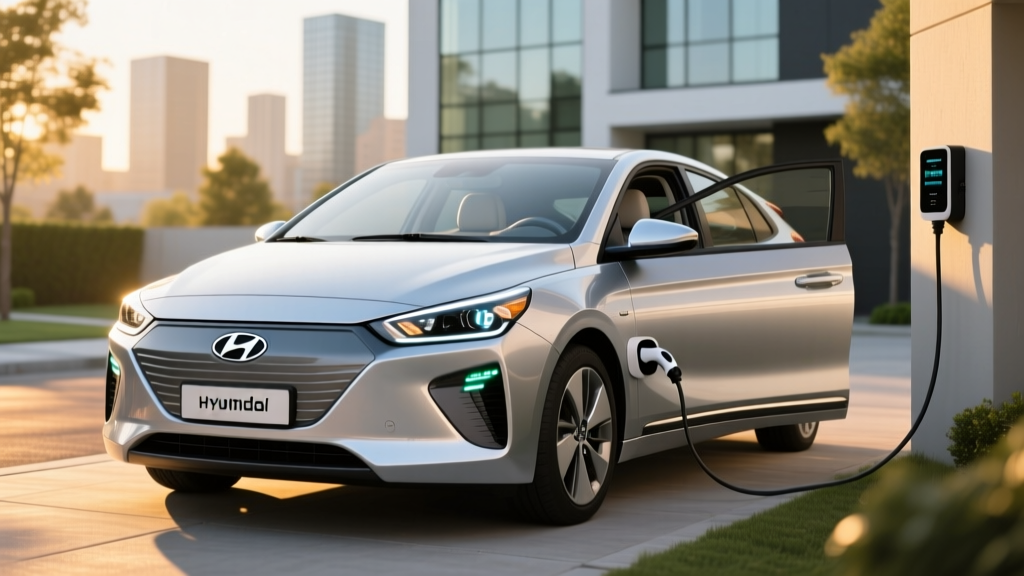
The 2019 Hyundai Ioniq Electric occupies a specific niche in the used EV market: an ultra-efficient, practical hatchback built for daily commuting rather than road-trip ambition. With an EPA-estimated 124 miles of range and class-leading efficiency, it remains one of the most energy-frugal EVs ever sold in the United States. For buyers shopping the used EV market in 2026 — particularly those eyeing the up to $4,000 used EV tax credit — the 2019 Ioniq Electric deserves a close look, provided its range limitations align with your driving routine.
Hyundai discontinued the Ioniq Electric after the 2021 model year, replacing it with the Ioniq 5 crossover. That means every 2019 Ioniq Electric on the market today is a used vehicle, typically priced between $10,000 and $16,000 depending on mileage, condition, and region. At those prices — and with potential tax credit savings — it's one of the most affordable ways into EV ownership.
Range, Battery, and Real-World Efficiency
The 2019 Ioniq Electric is powered by a 28 kWh lithium-ion polymer battery pack (approximately 27.2 kWh usable). Hyundai used NMC (nickel-manganese-cobalt) cell chemistry in this generation, prioritizing energy density and efficiency over the LFP chemistry found in some modern budget EVs.
Real-World Expectation: Expect 110–120 miles in mixed driving. Highway-heavy trips at 70+ mph may yield 95–105 miles. In cold weather (below 35°F), plan for 80–95 miles due to cabin heating draw and reduced battery output. The Ioniq Electric lacks a heat pump, so winter range loss is significant.
Where the 2019 Ioniq truly excels is efficiency. The EPA rates it at 136 MPGe combined (150 city / 122 highway), translating to roughly 25 kWh per 100 miles. That figure is exceptional — it beats the 2019 Nissan Leaf (112 MPGe), the 2019 Chevrolet Bolt EV (119 MPGe), and even rivals the latest Tesla Model 3 RWD. This efficiency means lower charging costs whether you plug in at home or at public stations.
| Spec | Value |
|---|---|
| EPA Range | 124 miles |
| Battery (Total / Usable) | 28 kWh / ~27.2 kWh |
| Battery Chemistry | NMC (Nickel-Manganese-Cobalt) |
| MPGe (City / Hwy / Combined) | 150 / 122 / 136 |
| Energy Consumption | 25 kWh / 100 mi |
| Motor Output | 88 kW (118 hp) / 218 lb-ft torque |
| Drivetrain | FWD (single front motor) |
| 0–60 mph | ~9.7 seconds |
| Top Speed | 103 mph (electronically limited) |
| Cargo Volume (rear seats up / down) | 23.8 cu ft / 55.0 cu ft |
| Rear Legroom | 35.7 inches |
| Curb Weight | 3,285 lbs |
Charging Speeds: DC Fast, Level 2, and Level 1
Charging infrastructure compatibility is where the 2019 Ioniq Electric shows its age. It uses a CCS1 (Combo) connector for DC fast charging and a standard J1772 inlet for Level 1 and Level 2 AC charging. It does not have a NACS (Tesla) port, though CCS-to-NACS adapters are available for Supercharger access on networks that support non-Tesla vehicles.
| Level | Power / Rate | Time / Miles Added |
|---|---|---|
| Level 1 (120V household) | ~1.2 kW | ~5 miles per hour |
| Level 2 (240V, 32A) | 6.6 kW (onboard charger max) | ~26 miles per hour; full charge in ~4.5 hours |
| DC Fast Charge (CCS1) | Up to ~50 kW peak | 10–80% in approximately 35–40 minutes |
The 50 kW DC fast-charge ceiling is the 2019 Ioniq's biggest practical limitation for road trips. Modern EVs routinely accept 150–250+ kW, meaning the Ioniq will spend considerably more time at charging stops. On a 200-mile trip requiring one DC fast-charge stop, expect to add roughly 60–80 miles of range in 30 minutes — enough to continue, but not quickly. The charge curve is relatively flat between 10–60% SoC, then tapers noticeably above 80%, so plan to charge only to 80% on road trips to minimize stop time.
For daily home charging, the 6.6 kW onboard charger is perfectly adequate. Plugging in overnight on a Level 2 home station replenishes the small 28 kWh battery in under five hours, making this a true "plug in when you get home, wake up full" vehicle for commuters.
Performance and Driving Dynamics
The 2019 Ioniq Electric's single front-mounted motor produces 118 horsepower (88 kW) and 218 lb-ft of torque. The instant torque delivery typical of electric motors makes it feel peppier around town than the 9.7-second 0–60 mph time suggests, but highway merging and passing require planning. This is not a performance EV — it's an efficiency-focused commuter, and Hyundai tuned it accordingly.
Ride quality is composed and quiet, with a low center of gravity from the floor-mounted battery pack contributing to stable handling. Regenerative braking is adjustable via steering-wheel paddles, offering four levels from coasting to near one-pedal driving (though it does not come to a complete stop without brake input). The lightweight curb weight of 3,285 lbs — hundreds of pounds lighter than most modern EVs — contributes directly to its efficiency advantage.
Interior, Tech, and Driver Assistance
Inside, the 2019 Ioniq Electric features a straightforward cabin with a 7-inch touchscreen infotainment system supporting Apple CarPlay and Android Auto — a significant usability advantage over Hyundai's older proprietary navigation interface. A 7-inch digital instrument cluster replaces the traditional gauge cluster, displaying speed, range, power flow, and battery state of charge.
Standard driver-assistance features on all trims include:
- Forward Collision-Avoidance Assist (FCA) with pedestrian detection
- Lane Keeping Assist (LKA)
- Blind-Spot Collision Warning (BCW)
- Rear Cross-Traffic Collision Warning (RCCW)
- Smart Cruise Control (SCC) with stop-and-go
These are SAE Level 2 driver-assist features, not autonomous driving. The driver must remain fully engaged with hands on the wheel and eyes on the road at all times. Smart Cruise Control is a nice inclusion for highway commuting, reducing fatigue on congested freeways.
The SEL trim adds a power driver seat, leather seating surfaces, and an auto-dimming rearview mirror. The top Limited trim includes an 8-inch navigation touchscreen, ventilated front seats, a sunroof, and a premium Harman Kardon audio system.
Pricing, Trims, and Used EV Tax Credit Eligibility
The 2019 Ioniq Electric was sold in three trims at launch:
| Trim | Original MSRP | Est. Used Price (2026) | After Used EV Credit (max) |
|---|---|---|---|
| SE (base) | $31,230 | $10,000–$13,000 | As low as ~$6,000–$9,000 |
| SEL | $33,730 | $12,000–$14,500 | As low as ~$8,000–$10,500 |
| Limited | $36,630 | $13,500–$16,000 | As low as ~$9,500–$12,000 |
Federal Used EV Tax Credit (§25E): As a used vehicle, the 2019 Ioniq Electric may qualify for the federal used clean vehicle credit — up to $4,000 or 30% of the sale price, whichever is less. Key eligibility rules per the IRS:
- Sale price cap: Vehicle must sell for $25,000 or less (virtually all 2019 Ioniq Electrics qualify)
- Buyer income limits (2026): AGI must not exceed $75,000 (single), $112,500 (head of household), or $150,000 (joint)
- Model year requirement: Vehicle must be at least two model years old (2019 qualifies)
- Dealer requirement: Must be purchased from a licensed dealer (private-party sales do not qualify)
- Credit is per-buyer, not per-vehicle: You can claim it once per three-year period
- Point-of-sale transfer: Eligible buyers can transfer the credit to the dealer at purchase, reducing the sale price directly
For a buyer in the $10,000–$13,000 price range for a base SE trim, the 30% calculation yields $3,000–$3,900, bringing the effective cost to roughly $7,000–$9,000. That makes the 2019 Ioniq Electric one of the cheapest paths to EV ownership in America, assuming you meet the income requirements.
Tax credit rules are subject to change. Consult a tax professional and verify current IRS guidance before relying on credit eligibility for purchase decisions.
Warranty and Long-Term Battery Outlook
Hyundai backed the 2019 Ioniq Electric with strong warranty coverage:
- Battery: 8 years / 100,000 miles (10 years / 100,000 miles in CARB states including CA, NY, MA, and others)
- Powertrain: 10 years / 100,000 miles
- New vehicle: 5 years / 60,000 miles
The battery warranty guarantees replacement or repair if capacity drops below 70% of original capacity during the warranty period. For a 2019 model, the 8-year/100k-mile battery warranty extends through 2027 or 100,000 miles — meaning many examples are still under factory battery coverage in 2026. This is a significant safety net for used buyers concerned about degradation.
Real-world degradation data from owners and fleet monitoring suggests NMC packs of this generation typically retain 88–93% capacity after 60,000 miles, well above the 70% warranty threshold. The Ioniq's conservative charge management (a generous buffer at the top and bottom of the pack) and liquid thermal management system contribute to strong longevity.
Pros and Cons
Pros
- Class-leading efficiency (136 MPGe, 25 kWh/100 mi)
- Extremely affordable on the used market ($10K–$16K)
- Eligible for up to $4,000 used EV tax credit
- Comprehensive standard driver-assist suite
- Apple CarPlay / Android Auto standard
- Strong remaining battery warranty coverage
- Lightweight, composed ride quality
- Practical hatchback cargo space (23.8 cu ft)
Cons
- Only 124 miles EPA range — limiting for road trips
- Slow DC fast charging (~50 kW peak, 35–40 min to 80%)
- No heat pump — significant winter range loss
- Modest 118 hp — highway passing requires patience
- CCS1 connector (no native NACS/Supercharger access)
- Rear seat space is tight for taller passengers
- Discontinued model — limited dealer familiarity
Who Should Buy the 2019 Ioniq Electric?
Best for: Single commuters or couples with predictable daily drives under 80 miles round-trip, access to home Level 2 charging, and a second vehicle (or transit alternative) for longer trips. It's an ideal second car, a budget-conscious first EV, or a college-town runabout where low running costs matter more than range.
Not ideal for: Single-vehicle households, frequent road-trippers, those in extreme cold climates without garage parking, or anyone who needs to regularly carry more than two adults. The 124-mile range and slow DC fast charging make this a poor choice for drivers who regularly exceed 100 miles in a day without predictable charging access.
2019 Ioniq Electric vs. Key Used EV Competitors
At similar used price points ($10K–$18K), the 2019 Ioniq Electric competes against:
- 2019 Nissan Leaf (40 kWh): 150-mile EPA range, but passive battery cooling leads to faster degradation and Chademo connector (being phased out). The Ioniq is more efficient; the Leaf has more range.
- 2019 Chevrolet Bolt EV: 238-mile EPA range, 60 kWh battery, CCS1 connector. Significantly more range and similar efficiency, but typically $3K–$5K more expensive used. Bolt also had a battery recall — verify recall completion before purchasing.
- 2019 Volkswagen e-Golf: 125-mile EPA range, similarly efficient, but discontinued with no dealer support pathway and Chademo connector. The Ioniq's Hyundai warranty backing is stronger.
If range is your top priority, the Bolt EV wins clearly. If you want the lowest cost of entry with maximum efficiency and a solid warranty safety net, the Ioniq Electric is hard to beat.
Frequently Asked Questions
What is the real-world range of the 2019 Hyundai Ioniq Electric?
The EPA estimates 124 miles. In real-world mixed driving, expect 110–120 miles. Highway driving at sustained speeds above 70 mph reduces this to roughly 95–105 miles. Cold weather (below 35°F) can drop range to 80–95 miles because the Ioniq Electric uses a resistive heater rather than a heat pump for cabin warmth.
How fast does the 2019 Ioniq Electric charge?
On DC fast charging, it peaks at approximately 50 kW, reaching 10–80% in about 35–40 minutes. At home on a Level 2 (240V) charger, the 6.6 kW onboard charger delivers a full charge in roughly 4.5 hours. On a standard 120V outlet (Level 1), expect about 5 miles of range per hour of charging.
Does the 2019 Ioniq Electric qualify for the federal EV tax credit?
As a new vehicle, it originally qualified for the full $7,500 federal credit. Today as a used vehicle, it may qualify for the §25E Used Clean Vehicle Credit — up to $4,000 or 30% of the sale price (whichever is less). Eligibility depends on buyer income limits (e.g., $75K single / $150K joint), purchase from a licensed dealer, and a sale price under $25,000. Verify current rules with a tax professional.
Is the 2019 Ioniq Electric worth buying in 2026?
Yes, if your daily driving fits within its ~100-mile real-world range and you have reliable home charging. At $10,000–$16,000 with a potential $4,000 tax credit, it's one of the most affordable EVs available. Its efficiency remains best-in-class, and remaining battery warranty coverage provides peace of mind. It's not the right choice for road trips or single-car households that need 250+ miles of range.
What should I check before buying a used 2019 Ioniq Electric?
Request a battery state-of-health (SoH) report from a Hyundai dealer — this shows remaining capacity percentage. Verify the vehicle has no outstanding recalls or service campaigns. Check that the battery warranty is still active (8 years/100,000 miles from original in-service date). Inspect the CCS charge port for damage or corrosion. A pre-purchase inspection at a Hyundai EV-certified dealer is strongly recommended.
Can the 2019 Ioniq Electric use Tesla Superchargers?
Not natively. The 2019 Ioniq Electric has a CCS1 connector. Some Tesla Supercharger stations now support non-Tesla CCS vehicles via the Magic Dock adapter, and third-party CCS-to-NACS adapters exist, but compatibility varies by network and adapter. Check the specific Supercharger station and adapter certification before relying on this for travel.