Quick Verdict: The Efficiency King of the Used EV Market
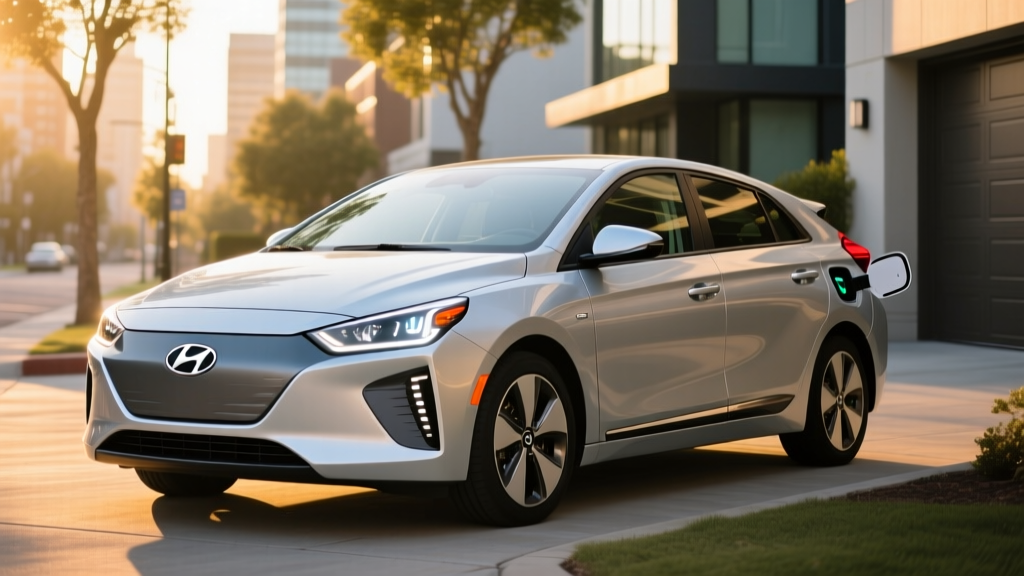
If you are shopping for an affordable, efficient commuter EV on the used market, the 2019 Hyundai Ioniq Electric remains one of the most compelling options available in 2026. Hyundai upgraded the battery significantly for this model year, jumping from the 2017-2018 car's 28 kWh pack to a 38.3 kWh unit, which pushed the EPA-estimated range from 124 miles to 170 miles. Combined with best-in-class efficiency — 136 MPGe combined — and a practical hatchback body, the 2019 Ioniq Electric is a rational, numbers-driven pick for daily drivers who want maximum miles per kilowatt-hour.
It is not a road-trip machine. DC fast-charging tops out at roughly 50 kW, and the compact cargo area limits its utility for families. But for a commuter who can charge at home, the 2019 Ioniq Electric delivers outstanding value, especially when the used-EV federal tax credit applies.
Range and Efficiency: EPA vs. Real World
The 2019 Ioniq Electric carries an EPA-estimated range of 170 miles on a full charge. That figure comes from a 38.3 kWh lithium-ion polymer battery pack (gross capacity; usable is approximately 36 kWh). The pack uses NMC (nickel-manganese-cobalt) chemistry, which was the standard across Hyundai's EV lineup before the brand began adopting LFP cells in some later models.
- EPA sticker: 170 miles
- City / mild-weather commuting: 175–190 miles (regen-heavy driving can exceed EPA)
- Highway (70+ mph): 140–155 miles
- Cold weather (below 32°F): 115–135 miles (20–30% reduction typical for NMC packs without a heat pump)
The 2019 Ioniq Electric does not have a heat pump — it uses a resistive PTC heater. That means winter range loss is more pronounced than in EVs equipped with heat-pump HVAC systems. Preconditioning the cabin while plugged in mitigates this significantly.
Efficiency is where this car truly shines. The EPA rates it at 136 MPGe combined (137 city / 133 highway), which translates to approximately 25 kWh per 100 miles. According to fueleconomy.gov, that made the 2019 Ioniq Electric the most efficient EV sold in the United States for its model year. For context, a Tesla Model 3 Long Range of the same era achieves around 130 MPGe combined, and most other EVs from that period fall between 100 and 120 MPGe.
Battery, Charging Speed, and Connector Details
Understanding the charging profile of the 2019 Ioniq Electric is critical for ownership satisfaction. This is not a vehicle designed for rapid cross-country travel. Its DC fast-charging capability is modest by 2026 standards, but perfectly adequate for daily top-ups and occasional longer drives if you plan ahead.
| Charging Level | Power / Voltage | Speed (Approx.) | Notes |
|---|---|---|---|
| Level 1 (120V household) | 1.4 kW | ~5 miles per hour | Emergency/trickle only; full charge in ~26 hours |
| Level 2 (240V home/public) | 7.2 kW (onboard charger) | ~25 miles per hour | Full 0–100% in ~5.5 hours |
| DC Fast Charge (CCS1) | Up to ~50 kW peak | 10–80% in ~50–55 minutes | CCS Combo connector; charge curve tapers significantly above 80% |
The onboard Level 2 charger is rated at 7.2 kW, which is competitive for its era. A full charge from empty on a 240V Level 2 station takes roughly 5.5 hours — easily an overnight session.
On DC fast charging, the Ioniq Electric peaks around 50 kW. Hyundai's battery thermal management in this generation is passive (air-cooled rather than liquid-cooled), which means sustained charge rates can drop in hot weather or after repeated fast-charge sessions. Expect the charge curve to taper noticeably after 60% state of charge, and plan for roughly 50–55 minutes to go from 10% to 80%. Above 80%, charging slows dramatically to protect cell longevity — this is normal behavior, but it means topping off to 100% on a road trip adds significant time.
The vehicle uses a CCS1 (Combo) connector for DC fast charging and a standard J1772 inlet for Level 1 and Level 2 AC charging. In 2026, CCS1 remains widely supported across Electrify America, EVgo, and ChargePoint networks, though the industry's shift toward NACS (Tesla's connector) means CCS adapters may become more relevant for future-proofing.
Performance and Drivetrain
The 2019 Ioniq Electric is front-wheel drive, powered by a single permanent-magnet synchronous motor producing 118 horsepower (88 kW) and 218 lb-ft of torque. That torque figure is available instantly from zero RPM, as with all EVs, which gives the car a peppy feel around town despite the modest horsepower number.
| 0–60 mph | ~9.7 seconds |
| Horsepower | 118 hp (88 kW) |
| Torque | 218 lb-ft |
| Drivetrain | Front-wheel drive (single motor) |
| Top speed | ~103 mph (electronically limited) |
| Regenerative braking | 3 levels via paddle shifters + Eco modes |
Acceleration is leisurely by modern EV standards — a 9.7-second 0–60 time puts it well behind a Tesla Model 3 or even a Chevrolet Bolt EV (6.5 seconds). But for its intended use as a commuter and city car, the instant torque and smooth single-speed reduction gear provide more than adequate performance. Highway merging requires a bit of planning, but the car never feels dangerously slow.
The regenerative braking system offers three levels of aggressiveness, selectable via steering-wheel paddle shifters. Level 3 provides strong deceleration that approaches one-pedal driving, though the car does not come to a complete stop without using the brake pedal. An Eco drive mode further optimizes throttle response and climate-control energy draw.
Interior, Cargo, and Technology
The Ioniq Electric is a five-seat compact hatchback. Passenger space is reasonable for its class, though the battery pack under the rear seat slightly compromises rear headroom and creates a raised floor in the cargo area.
| Front headroom | 39.1 inches |
| Front legroom | 43.3 inches |
| Rear headroom | 37.4 inches |
| Rear legroom | 35.2 inches |
| Cargo volume (behind rear seats) | 23.8 cu ft |
| Cargo volume (rear seats folded) | 55.0 cu ft |
The 23.8 cubic feet of cargo space behind the rear seats is less than a Chevrolet Bolt EV (56.6 cu ft with seats up, due to its taller hatch design) but adequate for groceries, gym bags, or a week's worth of commuting essentials. With the rear seats folded, 55.0 cu ft opens up — enough for flat-packed furniture or bulky items.
Standout tech features:
- 7-inch touchscreen infotainment with Apple CarPlay and Android Auto (standard on all trims)
- Hyundai SmartSense suite: forward collision-avoidance assist, lane keeping assist, driver attention warning, high beam assist
- Adaptive cruise control with stop-and-go (available on Limited trim)
- Wireless phone charging pad (Limited trim)
- Blue Link connected services with remote climate control and charge scheduling
- 8-inch navigation display with EV-specific features (charging station locator, range estimator) on Limited trim
Notable drawbacks:
- No DC fast-charge port door illumination — difficult to find the inlet at night
- Infotainment feels dated by 2026 standards (resistive-touch feel, no OTA updates)
- Rear visibility is compromised by the split rear window and thick C-pillars
- No frunk (front trunk) — the space under the hood houses conventional power electronics
- PTC resistive heater instead of a heat pump increases winter energy consumption
Pricing, Trims, and Federal Tax Credit Eligibility
The 2019 Hyundai Ioniq Electric was sold in two trims: the base EV and the upgraded Limited. Original MSRP pricing was:
- EV (base): $36,950 (including destination)
- Limited: $39,450 (including destination)
As a used vehicle in 2026, the 2019 Ioniq Electric typically sells for between $12,000 and $18,000 depending on mileage, condition, and region, based on listings across major used-car platforms.
Does It Qualify for the Federal Used EV Tax Credit?
Under IRS §25E (the previously owned clean vehicle credit), the 2019 Ioniq Electric can qualify for a federal tax credit of up to $4,000 — but only if several conditions are met. Per IRS guidelines, the key requirements include:
- Sale price must be $25,000 or less (most 2019 Ioniq Electric listings qualify)
- Buyer's adjusted gross income must not exceed: $75,000 (single), $112,500 (head of household), or $150,000 (married filing jointly)
- Vehicle must be purchased from a licensed dealer (private-party sales do not qualify)
- Vehicle must have a battery capacity of at least 7 kWh (the Ioniq Electric's 38.3 kWh pack easily clears this)
- The same vehicle can only trigger the used-EV credit once every three years (check VIN history)
- Credit equals 30% of the sale price, capped at $4,000
Important: The §25E credit is non-refundable — it can only reduce your tax liability to zero, not generate a refund. Consult a tax professional for your specific situation. Rules are subject to change; always verify current-year eligibility at irs.gov.
Note: The 2019 Ioniq Electric does not qualify for the new-vehicle §30D credit (up to $7,500) because that credit applies only to new purchases, and the §30D program's MSRP caps, critical-mineral sourcing requirements, and battery-component rules are designed for current-year vehicles. The used-EV credit under §25E is the relevant incentive here.
Warranty and Long-Term Battery Outlook
Hyundai backed the 2019 Ioniq Electric with one of the strongest warranty packages in the industry:
| New-vehicle limited warranty | 5 years / 60,000 miles |
| Powertrain warranty | 10 years / 100,000 miles |
| EV battery warranty | 8 years / 100,000 miles (retains ≥70% capacity) |
| Roadside assistance | 5 years / unlimited miles |
The 8-year/100,000-mile battery warranty guarantees that the pack will retain at least 70% of its original capacity. In practice, Hyundai's NMC packs from this generation have shown strong longevity. Real-world data from owner forums and fleet reports suggest typical degradation of 5–10% over the first 5 years / 60,000 miles, which is well within warranty thresholds.
One consideration for used buyers: the 8-year battery warranty window for a 2019 model expires in 2027. If you are buying in 2026, you likely have 1–2 years of factory battery coverage remaining (assuming under 100,000 miles). After that, an out-of-warranty battery replacement would cost approximately $8,000–$12,000 based on current Hyundai parts pricing and labor — a significant expense to factor into your total cost of ownership.
Competitor Comparison: Ioniq Electric vs. Bolt EV vs. Leaf
The 2019 Ioniq Electric competed primarily with the Chevrolet Bolt EV and the Nissan Leaf (both the 40 kWh standard and 62 kWh Plus versions). Here is how they stack up on the metrics that matter most to used-EV buyers:
| Spec | 2019 Hyundai Ioniq Electric | 2019 Chevrolet Bolt EV | 2019 Nissan Leaf Plus (62 kWh) |
|---|---|---|---|
| EPA range | 170 miles | 259 miles | 226 miles |
| Battery capacity | 38.3 kWh | 60 kWh | 62 kWh |
| Efficiency (MPGe combined) | 136 MPGe | 118 MPGe | 108 MPGe |
| DC fast-charge peak | ~50 kW | ~55 kW | ~100 kW (CHAdeMO) |
| 0–60 mph | ~9.7 sec | ~6.5 sec | ~7.9 sec |
| Cargo (seats up) | 23.8 cu ft | 56.6 cu ft | 23.6 cu ft |
| Original base MSRP | $36,950 | $37,495 | $39,125 |
| Connector | CCS1 | CCS1 | CHAdeMO |
- Choose the Ioniq Electric if: You prioritize efficiency (lowest cost per mile), have a short commute, charge at home, and want the lowest entry price on the used market.
- Choose the Bolt EV if: You need more range (259 miles), more cargo space, stronger acceleration, and don't mind slightly lower efficiency.
- Choose the Leaf Plus if: You find one at a compelling price and have access to CHAdeMO chargers — but note that CHAdeMO infrastructure is declining in the U.S. as CCS and NACS dominate.
Pros, Cons, and Who This EV Suits Best
- Best-in-class efficiency (136 MPGe / ~25 kWh/100mi) means lowest per-mile electricity cost
- Low used-market price ($12K–$18K) with potential $4,000 §25E tax credit
- Hyundai SmartSense safety suite is standard on all trims
- Comfortable ride quality for a compact hatchback
- Strong 8-year/100,000-mile battery warranty (some coverage may remain)
- Apple CarPlay and Android Auto standard
- 170-mile EPA range limits road-trip utility
- Slow DC fast charging (~50 kW peak, ~55 min 10–80%)
- No heat pump — significant cold-weather range loss
- Air-cooled battery pack may limit repeated fast-charge performance in heat
- Dated infotainment with no over-the-air updates
- Modest 118 hp and 9.7-second 0–60 time
- Split rear window hampers rearward visibility
Who this EV suits best: The 2019 Ioniq Electric is ideal for a single driver or couple with a predictable commute of 50 miles or less round-trip, reliable access to home Level 2 charging, and a second vehicle (or ride-share option) for longer trips. It excels as a cost-minimizing daily driver where efficiency and low purchase price matter more than range or performance.
Frequently Asked Questions
What is the real-world range of the 2019 Hyundai Ioniq Electric?
The EPA rates it at 170 miles. In real-world city commuting with regenerative braking, expect 175–190 miles. On the highway at 70+ mph, plan for 140–155 miles. In freezing temperatures, range can drop to 115–135 miles due to the resistive PTC heater and NMC battery chemistry without a heat pump.
How fast does it charge at home and on DC fast chargers?
At home on a 240V Level 2 charger, the 7.2 kW onboard charger delivers about 25 miles of range per hour, with a full charge in roughly 5.5 hours. On a DC fast charger, it peaks at approximately 50 kW, taking about 50–55 minutes to go from 10% to 80% state of charge.
How much does a used 2019 Ioniq Electric cost after tax credits?
Used prices in 2026 typically range from $12,000 to $18,000. If you qualify for the §25E used-EV tax credit (income limits apply, dealer purchase required, sale price ≤$25,000), you can receive up to $4,000 back, potentially bringing your effective cost to $8,000–$14,000.
Does the 2019 Ioniq Electric qualify for the federal EV tax credit?
It does not qualify for the new-vehicle §30D credit, which is for new purchases only. However, it can qualify for the §25E previously owned clean vehicle credit (up to $4,000) if purchased from a dealer, the sale price is $25,000 or less, and the buyer meets IRS income thresholds. Always verify eligibility at irs.gov and consult a tax professional.
Is the 2019 Ioniq Electric worth buying vs. a Chevrolet Bolt EV?
It depends on your priorities. The Bolt EV offers significantly more range (259 vs. 170 miles), more cargo space, and quicker acceleration. The Ioniq Electric counters with superior efficiency (lower electricity cost per mile), a typically lower used purchase price, and a more comfortable ride. If range and cargo space are critical, the Bolt wins. If minimizing cost per mile and purchase price is paramount, the Ioniq is the smarter buy.
How long will the battery last?
Hyundai's 8-year/100,000-mile battery warranty guarantees at least 70% capacity retention. Real-world data suggests NMC packs of this generation lose 5–10% capacity over the first 60,000 miles. With proper care (avoiding frequent 100% charges, minimizing DC fast charging in extreme heat), the pack should provide reliable service well beyond 100,000 miles. A replacement battery, if needed out of warranty, costs approximately $8,000–$12,000.