The 2019 Chevy Bolt EV: Still a Smart Used-EV Buy in 2026?
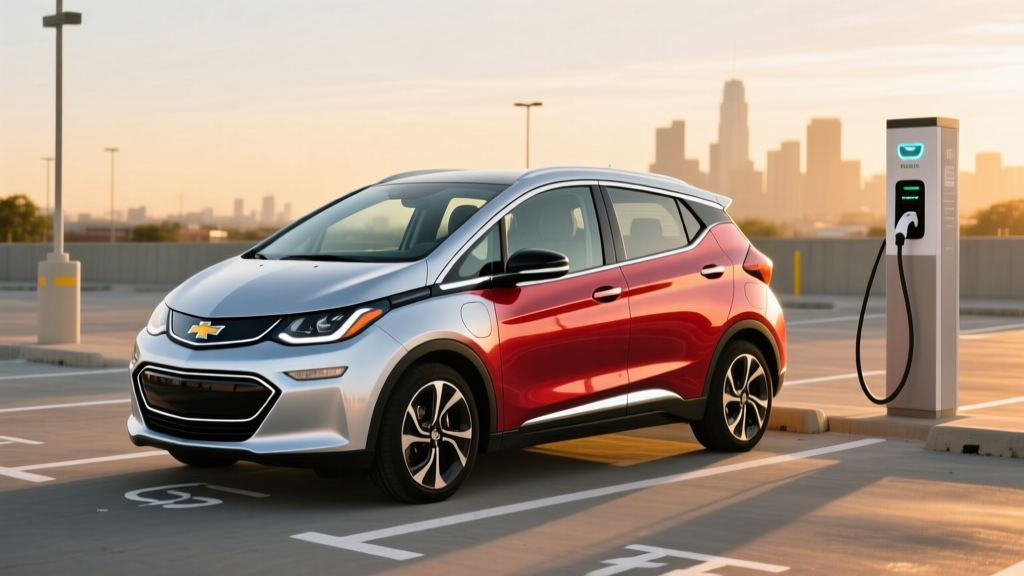
Seven years after its debut, the 2019 Chevrolet Bolt EV remains one of the most practical used electric vehicles on the market. With an EPA-estimated 238 miles of range, a usable 60 kWh battery, and a compact hatchback footprint, it occupies a sweet spot for budget-conscious EV adopters who need real daily range without paying new-car premiums. In 2026, with new EVs averaging over $48,000 before incentives, a well-maintained 2019 Bolt EV typically trades between $11,000 and $17,000 depending on mileage and battery state of health — making it one of the cheapest ways to access 200+ miles of electric range.
But buying a used EV requires different homework than buying new. Battery degradation, DC charging speed limitations, and shifting federal tax credit rules all shape the ownership equation. This review breaks down the exact numbers you need to evaluate a 2019 Bolt EV in today's market.
Range, Efficiency, and Real-World Expectations
The 2019 Bolt EV carries a 60 kWh lithium-ion battery pack (LG Chem NMC chemistry) with approximately 57 kWh usable. The EPA rates it at 238 miles of combined range — a figure that held up well in mixed-driving testing when the car was new.
EPA Combined: 238 miles
Highway (70 mph, moderate temps): ~200–215 miles
City/stop-and-go (with regen): ~245–260 miles
Cold weather (below 32°F, cabin heat): ~165–190 miles
The Bolt EV's range is highly driving-style dependent. Its strong regenerative braking (especially in "L" mode or with the steering-wheel regen paddle) rewards city driving. Highway range suffers from the Bolt's relatively boxy shape and lack of a heat pump — resistance cabin heating draws significant battery power in winter.
Efficiency comes in at 119 MPGe combined (28 kWh/100 miles) per fueleconomy.gov. That's competitive with a Hyundai Kona Electric but trails the Tesla Model 3 Standard Range, which achieves roughly 130+ MPGe thanks to superior aerodynamics and a heat pump.
| Spec | Value |
|---|---|
| EPA Range | 238 miles |
| Battery (Usable) | ~57 kWh (60 kWh gross), NMC |
| Efficiency | 119 MPGe / 28 kWh/100 mi |
| Motor | 200 hp / 266 lb-ft, FWD |
| 0–60 mph | ~6.5 seconds |
| Max DC Fast Charge | 55 kW (CCS1) |
| Level 2 Charge Rate | 7.2 kW (25 miles/hr) |
| Cargo Volume | 16.9 cu ft (rear up) / 56.6 cu ft (rear folded) |
| Original MSRP (LT/Premier) | $37,495 / $43,895 (before incentives) |
| Battery Warranty | 8 years / 100,000 miles (60% capacity retention) |
Charging Speed: The Bolt's Biggest Limitation
If there's one factor that defines the 2019 Bolt EV ownership experience in 2026, it's charging speed. The Bolt's DC fast-charging capability peaks at just 55 kW — and that peak is short-lived.
| Level | Power | Speed | Notes |
|---|---|---|---|
| Level 1 (120V) | ~1.2 kW | ~4 miles/hr | Emergency/top-up only; full charge ~48 hrs |
| Level 2 (240V) | 7.2 kW | ~25 miles/hr | Full charge in ~9.5 hours; ideal for overnight |
| DC Fast (CCS1) | 55 kW peak | ~100 miles in 30 min | 10–80% in ~60–70 min; tapers sharply above 80% |
The charge curve is the critical detail. The Bolt EV hits ~55 kW only between roughly 10–40% state of charge. From 40–60%, it drops to around 38 kW. Above 60%, it falls to roughly 20–25 kW, and above 80% it slows to a trickle under 10 kW. A 10–80% session takes approximately 60 to 70 minutes — roughly three times longer than a Hyundai Ioniq 5 or Tesla Model 3 on the same charger.
What this means for ownership: If your driving is mostly local with overnight Level 2 home charging, the Bolt's DC speed rarely matters. But if you plan regular road trips exceeding 200 miles, the slow fast-charging becomes a genuine constraint. Plan for one-hour charging stops, not 20-minute ones.
The Bolt uses the CCS1 connector for DC fast charging and J1772 for Level 2. As GM transitions to NACS (Tesla's connector) on new vehicles, CCS1 infrastructure remains widely available at Electrify America, EVgo, and ChargePoint stations — and CCS1-to-NACS adapters are available if needed for Tesla Supercharger access.
Performance and Driving Dynamics
The 2019 Bolt EV's single front-mounted permanent-magnet motor produces 200 horsepower and 266 lb-ft of torque, driving the front wheels. The 0–60 mph sprint takes about 6.5 seconds — genuinely quick for a compact hatchback and more than adequate for highway merging and passing.
Instant torque delivery makes the Bolt feel even quicker than its numbers suggest around town. The low center of gravity (battery pack under the floor) gives it planted handling, though the eco-oriented tires prioritize efficiency over grip. Ride quality is firm but controlled, and the cabin stays reasonably quiet at speed.
The Bolt's regenerative braking system deserves special mention. In "L" (low) mode, regen is aggressive enough for near-one-pedal driving in most conditions. The steering-wheel-mounted "Regen on Demand" paddle lets you dial in additional braking force in "D" mode — a thoughtful feature that many newer EVs still lack.
Interior Space, Technology, and Driver Assists
Despite its compact exterior, the Bolt EV's interior is surprisingly spacious. Front legroom measures 42.8 inches and rear legroom comes in at 36.5 inches — adequate for adults on shorter trips. Cargo volume is 16.9 cubic feet behind the rear seats and 56.6 cubic feet with them folded, rivaling many compact crossovers.
Infotainment: The 2019 model year brought a standard 10.2-inch touchscreen with Apple CarPlay and Android Auto, a significant upgrade over earlier models. The interface is responsive and logical. A Wi-Fi hotspot, Bose premium audio (Premier trim), and wireless phone charging (Premier) round out the tech roster.
Driver Assistance: The Bolt EV offers Chevrolet's driver-assist suite including forward collision alert, automatic emergency braking, lane keep assist, and following distance indicator. Available features on Premier trim include adaptive cruise control, surround-view camera, and rear cross-traffic alert. These are SAE Level 0–1 features — they assist but do not automate driving. There is no hands-free system like GM's Super Cruise on the Bolt.
Notable drawbacks: The seats are relatively flat and lack lumbar adjustment, which becomes noticeable on drives over two hours. Rear headroom is tight for taller passengers due to the sloping roofline. And the absence of a heat pump means cold-weather cabin heating draws heavily from the battery.
Used Pricing, Tax Credits, and Ownership Costs
The 2019 Bolt EV was offered in two trims: the LT (starting at $37,495) and the Premier (starting at $43,895) before any incentives. In the 2026 used market, expect to pay:
| Trim | Original MSRP | Typical Used Price (2026) | After Used EV Credit |
|---|---|---|---|
| LT | $37,495 | $11,000–$14,000 | $7,000–$10,000 |
| Premier | $43,895 | $14,000–$17,000 | $10,000–$13,000 |
Federal Used EV Tax Credit (§25E)
As a used purchase, the 2019 Bolt EV may qualify for the IRC §25E Previously-Owned Clean Vehicle Credit — up to $4,000 (30% of sale price, capped at $4,000). Per IRS guidelines, eligibility requires:
- Sale price: $25,000 or less (the Bolt easily qualifies at current used prices)
- Buyer income caps: Modified AGI ≤ $75,000 (single), $112,500 (head of household), $150,000 (joint)
- Model year: Must be at least two model years older than the purchase year (a 2019 qualifies in 2026)
- Purchase from a dealer: Private-party sales do not qualify
- First use: Vehicle must be new to you (not previously owned by a spouse or family member)
- Claimed once per vehicle: The specific VIN can only receive this credit once every three years
This credit can be transferred to the dealer at point of sale as an immediate price reduction, making a $13,000 Bolt LT effectively $9,000 for eligible buyers. Consult a tax professional to confirm your eligibility — income limits and rules are subject to legislative changes.
Battery Health and Warranty
The 2019 Bolt's battery warranty covers 8 years / 100,000 miles against defects and capacity loss below 60% of original capacity. A 2019 model's factory warranty expires in 2027 at the latest. When evaluating a used Bolt, request a battery state-of-health (SoH) reading from the dealer or use an OBD2 reader with an app like Torque Pro to check capacity.
Real-world Bolt battery degradation has been modest. Most owners report 5–10% capacity loss over the first 60,000–80,000 miles, which translates to roughly 215–225 miles of range remaining for a typical example. Notably, GM issued a recall for 2017–2019 Bolt EVs related to battery fire risk; confirm that the recall software update (which limits charge to ~90% and adjusts thermal management thresholds) has been applied. Some owners received full battery pack replacements under this recall, which is a significant plus for a used purchase.
How the 2019 Bolt EV Compares to Key Rivals
The used compact EV market in 2026 gives buyers several alternatives near the Bolt's price range. Here's how the numbers stack up:
| Model | EPA Range | DC Charge (Peak kW) | 10–80% Time | Used Price (2026) |
|---|---|---|---|---|
| 2019 Chevy Bolt EV | 238 mi | 55 kW | ~65 min | $11K–$17K |
| 2019 Nissan LEAF PLUS | 226 mi | 100 kW (CHAdeMO) | ~45 min | $12K–$16K |
| 2019 Hyundai Kona Electric | 258 mi | 75 kW | ~54 min | $14K–$19K |
| 2019 Tesla Model 3 SR+ | 220 mi | 170 kW | ~30 min | $16K–$22K |
The Bolt's edge: Best range-per-dollar in the used market and the most cargo space. Its weakness: Slowest DC charging by a wide margin, and no access to the Supercharger network without an adapter (and even then, charging speed is still limited by the Bolt's onboard hardware).
The Kona Electric offers 20 more miles of EPA range and faster charging but costs $2,000–$4,000 more used. The Model 3 charges dramatically faster and has better driver-assist tech but commands a premium and offers less cargo versatility. The LEAF PLUS uses the dwindling CHAdeMO standard and has passive battery cooling, which accelerates degradation in hot climates.
- 238 miles EPA — best range per dollar in the used EV market
- Spacious cargo area (56.6 cu ft folded) for a compact hatch
- Strong 200 hp motor with instant torque for confident merging
- Excellent regenerative braking with one-pedal capability
- Low used pricing; eligible for up to $4,000 §25E credit
- Apple CarPlay/Android Auto standard on 10.2-inch screen
- DC fast charging peaks at just 55 kW — 10–80% takes ~65 min
- No heat pump; significant range loss in cold weather
- Seats lack long-distance comfort and lumbar support
- Battery recall history — verify update/replacement status
- CCS1 connector; no native Supercharger access
- Battery warranty expires by 2027 on all 2019 examples
Who Should Buy the 2019 Chevy Bolt EV?
- You need a budget commuter EV with 200+ miles of real range and will charge at home overnight
- Your budget is under $15,000 and you want maximum range per dollar
- You value cargo versatility (hatchback with 56.6 cu ft) over premium branding
- You rarely take road trips exceeding 180 miles one-way
- You qualify for the §25E used EV credit, bringing effective cost below $10,000
- You need fast DC charging for frequent long-distance travel (consider a used Model 3 or Kona Electric)
- You live in a very cold climate where the lack of a heat pump will cut range by 25–35%
- You want modern Level 2+ driver assists (the Bolt has basic ADAS only)
- You need all-wheel drive or towing capability
Frequently Asked Questions
What is the real-world range of the 2019 Chevy Bolt EV?
Expect roughly 200–215 miles at highway speeds in moderate temperatures, up to 260 miles in city driving with regenerative braking, and as low as 165–190 miles in freezing weather with cabin heat. The EPA sticker of 238 miles reflects a combined cycle that most drivers won't perfectly match.
How fast does the 2019 Bolt charge at home and on the road?
At home on a 240V Level 2 charger (7.2 kW), the Bolt gains about 25 miles of range per hour and fully charges in roughly 9.5 hours — ideal for overnight. On a DC fast charger, it peaks at 55 kW, adding roughly 100 miles in 30 minutes, with a 10–80% session taking 60–70 minutes. This is the Bolt's biggest competitive disadvantage.
Does the 2019 Bolt EV qualify for any federal tax credit in 2026?
It does not qualify for the new-vehicle §30D credit (it's no longer sold new). However, buyers purchasing from a dealer may qualify for the §25E Used Clean Vehicle Credit — up to $4,000, transferable at point of sale. Income caps apply ($75K single / $150K joint), and the sale price must be $25,000 or less. Verify current rules at irs.gov or with a tax professional.
Is the 2019 Bolt EV worth buying versus a used Tesla Model 3?
It depends on priorities. The Bolt costs $4,000–$8,000 less used, offers more cargo space, and qualifies for the used EV credit. The Model 3 charges roughly three times faster on DC, has access to the Supercharger network, offers better driver-assist features, and has a more premium interior. For a commuter-only budget buyer, the Bolt wins on value. For anyone who road-trips regularly, the Model 3's charging advantage is decisive.
Should I worry about the Bolt EV battery recall?
GM issued a recall for 2017–2019 Bolt EVs related to potential battery cell defects that could cause fires, primarily when charging to full capacity. The remedy involved a software update limiting maximum charge and monitoring cell voltage anomalies. Some vehicles received full battery pack replacements. Before buying, confirm via the VIN at nhtsa.gov/recalls that all recall work has been completed. A Bolt with a replaced battery pack is actually a strong used buy — you're getting a fresh 60 kWh pack.
How long will the 2019 Bolt's battery last?
LG Chem NMC packs in the Bolt have shown moderate degradation: typically 5–12% capacity loss over the first 60,000–80,000 miles. At 100,000 miles, most Bolts retain 85–92% of original capacity. The battery should remain functional well beyond 150,000 miles, though range will gradually decrease. Avoid habitual DC fast charging and storing at 100% SoC to maximize longevity.