Quick Verdict: The Used-EV Bargain That Still Holds Up
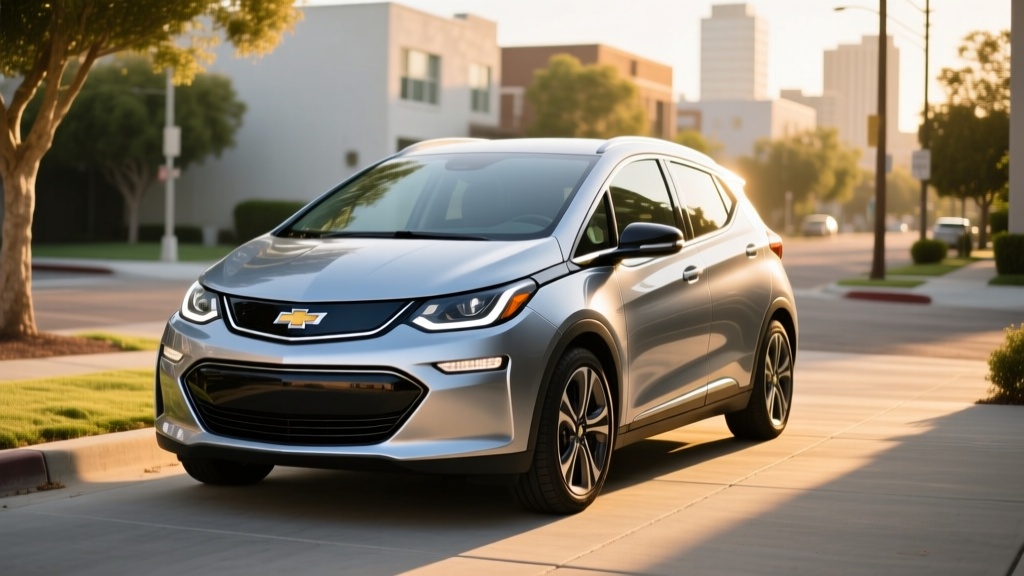
The 2019 Chevrolet Bolt EV occupies a specific and increasingly rare position in the 2026 used-EV market: a sub-$15,000 hatchback with over 200 miles of EPA range, practical cargo space, and a proven battery platform. For budget-conscious buyers, apartment dwellers with Level 2 access, and daily commuters covering under 60 miles round-trip, the Bolt EV remains a compelling electrified option seven years after its debut.
But buying a 2019 Bolt EV in 2026 requires navigating real-world trade-offs. DC fast-charging is limited by today's standards, the battery recall history demands careful verification, and the interior tech shows its age. This review covers every spec, ownership cost, and practical consideration you need before signing the paperwork.
2019 Chevy Bolt EV Core Specifications
| Specification | Value |
|---|---|
| EPA Range | 238 miles |
| Usable Battery Capacity | 60 kWh (NMC lithium-ion) |
| Total Battery Capacity (gross) | 60 kWh |
| Efficiency | 119 MPGe combined / 28 kWh per 100 mi |
| Motor Output | 200 hp (150 kW) / 266 lb-ft torque |
| Drivetrain | Front-wheel drive (single motor) |
| 0-60 mph | 6.5 seconds |
| Max DC Fast Charge Rate | 55 kW (CCS) |
| 10-80% DC Fast Charge Time | ~50 minutes (est.) |
| Level 2 AC Charge Rate | 7.2 kW (onboard charger) |
| Level 2 Full Charge Time | ~9.5 hours (0-100%) |
| Cargo Volume (behind rear seats) | 16.9 cu ft |
| Cargo Volume (seats folded) | 56.6 cu ft |
| Rear Legroom | 36.5 inches |
| Original MSRP (LT trim) | $36,620 |
| Original MSRP (Premier trim) | $43,520 |
| Typical 2026 Used Price | $11,000–$16,500 |
| Battery Warranty (original) | 8 years / 100,000 miles |
Real-World Range: What to Actually Expect
Real-World Highway (70 mph, moderate temps): ~195–210 miles
Cold Weather (below 32°F, mixed driving): ~155–180 miles
City / Suburban Commute (moderate temps): ~220–240 miles
The Bolt EV's 238-mile EPA rating was genuinely impressive for a 2019 model year, and it still outpaces many used EVs in this price range. However, real-world results vary significantly based on driving conditions.
On a flat highway at 65–70 mph in 60–80°F weather, expect roughly 200 miles before needing a charge. The Bolt's relatively upright hatchback shape and narrow low-rolling-resistance tires create more aerodynamic drag at speed than sleeker competitors, which is the primary range penalty on road trips.
Cold weather is the Bolt's most notable range liability. Without a heat pump — the 2019 model uses a conventional resistive cabin heater — winter range can drop 25–35%. If your daily commute is 40 miles round-trip in Minnesota or New England winters, you'll still be fine, but the effective buffer shrinks considerably. Preconditioning the battery while plugged in mitigates some of this loss.
The Bolt EV's regenerative braking is notably strong, with a one-pedal driving mode and a steering-wheel paddle for on-demand regen. In stop-and-go city driving, this recovers meaningful energy, often pushing real-world city range above the EPA figure.
Charging Speed: The Bolt's Biggest 2026 Limitation
Charging performance is where the 2019 Bolt EV shows its age most clearly. The car supports a maximum DC fast-charge rate of just 55 kW via CCS1 — a figure that was modest in 2019 and is now far behind the 150–350 kW rates common on modern EVs.
| Charging Level | Power | Rate | Typical Use |
|---|---|---|---|
| Level 1 (120V household) | ~1.4 kW | ~4 miles per hour | Emergency / overnight top-off |
| Level 2 (240V, 32A) | 7.2 kW | ~25 miles per hour | Home daily charging |
| DC Fast Charge (CCS1) | 55 kW peak | ~90 miles in 30 min | Road-trip stops |
Home Level 2 charging is perfectly adequate. At 7.2 kW, a full 0–100% charge takes about 9.5 hours, which means plugging in after work delivers a full battery by morning. If you're installing a home Level 2 charger, a standard 40-amp circuit on a NEMA 14-50 outlet is the typical setup. Budget $800–$2,000 for equipment and electrician labor depending on panel proximity.
DC fast charging is the sore spot. The Bolt's 55 kW peak rate means a 10–80% session takes roughly 50 minutes — and that's under optimal thermal conditions. The Bolt does not actively precondition its battery for fast charging (no navigation-linked battery warming), so if you arrive at a charger with a cold battery, the rate may start as low as 20–30 kW and taper gradually. On a road trip, plan for longer stops and use DCFC primarily to reach your next Level 2 overnight destination rather than rapid charge-and-go driving.
The charge curve is relatively flat — a small advantage of the lower peak rate. You'll sustain close to 50–55 kW from roughly 10% to 50% SoC, then taper to ~38 kW through 70%, and drop further above 80%. The session isn't fast, but it's predictable.
Battery Chemistry, Health, and the Recall History
The 2019 Bolt EV uses a 60 kWh NMC (nickel-manganese-cobalt) lithium-ion battery pack manufactured by LG Chem. Unlike LFP (lithium iron phosphate) batteries found in some newer EVs, NMC offers higher energy density — which is how GM packed 238 miles into a compact hatchback — but is more sensitive to sustained high-SoC storage and extreme temperatures.
The battery recall is critical context for any 2019 Bolt buyer. In 2021–2022, GM recalled Bolt EV and EUV models due to manufacturing defects in certain LG Chem battery cells that posed a fire risk. GM replaced affected battery modules with newly manufactured units. Before purchasing any used 2019 Bolt, verify the following:
- The recall repair was completed (request documentation from the seller or verify with a Chevy dealer using the VIN)
- Check for open recalls at nhtsa.gov/recalls using the vehicle's VIN
- Ask for a battery State of Health (SoH) reading — a dealer can pull this via the vehicle's diagnostic system
Post-recall Bolts received new battery modules and, in many cases, a software update that slightly increased usable capacity. Some owners report a modest range bump (5–10 miles) after the recall fix.
The original battery warranty covers 8 years or 100,000 miles against capacity loss below 60% of original. For a 2019 model, that warranty extends through approximately 2027, providing at least one more year of coverage for a 2026 buyer — though mileage limits may already be exceeded on higher-use examples.
Performance, Driving Dynamics, and Efficiency
The Bolt EV's single front-mounted motor produces 200 horsepower and 266 lb-ft of torque, available instantly from zero RPM. The 0–60 mph time of 6.5 seconds was quick for a 2019 compact car and still feels punchy in daily driving, particularly in the 0–30 mph range where the instant torque makes the Bolt feel faster than its numbers suggest.
Driving dynamics are competent rather than engaging. The 3,500-pound curb weight sits low thanks to the under-floor battery pack, giving the Bolt a planted feel through corners. Steering is light and numb — fine for commuting, less ideal for canyon roads. Ride quality is firm but controlled, with the stiff suspension tuning a trade-off for the heavy battery mass.
Efficiency is a genuine strong point. At 119 MPGe combined (28 kWh per 100 miles), the Bolt is among the most efficient EVs in its class. On a fueleconomy.gov basis, this translates to roughly $0.04–$0.05 per mile at average US residential electricity rates (~$0.16/kWh) — compared to $0.12–$0.15 per mile for a 30 mpg gas car at current fuel prices.
Interior, Tech, and Daily Livability
The 2019 Bolt's cabin is functional and spacious for its footprint, but it reflects its economy-car origins. Materials are hard-plastic-heavy, and the seating position is upright — GM positioned the battery under the floor, which raises the floor height and creates a "sitting on top of the car" feel rather than the low-slung position of a Tesla Model 3 or Hyundai Ioniq 5.
Cargo and passenger space:
- 16.9 cu ft behind the rear seats (comparable to a Honda HR-V)
- 56.6 cu ft with rear seats folded flat
- 36.5 inches of rear legroom (adequate for adults on shorter trips)
- No front trunk (frunk) — the space under the hood houses conventional drivetrain components
Infotainment: The 10.2-inch touchscreen runs Chevrolet's MyLink system with Apple CarPlay and Android Auto (wired, not wireless). It's responsive and straightforward, though the interface looks dated compared to 2026 systems. A 4G LTE Wi-Fi hotspot was available as an option.
Driver assistance: The 2019 Bolt offers a basic suite under the Chevy Safety Assist umbrella:
- Forward collision alert with automatic emergency braking
- Lane keep assist with lane departure warning
- Following distance indicator
- Rear cross-traffic alert (Premier trim)
- Adaptive cruise control was not available on the 2019 model year
This is SAE Level 0–1 assistance — there is no hands-free or lane-centering system comparable to Tesla Autopilot or GM's own Super Cruise (which was not offered on the Bolt platform).
Pricing, Tax Credits, and Ownership Costs in 2026
| Cost Factor | Details |
|---|---|
| Typical Used Price (2026) | $11,000–$16,500 depending on mileage, condition, trim |
| Federal Used EV Tax Credit (§25E) | Up to $4,000 (30% of sale price, max $4,000) |
| Credit Price Cap | Vehicle sale price must be $25,000 or less |
| Buyer Income Cap (§25E) | $75K single / $112.5K head of household / $150K joint |
| Effective Price After Credit | ~$7,000–$12,500 for qualifying buyers |
| Estimated Insurance (annual) | $1,100–$1,600 (varies by state, driver profile) |
| Annual Electricity Cost (12K mi/yr) | ~$540 at $0.16/kWh national average |
The 2019 Bolt EV does not qualify for the new-vehicle §30D federal tax credit (it's a used vehicle and no longer sold new). However, it can qualify for the §25E used clean vehicle credit, which provides up to $4,000 or 30% of the sale price — whichever is less — when purchased from a licensed dealer.
Because the Bolt's used price is well under the $25,000 sale-price cap for §25E, a $13,000 purchase nets $3,900 back (30% of $13,000). Combined with the low purchase price, this makes the Bolt one of the most affordable paths into EV ownership in 2026. Note: the credit requires purchase from a dealer (not a private party), and buyer income caps apply. Verify current-year rules at irs.gov, as credit provisions may shift with legislative changes.
Who Should Buy the 2019 Chevy Bolt EV?
Pros, Cons, and the Competition
Pros
- 238-mile EPA range at a sub-$15K price point
- 119 MPGe combined — excellent efficiency
- Peppy 200 hp / 266 lb-ft torque for a commuter
- Spacious cargo area (56.6 cu ft max)
- Eligible for up to $4,000 used-EV tax credit
- Strong regenerative braking with one-pedal mode
- Battery warranty may still have remaining coverage
Cons
- 55 kW max DC fast charging — slow for road trips
- No battery preconditioning for fast charging
- No adaptive cruise control available
- Firm ride, upright seating position
- Battery recall history requires VIN verification
- Dated interior materials and infotainment
- CCS1 connector (NACS adapters available but add cost)
Key competitors in the used market: The 2019 Nissan Leaf (150 or 226 mi, but CHAdeMO and passive air-cooled battery), 2019 Hyundai Kona Electric (258 mi, faster 100 kW DC charging, but pricier used), and 2019 Tesla Model 3 Standard Range (220 mi, Supercharger access, but higher used prices around $18K–$23K). The Bolt undercuts all of them on price while offering competitive range.
Frequently Asked Questions
What is the real-world range of the 2019 Chevy Bolt EV?
Expect 195–210 miles on the highway at moderate temperatures, and 220–240 miles in city driving with regenerative braking. In cold weather below freezing, range drops to approximately 155–180 miles due to the resistive cabin heater and battery chemistry limitations.
How fast does the 2019 Bolt charge at home and on DC fast chargers?
At home on a 240V Level 2 charger (7.2 kW), the Bolt gains about 25 miles of range per hour and fully charges in roughly 9.5 hours. On a DC fast charger, it peaks at 55 kW, adding about 90 miles in 30 minutes. A 10–80% session takes approximately 50 minutes.
Does the 2019 Chevy Bolt qualify for any federal tax credit in 2026?
Yes — when purchased from a licensed dealer, the 2019 Bolt can qualify for the §25E used clean vehicle credit of up to $4,000 (30% of sale price). The vehicle must sell for $25,000 or less (virtually all used Bolts do), and buyer income must not exceed $75K single / $150K joint. Verify eligibility at irs.gov before purchasing.
Is the 2019 Bolt EV worth buying versus newer or competing used EVs?
For budget-focused buyers, the Bolt offers the best range-per-dollar ratio in the 2026 used market. If you primarily commute and have reliable Level 2 charging access, the Bolt's 238-mile range and low purchase price are hard to beat. If you road-trip frequently, the 55 kW charging speed is a meaningful limitation, and a used Hyundai Kona Electric (100 kW) or Tesla Model 3 (Supercharger network) may justify a higher price.
How do I check if the battery recall was completed on a used 2019 Bolt?
Enter the vehicle's VIN at nhtsa.gov/recalls to check for any open recalls. Additionally, ask the seller for documentation that the GM battery recall repair was performed. A Chevy dealer can also verify recall status and pull a battery State of Health reading during a pre-purchase inspection.
What is the battery warranty status on a 2019 Bolt EV in 2026?
The original battery warranty covers 8 years or 100,000 miles against degradation below 60% capacity. For a 2019 model, the time-based warranty extends through 2027, but many examples will have exceeded the 100,000-mile threshold. Lower-mileage examples may still have active coverage — verify with a dealer using the VIN.