Quick Verdict: The Used EV Bargain That Still Delivers
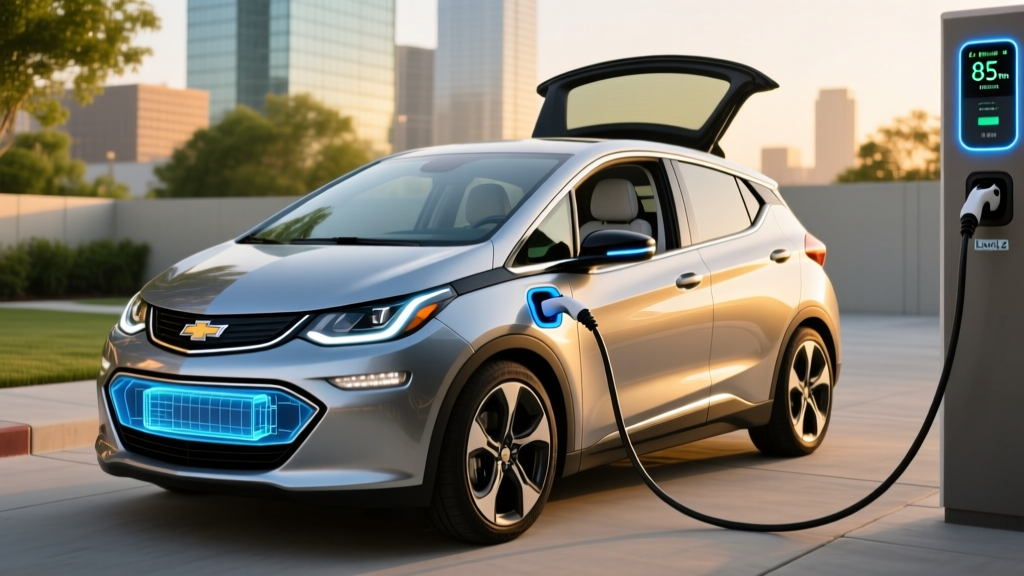
If you're shopping for a used electric vehicle under $20,000, the 2019 Chevrolet Bolt EV remains one of the smartest purchases in the segment. With an EPA-estimated 238 miles of range, a practical hatchback body, and zippy city acceleration, it was years ahead of its time when new — and it holds up well today. The caveats are real, though: DC fast charging is painfully slow by 2026 standards, the rear seat is tight, and you'll want to verify battery health and recall completion before signing any paperwork.
For urban commuters and budget-conscious buyers who can charge at home, the Bolt EV offers a compelling entry into electric ownership with minimal compromise on daily usability.
| Spec | Value |
|---|---|
| EPA Range | 238 miles |
| Battery (usable) | ~57 kWh of 60 kWh total, NMC (LG Chem) |
| Motor Output | 200 hp / 266 lb-ft torque |
| 0–60 mph | 6.5 seconds |
| Drivetrain | Front-wheel drive (single motor) |
| DC Fast Charge (peak) | 55 kW (CCS1) |
| 10–80% DC Charge | ~70 minutes |
| Level 2 Charge Rate | 7.2 kW (~25 miles/hour) |
| MPGe (combined) | 118 MPGe |
| kWh/100 mi | 28 kWh |
| Cargo (behind rear seat) | 16.9 cu ft |
| Cargo (rear seats folded) | 56.6 cu ft |
| Battery Warranty | 8 years / 100,000 miles (transferable) |
| Original MSRP | $36,620 (LT) / $43,520 (Premier) |
| Used Price Range (2026) | $11,000 – $18,000 |
Range and Efficiency: EPA Numbers vs. Real-World Reality
The 2019 Bolt EV carries a 60 kWh lithium-ion battery pack built by LG Chem, using nickel-manganese-cobalt (NMC) chemistry. Approximately 57 kWh is usable, with the remainder held as a buffer to protect long-term battery health. The EPA rates the 2019 Bolt EV at 238 miles of combined range — a figure that was class-leading when the car launched and still respectable today.
EPA Sticker: 238 miles (combined city/highway)
City/Commuter Driving (55–65 mph, mild weather): 240–260 miles — regenerative braking in stop-and-go traffic actually lets many owners exceed the EPA number.
Highway Driving (70–75 mph sustained): 190–215 miles — the Bolt's boxy shape and lack of a heat pump hurt efficiency at speed.
Cold Weather (below 32°F): 150–180 miles — expect 25–35% range loss. The Bolt uses resistive cabin heating, which draws heavily from the pack. Preconditioning while plugged in mitigates some loss.
Efficiency is rated at 118 MPGe combined (28 kWh per 100 miles). That's competitive with modern EVs like the base Hyundai Ioniq 5 and notably better than heavier crossovers. The Bolt's relatively light curb weight (~3,563 lbs) helps it punch above its class in efficiency.
Charging Speed: The Bolt's Biggest Weakness
Here's where the 2019 Bolt EV shows its age most clearly. The DC fast-charging system peaks at just 55 kW via its CCS1 connector. In an era where competitors charge at 150–350 kW, a 10–80% session takes roughly 70 minutes — more than twice as long as a Hyundai Ioniq 5 or Tesla Model 3.
| Charging Level | Power / Rate | Time / Miles Added |
|---|---|---|
| Level 1 (120V household) | ~1.2 kW | ~4 miles per hour |
| Level 2 (240V, 32A) | 7.2 kW | ~25 miles per hour; full charge in ~9 hours |
| DC Fast Charge (CCS1) | 55 kW peak | 10–80% in ~70 min; ~90 miles in 30 min |
The charging curve is relatively flat — the Bolt sustains close to its peak rate through most of the session, which is actually an advantage over vehicles that spike to a high peak then taper aggressively. But 55 kW is 55 kW: road trips require planning and patience.
For home charging, the 7.2 kW onboard charger is adequate. A full overnight charge from empty takes about 9 hours on a Level 2 home station. Most owners who plug in nightly never need DC fast charging for daily use.
Important note: Some 2017–2019 Bolt EVs were affected by a battery recall related to fire risk from manufacturing defects in certain LG Chem cells. GM issued a software fix that initially limited charge to 80% and later provided replacement battery packs for affected vehicles. Before purchasing any used 2019 Bolt EV, verify with a Chevy dealer that recall #N212349060 has been completed. Vehicles with the replacement pack received a larger 65 kWh battery, which actually improves range beyond the original 238-mile rating.
Performance and Driving Impressions
The Bolt EV's single front-mounted permanent-magnet motor produces 200 horsepower and 266 lb-ft of torque, available instantly from zero RPM. The 0–60 mph sprint takes 6.5 seconds — quick enough to merge confidently and genuinely fun in city driving. Torque steer is noticeable under hard acceleration, a consequence of routing this much twist through the front wheels.
Ride quality is firm but controlled. The low center of gravity (battery pack under the floor) keeps body roll in check, and the 2,400-lb battery gives the lightweight chassis a planted feel. The steering is numb but accurate.
Regenerative braking offers two modes: standard (mild regen, coast-friendly) and "L" mode with the steering-wheel paddle engaged, which provides aggressive one-pedal driving capability. Most Bolt owners quickly adopt one-pedal mode and rarely touch the friction brakes.
Interior, Tech, and Practicality
The cabin is where the Bolt's economy-car roots show most clearly. Materials are hard-plastic-heavy, and the seats are thinly padded for long trips. But the layout is functional, and the tech was ahead of its time for a sub-$40K EV in 2019.
Infotainment: A 10.2-inch touchscreen runs Chevrolet's Infotainment 3 system with Apple CarPlay and Android Auto (wired). It remains responsive and intuitive. An 8-inch digital driver display shows range, efficiency, and power flow.
Driver Assistance: The 2019 Bolt offers Chevrolet's Driver Confidence packages, including:
- Forward collision alert with automatic emergency braking
- Lane keep assist with lane departure warning
- Blind-spot monitoring (Premier trim or LT with convenience package)
- Rear cross-traffic alert
- Adaptive cruise control (available on Premier trim)
Note: These are SAE Level 1–2 driver-assist features, not autonomous driving. The driver must remain fully engaged at all times.
Space: Front legroom is generous at 42.8 inches. Rear legroom is tight at 36.5 inches — adequate for children or shorter adults, but cramped for tall passengers on long trips. Cargo volume is 16.9 cu ft behind the rear seat and 56.6 cu ft with the 60/40 split folded — competitive with a Honda Civic Hatchback.
- 238-mile EPA range still competitive in 2026
- Low used pricing ($11K–$18K) with potential $4,000 federal credit
- Strong city acceleration and one-pedal driving
- Excellent efficiency (118 MPGe / 28 kWh/100mi)
- Hatchback practicality with 56.6 cu ft max cargo
- Transferable 8-year/100,000-mile battery warranty
- Apple CarPlay / Android Auto standard
- 55 kW DC fast charging is very slow for road trips
- Rear seat is cramped for adults
- Cheap interior materials
- No heat pump — significant cold-weather range loss
- Battery recall history requires verification
- CCS1 connector (NACS adapters available but add cost)
- No frunk (front trunk) storage
Pricing, Tax Credits, and Ownership Costs
The 2019 Bolt EV originally started at $36,620 for the LT trim and $43,520 for the Premier. In 2026, used examples typically sell for $11,000–$18,000 depending on mileage, condition, and whether the battery recall remedy was completed.
Federal Used EV Tax Credit (§25E): The 2019 Bolt EV qualifies for the federal used clean vehicle credit, which provides up to $4,000 (or 30% of the sale price, whichever is lower) when purchased from a licensed dealer. Key requirements per IRS guidelines:
- Sale price must be $25,000 or less
- Buyer income caps: $75,000 (single), $112,500 (head of household), $150,000 (joint)
- Vehicle must be at least 2 model years old (2019 qualifies)
- Must purchase from a licensed dealer (private-party sales don't qualify)
- Credit can be transferred to the dealer at point of sale for an immediate price reduction
- Credit is non-refundable — you must have tax liability to benefit (unless transferred at sale)
| Scenario | Dealer Price | After $4,000 Credit | Effective Cost |
|---|---|---|---|
| LT, higher mileage (~65K mi) | $12,500 | −$3,750 (30% cap) | ~$8,750 |
| LT, average mileage (~45K mi) | $14,500 | −$4,000 | ~$10,500 |
| Premier, lower mileage (~30K mi) | $17,500 | −$4,000 | ~$13,500 |
Warranty: The original 8-year/100,000-mile battery and powertrain warranty is transferable to subsequent owners. A 2019 model's battery coverage extends through the 2027 model year or 100,000 miles, whichever comes first. GM warrants the battery against capacity loss below 60% of original capacity during that period. Given the battery recall replacements many Bolts received, a significant number of used examples now carry relatively fresh packs.
2019 Bolt EV vs. Key Used-EV Competitors
How does the Bolt stack up against other used EVs in the $12K–$20K range?
| Spec | 2019 Chevy Bolt EV | 2019 Nissan Leaf (62 kWh) | 2019 Hyundai Kona Electric |
|---|---|---|---|
| EPA Range | 238 mi | 226 mi | 258 mi |
| Battery | 60 kWh NMC | 62 kWh NMC | 64 kWh NMC |
| DC Fast Charge | 55 kW | 50 kW (CHAdeMO) | 75 kW |
| 0–60 mph | 6.5 sec | 6.9 sec | 6.4 sec |
| Liquid-Cooled Battery | Yes | No (passive air) | Yes |
| Cargo (max) | 56.6 cu ft | 30.0 cu ft | 45.8 cu ft |
| Connector | CCS1 | CHAdeMO | CCS1 |
Key takeaways: The Kona Electric charges faster (75 kW) and has slightly more range, but cargo space is smaller and used examples tend to cost more. The Leaf's lack of liquid battery cooling is a significant concern for long-term degradation, especially in hot climates, and CHAdeMO infrastructure is declining. The Bolt's combination of range, cargo space, liquid-cooled battery, and CCS1 connectivity makes it the most well-rounded choice for most buyers in this price bracket.
Who Should Buy the 2019 Bolt EV?
Buy the 2019 Bolt EV if:
- You commute 30–80 miles round-trip and can charge at home
- You want the most range per dollar in the used EV market
- You value hatchback cargo space over rear-seat comfort
- Road trips are occasional, not weekly
- You qualify for the $4,000 used-EV federal tax credit
Look elsewhere if:
- You frequently drive 200+ miles between charges (the slow DC charging will frustrate you)
- You regularly carry adult rear-seat passengers
- You live in a very cold climate without garage charging (the lack of a heat pump hurts)
- You need a NACS connector without an adapter
Frequently Asked Questions
What is the real-world range of the 2019 Chevrolet Bolt EV?
The EPA rates it at 238 miles combined. In real-world city driving with mild temperatures, many owners achieve 240–260 miles thanks to regenerative braking. Highway driving at 70+ mph drops range to roughly 190–215 miles, and cold weather (below freezing) can reduce it to 150–180 miles due to the resistive heating system and lack of a heat pump.
How fast does the 2019 Bolt EV charge?
On a Level 2 home charger (240V), it charges at 7.2 kW, adding about 25 miles of range per hour — a full charge takes roughly 9 hours. On DC fast chargers, it peaks at 55 kW via CCS1, meaning a 10–80% session takes approximately 70 minutes. That's slow by 2026 standards and makes road trips require more planning than in faster-charging EVs.
Does the 2019 Bolt EV qualify for the federal EV tax credit?
It does not qualify for the new-vehicle §30D credit (the vehicle must be new). However, it qualifies for the used clean vehicle credit (§25E), which provides up to $4,000 when purchased from a licensed dealer for $25,000 or less. Income caps apply: $75,000 for single filers, $150,000 for joint filers. The credit can be applied at the point of sale as an immediate discount. Always verify current rules at irs.gov, as incentive programs can change.
Is the 2019 Bolt EV worth buying in 2026?
Yes, for the right buyer. At $11,000–$18,000 (and potentially $4,000 less with the federal used-EV credit), it offers more range and cargo space than almost any competitor at this price point. The slow DC charging and cramped rear seat are real trade-offs, but for a home-charging commuter, the Bolt EV is one of the best values in the used EV market.
What about the battery recall? Is the 2019 Bolt safe?
GM issued recall #N212349060 for certain 2017–2019 Bolt EVs due to a manufacturing defect in some LG Chem battery cells that could pose a fire risk when charged to full capacity. The remedy involved a software update and, in many cases, a complete battery pack replacement — often with a larger 65 kWh pack that improves range. Before purchasing, have a Chevrolet dealer verify the recall was completed. A Bolt with the replacement pack is arguably a better vehicle than one with the original.
Can I use Tesla Superchargers with a 2019 Bolt EV?
Yes, with an adapter. GM has provided CCS-to-NACS adapters for Bolt owners, enabling access to Tesla's V2 and V3 Supercharger stalls (which max out well above the Bolt's 55 kW peak, so the car limits the session). Check with your dealer for adapter availability and compatibility with your specific vehicle.
Sources: fueleconomy.gov, irs.gov, Chevrolet specifications.