Quick Verdict: The 2019 Audi e-tron in 2026
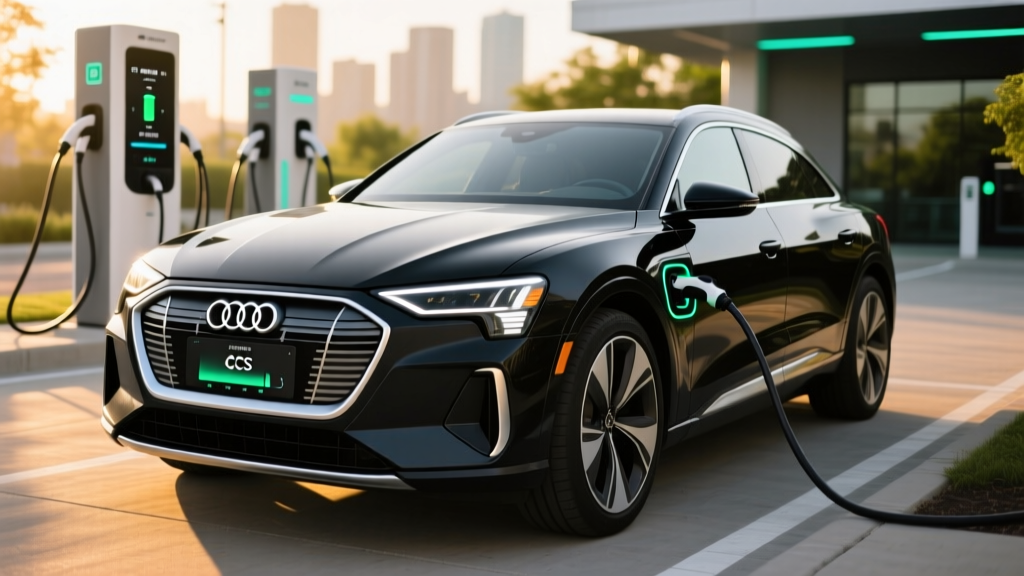
The 2019 Audi e-tron was Audi's first mass-production battery-electric vehicle, and it arrived with a clear philosophy: prioritize refinement, build quality, and charging speed over maximum range. With a 204-mile EPA range, it never led the pack — and in 2026, that figure looks even more modest against newer EVs pushing 300+ miles. But as a used luxury EV purchase, the 2019 e-tron occupies an interesting niche. Depreciation has been steep, meaning buyers can now pick one up for a fraction of its original $74,800 starting MSRP, while still getting Audi's benchmark interior quality, a genuinely fast 150 kW DC fast-charging curve, and standard quattro all-wheel drive.
This review covers what you need to know before buying a 2019 e-tron in 2026 — real-world range expectations, charging performance, battery health considerations, ownership costs, and whether the used-EV tax credit applies.
Range & Efficiency: EPA vs. the Real World
Real-World Expectation: 180–200 miles in mixed driving; 160–175 miles sustained highway at 70+ mph; 130–150 miles in sub-freezing winter conditions with cabin heat.
The 2019 e-tron carries a 95 kWh battery pack (86.5 kWh usable), using NMC (nickel-manganese-cobalt) lithium-ion chemistry. Audi deliberately locked off a large buffer — roughly 8.5 kWh — to protect long-term battery health and reduce degradation. That conservative approach is good news for used buyers concerned about battery longevity, but it's also why the e-tron's EPA range trails competitors from the same era.
Efficiency is rated at 74 MPGe combined (73 city / 74 highway) per fueleconomy.gov. In energy terms, that translates to roughly 46 kWh per 100 miles, which is thirsty by modern EV standards. For comparison, a 2024 Tesla Model Y consumes about 28 kWh/100mi. This means your electricity cost per mile will be noticeably higher in the e-tron than in a more efficient crossover.
The e-tron's efficiency penalty comes from its weight (5,765 lbs curb), its relatively conservative aerodynamics (it's a traditional SUV shape, not a teardrop), and Audi's decision to run a thermal management system that prioritizes battery longevity over energy frugality. In real-world ownership, plan your road trips around 150–170 mile legs to keep a comfortable reserve.
Charging Performance: DC Fast & Level 2
Charging is where the 2019 e-tron still punches above its age. Audi engineered this SUV with a remarkably flat charging curve — meaning it sustains high power well past the typical 50% state of charge where most EVs begin tapering.
| Charging Level | Max Power | Speed / Time | Connector |
|---|---|---|---|
| DC Fast Charge (peak) | 150 kW | 10–80% in ~30 minutes | CCS1 (Combo) |
| DC Fast Charge (sustained to 80%) | ~120–135 kW avg | Flat curve to ~80% SoC | CCS1 |
| Level 2 (240V, 40A) | 9.6 kW | ~21 miles per hour of charging | J1772 / Type 2 |
| Level 2 (240V, 48A) | 11.5 kW | ~25 miles per hour of charging | J1772 / Type 2 |
| Level 1 (120V) | 1.2–1.4 kW | ~3–4 miles per hour | Standard outlet |
The e-tron's 150 kW peak is no longer class-leading in 2026 — vehicles like the Hyundai Ioniq 5 and Porsche Taycan hit 240–350 kW on compatible chargers. However, the e-tron's sustained charging curve is its secret weapon. Where many EVs spike to peak power and then taper sharply, the e-tron holds close to 120–135 kW all the way to 80% SoC. That means your actual 10–80% session at a 150 kW Electrify America or EVgo stall is a genuinely useful ~30 minutes — not the inflated times you see from vehicles that peak briefly and then crawl.
At home on a 48-amp Level 2 charger (like a ChargePoint Home Flex or Tesla Wall Connector with J1772 adapter), a full overnight charge from 20% to 100% takes roughly 8 hours. That's adequate for daily use: plug in when you get home, and you'll wake up with a full battery every morning.
One used-buyer note: The 2019 e-tron uses the CCS1 connector standard. As of 2026, most public fast-charging networks still support CCS1 natively. However, with the industry's shift toward NACS (Tesla's standard), you may want to budget for a CCS-to-NACS adapter (~$200–$250) if you plan to use Tesla Supercharger stations, which are increasingly opening to non-Tesla EVs.
Performance & Drivetrain
| Specification | Value |
|---|---|
| Powertrain | Dual-motor AWD (quattro) |
| Horsepower (Boost Mode) | 402 hp |
| Torque (Boost Mode) | 490 lb-ft |
| 0–60 mph | 5.5 seconds |
| Top Speed | 124 mph (electronically limited) |
| Curb Weight | 5,765 lbs |
| Towing Capacity | 4,000 lbs (braked) |
The e-tron's dual asynchronous motors provide standard quattro all-wheel drive. In normal driving, output is 355 hp and 414 lb-ft, but engaging Boost Mode (pulling the shift lever to the left) unlocks 402 hp and 490 lb-ft for 60-second bursts. The 5.5-second 0–60 time won't embarrass you at a merge, but this is a luxury cruiser, not a performance EV — the Porsche Taycan and Tesla Model X were considerably quicker even in 2019.
The regenerative braking system is worth discussing. Audi opted for a relatively mild regen feel — the e-tron doesn't offer true one-pedal driving in the way a Nissan LEAF or Chevrolet Bolt does. Instead, you select from three regen levels via steering-wheel paddles, or let the car's predictive system manage deceleration based on navigation data and traffic ahead. Some EV enthusiasts find this underwhelming; others appreciate how natural it feels for drivers transitioning from a gas car.
Interior, Tech & Cargo Space
The 2019 e-tron's interior is where Audi's investment shows most clearly. Materials, fit-and-finish, and sound isolation are a step above the Tesla Model X and on par with the Mercedes EQC (which never officially came to the US). The cabin is genuinely quiet — aided by acoustic glass and the absence of engine noise — making it one of the most relaxing EVs for highway cruising.
Infotainment: Audi's MMI touch response system uses dual center screens (10.1" upper, 8.6" lower) replacing physical climate controls. It looks sleek but demands more attention than physical knobs while driving. Apple CarPlay and Android Auto are wired (not wireless) on the 2019 model. The Virtual Cockpit digital instrument cluster is excellent, with configurable navigation and efficiency displays.
Driver Assistance: The 2019 e-tron comes with Audi's pre sense basic and rear systems, adaptive cruise control with stop-and-go, lane departure warning, and a 360-degree camera system. Note that this is an SAE Level 1–2 driver-assistance suite — the driver must remain fully engaged at all times. There is no hands-free driving capability.
Cargo & Passenger Dimensions:
- Cargo volume (rear seats up): 28.5 cu ft
- Cargo volume (rear seats folded): 57.2 cu ft
- Front legroom: 41.3 inches
- Rear legroom: 39.1 inches
- Frunk (front trunk): Small compartment (~2.1 cu ft) for charging cables
Cargo space is modest for a midsize luxury SUV. The Tesla Model Y offers significantly more room (76 cu ft max), and even the Jaguar I-PACE edges ahead. If you regularly haul large items or a family of five with luggage, the e-tron's cargo area may feel tight. The small frunk is useful for stowing the mobile charge cord but won't fit a carry-on bag.
Pricing, Depreciation & Tax Credits
When new, the 2019 Audi e-tron started at $74,800 (Premium Plus trim) and reached $81,800 for the Prestige trim, before a $995 destination charge. With options like the towing package, cold-weather package, and 21-inch wheels, as-tested prices routinely exceeded $85,000.
In 2026, depreciation has been significant — favorable for used buyers. Expect to find 2019 e-tron listings in the $28,000–$38,000 range depending on mileage, condition, and trim. Prestige models with under 50,000 miles typically command the upper end of that range.
| Trim | Original MSRP | Typical 2026 Used Price |
|---|---|---|
| Premium Plus | $74,800 | $28,000–$33,000 |
| Prestige | $81,800 | $33,000–$38,000 |
Federal Used-EV Tax Credit (§25E)
Because the 2019 e-tron is now purchased as a used vehicle, the IRS §25E Used Clean Vehicle Credit may apply. This credit offers up to $4,000 (or 30% of the sale price, whichever is less) for qualifying used EVs. Key eligibility rules:
- Price cap: The sale price must be $25,000 or less to qualify for the full $4,000 credit. At $25,001–$13,333, the 30% calculation applies (e.g., $25,000 × 30% = $7,500, capped at $4,000). Above ~$13,333 and below $25,000, the credit tapers.
- Buyer income limits: Modified AGI must not exceed $75,000 (single), $112,500 (head of household), or $150,000 (joint) for the year of purchase or the prior year.
- Vehicle requirements: Must be at least 2 model years old (the 2019 qualifies), purchased from a licensed dealer, and the buyer must not have claimed the used-EV credit in the prior 3 years.
- Point-of-sale transfer: The credit can be transferred to the dealer at purchase, reducing your out-of-pocket cost immediately.
Practical example: If you buy a 2019 e-tron Premium Plus for $24,500 from a qualifying dealer and your income is under the cap, you could receive a $4,000 credit, bringing your effective cost to ~$20,500. That's exceptional value for a luxury electric SUV with Audi build quality. Consult a tax professional for your specific situation.
Note: The §30D New Clean Vehicle Credit does not apply to used purchases. The §30D credit (up to $7,500) is only available for new EVs meeting current-year battery sourcing, MSRP, and income requirements per IRS guidelines.
Battery Health, Warranty & Longevity
The 2019 e-tron's 95 kWh NMC battery pack was engineered with one of the most aggressive thermal management systems in the industry. Audi's large liquid-cooling/heating loop and generous top/bottom buffer (86.5 kWh usable out of 95 kWh gross) mean the cells operate in a narrower, healthier state-of-charge window than many competitors.
Battery warranty (original): 8 years / 100,000 miles, whichever comes first. Audi guarantees the battery will retain at least 70% of its original capacity during the warranty period. If capacity drops below that threshold, Audi will repair or replace the pack.
For a 2019 model purchased in 2026, the original battery warranty has approximately 1 year remaining (or until 100,000 miles). This is a critical consideration: if you're looking at a 2019 e-tron with 85,000+ miles, verify the battery's State of Health (SoH) through an Audi dealer diagnostic before purchase. Most 2019 e-trons with moderate mileage (30,000–60,000 miles) are showing 92–96% SoH thanks to the conservative buffer strategy, but it's essential to confirm.
If battery replacement is needed out of warranty, expect costs in the $15,000–$22,000 range for a full pack replacement at an Audi dealer — a significant expense that should factor into your total cost of ownership calculation for higher-mileage examples.
Powertrain warranty: 4 years / 50,000 miles (original), which has expired on all 2019 models by 2026. Extended warranties or third-party EV-specific coverage may be worth exploring.
Pros, Cons & Who Should Buy
Pros
- Excellent build quality, materials, and cabin quietness
- Flat DC fast-charging curve (sustained 120–135 kW to 80%)
- Standard quattro AWD with 4,000-lb towing capacity
- Conservative battery buffer supports long-term health
- Steep depreciation = strong used value in 2026
- Potential $4,000 used-EV tax credit (§25E)
- Comfortable, compliant air-suspension ride
Cons
- 204-mile EPA range is short by 2026 standards
- Low efficiency (46 kWh/100mi) raises charging costs
- CCS1 connector may need NACS adapter for Supercharger access
- Modest cargo space (28.5 cu ft) for a midsize SUV
- Original battery warranty nearly expired on 2019 models
- No one-pedal driving; mild regen feel
- Wired-only Apple CarPlay / Android Auto
- Heavy at 5,765 lbs — affects tire wear and braking distances
Who the 2019 e-tron Suits Best
Ideal for: Luxury-oriented commuters with reliable home Level 2 charging who drive less than 150 miles daily, value cabin refinement over maximum range, and want AWD capability for snow or rain. Also a strong pick as a second vehicle for a household that already has a longer-range EV for road trips.
Not ideal for: High-mileage commuters, frequent road-trippers (the 204-mile range means frequent charging stops), buyers in extremely cold climates where winter range drops to ~140 miles, or anyone who needs maximum cargo volume.
2019 e-tron vs. Key Used-EV Competitors
| Spec | 2019 Audi e-tron | 2019 Jaguar I-PACE | 2020 Tesla Model Y LR |
|---|---|---|---|
| EPA Range | 204 mi | 234 mi | 316 mi |
| Battery (usable) | 86.5 kWh (NMC) | 84 kWh (NMC) | 75 kWh (NMC/NCA) |
| DC Fast Charge | 150 kW | 100 kW | 250 kW |
| 10–80% Time | ~30 min | ~45 min | ~22 min |
| 0–60 mph | 5.5 sec | 4.5 sec | 4.8 sec |
| Cargo (max) | 57.2 cu ft | 51.0 cu ft | 76.2 cu ft |
| Typical 2026 Used Price | $28K–$38K | $24K–$32K | $27K–$35K |
The I-PACE offers more range and quicker acceleration but charges considerably slower (100 kW peak). The Model Y dominates on range, efficiency, and cargo space but can't match the e-tron's interior quality or ride comfort. Your choice depends on which compromises matter least to you.
Frequently Asked Questions
What is the real-world range of the 2019 Audi e-tron?
Expect 180–200 miles in mixed city/suburban driving, 160–175 miles on sustained highway trips at 70+ mph, and 130–150 miles in cold weather (below 32°F) with the cabin heater running. The EPA sticker says 204 miles, but real-world conditions — especially highway speeds and temperature — reduce that figure meaningfully.
How fast does the 2019 e-tron charge?
On a 150 kW DC fast charger, the e-tron charges from 10% to 80% in approximately 30 minutes, with a remarkably flat curve that sustains 120–135 kW through most of the session. At home on a 48-amp Level 2 charger (11.5 kW), you'll add about 25 miles of range per hour, achieving a full overnight charge in ~8 hours.
Does the 2019 Audi e-tron qualify for any federal tax credit?
Not the §30D new-vehicle credit. However, the §25E Used Clean Vehicle Credit may provide up to $4,000 if the sale price is $25,000 or less, the buyer meets income caps ($75K single / $150K joint), and the vehicle is purchased from a licensed dealer. The credit can be transferred at the point of sale to reduce your out-of-pocket cost.
Is the 2019 e-tron worth buying vs. a newer EV?
It depends on your priorities. If cabin refinement, build quality, and a comfortable ride matter more than maximum range or the latest tech, the 2019 e-tron at $28K–$38K (potentially $24K–$34K after the used-EV credit) is a compelling luxury EV value. If range and efficiency are your top concerns, a used Tesla Model Y or newer Hyundai Ioniq 5 will serve you better.
How long will the 2019 e-tron battery last?
Audi's large buffer and aggressive thermal management are designed for longevity. Most 2019 e-trons with moderate mileage show 92–96% State of Health (SoH) in 2026. The original 8-year/100,000-mile battery warranty has ~1 year remaining. Out-of-warranty pack replacement costs $15,000–$22,000 if needed, though early data suggests these packs degrade slowly.
Can I charge the 2019 e-tron at Tesla Superchargers?
Not natively — the e-tron uses the CCS1 connector. However, as Tesla opens more Supercharger stations to non-Tesla EVs (via the Magic Dock adapter built into some stalls or with a CCS-to-NACS adapter you can purchase separately), access is improving. Check the Tesla app for compatible stations in your area.
What's the biggest drawback of the 2019 e-tron in 2026?
Range and efficiency. The 204-mile EPA range is short by modern standards, and the 46 kWh/100mi consumption means higher electricity costs per mile. Combined with the CCS1 connector (requiring an adapter for growing NACS infrastructure) and the nearly expired battery warranty, the e-tron demands a buyer who values luxury and build quality over practical EV metrics.