Quick Verdict: Still a Benchmark, But Buy With Eyes Open
The 2018 Tesla Model S remains one of the most capable luxury electric sedans on the used market. With EPA range spanning 210 to 315 miles depending on the battery pack, dual-motor all-wheel drive, and access to Tesla's Supercharger network, it still competes with newer EVs in 2026. But as a six-to-eight-year-old vehicle, battery degradation, out-of-warranty repair risk, and outdated DC fast-charge speeds (by modern standards) are the real story. This guide breaks down exactly what you're getting, what it costs, and whether it's the right used EV for your garage.
2018 Tesla Model S Specs at a Glance
| Spec | 75D | 100D | P100D |
|---|---|---|---|
| EPA Range | 210 mi | 315 mi | 315 mi |
| Battery (usable) | ~75 kWh | ~100 kWh | ~100 kWh |
| Chemistry | NMC | NMC | NMC |
| Drivetrain | Dual-motor AWD | Dual-motor AWD | Dual-motor AWD |
| Horsepower | ~328 hp | ~417 hp | ~762 hp (Ludicrous) |
| 0-60 mph | 4.2 sec | 4.2 sec | 2.5 sec |
| MPGe (combined) | 103 MPGe | 103 MPGe | 98 MPGe |
| Max DC Fast Charge | ~120 kW | ~120 kW | ~120 kW |
| 10-80% DCFC Time | ~38 min | ~50 min | ~50 min |
| Level 2 (Home) | 11.5 kW / ~29 mi/hr | 16.5 kW / ~41 mi/hr | 16.5 kW / ~41 mi/hr |
| Original MSRP | ~$79,500 | ~$99,500 | ~$140,000 |
| 2026 Used Price (est.) | $22,000-$28,000 | $30,000-$40,000 | $38,000-$50,000 |
| Battery Warranty (new) | 8 yr / Unlimited mi | 8 yr / Unlimited mi | 8 yr / Unlimited mi |
Sources: EPA fueleconomy.gov, Tesla historical spec sheets.
Real-World Range: What to Actually Expect
EPA Sticker: 210 mi (75D) / 315 mi (100D/P100D)
Real-World Highway (70°F): ~175-190 mi (75D) / ~265-285 mi (100D/P100D)
Cold Weather (30°F, highway): ~140-160 mi (75D) / ~210-235 mi (100D/P100D)
With Degradation (8-year-old pack): Subtract 8-15% from above figures depending on pack health.
The 2018 Model S predates Tesla's heat pump (introduced on the refreshed Model S in 2021), so it uses a resistive PTC heater. This means cold-weather range loss is significant — expect 25-35% reduction in freezing temperatures, especially on short trips where cabin heating cycles on and off. The 100D's larger buffer makes this more livable; the 75D's 210-mile EPA rating can drop below 150 real-world miles in a northern winter.
Highway efficiency at 75 mph also falls short of the EPA combined cycle. Plan for roughly 85-90% of sticker range on a warm-weather road trip, and always keep a 10-15% buffer for detours or charger downtime.
Charging Speeds: Functional but Dated
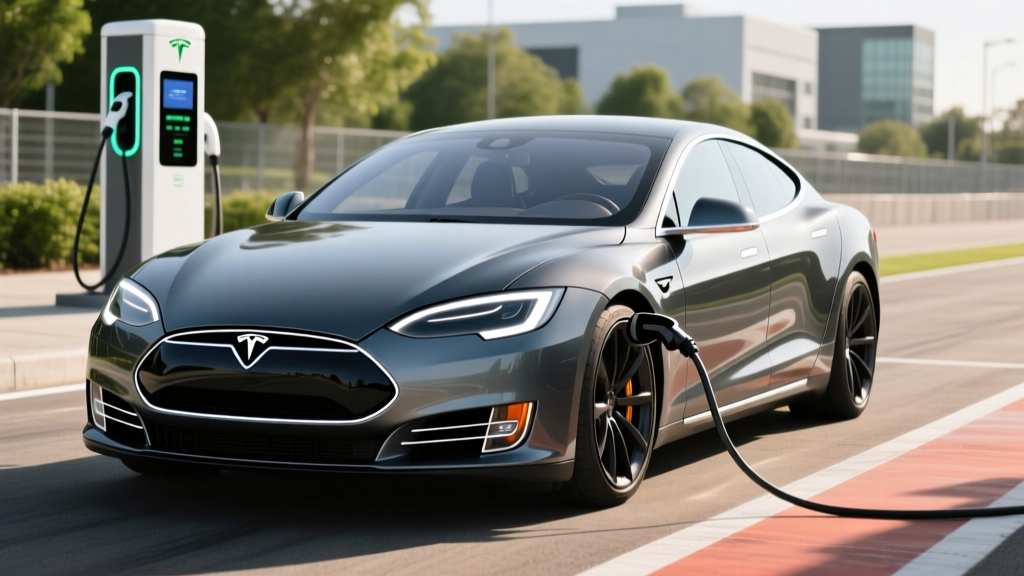
The 2018 Model S uses Tesla's proprietary connector (now being rebranded as NACS) and charges on Tesla's Supercharger network — still the most reliable public DC fast-charging system in 2026. However, the charge architecture is a generation behind.
| Charging Method | Max Power | Speed | Notes |
|---|---|---|---|
| Level 1 (120V outlet) | 1.4 kW | ~3-4 mi/hr | Emergency/trickle only |
| Level 2 (240V, 48A) | 11.5-16.5 kW | 29-41 mi/hr | Full charge overnight (8-10 hrs for 100D) |
| Tesla Supercharger V2 | ~120 kW peak | ~200 mi in 40 min | Typical road-trip charger |
| Tesla Supercharger V3 | Capped at ~120 kW | No benefit over V2 | 2018 hardware cannot use 250 kW |
| CCS (with adapter) | Varies | Adapter-dependent | Tesla CCS adapter enables non-Tesla networks |
Key insight: The 2018 Model S cannot take advantage of V3 Supercharger's 250 kW speeds. Its pack and charge controller top out around 120 kW, meaning a 10-80% charge takes roughly 38 minutes on the 75D and 50 minutes on the 100D. For comparison, a 2025 Hyundai Ioniq 5 hits 10-80% in about 18 minutes at a 350 kW charger. Road trips are still viable — Tesla's network reliability compensates — but you'll spend more time plugged in than newer 800V-architecture EVs.
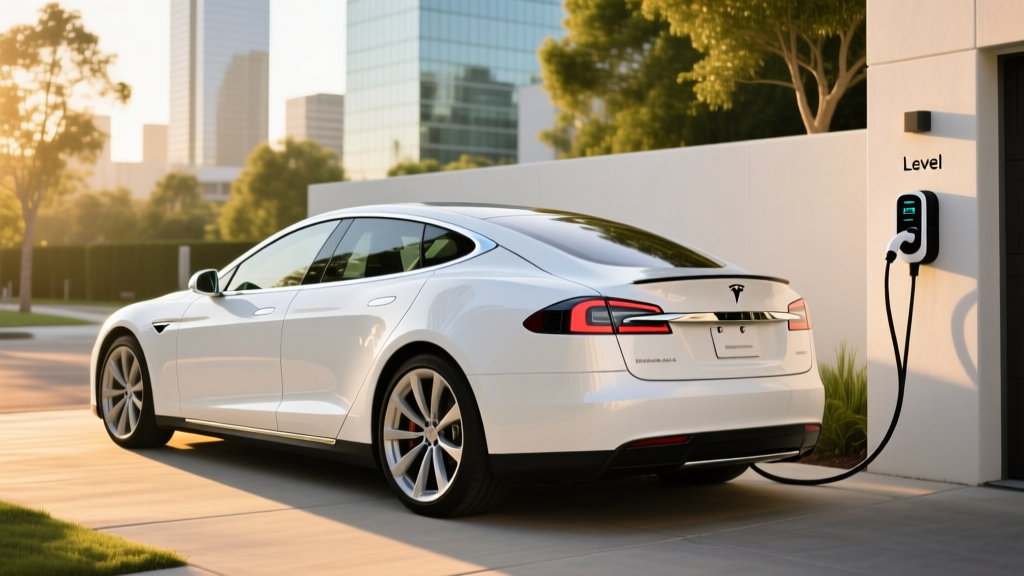
At home, the onboard charger supports up to 16.5 kW (72A) on 100D/P100D models with the optional dual charger, or 11.5 kW (48A) as standard. A Level 2 home installation on a 60A circuit is the practical sweet spot, delivering a full overnight charge for daily commuting.
Performance, Efficiency, and Drivetrain
Even in 2026, the 2018 Model S P100D's 2.5-second 0-60 time places it among the quickest production sedans ever built. The standard 100D and 75D are hardly slow at 4.2 seconds. Dual-motor all-wheel drive is standard across all 2018 trims, providing confident traction in rain and light snow.
Efficiency is respectable for a 4,600-4,900 lb luxury sedan. The EPA rates the 100D at 103 MPGe combined (roughly 33 kWh/100 mi), and the P100D at 98 MPGe. Real-world highway driving at 75 mph pushes consumption closer to 35-38 kWh/100 mi. Regenerative braking in "Standard" mode enables near one-pedal driving, though it doesn't come to a complete hold at zero mph — you'll still use the brake pedal at stoplights.
Interior, Cargo, and Tech
The 2018 Model S interior is a mixed bag. The 17-inch center touchscreen remains impressive and was updated to a faster MCU2 (Media Control Unit) in March 2018 — verify which MCU your specific car has, as the older MCU1 (NVIDIA Tegra 3) is sluggish and no longer receives full software updates.
Passenger space: The Model S seats five comfortably, with 42.7 inches of front legroom and 35.4 inches rear. The flat floor and panoramic glass roof (standard on most 2018 models) make the cabin feel airy.
Cargo: 26.3 cubic feet behind the rear seats, expanding to 58.1 cu ft with seats folded. The front trunk (frunk) adds another 5.3 cu ft — useful for charging cables or a carry-on bag. Total cargo volume is competitive with midsize SUVs.
Driver assistance: 2018 models with Enhanced Autopilot or Full Self-Driving Capability include Tesla's Hardware 2.5 suite. However, this is SAE Level 2 driver assistance — you must keep your hands on the wheel and eyes on the road. It is not self-driving. Autosteer, Traffic-Aware Cruise Control, and Auto Lane Change are the core features. The "Full Self-Driving" package purchased in 2018 has not delivered Level 4/5 autonomy and remains a supervised Level 2 system in 2026.
Pricing, Tax Credits, and Ownership Costs
The 2018 Model S was originally priced from $79,500 (75D) to over $140,000 (P100D with options). In the 2026 used market, you'll find:
- 75D: $22,000 - $28,000
- 100D: $30,000 - $40,000
- P100D: $38,000 - $50,000
| Cost Factor | Detail |
|---|---|
| Federal Used EV Credit (§25E) | Up to $4,000 or 30% of sale price (whichever is lower) on vehicles under $25,000 sold by a dealer. Income caps apply: $75K single / $150K married filing jointly. |
| New EV Credit (§30D) | Does NOT apply — this is a used vehicle. |
| Effective Price (75D w/ credit) | As low as ~$18,000 if priced at or under $25,000 from a dealer |
| Insurance (annual est.) | $2,200 - $3,500 depending on state, age, and driving record |
| Maintenance (annual) | Low — no oil changes. Budget for cabin air filter, wiper fluid, tire rotation, and potential HVAC/suspension repairs. |
Tax credit note: The federal §25E Used Clean Vehicle Credit applies to the 2018 Model S if purchased from a licensed dealer for $25,000 or less (which limits eligibility to lower-mileage 75D examples). The credit is 30% of the sale price, capped at $4,000. Buyer income caps apply. Private-party sales do not qualify. Always verify eligibility with a tax professional before relying on this credit. State and local incentives vary — check your jurisdiction's official resources.
Battery Health, Warranty, and Longevity
All 2018 Model S variants use NMC (nickel-manganese-cobalt) lithium-ion battery packs. Tesla's original battery warranty was 8 years with unlimited miles, covering defects and capacity retention below 70%. For most 2018 cars, this warranty expired in 2026.
Real-world degradation data from Tesla fleet analyses and owner forums suggests:
- Average capacity loss at 100,000 miles: 8-12%
- Average capacity loss at 150,000 miles: 12-18%
- Packs that were frequently charged to 100% or DC fast-charged daily may show higher degradation
Buying tip: Request a battery health report or use third-party tools (like the TeslaFi or Tessie apps with owner permission) to check State of Health (SoH) before purchase. A pack showing more than 15% degradation at under 80,000 miles is a red flag.
Out-of-warranty battery replacement for a 100 kWh pack runs $15,000-$22,000 at a Tesla Service Center in 2026. Third-party EV repair shops are beginning to offer module-level repairs for $5,000-$10,000, which can address specific degraded cell groups without a full pack swap.
Pros and Cons
Pros
- 315-mile EPA range (100D) still competitive in 2026
- Access to Tesla Supercharger network — most reliable public charging
- Blistering acceleration, especially P100D
- Over-the-air software updates keep features current
- Generous cargo space with frunk + hatchback design
- Premium ride quality with adaptive air suspension
Cons
- DC fast-charge speed capped at ~120 kW (slow by 2026 standards)
- No heat pump — significant cold-weather range loss
- Battery warranty likely expired; replacement is $15K-$22K
- MCU1-equipped cars have sluggish infotainment
- Build quality inconsistencies (panel gaps, interior rattles) on some units
- Insurance costs higher than comparable ICE sedans
- Autopilot/FSD is Level 2 only — not self-driving
Who Should Buy the 2018 Tesla Model S?
Choose the 100D if: You want a daily-driver luxury sedan with genuine road-trip range (265+ real-world miles warm weather), commute over 40 miles round-trip, and have Level 2 home charging. It's the sweet spot of value and capability.
Choose the 75D if: You're on a tighter budget, primarily commute under 30 miles daily, and can find one under $25,000 from a dealer to capture the $4,000 used-EV tax credit. Understand that real-world range hovers around 175 miles.
Choose the P100D if: Performance is a priority and you accept the premium. The 2.5-second 0-60 time is exotic-car territory, but the 120 kW charge cap and degradation risk are the same as the 100D.
Look elsewhere if: You need the fastest possible road-trip charging (consider a used Hyundai Ioniq 5 or Kia EV6 with 800V architecture), you live in extreme cold without a garage, or you want a warranty-backed battery.
How It Compares to Key Competitors
In the 2026 used luxury EV sedan market, the 2018 Model S competes against:
- 2018-2019 Jaguar I-Pace: 234 mi EPA, 100 kW DCFC, lower used prices (~$18K-$25K) but less range and no Supercharger access.
- 2019 Audi e-tron: 204 mi EPA, 150 kW DCFC, more refined interior, but significantly less range and higher energy consumption.
- 2020-2021 Tesla Model 3 Long Range: 353 mi EPA, 250 kW DCFC, newer platform, more efficient. A strong alternative if you don't need the S's size and luxury.
- 2021+ Tesla Model S (refresh): 405 mi EPA, 250 kW DCFC, heat pump, yoke or round wheel, MCU3. Substantially better but $50K+ used.
The 2018 Model S's strongest advantage remains its combination of range, Supercharger access, and interior space at a depreciated price. Its weakest point is charging speed — if you road-trip frequently, a newer 800V vehicle will save you 15-20 minutes per stop.
Frequently Asked Questions
What is the real-world range of the 2018 Tesla Model S?
Expect roughly 175-190 highway miles from the 75D and 265-285 from the 100D in warm weather at highway speeds. Cold weather reduces this by 25-35%. Account for 8-15% battery degradation depending on mileage and charging history.
How fast does the 2018 Model S charge?
DC fast charging peaks at approximately 120 kW on Tesla Superchargers, reaching 10-80% in about 38 minutes (75D) or 50 minutes (100D). The car cannot use V3 Supercharger's 250 kW capability. Home Level 2 charging at 48A delivers roughly 29 miles of range per hour.
Does the 2018 Tesla Model S qualify for any federal tax credit?
It does not qualify for the §30D new-vehicle credit. However, it may qualify for the §25E Used Clean Vehicle Credit of up to $4,000 if purchased from a licensed dealer for $25,000 or less. Buyer income caps apply ($75K single / $150K joint). Verify with a tax professional and check IRS guidelines.
Is the 2018 Model S still worth buying in 2026?
Yes, if you prioritize range, Supercharger access, and interior space at a depreciated price, and accept the 120 kW charge-speed limitation and out-of-warranty battery risk. If fast charging and a modern heat pump are priorities, look at a 2021+ Model S or a used Hyundai Ioniq 5.
What should I check before buying a used 2018 Model S?
Verify the MCU version (MCU2 preferred — built after March 2018), check battery State of Health via a third-party app or service report, inspect for suspension air-strut wear, confirm Autopilot hardware version, review service history for drive unit replacements, and ensure the title is clean (not salvaged or rebuilt, which voids remaining Tesla support).
Does Autopilot or FSD on the 2018 Model S drive itself?
No. All Tesla driver-assistance features on the 2018 Model S are SAE Level 2 — the driver must remain fully engaged with hands on the wheel and eyes on the road. "Full Self-Driving" is a supervised Level 2 system, not autonomous driving.