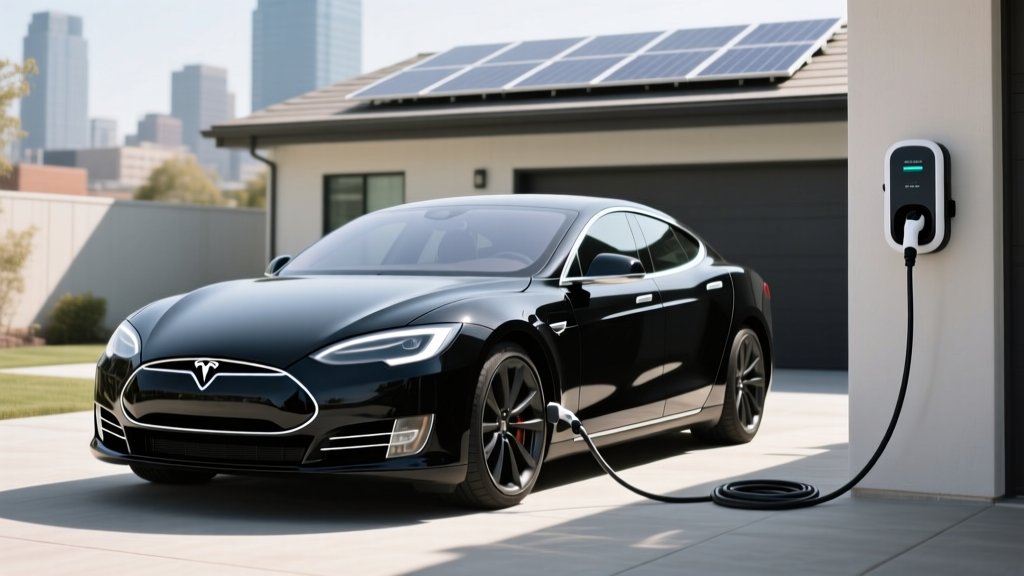
The 2018 Tesla Model S occupies a unique space in the used EV market in 2026. It was the last model year before Tesla's major interior refresh, meaning buyers get a proven luxury sedan with access to the Supercharger network at a fraction of its original $74,500–$135,000 sticker. But with battery degradation, outdated MCU hardware on some units, and a rapidly evolving used-EV landscape, the 2018 Model S demands careful evaluation before you sign the paperwork.
This guide breaks down every variant—the 75D, 100D, and Performance—covering real-world range, charging realities, ownership costs, and whether this eight-year-old flagship still holds up against newer, cheaper competition.
2018 Tesla Model S: Quick Verdict
The 2018 Model S remains a compelling used luxury EV if you prioritize Supercharger network access, proven dual-motor AWD performance, and genuine five-adult seating. The 100D variant offers the best value proposition with its 315-mile EPA range. However, buyers must budget for potential battery replacement ($12,000–$22,000 out of warranty), accept that the pre-refresh interior feels dated compared to 2021+ models, and verify that the vehicle has received the MCU2 (Media Control Unit) upgrade for modern infotainment responsiveness.
| Spec | 75D | 100D | Performance (P100D) |
|---|---|---|---|
| EPA Range | 238 mi | 315 mi | 315 mi |
| Battery (usable, approx.) | 75 kWh (NMC) | 100 kWh (NMC) | 100 kWh (NMC) |
| Drivetrain | Dual-Motor AWD | Dual-Motor AWD | Dual-Motor AWD |
| Horsepower | ~328 hp (combined) | ~417 hp (combined) | ~762 hp (Ludicrous) |
| 0–60 mph | 4.2 sec | 3.8 sec | 2.5 sec |
| MPGe (combined) | 102 MPGe | 102 MPGe | 98 MPGe |
| Efficiency | 33 kWh/100 mi | 33 kWh/100 mi | 35 kWh/100 mi |
| Original MSRP (base) | $74,500 | $94,000 | $135,000 |
| 2026 Used Price (est.) | $22,000–$28,000 | $28,000–$38,000 | $35,000–$48,000 |
| Battery Warranty (original) | 8 yr / 150,000 mi | 8 yr / 150,000 mi | 8 yr / 150,000 mi |
Range, Efficiency, and Real-World Expectations
The 2018 Model S lineup uses NMC (nickel-manganese-cobalt) lithium-ion cells across all trims. The 75D carries approximately 75 kWh of usable capacity, while the 100D and P100D pack roughly 100 kWh. These are the older-style 18650-format cells in the original skateboard platform, not the newer 4680 cells found in post-2021 Teslas.
EPA Sticker: 238 mi (75D) / 315 mi (100D & P100D)
Expect in practice (2026, with degradation):
- 75D: 190–215 mi typical; 150–175 mi highway at 75 mph; 140–160 mi in freezing weather
- 100D: 265–290 mi typical; 220–250 mi highway at 75 mph; 195–220 mi in freezing weather
- P100D: 255–280 mi typical; 210–240 mi highway at 75 mph; 185–210 mi in freezing weather
Source: fueleconomy.gov
Most 2018 Model S vehicles in 2026 have accumulated 60,000–120,000 miles. Expect 8–15% battery degradation depending on charging habits. Vehicles frequently DC fast-charged or regularly charged to 100% will sit at the higher end of that range. A pre-purchase battery health check (available via Tesla service or third-party tools like Tessie or TeslaFi) is strongly recommended.
Efficiency figures hover around 33–35 kWh per 100 miles, which was class-leading in 2018 and remains competitive in 2026. For context, the 2026 Mercedes EQS 450+ achieves roughly 35 kWh/100 mi, so the eight-year-old Model S holds its own on energy consumption.
Charging Speed: DC Fast, Level 2, and Supercharger Access
Charging capability is where the 2018 Model S shows its age relative to 800V-architecture EVs, but Supercharger network access (now with NACS adapter compatibility for CCS vehicles, though the 2018 Model S uses the native NACS/Tesla connector) remains a significant ownership advantage.
| Charging Level | 75D | 100D / P100D |
|---|---|---|
| DC Fast Charge (peak) | ~120 kW | ~140 kW |
| 10–80% DC Fast Time | ~45 min | ~40 min |
| Sustained DC Rate (avg 10–80%) | ~80 kW | ~95 kW |
| Level 2 (240V, 48A onboard) | 11.5 kW / ~37 mi/hr | 11.5 kW / ~37 mi/hr |
| Level 1 (120V, 12A) | ~1.4 kW / ~4 mi/hr | ~1.4 kW / ~4 mi/hr |
| Connector | Tesla NACS (proprietary at the time) | Tesla NACS (proprietary at the time) |
The 2018 Model S predates Tesla's V3 Supercharger optimizations. On a V3 Supercharger (250 kW capable), the 100D will peak around 140 kW but taper aggressively above 60% state of charge. The charge curve is notably less aggressive than a 2024+ Model S Plaid, which sustains higher rates longer thanks to improved thermal management.
For home charging, the 48-amp onboard charger is a strong point. With a proper Level 2 wall connector on a 60-amp circuit, you'll recover roughly 37 miles of range per hour—enough to fully replenish even the 100D overnight. This is significantly faster than many 2018-era competitors limited to 6.6 kW or 7.2 kW onboard charging.
Performance and Drivetrain
All 2018 Model S trims feature dual-motor all-wheel drive. Tesla discontinued the rear-wheel-drive 60 and 75 variants after 2017, so every 2018 example you'll find has front and rear motors.
The 75D delivers a 4.2-second 0–60 mph time with approximately 328 combined horsepower—quick by any measure and more than adequate for daily driving and highway merging. The 100D drops that to 3.8 seconds with roughly 417 hp, offering genuine sports-sedan acceleration. The P100D with Ludicrous Mode is the headline act: 2.5 seconds to 60 mph from 762 hp, which in 2018 made it one of the quickest production cars ever built. Even in 2026, that figure commands respect.
Regenerative braking on the 2018 Model S is strong and adjustable (standard or low). Unlike newer Teslas that removed the low-regen option, the 2018 model lets you choose. One-pedal driving is achievable in standard mode, though it doesn't bring the car to a complete stop—expect to use the friction brakes at the last 2–3 mph.
Interior, Cargo, and Technology
The 2018 Model S interior is the vehicle's most divisive element. The minimalist dashboard centers on a 17-inch portrait touchscreen that controls nearly every function, from climate to glovebox release. The digital instrument cluster behind the steering wheel is functional but dated compared to 2021+ Tesla designs.
Key interior dimensions:
- Front legroom: 42.7 inches
- Rear legroom: 35.4 inches
- Cargo (rear trunk): 26.3 cu ft
- Frunk (front trunk): 5.3 cu ft
- Total cargo: 31.6 cu ft (seats up); ~58.1 cu ft (rear seats folded)
- Seating: 5 adults standard; optional rear-facing third-row jump seats (rare, child-only)
The cargo advantage of the Model S over similarly priced used luxury sedans (BMW 5 Series, Mercedes E-Class) is substantial. The hatchback design and frunk make it genuinely practical for families and road trips.
Infotainment and MCU hardware: Early 2018 Model S vehicles shipped with MCU1 (Nvidia Tegra 3), which is sluggish by 2026 standards—slow map rendering, limited app support, no Netflix/YouTube/theater mode. Tesla offered an MCU2 upgrade (Intel Atom) for approximately $1,500–$2,500, and some vehicles received it under warranty campaigns. Always verify which MCU is installed before purchasing. MCU2-equipped cars are significantly more usable daily.
Autopilot and driver assistance: The 2018 Model S came with Enhanced Autopilot hardware (HW2.5). This supports Traffic-Aware Cruise Control, Autosteer (lane centering), Auto Lane Change, and Autopark. Full Self-Driving (FSD) capability was available as a paid option and can be transferred to subsequent owners if it was purchased outright (not the subscription model). However, FSD remains an SAE Level 2 system—the driver must remain fully engaged and is responsible for all driving decisions at all times.
Tesla Autopilot and FSD (Supervised) on the 2018 Model S are SAE Level 2 driver-assistance systems. They do not make the vehicle self-driving. The driver must keep hands on the wheel, eyes on the road, and remain prepared to take over instantly. Autosteer works best on well-marked highways and can struggle in construction zones, heavy rain, faded lane markings, and complex intersections. Never treat this system as autonomous.
Pricing, Tax Credits, and Ownership Costs
Used 2018 Model S pricing in 2026 varies considerably based on mileage, condition, battery health, trim, and MCU status. Here's the current landscape:
| Trim | Used Price Range (2026) | Federal Used EV Credit (§25E) | Effective Price (best case) |
|---|---|---|---|
| 75D | $22,000–$28,000 | Up to $4,000 (30% of sale price, max $4,000) | $18,000–$24,000 |
| 100D | $28,000–$38,000 | $4,000 (if sale price ≥ $13,334) | $24,000–$34,000 |
| Performance (P100D) | $35,000–$48,000 | $4,000 (if sale price ≥ $13,334) | $31,000–$44,000 |
Critical tax credit details: The 2018 Model S does not qualify for the new-vehicle §30D credit (obviously, as it's used). However, it can qualify for the §25E Previously-Owned Clean Vehicle Credit, which provides 30% of the sale price up to a maximum of $4,000. Key eligibility requirements per IRS guidelines:
- Sale price must be $25,000 or less (this disqualifies many 100D and most P100D examples)
- Buyer AGI must not exceed $75,000 (single), $112,500 (head of household), or $150,000 (joint)
- Vehicle must be purchased from a licensed dealer (private-party sales excluded)
- Vehicle must be at least two model years old (2018 qualifies)
- The credit can be claimed once per buyer per three-year period
Practical implication: The 75D, priced in the $22,000–$28,000 range, is the most likely candidate for the full $4,000 used-EV credit. Many 100D units will exceed the $25,000 sale-price cap, making them ineligible. Always confirm the dealer's sale price and your income eligibility with a tax professional before relying on this credit.
Warranty status: Tesla's original battery and drive unit warranty for the 2018 Model S covers 8 years or 150,000 miles, whichever comes first, with a minimum 70% capacity retention threshold. In 2026, most 2018 vehicles have expired or are about to expire from this warranty. If the battery has been replaced under warranty, the replacement typically carries its own 4-year/50,000-mile warranty. Out-of-pocket battery replacement runs $12,000–$22,000 depending on the pack and service provider.
Pros and Cons: The Honest Assessment
Pros
- Supercharger network access — native NACS connector; no adapter needed at Tesla Superchargers, which remain the most reliable DC fast-charging network in the US
- 315-mile EPA range (100D) — still competitive with many 2026 EVs; genuine road-trip capability
- Strong performance across all trims — 4.2-sec 0–60 on the "base" 75D; P100D is supercar-quick
- Spacious hatchback + frunk — 31.6 cu ft cargo with seats up; far more practical than sedan competitors
- 48A onboard Level 2 charging — 37 mi/hr at home beats most 2018 contemporaries
- Over-the-air updates — Tesla continues to push software updates to 2018 vehicles (feature support varies)
- Low running costs — electricity vs. premium gasoline saves $1,500–$2,500/year for a 12,000-mile driver
Cons
- Pre-refresh interior — materials, seat design, and dashboard feel dated vs. 2021+ Model S and 2026 competitors
- MCU1 sluggishness — if not upgraded to MCU2, the infotainment experience is frustratingly slow
- Battery warranty mostly expired — out-of-pocket replacement risk of $12,000–$22,000
- DC fast charging capped at ~120–140 kW — significantly slower than 2024+ EVs with 800V architecture (250–350 kW)
- Air suspension reliability — known failure point on 2012–2020 Model S; replacement struts cost $1,500–$3,000 per corner
- Insurance costs — Model S premiums remain 20–40% above comparable gas sedans due to repair costs
- No heat pump — uses resistive heating, which reduces winter range more than heat-pump-equipped EVs
Who Should Buy the 2018 Model S?
Decision Framework
Choose the 2018 Model S 100D if: You need a spacious luxury sedan with genuine 250+ mile real-world range, frequent the Supercharger network for road trips, value AWD performance, and can budget for potential air suspension or battery service.
Choose the 75D if: You're a commuter with home charging, drive under 200 miles daily, want the lowest entry price (potentially under $20,000 after the §25E credit), and don't need maximum range.
Look elsewhere if: You want a modern interior, the fastest possible DC charging, a vehicle still under factory battery warranty, or you need the latest ADAS hardware. Consider a used 2021+ Model S (refreshed interior, MCU3, heat pump), a 2023+ Hyundai Ioniq 6, or a BMW i5 instead.
Best use cases for the 2018 Model S:
- Daily commuter with home charging: Excellent. Quiet, smooth, low per-mile cost, and the range covers virtually any commute.
- Family sedan: Strong. Five-adult seating, hatchback cargo space, good safety ratings (5-star NHTSA overall), and rear-seat entertainment via the touchscreen.
- Road trips: Very capable on routes with Supercharger coverage. The 100D's range means fewer stops, and Supercharger reliability exceeds CCS networks in most regions.
- Towing: Not recommended. While rated for 2,000 lbs (with hitch), towing severely impacts range (expect 40–50% reduction), and the air suspension isn't designed for sustained heavy loads.
2018 Model S vs. Key Used-EV Competitors
In the $25,000–$40,000 used-EV market of 2026, the 2018 Model S competes with several compelling alternatives:
| Vehicle | EPA Range | DC Fast Charge (peak) | Used Price (2026) | Key Advantage |
|---|---|---|---|---|
| 2018 Tesla Model S 100D | 315 mi | ~140 kW | $28K–$38K | Supercharger network, cargo space |
| 2021 Tesla Model 3 LR AWD | 353 mi | ~250 kW | $27K–$34K | Newer, faster charging, heat pump |
| 2020 Porsche Taycan 4S | 203 mi | ~270 kW | $42K–$55K | Build quality, 800V charging, driving dynamics |
| 2021 BMW i4 eDrive40 | 301 mi | ~200 kW | $30K–$38K | Traditional luxury feel, newer platform |
| 2020 Jaguar I-PACE | 234 mi | ~100 kW | $22K–$30K | Distinctive styling, solid build |
The 2021 Model 3 Long Range is the most direct threat: it's newer, charges faster, includes a heat pump, and often costs less than a 2018 Model S 100D. However, the Model S still wins on interior volume, hatchback practicality, and the prestige factor of the flagship sedan.
Frequently Asked Questions
What is the real-world range of the 2018 Tesla Model S in 2026?
With typical battery degradation of 8–15%, expect 190–215 miles from the 75D, 265–290 miles from the 100D, and 255–280 miles from the P100D under mixed driving conditions. Highway driving at 75 mph reduces these figures by roughly 15%, and freezing temperatures can cut range by an additional 20–30% due to the resistive cabin heater and battery conditioning demands.
How fast does the 2018 Model S charge at home and on the road?
At home on a Level 2 (240V, 48A) Tesla Wall Connector, the 2018 Model S charges at 11.5 kW, adding approximately 37 miles of range per hour—a full charge takes 7–9 hours depending on battery size. On DC fast charging, the 100D peaks around 140 kW and charges from 10–80% in approximately 40 minutes. The 75D peaks around 120 kW with a 10–80% time of roughly 45 minutes. These rates are slower than modern 800V EVs but remain practical for road-trip use on the Supercharger network.
Does the 2018 Model S qualify for any federal EV tax credit?
Not the new-vehicle §30D credit, but it may qualify for the §25E Previously-Owned Clean Vehicle Credit. This credit offers 30% of the sale price, up to $4,000, but only if the dealer sale price is $25,000 or less and the buyer's adjusted gross income falls under IRS limits ($75K single / $150K joint). In practice, this means the 75D is the most likely trim to qualify; many 100D and P100D examples exceed the $25,000 price cap. Always verify eligibility with a tax professional. See IRS §25E guidelines.
Is the 2018 Model S worth buying versus newer used EVs?
It depends on your priorities. If Supercharger network access, hatchback cargo space, and flagship performance matter most, the 2018 Model S 100D is still compelling at $28,000–$38,000. If you'd rather have a newer vehicle with faster charging, a heat pump, and remaining warranty, a 2021 Model 3 Long Range ($27,000–$34,000) or 2021 BMW i4 eDrive40 ($30,000–$38,000) may serve you better. The 2018 Model S trades modernity for space, range, and network advantages.
What are the biggest risks of buying a used 2018 Model S?
The three primary risks are: (1) Battery degradation or failure outside warranty, with replacement costs of $12,000–$22,000; (2) Air suspension failure, a known issue on pre-2021 Model S vehicles, costing $1,500–$3,000 per corner; and (3) MCU1 infotainment hardware that is slow and may not support newer software features. Always request a pre-purchase inspection from a Tesla-certified technician or independent EV specialist, and verify battery health via the car's energy screen or a third-party diagnostic tool.
Can I still get software updates on a 2018 Model S?
Yes. Tesla continues to push over-the-air updates to 2018 Model S vehicles, though feature support depends on hardware. MCU2-equipped vehicles receive more updates and newer features than MCU1 units. Autopilot improvements, UI refinements, and entertainment app updates are still delivered, though some newer features (like the redesigned navigation or theater mode) require MCU2 or later.