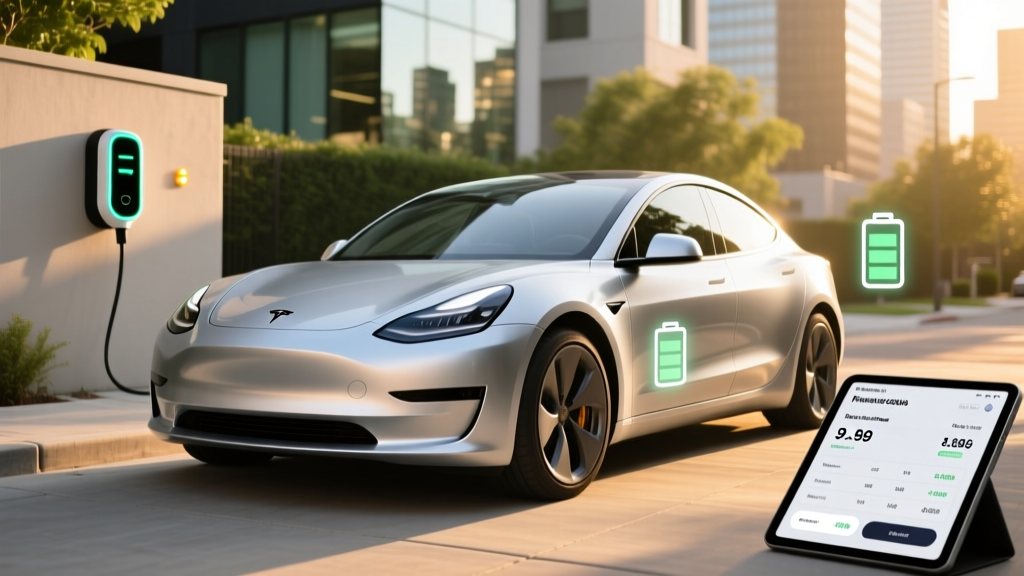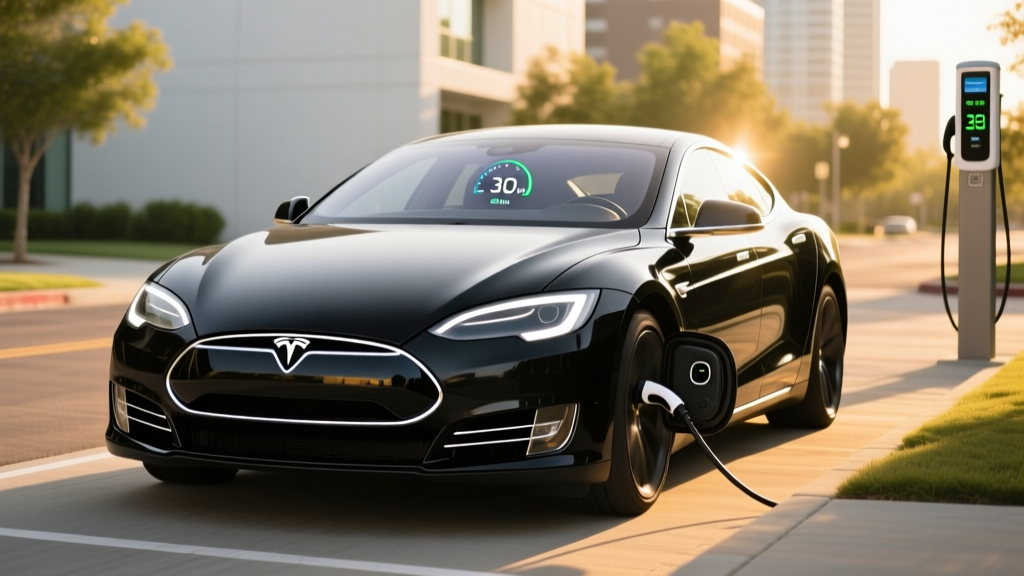
The 2018 Tesla Model S P100D remains one of the quickest production sedans ever built. With its legendary 2.4-second 0-60 mph time and 315-mile EPA range, it still turns heads in 2026. But as a used EV purchase, the P100D demands careful scrutiny: battery degradation, outdated charging hardware, and expired federal incentives all factor into whether this flagship sedan is a brilliant bargain or a money pit.
This guide breaks down every spec, real-world driving impression, and ownership cost you need to evaluate the 2018 Model S P100D on today's used market.
2018 Tesla Model S P100D: Core Specifications
| Spec | Value |
|---|---|
| EPA Range | 315 miles |
| Usable Battery Capacity | ~100 kWh (NMC) |
| Drivetrain | Dual-Motor AWD |
| Peak Horsepower | ~680 hp (Ludicrous mode) |
| 0-60 mph | 2.4 seconds (w/ rollout subtracted) |
| Top Speed | 155 mph |
| Max DC Fast Charge Rate | ~120 kW (Supercharger V2) |
| 10-80% DC Fast Charge | ~40 minutes |
| Level 2 Home Charge (48A) | ~11.5 kW / ~34 mi/hr |
| EPA Efficiency | 98 MPGe combined / 34 kWh/100mi |
| Cargo Volume | 26.3 cu ft (rear) + 5.3 cu ft (frunk) |
| Battery Warranty (original) | 8 years / 150,000 miles |
| Original Base MSRP | ~$135,000 (before options) |
Real-World Range: What the EPA Sticker Doesn't Tell You
Real-World Expectation (2026, used pack): 240-280 miles in mixed driving; 200-230 miles sustained highway at 75 mph; 180-210 miles in freezing temperatures.
The P100D's 100 kWh NMC (nickel manganese cobalt) battery was the largest Tesla offered at the time, and 315 miles of EPA range was class-leading in 2018. However, several factors compress that figure in real-world use.
Battery degradation: By 2026, an 8-year-old NMC pack with typical mileage (80,000-120,000 miles) will have lost approximately 10-18% of its original capacity, depending on charging habits and climate exposure. Owners who frequently charged to 100% or regularly used DC fast charging will see greater degradation. Tesla's battery management system includes a top and bottom buffer, but physical cell wear is unavoidable. Expect a well-maintained P100D to deliver roughly 260-280 miles at 80% state of charge in moderate temperatures.
Highway efficiency: The Model S is a large, heavy sedan (nearly 5,000 lbs), and its aerodynamic drag increases substantially above 70 mph. Sustained 75-80 mph highway driving typically yields 230-260 miles from a fully charged pack in a new unit — and proportionally less with a degraded battery.
Cold-weather penalty: NMC chemistry loses efficiency in freezing temperatures, and the 2018 Model S relies on resistive cabin heating rather than a heat pump (which Tesla introduced in the 2021 refresh). Expect a 20-30% range reduction in sub-freezing conditions, bringing usable range down to roughly 180-210 miles on a cold winter road trip.
Before purchasing, request a State of Health (SoH) reading from a Tesla Service Center or use third-party OBD-II tools like Scan My Tesla to check actual pack capacity. An SoH below 82% is a negotiation point; below 75% is a red flag.
Charging Speed: The P100D's Biggest 2026 Limitation
| Charging Level | Power | Speed (approx.) | Notes |
|---|---|---|---|
| Level 1 (120V) | ~1.4 kW | ~4 mi/hr | Emergency/trickle only |
| Level 2 (240V, 48A) | 11.5 kW | ~34 mi/hr | Full charge in ~9 hours |
| DC Fast (Supercharger V2) | Peak ~120 kW | ~170 mi in 30 min | 10-80% in ~40 min |
| DC Fast (Supercharger V3/V4) | Capped at ~150 kW | ~190 mi in 30 min | Car cannot use full 250-325 kW |
The 2018 Model S uses Tesla's proprietary connector (now called NACS — North American Charging Standard) and charges exclusively on the Supercharger network or via adapter at third-party CCS stations.
The charging bottleneck: The P100D's battery management system caps DC fast charging at roughly 120-140 kW, even when plugged into a 250 kW V3 Supercharger or a 325 kW V4 stall. Tesla imposed this limit via software to protect the older NMC cells from thermal stress and accelerated degradation. The result: a 10-80% charge takes approximately 35-45 minutes, compared to 18-22 minutes for a modern 800V architecture EV like the Hyundai Ioniq 5 or Porsche Taycan.
The charge curve tapers aggressively above 60% SoC. You'll see peak rates (~120 kW) only between roughly 10-40% SoC, dropping to 70-80 kW by 60%, and below 40 kW above 80%. Road-trip strategy: charge in short bursts from 10-60% and move on rather than waiting for a full top-off.
CCS adapter access: Tesla released a NACS-to-CCS adapter enabling older Teslas to use Electrify America, EVgo, and other networks. The adapter costs ~$250 and is essential for road trips outside Supercharger-dense corridors. However, charging speeds on third-party networks are still limited by the car's onboard cap.
Home charging: The onboard charger supports up to 48 amps (11.5 kW) on a Level 2 circuit. A full home install with a Tesla Wall Connector on a 60A circuit delivers roughly 34 miles of range per hour — adequate for overnight replenishment. Installation typically costs $800-$2,000 depending on panel capacity and run length; consult a licensed electrician for your specific setup.
Performance: The 0-60 Time That Defined an Era
The headline number is staggering even by 2026 standards: 2.4 seconds from 0-60 mph with Ludicrous mode engaged and the 1-foot rollout subtracted (Tesla's standard measurement methodology). Independent testing by Motor Trend and Car and Driver confirmed 2.28-2.5 second runs on prepped surfaces.
The dual-motor AWD powertrain delivers approximately 680 peak horsepower and an estimated 790 lb-ft of torque to all four wheels. The instant torque delivery and all-wheel traction make the P100D one of the most visceral acceleration experiences available at any price.
Important caveats for used buyers:
- Ludicrous mode requires a warm battery (above ~50°F / 10°C). In cold weather, the car will limit peak power output until the pack reaches operating temperature.
- Repeated full-power launches generate significant heat. The car will temporarily reduce power after 2-3 consecutive Ludicrous runs to protect the drivetrain.
- Tire wear is extreme under hard acceleration. Budget for Michelin Pilot Sport 4S or equivalent high-performance tires (~$1,200-$1,600 per set) every 15,000-20,000 miles if you use the performance regularly.
Beyond straight-line speed, the P100D handles competently for a 4,900-lb sedan, with standard adaptive air suspension providing adjustable ride height and firmness. Steering is precise but light, and the low center of gravity (battery pack under the floor) minimizes body roll. It's no Porsche Taycan in the corners, but it's remarkably capable for its size and era.
Interior, Tech, and Daily Livability
The 2018 Model S interior is a study in minimalist ambition and mixed execution. The centerpiece is a 17-inch vertically oriented touchscreen running Tesla's proprietary infotainment software, which by 2026 standards feels both advanced (over-the-air updates, streaming media, Sentry Mode dashcam) and dated (no Apple CarPlay or Android Auto, slower processor than current Teslas).
Space and comfort:
- Rear legroom: 35.4 inches — adequate for adults but tighter than a Mercedes S-Class or BMW 7 Series.
- Cargo: 26.3 cu ft behind the rear seats (hatchback-style liftgate) plus a 5.3 cu ft front trunk (frunk). Total with seats folded: ~58 cu ft.
- Seating: Available in 5-seat or optional rear-facing 7-seat configuration (small children only in the third row).
Driver assistance — Autopilot: The 2018 Model S came with Tesla's Enhanced Autopilot hardware (HW2.5), supporting adaptive cruise control, lane-keeping, and automatic lane changes. Some cars were optioned with "Full Self-Driving Capability" (FSD), which by 2026 includes city-street navigation but remains a SAE Level 2 driver-assist system — the driver must remain fully engaged, hands on or near the wheel, eyes on the road at all times. This is not autonomous driving.
Tesla Autopilot and FSD (Supervised) require continuous driver supervision. The vehicle can steer, accelerate, and brake under certain conditions, but the driver is legally and operationally responsible at all times.
Notable drawbacks:
- Panel gaps and interior material quality inconsistent with the $135,000+ original price.
- No native Apple CarPlay / Android Auto (a dealbreaker for some buyers).
- MCU1 (Media Control Unit) in early 2018 cars is prone to failure and slow performance — verify whether the car has been upgraded to MCU2 (a ~$2,000 retrofit if not).
- Phantom braking incidents reported with Autopilot; stay alert and prepared to override.
Pricing, Tax Credits, and Total Cost of Ownership
The 2018 Model S P100D originally stickered at approximately $135,000-$145,000 depending on options (Enhanced Autopilot, premium interior, premium wheels). In the 2026 used market, examples typically trade between $38,000 and $58,000, depending on mileage, condition, battery SoH, and service history.
The 2018 Model S P100D does not qualify for the IRS §30D new clean vehicle credit (it's a used purchase). The Used Clean Vehicle Credit (§25E) offers up to $4,000 or 30% of the sale price (whichever is less), but only for vehicles with an MSRP under $25,000 when new — the P100D's original MSRP far exceeds this cap. State-level incentives vary by jurisdiction; consult your state's energy office or a tax professional for specifics.
| Category | Estimated 5-Year Cost |
|---|---|
| Purchase Price | $48,000 |
| Depreciation (est. 40%) | -$19,200 (residual ~$28,800) |
| Electricity (home charging, 60k mi) | ~$4,800 |
| Insurance (est.) | ~$14,000-$18,000 |
| Maintenance & Repairs | ~$4,000-$8,000 |
| Potential Battery Replacement | $13,000-$20,000 (if needed) |
| Est. 5-Year Total (excl. battery replacement) | ~$70,000-$77,600 |
Insurance is a significant cost for the P100D. Its performance classification, high repair costs, and Tesla-specific parts pricing push annual premiums to $2,800-$3,600 for a typical driver — roughly 40-60% more than a comparable non-performance luxury sedan.
Maintenance is lighter than a gas equivalent (no oil changes, fewer brake replacements thanks to regenerative braking), but suspension components, air conditioning compressors, and the MCU are known failure points at this age. Budget $1,500-$2,000/year for out-of-warranty repairs.
Battery replacement is the worst-case scenario. A remanufactured 100 kWh pack from Tesla costs $13,000-$16,000 installed; a new pack can exceed $20,000. The original 8-year/150,000-mile battery warranty expired in 2026 for all 2018 vehicles. If the pack shows >18% degradation or cell imbalance, negotiate the purchase price accordingly.
2018 Model S P100D vs. 2026 Alternatives
| 2018 Model S P100D | 2022 Model S Plaid | 2022 Lucid Air Pure | 2022 Taycan 4S | |
|---|---|---|---|---|
| Used Price (2026) | $38k-$58k | $70k-$85k | $55k-$70k | $60k-$78k |
| 0-60 mph | 2.4 sec | 1.99 sec | 5.0 sec | 3.8 sec |
| EPA Range | 315 mi | 396 mi | 410 mi | 227 mi |
| Max DC Charge | ~120 kW | ~250 kW | ~300 kW | ~270 kW |
| 10-80% Time | ~40 min | ~25 min | ~20 min | ~22 min |
The P100D's 0-60 time still rivals supercars, but its charging speed, interior quality, and technology have been eclipsed. The 2022 Model S Plaid is faster, charges twice as quickly, and offers a refreshed interior — but costs $20,000-$30,000 more used. The Lucid Air Pure trades acceleration for best-in-class range and efficiency. The Porsche Taycan 4S delivers far superior handling and 800V charging at the cost of range.
Look elsewhere if: You road-trip frequently and need fast charging, prioritize interior luxury and build quality, or want a battery still under factory warranty.
Pros and Cons at a Glance
- 2.4-second 0-60 — still world-class in 2026
- 315-mile EPA range (when new) is practical for daily use
- Supercharger network access (NACS connector)
- Over-the-air software updates continue
- Hatchback cargo versatility + frunk
- Air suspension provides adjustable ride height
- DC fast charging capped at ~120-140 kW (slow by 2026 standards)
- Battery warranty expired — replacement is $13k-$20k
- No federal tax credit eligibility on used purchase
- Interior quality inconsistent with original luxury price
- No Apple CarPlay / Android Auto
- High insurance premiums ($2,800-$3,600/yr)
- MCU1 hardware in early 2018 cars is slow/failure-prone
Frequently Asked Questions
What is the real-world range of the 2018 Tesla Model S P100D in 2026?
With typical battery degradation (10-18% over 8 years), expect 240-280 miles in mixed driving, 200-230 miles on sustained highway trips, and 180-210 miles in freezing weather. Always check the battery's State of Health before purchase.
How fast does the P100D charge at home and on the road?
At home on a 48A Level 2 charger, it adds roughly 34 miles per hour (full charge in ~9 hours). On DC fast chargers, it peaks at ~120-140 kW and takes approximately 40 minutes from 10-80%. This is the car's primary weakness vs. modern 800V EVs.
Does the 2018 Model S P100D qualify for any federal EV tax credit?
No. The §30D new-vehicle credit doesn't apply to used purchases, and the §25E used-vehicle credit caps eligibility at cars with an original MSRP under $25,000 — the P100D's MSRP was ~$135,000. Check IRS.gov for current rules and consult a tax professional for state-level incentives.
Is the P100D worth buying vs. newer EVs?
It depends on your priorities. If acceleration thrills and Supercharger access at a sub-$50k price matter most, yes. If you need fast road-trip charging, modern interior quality, or remaining battery warranty, consider a 2022+ Model S Plaid, Lucid Air, or Porsche Taycan instead.
What should I check before buying a used 2018 P100D?
Request battery State of Health from Tesla Service, verify MCU2 upgrade status (critical for infotainment performance), inspect air suspension for leaks, check service records for drive unit replacements, and confirm Autopilot hardware version (HW2.5 minimum).
How much does a replacement battery cost?
A remanufactured 100 kWh pack costs $13,000-$16,000 installed at a Tesla Service Center; a new pack exceeds $20,000. Third-party rebuilds may be slightly cheaper but vary in quality. Factor this into your purchase negotiation if SoH is below 85%.
Sources: EPA Fuel Economy, Tesla Battery Warranty, IRS Clean Vehicle Credits