Quick Verdict: The 2018 Tesla Model S P100D in 2026
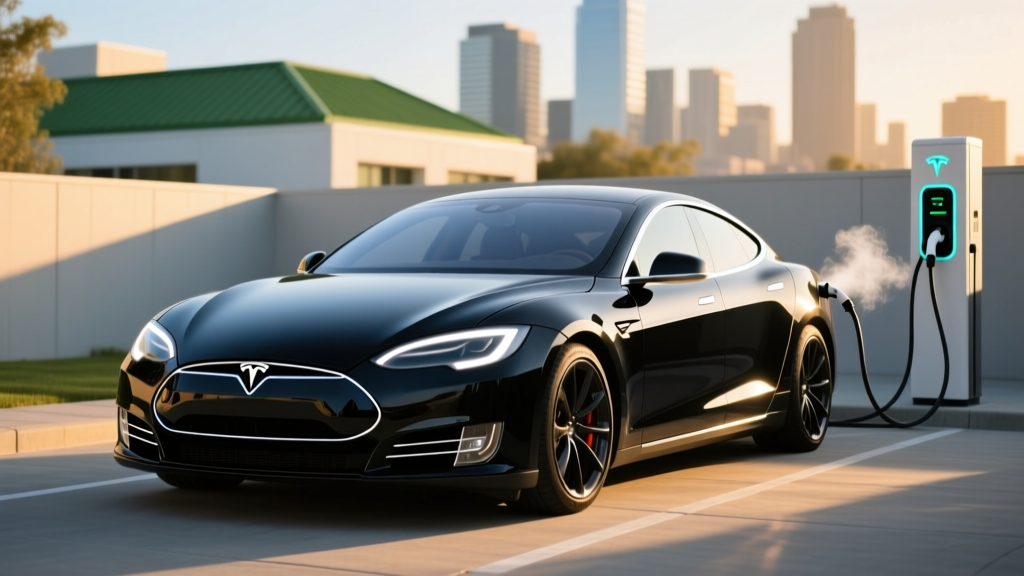
The 2018 Tesla Model S P100D was the halo performance sedan of its era — a 100 kWh flagship that combined supercar acceleration with legitimate long-range capability. In 2026, it exists exclusively on the used market, where well-maintained examples trade between roughly $30,000 and $45,000 depending on mileage, battery State of Health (SoH), and hardware configuration. It remains one of the quickest production sedans ever built, but prospective buyers need to weigh aging battery chemistry, pre-refresh interior quality, and the absence of modern charge speeds against its still-impressive spec sheet.
| Spec | Value |
|---|---|
| EPA Range | 315 miles |
| Battery (usable) | ~100 kWh (NMC/NCA) |
| Drivetrain | Dual-Motor AWD |
| Horsepower | ~762 hp (Ludicrous mode) |
| 0–60 mph | 2.4 seconds |
| Top Speed | 155 mph |
| Efficiency | 98 MPGe combined / 34 kWh/100 mi |
| Max DC Fast Charge | ~120 kW peak (V2 Supercharger) |
| 10–80% DC Time | ~45 minutes |
| Level 2 Home Charge | 11.5 kW (48A) — ~34 mi/hr |
| Cargo (rear + frunk) | 26.3 cu ft (rear) + 5.3 cu ft (frunk) |
| Original MSRP | ~$135,000 (before incentives) |
| Used Price Range (2026) | $30,000–$45,000 |
| Battery Warranty (original) | 8 yr / 150,000 mi |
Range and Efficiency: EPA vs. the Real World
The P100D's 100 kWh battery pack (approximately 98–100 kWh usable, with a top and bottom buffer managed by the BMS) delivered an EPA-estimated 315 miles when new — a class-leading figure in 2018. Efficiency was rated at 98 MPGe combined by fueleconomy.gov, translating to roughly 34 kWh consumed per 100 miles of driving.
Expect 260–285 miles in mixed real-world driving from a 2018 P100D today. Highway cruising at 75+ mph pushes consumption to 38–42 kWh/100 mi, cutting range to roughly 230–250 miles. In cold weather (below 32°F), count on a 20–30% reduction due to cabin heating demands and increased battery internal resistance — potentially dropping effective range to 190–220 miles unless preconditioning is used.
Battery degradation on a 6–8-year-old 100 kWh NMC/NCA pack typically ranges from 8% to 15% depending on charging habits (frequent 100% charges and DC fast charging accelerate wear). Request a State of Health (SoH) reading from a Tesla Service Center or use third-party tools like TeslaFi or Scan My Tesla before purchasing.
Charging: Speeds, Connectors, and Infrastructure
The 2018 Model S P100D predates Tesla's V3 Supercharger and CCS adapter ecosystem. It uses the proprietary Tesla connector for both AC and DC charging, though Tesla has since released a CCS Combo 1 adapter for legacy vehicles (requires an ECU firmware update).
| Level | Power | Speed | Notes |
|---|---|---|---|
| Level 1 (120V) | ~1.4 kW | ~3–4 mi/hr | Emergency/trickle only |
| Level 2 (240V, 48A) | 11.5 kW | ~34 mi/hr | Full charge in ~9 hours |
| DC Fast (V2 Supercharger) | ~120 kW peak | ~180 mi/hr at peak | 10–80% in ~45 min |
| DC Fast (V3 Supercharger) | ~150 kW (limited) | ~200 mi/hr at peak | Older pack architecture caps throughput |
The 100 kWh pack's charge curve is notably different from modern EVs. Peak charge rates (~120 kW) are sustained only between roughly 10–30% SoC, then taper progressively. From 50% to 80%, the car may pull only 60–80 kW, making the 10–80% session take around 45 minutes at a V2 Supercharger. At V3 stalls (250 kW capable), the older battery management system and pack architecture prevent the P100D from utilizing full V3 speeds — you'll see a modest bump to maybe 140–150 kW peak, shaving perhaps 5–8 minutes off the session.
For home Level 2 charging, a Wall Connector or equivalent J1772 station delivering 48 amps on a 60-amp circuit provides roughly 34 miles of range per hour — sufficient for overnight replenishment. Installation typically costs $800–$2,500 depending on panel capacity and conduit run length; a licensed electrician should verify your 200-amp panel has sufficient headroom.
Performance: Ludicrous Mode and Dual-Motor AWD
The P100D's dual-motor all-wheel-drive powertrain produces approximately 762 horsepower in Ludicrous mode, launching the 5,000+ lb sedan from 0–60 mph in 2.4 seconds. This figure placed it among the quickest accelerating production cars in the world when new, rivaling the Bugatti Chiron in straight-line sprints to 60.
The instant torque delivery characteristic of electric motors means there is no turbo lag, no gear-shift interruption — just relentless, linear thrust. Even in 2026, very few production vehicles match this acceleration. The dual-motor setup provides confident traction in wet and light snow conditions, and the adaptive air suspension (standard on P100D) offers adjustable ride height and damping for comfort or sport settings.
Regenerative braking is strong enough for one-pedal driving in most scenarios, though Tesla's firmware updates over the years have occasionally modified regen behavior. The P100D does not offer a user-selectable regen level — it operates in a fixed, strong-regen mode.
Interior, Cargo, and Technology
The 2018 Model S interior uses the pre-refresh architecture: a 17-inch center touchscreen (vertically oriented, running MCU1 or MCU2 hardware depending on production date), a 12.3-inch digital instrument cluster, and a minimalist dashboard. Early 2018 cars shipped with MCU1 (NVIDIA Tegra 3), which is noticeably sluggish by 2026 standards. Tesla offered an MCU2 upgrade (Intel Atom) for ~$2,500 that dramatically improves responsiveness and enables modern infotainment features including Netflix, YouTube, and the current Tesla app UI.
Notable interior drawbacks:
- Panel fit and material quality lag behind contemporaries from Mercedes-Benz and BMW — expect minor rattles and uneven trim gaps
- Seats are comfortable but lack the bolstering and adjustability of German rivals
- Rear seat legroom (35.4 inches) is adequate but not generous for the segment
- MCU1-equipped cars feel dated; verify MCU2 before purchasing
Cargo versatility is a genuine strength: The liftback design provides 26.3 cubic feet behind the rear seats and 58.1 cu ft with seats folded. The front trunk (frunk) adds 5.3 cu ft — useful for charging cables or a small bag. A rear-facing third-row jump seat was available as an option, technically making the P100D a 7-seater, though the space is suitable only for small children.
Autopilot and Driver-Assistance Systems
The 2018 Model S P100D shipped with Hardware 2.5 (HW2.5) — Tesla's second-generation Autopilot computer with 8 surround cameras, 12 ultrasonic sensors, and a forward-facing radar. Enhanced Autopilot (EAP) was a $5,000 option adding adaptive cruise control, lane-keeping assist, auto lane change, and Autopark. Full Self-Driving (FSD) capability was offered as a $8,000–$10,000 add-on depending on purchase timing.
Tesla Autopilot and FSD (Supervised) are SAE Level 2 driver-assistance systems. The driver must remain fully attentive, keep hands on the wheel, and be prepared to take over at any moment. These systems are not "self-driving." Only Level 4 services like Waymo operate without a human driver in defined geographic areas. For detailed SAE level definitions, see SAE International J3016.
For 2026 buyers, verify whether the car has EAP or FSD purchased and transferred — Tesla's policy on software transferability for used vehicles has changed over time, and not all features carry over on resale. Also note that HW2.5 cannot run Tesla's latest FSD neural network stacks; only Hardware 3.0 (HW3/AI3) and HW4 support current FSD (Supervised). Some 2018 cars received a free HW3 retrofit from Tesla, but this is not universal — check the vehicle's Autopilot menu to confirm hardware version.
Pricing, Tax Credits, and Used Purchase Economics
The 2018 Model S P100D originally stickered at approximately $135,000 before any incentives (base P100D was ~$131,000; options like FSD, premium interior, and special paint pushed examples to $145,000+). In the 2026 used market, expect to pay:
| Condition / Config | Price Range | Notes |
|---|---|---|
| High mileage (80k+), MCU1 | $28,000–$33,000 | Verify SoH; likely 85–90% battery |
| Average (50–70k mi), MCU2 | $33,000–$39,000 | Sweet spot for value |
| Low mileage (<40k), FSD, excellent SoH | $39,000–$48,000 | Premium examples |
Federal Tax Credit Eligibility
The used EV tax credit (IRS §25E, not §30D which applies to new vehicles) offers up to $4,000 or 30% of the sale price, whichever is lower, for qualified used electric vehicles. Key requirements per IRS guidelines:
- Sale price must be $25,000 or less — this disqualifies most 2018 P100D examples, which trade well above this cap
- Buyer income limits: $75,000 single / $112,500 head of household / $150,000 joint (modified AGI)
- Vehicle must be at least 2 model years old (2018 qualifies in 2026)
- Must purchase from a licensed dealer (private-party sales excluded)
- Credit is non-refundable and can only be claimed once per VIN
Bottom line: The vast majority of 2018 P100D listings exceed the $25,000 sale price cap, making them ineligible for the federal used-EV credit. Buyers should consult a tax professional for personal eligibility assessment. Some states offer additional used-EV rebates — check your local energy agency or DMV.
Ownership Costs: Battery Health, Warranty, and Maintenance
The 2018 P100D's original battery and drive unit warranty covers 8 years / 150,000 miles with a minimum 70% capacity retention threshold. For a 2018 model, the 8-year clock expires in 2026 — meaning most examples are either at or past their warranty expiration unless they have very low mileage. This is a critical consideration:
- A full 100 kWh battery replacement (out of warranty) costs approximately $18,000–$25,000 at a Tesla Service Center, including labor
- Refurbished/remanufactured packs may be available for $12,000–$16,000
- Drive unit failures are less common but run $5,000–$8,000 per motor if out of warranty
Ongoing maintenance is minimal compared to ICE vehicles — no oil changes, no transmission fluid, no spark plugs. Expect to budget for:
- Tire replacement every 20,000–30,000 miles (performance tires, ~$1,200–$1,800 per set)
- Cabin air filter: every 2 years (~$60–$100)
- Brake fluid check: every 2 years (regenerative braking minimizes pad wear)
- 12V auxiliary battery: replacement every 3–5 years (~$300–$500; some 2018 models still use lead-acid, others were upgraded to lithium)
- Air suspension: potential failure after 80,000–100,000 miles; strut replacement runs $1,500–$2,500 per corner
Insurance premiums for the P100D remain elevated due to its performance classification and high repair costs — expect $2,400–$4,000 annually depending on your profile and state.
Pros and Cons: The 2018 P100D Scorecard
- 2.4-second 0–60 mph — still elite in 2026
- 315-mile EPA range (when new) remains competitive
- Supercharger network access (now with CCS adapter option)
- Liftback cargo versatility with frunk
- Over-the-air updates continue to add features
- Dual-motor AWD for all-weather confidence
- Air suspension for adjustable ride quality
- Battery warranty expiring or expired in 2026
- DC fast charge speed (120–150 kW) trails modern 250–350 kW EVs
- Pre-refresh interior quality and panel fit
- MCU1 hardware is sluggish without paid upgrade
- Air suspension repair costs after 80k+ miles
- Generally ineligible for federal used-EV tax credit (above $25k cap)
- Insurance premiums remain high
- No heat pump (resistive cabin heater reduces cold-weather range)
Who Should Buy the 2018 Model S P100D?
Choose the P100D if:
- You want supercar-level acceleration in a practical 4-door sedan
- You prioritize Supercharger network access for road trips
- You can verify strong battery SoH (>90%) and remaining warranty
- You value liftback cargo space and optional 7-seat configuration
- You have home Level 2 charging and rarely need ultra-fast DC charging
Look elsewhere if:
- You need a warranty-backed battery — consider a 2022+ Model S with active coverage
- You take frequent long road trips and want 250+ kW DC fast charging (consider a 2022+ Hyundai Ioniq 5/6, Lucid Air, or newer Model S Plaid)
- You want modern interior build quality and the latest hardware (HW4, MCU3)
- Your budget is below $30,000 — the out-of-warranty risk may be too high
Frequently Asked Questions
What is the real-world range of the 2018 Tesla Model S P100D?
Expect 260–285 miles in mixed driving from a well-maintained example. Highway speeds above 75 mph and cold weather (below freezing) can reduce range to 190–240 miles. Battery degradation of 8–15% is typical at this age, directly reducing maximum range.
How fast does the 2018 P100D charge at home and on the road?
At home on a 48-amp Level 2 charger, it adds about 34 miles per hour (11.5 kW), fully charging overnight in ~9 hours. On DC fast chargers, peak rate is ~120 kW at V2 Superchargers (10–80% in ~45 minutes). V3 Superchargers provide a modest improvement to ~150 kW peak due to the older pack architecture.
Does the 2018 Model S P100D qualify for the federal EV tax credit?
For new purchases, no — the §30D new-vehicle credit is only available at the time of original sale. For used purchases, the §25E used-EV credit requires a sale price of $25,000 or less, plus buyer income limits. Most P100D examples trade above $25,000, making them ineligible. Always verify with a tax professional and check IRS §25E guidelines.
Is the 2018 P100D worth buying versus competitors?
Against a used 2018 Porsche Panamera Turbo S E-Hybrid, the P100D offers more electric range, faster acceleration, and lower running costs — but inferior interior quality. Versus a used 2019–2020 Tesla Model S Long Range (Raven), the P100D gives up the newer adaptive suspension, heat pump, and better efficiency. At $35,000–$40,000, the P100D is a performance bargain if you accept the warranty risk.
What should I check before buying a used 2018 P100D?
Request a battery State of Health reading (SoH percentage), verify whether the car has MCU1 or MCU2, confirm Autopilot hardware version (HW2.5 vs. upgraded HW3), check air suspension functionality, review service records for drive unit or battery replacements, and confirm whether EAP/FSD software transfers with the sale. A pre-purchase inspection at a Tesla Service Center (~$200–$300) is strongly recommended.
Does the 2018 P100D have a heat pump?
No. The 2018 Model S uses a resistive electric heater for cabin warmth, which draws significantly more energy than a heat pump system. Tesla introduced heat pumps in the Model Y (2020) and refreshed Model S (2021). This means cold-weather range loss on the 2018 P100D is more pronounced — expect 25–30% reduction in freezing temperatures versus 15–20% on heat-pump-equipped EVs.