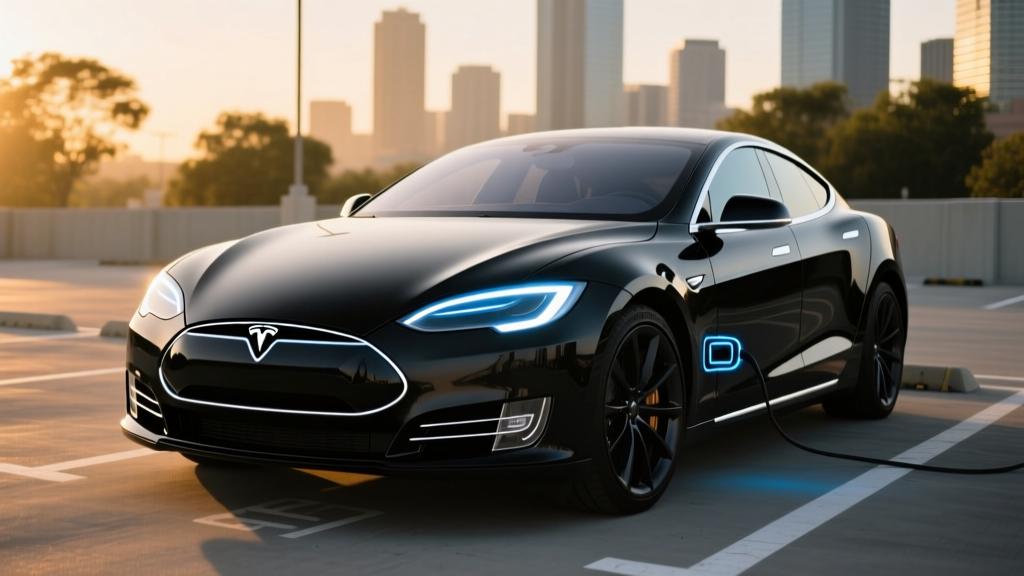
Quick Verdict: Is the 2018 Tesla Model S 100D Still Worth It?
The 2018 Tesla Model S 100D occupies a unique position in the used EV market in 2026. It was the range king of its era — a dual-motor, all-wheel-drive luxury sedan with an EPA-estimated 335 miles of range from a massive 100 kWh battery pack. For used-EV shoppers hunting a comfortable long-range commuter or road-trip capable sedan at a steep discount from its original $96,000+ MSRP, the 100D remains compelling. But buyers must weigh battery degradation realities, the older CCS/CHAdeMO adapter situation (this car uses Tesla's proprietary connector), and the fact that Tesla no longer offers free unlimited Supercharging on most used transfers.
This is not a performance model — that's the P100D's territory. The 100D prioritizes efficiency and distance over brute acceleration, though 0-60 mph in roughly 4.2 seconds is hardly slow. If you're evaluating a used 2018 Model S 100D in 2026, here's everything you need to know before signing.
Range, Battery & Efficiency: The Numbers That Matter
The 2018 Model S 100D's headline achievement was its range. Here's the hard data:
| Spec | 2018 Tesla Model S 100D |
|---|---|
| EPA Estimated Range | 335 miles |
| Battery Capacity (Usable) | ~98 kWh usable (100 kWh nominal) |
| Battery Chemistry | NMC (Nickel Manganese Cobalt) |
| EPA Efficiency | 101 MPGe combined (33 kWh/100 mi) |
| Drivetrain | Dual-Motor AWD |
| 0-60 mph | 4.2 seconds |
| Horsepower | ~518 hp (combined, battery-limited) |
| Top Speed | 155 mph |
| Cargo Volume | 26.3 cu ft (rear) + 5.3 cu ft (frunk) |
| Original Base MSRP | ~$96,000 (before incentives) |
| Battery Warranty (Original) | 8 years / 150,000 miles, 70% retention |
The NMC chemistry in the 100D offers high energy density but is more sensitive to sustained 100% charges and extreme heat than LFP packs found in later base Teslas. Tesla recommends daily charging to 80-90% for NMC batteries and reserving 100% for road trips. This is critical for used buyers: ask for the battery's State of Health (SoH) readout from the service menu or a third-party diagnostic.
Charging Speed: DC Fast Charge & Home Level 2
Charging infrastructure has evolved dramatically since 2018, but the Model S 100D's onboard hardware sets hard limits on how fast it can accept energy.
| Charging Level | Power / Rate | Estimated Time / Miles Added |
|---|---|---|
| Level 1 (120V household) | ~1.4 kW | ~3-4 miles per hour |
| Level 2 (240V, 48A / Tesla Wall Connector) | 11.5 kW | ~34 miles per hour; 0-100% in ~10 hours |
| DC Fast Charge (Tesla Supercharger V2) | Peak ~120 kW | 10-80% in ~40 minutes |
| DC Fast Charge (Tesla Supercharger V3/V4) | Capped at ~120 kW by vehicle | 10-80% in ~40 minutes (no V3 speed benefit) |
| CCS Adapter (non-Tesla DCFC) | Peak ~120 kW (with adapter) | 10-80% in ~40 minutes |
The 2018 Model S 100D peaks at roughly 120 kW on DC fast charging. This was respectable in 2018 but is now outpaced by newer EVs pulling 200-350 kW. On a V3 Supercharger rated for 250 kW, the 100D still maxes out around 120 kW — the limitation is in the car's battery management system and pack architecture, not the charger. The charge curve tapers significantly above 60% SoC, meaning the last 20% takes disproportionately longer. Plan your road-trip stops around the 10-70% window for the fastest throughput.
Connector note: The 2018 Model S uses Tesla's proprietary connector (now called NACS). Tesla sells a CCS1 adapter (~$175-$250) enabling access to Electrify America, EVgo, and other non-Tesla networks. As of 2026, most Supercharger stations have opened to non-Tesla vehicles, but your 100D has native access to the full Supercharger network — still the most reliable DC fast-charging ecosystem in the U.S.
Driving Experience, Tech & Interior
The 2018 Model S 100D delivers a refined, quiet, and deceptively quick driving experience. Dual-motor AWD provides confident traction in rain and light snow. The air suspension (standard on most 100D trims) offers a comfortable ride with adjustable ride height — useful for speed bumps and steep driveways. However, be aware that air suspension struts on 2018-era Model S vehicles are a known wear item; replacement runs $1,500-$2,500 per corner if they fail.
Infotainment: The 2018 model year straddles a hardware transition. Early 2018 builds may have the older MCU1 (Nvidia Tegra) infotainment processor, which is noticeably sluggish by 2026 standards and no longer receives all software updates. Tesla offered an MCU2 (Intel Atom) upgrade for ~$1,500-$2,000. Confirm which unit the car has — MCU2 is strongly preferred for navigation responsiveness, streaming, and continued OTA update support.
Driver Assistance (Autopilot): All 2018 Model S vehicles shipped with Autopilot hardware suite 2.5 (HW2.5), which includes 8 cameras, 12 ultrasonic sensors, and radar. Basic Autopilot (Traffic-Aware Cruise Control and Autosteer) was standard. Enhanced Autopilot (auto lane change, Navigate on Autopilot, Smart Summon) and Full Self-Driving Capability were paid add-ons ($5,000-$8,000 at the time).
Interior & Cargo: The Model S seats five adults comfortably, with generous rear legroom (35.4 inches) and a flat floor. The 26.3 cu ft rear cargo area (hatchback-style liftgate) plus 5.3 cu ft frunk gives it more total storage than most luxury sedans. Build quality on 2018 models is generally good but not at Mercedes S-Class level — expect some panel-gap variation and minor rattles on higher-mileage examples.
Used Pricing, Tax Credits & Ownership Costs
As of early 2026, the 2018 Tesla Model S 100D trades in the used market for roughly $28,000 to $40,000, depending on mileage, condition, battery health, and Autopilot package. Low-mileage examples with MCU2 upgrades and FSD command the upper end; high-mileage units with original MCU1 sit at the lower end.
| Cost Factor | Amount / Detail |
|---|---|
| Original MSRP (2018) | ~$96,000 - $105,000+ (depending on options) |
| Used Market Price (2026) | $28,000 - $40,000 |
| Federal Used EV Tax Credit (§25E) | Up to $4,000 (30% of sale price, max $4,000) |
| Credit Eligibility Requirements | Vehicle ≤$25,000 sale price; buyer income ≤$75K single / $150K joint; model year ≥2014; purchased from licensed dealer |
| Federal New EV Credit (§30D) | Not applicable — this is a used/discontinued vehicle |
| Estimated Annual Insurance | $2,200 - $3,500 (varies by state, driver, coverage) |
| Estimated Electricity Cost (15K mi/yr) | $600 - $900/yr (at $0.14/kWh avg) |
Tax credit reality check: The §30D new-vehicle credit does not apply here — the Model S is discontinued and this is a used purchase. However, the IRS §25E Used Clean Vehicle Credit may provide up to $4,000 (30% of the sale price, capped at $4,000). Critical caveats: the vehicle must sell for $25,000 or less to qualify, must be purchased from a licensed dealer (not private party), and the buyer's modified adjusted gross income must not exceed $75,000 (single) or $150,000 (joint). This means most 100D examples priced above $25,000 will not qualify for the used credit. Check current rules at irs.gov or consult a tax professional, as these provisions are subject to legislative change.
What to Inspect Before Buying a Used 2018 Model S 100D
Buying a used EV requires different diligence than a gas car. Here's your priority checklist:
- Battery State of Health (SoH): Request a battery health report from a Tesla Service Center or use the car's built-in range estimate. Compare the displayed "rated range" at 100% charge to the original 335 miles. A reading below 285 miles (85% SoH) suggests above-average degradation.
- MCU Version: Confirm whether the car has MCU1 or MCU2 (Settings → Software → look for processor info). MCU1 is outdated and limits functionality.
- Air Suspension: Test all ride-height settings. Listen for compressor cycling. Check for sagging corners after the car sits overnight.
- Supercharger History: Check if the car has transferable free Supercharging. Most 2018 Model S vehicles lost this benefit upon resale, but some early orders included it — this adds meaningful value.
- Drive Unit Noise: Listen for whining or grinding from the front or rear drive units during acceleration and regen braking. Drive unit replacement is $3,000-$5,000+ out of warranty.
- Title & Accident History: Verify clean title via Carfax/AutoCheck. Salvage-title Teslas lose OTA update access and Supercharger eligibility.
2018 Model S 100D vs. Key Used-EV Competitors
At the $28,000-$40,000 used price point in 2026, the 100D competes with several compelling alternatives:
| Spec | 2018 Tesla Model S 100D | 2019 Tesla Model 3 Long Range AWD | 2020 Porsche Taycan 4S |
|---|---|---|---|
| EPA Range | 335 mi | 310 mi | 203 mi (Performance) / 227 mi (w/ Perf Battery+) |
| Battery | 100 kWh NMC | 75 kWh NMC | 79.2 / 93.4 kWh NMC |
| 0-60 mph | 4.2 sec | 4.4 sec | 3.8 sec |
| Peak DC Charge | ~120 kW | ~170 kW | ~225 kW (93.4 kWh) |
| Used Price Range (2026) | $28K-$40K | $22K-$30K | $40K-$55K |
| Supercharger Access | Native | Native | CCS (adapter for NACS stations) |
The Model 3 Long Range offers similar range and modern charging in a smaller, more affordable package — but sacrifices cargo space, ride comfort, and the prestige factor. The Taycan charges faster and drives better but has significantly less range and costs more. The 100D's sweet spot is buyers who want maximum range, full-size sedan comfort, and native Supercharger access at a steep discount from new.
Pros, Cons & Who Should Buy
Pros
- Class-leading 335-mi EPA range (still competitive in 2026)
- Native Tesla Supercharger network access
- Spacious hatchback cargo area + frunk (31.6 cu ft total)
- Comfortable air suspension and quiet cabin
- Dual-motor AWD for all-weather confidence
- Continued OTA software updates (with MCU2)
- Strong 0-60 time (4.2 sec) without the P100D price premium
Cons
- DC fast charging capped at ~120 kW (slow vs. modern EVs)
- NMC battery requires careful charging habits (avoid sustained 100%)
- MCU1 infotainment in early 2018 builds is outdated
- Air suspension and drive units are expensive out-of-warranty repairs
- No federal §30D credit; §25E used credit only if price ≤$25K
- Insurance costs above average for the segment
- Interior materials don't match German luxury rivals at this price
Who Should Buy the 2018 Model S 100D?
Choose the 100D if: You need a comfortable, spacious sedan with maximum range for long commutes or frequent road trips, you value Supercharger network reliability, and you can budget $2,000-$4,000/year for potential out-of-warranty repairs.
Look elsewhere if: You prioritize the fastest possible charging (consider a used 2022+ Hyundai Ioniq 5 or Kia EV6 with 800V architecture), you want a compact footprint (Model 3), or you need guaranteed low maintenance costs (a newer CPO EV with remaining warranty).
Frequently Asked Questions
What is the real-world range of the 2018 Tesla Model S 100D in 2026?
With typical battery degradation of 8-15% after 6-8 years, expect 250-290 miles of real-world range in moderate conditions. Highway driving at 75+ mph reduces this to 230-260 miles. Cold weather (below freezing) can drop range another 20-30%, to roughly 190-230 miles.
How fast does the 2018 Model S 100D charge at home and on road trips?
At home on a Level 2 Tesla Wall Connector (48A/240V), it adds about 34 miles per hour, with a full charge taking roughly 10 hours. On DC fast chargers (Supercharger or CCS with adapter), it peaks at ~120 kW, achieving a 10-80% charge in approximately 40 minutes. It does not benefit from V3/V4 Supercharger speeds above 120 kW.
Does the 2018 Tesla Model S 100D qualify for any federal tax credit?
Not the §30D new-vehicle credit — it's a used, discontinued model. The §25E used-EV credit offers up to $4,000, but only if the sale price is $25,000 or less, the buyer earns under $75K single/$150K joint, and the purchase is from a licensed dealer. Most 100D examples in 2026 exceed the $25,000 price cap and will not qualify.
Is the 2018 Model S 100D better than a used Model 3 Long Range?
It depends on your priorities. The 100D offers more range (335 vs. 310 EPA), significantly more cargo and passenger space, air suspension, and a more premium feel. The Model 3 charges faster (~170 kW peak), costs $5,000-$10,000 less on the used market, and has lower insurance and maintenance costs. For families and road trippers, the 100D wins. For budget-conscious commuters, the Model 3 is the smarter financial play.
What is the biggest risk of buying a used 2018 Model S 100D?
Out-of-warranty repair costs. The air suspension system, drive units, and battery pack are all expensive to replace. A battery replacement (if degradation is severe or a cell fails) can cost $12,000-$20,000+. The original 8-year/150,000-mile battery warranty expires in 2026 for all 2018 models, meaning most examples are now out of battery warranty. Get a pre-purchase inspection from a Tesla Service Center or qualified EV specialist.
Does the 2018 Model S 100D have free Supercharging?
Most do not. Tesla removed free unlimited Supercharging transferability for vehicles ordered after January 2017. However, some 2018 models from early production runs may still carry transferable free Supercharging — this adds $1,000-$2,000 in annual value for high-mileage drivers. Always verify via the Tesla app or vehicle settings before purchasing.