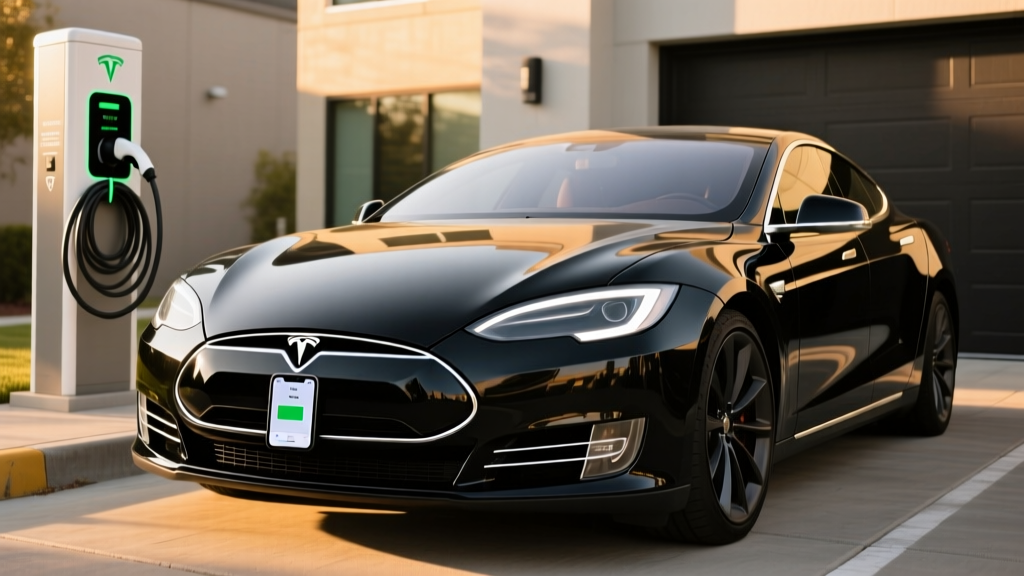
The 2018 Tesla Model S 100D occupies a unique spot in the used electric-vehicle market. It was the year Tesla's flagship sedan combined a massive 100 kWh battery with dual-motor all-wheel drive and a sub-$100,000 starting price — before the Performance and Plaid variants reshuffled the lineup. For buyers in 2026 searching for the 2018 Tesla Model S 100D 0-60 time, range figures, and charging practicality, this guide delivers the exact numbers and real-world ownership context you need before signing on a used example.
Eight years on, the 100D's blend of 335 miles of EPA-rated range, a spacious liftback, and access to the Tesla Supercharger network still makes it a compelling long-distance EV. But battery degradation, outdated MCU1 infotainment hardware on early-build cars, and the absence of modern structural-battery-pack efficiency mean you need to shop with eyes open. Here's everything that matters.
Quick Verdict: Who Should Buy a Used 2018 Model S 100D?
Choose the 2018 Model S 100D if: You need a genuine 280+ mile real-world highway range, a premium full-size sedan with hatchback cargo versatility, and access to the most reliable DC fast-charging network in North America — all for roughly $22,000–$32,000 on the used market in 2026.
Look elsewhere if: You want the latest heat-pump thermal management, a 250 kW+ charge curve, or the newer MCU2/MCU3 infotainment experience standard. The 2021+ refreshed Model S or a used Hyundai Ioniq 6 may serve you better.
2018 Tesla Model S 100D: Core Specifications
| Specification | 2018 Model S 100D |
|---|---|
| EPA Range | 335 miles |
| Battery (Usable / Gross) | ~98 kWh usable / 100 kWh gross, NMC |
| Drivetrain | Dual-Motor AWD |
| Horsepower | ~417 hp (combined) |
| 0-60 mph | 4.2 seconds |
| Top Speed | 155 mph |
| Efficiency | 101 MPGe combined / 33 kWh/100 mi |
| Max DC Fast Charge | ~120 kW peak (V2 Supercharger) |
| Level 2 Charge Rate | 11.5 kW (48A) onboard charger |
| Cargo Volume | 26.3 cu ft (rear seats up) / 58.1 cu ft (folded) |
| Front Trunk (Frunk) | 5.3 cu ft |
| Original Base MSRP (2018) | $94,000 (before incentives) |
| 2026 Used Price Range | $22,000–$32,000 |
| Battery Warranty (Original) | 8 years / 150,000 miles |
Range, Efficiency, and Real-World Expectations
The 2018 Model S 100D carries a 100 kWh (gross) lithium-ion battery pack using NMC (nickel manganese cobalt) chemistry. Tesla never published the exact usable figure, but independent testing and owner telemetry consistently place usable capacity at approximately 98 kWh when new, with a top/bottom buffer to protect longevity.
EPA Sticker: 335 miles
Real-World Expectations:
- Mixed driving (city + highway): ~290–310 miles at moderate temperatures
- Sustained 75 mph highway: ~260–280 miles
- Cold weather (below 32°F): ~220–250 miles (20–30% reduction typical for NMC packs without a heat pump)
- With 8 years of degradation (~8–12% loss): Subtract another 25–40 miles from the figures above
The 2018 Model S predates Tesla's heat-pump thermal management system (introduced with the Model Y and refreshed Model S in 2021). In cold climates, the resistive cabin heater and battery warming draw significant energy from the pack. Plan for roughly 220 miles of usable range on a freezing winter highway drive, and precondition the battery whenever possible to recover efficiency.
Efficiency lands at 101 MPGe combined per the EPA, which translates to approximately 33 kWh per 100 miles. That's competitive for a 5,000-lb luxury sedan but trails newer, more aerodynamic platforms like the Lucid Air or the refreshed 2021+ Model S.
Charging Speeds: DC Fast, Level 2, and Level 1
Understanding charge speed is critical for a used EV purchase. The 2018 Model S 100D uses Tesla's proprietary connector (pre-NACS standardization) and charges at rates that were class-leading in 2018 but now trail newer 800V architectures.
| Charging Level | Power | Speed | Notes |
|---|---|---|---|
| Level 1 (120V outlet) | ~1.4 kW | ~3–4 miles/hour | Emergency/trickle only |
| Level 2 (240V, 48A) | 11.5 kW | ~34 miles/hour | Full charge in ~9 hours |
| Level 2 (240V, 32A Mobile Connector) | 7.7 kW | ~23 miles/hour | Standard mobile connector rate |
| DC Fast (Tesla V2 Supercharger) | ~120 kW peak | 10–80% in ~45 min | Sustained rate drops above 60% |
| DC Fast (Tesla V3 Supercharger) | ~120 kW peak (capped) | 10–80% in ~45 min | 2018 Model S cannot use full 250 kW V3 rate |
| DC Fast (CCS via adapter) | ~100–120 kW | Similar to V2 Supercharger | Tesla CCS adapter required (sold separately) |
Key charging reality: The 2018 Model S 100D peaks at approximately 120 kW on DC fast charging. Unlike the 2021+ Model S with its redesigned pack architecture capable of 250 kW, the older 100 kWh pack tapers aggressively above 60% State of Charge (SoC). Expect the 10–80% session to take roughly 45 minutes at a V2 or V3 Supercharger. The car can physically connect to a V3 Supercharger (250 kW capable), but the battery management system limits intake to protect the cells.
For home charging, the onboard 11.5 kW charger (48 amps) is a strong point — it replenishes roughly 34 miles of range per hour, meaning an overnight session easily covers even heavy daily driving. Ensure your home Level 2 charger is hardwired on a 60-amp circuit to take full advantage.
Performance: The 2018 Model S 100D 0-60 Story
The number most enthusiasts search for — the 2018 Tesla Model S 100D 0-60 time — is 4.2 seconds. That's the dual-motor, all-wheel-drive standard 100D, not the Performance variant (which hit 2.5 seconds with Ludicrous Mode). For context, 4.2 seconds in a 4,941-lb luxury sedan was extraordinary in 2018 and remains genuinely quick today, matching or beating many sports sedans with far higher price tags.
The dual-motor setup provides one AC induction motor on each axle, delivering approximately 417 combined horsepower and instant torque from zero RPM. The all-wheel-drive system distributes torque front-to-rear in milliseconds, giving the 100D confident traction in rain and light snow. There's no mechanical linkage between axles — it's fully electronic torque management.
What the 100D trades against the Performance variant is the Ludicrous acceleration mode and the higher-output rear motor. You also don't get the adaptive air suspension's sport-tuned calibration. But for daily driving and highway merging, the 4.2-second sprint is more than adequate, and the 100D's slightly softer tuning makes it the more comfortable long-distance cruiser of the two.
Interior, Technology, and Driver Assistance
The 2018 Model S interior is defined by its massive 17-inch portrait touchscreen, which handles nearly every vehicle function — climate, navigation, media, vehicle settings, and even glovebox release. There are minimal physical buttons, which some buyers love and others find distracting while driving.
Infotainment hardware warning: Early-build 2018 Model S vehicles may still carry the MCU1 (Media Control Unit 1) with an NVIDIA Tegra 3 processor. This hardware is noticeably sluggish by 2026 standards, struggles with newer software features, and is prone to the well-documented eMMC memory failure. Tesla issued a recall and free replacement for affected MCU1 units, but verify with any seller that the car has been upgraded to MCU2 (Intel Atom E3950), which Tesla began installing in March 2018. MCU2 supports Netflix, YouTube, Theater mode, and significantly faster map rendering.
Other tech highlights:
- Over-the-air (OTA) updates: The 2018 Model S continues to receive Tesla software updates in 2026, though newer features requiring Hardware 4 (HW4) cameras or the latest neural-net processors are not available
- Autopilot (Hardware 2.5): Standard Autopilot includes Traffic-Aware Cruise Control and Autosteer. Enhanced Autopilot (optional, $5,000 at purchase) adds Navigate on Autopilot, Auto Lane Change, and Summon. Full Self-Driving (FSD) capability was available as a purchase but remains an SAE Level 2 driver-assist system — the driver must remain fully engaged at all times
- Premium interior package: Most 100D examples include HEPA air filtration (Bioweapon Defense Mode), LED ambient lighting, premium audio with 12 speakers, and heated front/rear seats
- Air suspension: Adaptive air suspension is standard, offering adjustable ride height and automatic lowering at highway speeds for efficiency
Autopilot / FSD Reality Check: Regardless of whether a used 2018 Model S has the "Full Self-Driving" package purchased, this is an SAE Level 2 driver-assistance system. It does NOT drive the car autonomously. You must keep your hands on the wheel, eyes on the road, and be prepared to take over instantly. Hardware 2.5 cameras and processors cannot support true autonomous operation.
Pricing, Tax Credits, and Total Used-Buyer Cost
When new, the 2018 Model S 100D started at approximately $94,000 before options and destination fees. A well-optioned example with Enhanced Autopilot, premium interior, and metallic paint could push past $110,000.
In the 2026 used market, pricing has settled considerably:
| Condition / Mileage | Typical 2026 Used Price |
|---|---|
| 30,000–50,000 mi, excellent | $28,000–$32,000 |
| 50,000–80,000 mi, good | $24,000–$28,000 |
| 80,000–120,000 mi, fair | $20,000–$24,000 |
| 120,000+ mi or battery concerns | $16,000–$20,000 |
Federal Tax Credit Eligibility for Used EVs
The Used Clean Vehicle Credit (IRS §25E) — separate from the new-vehicle §30D credit — can provide up to $4,000 (or 30% of the sale price, whichever is lower) on a qualifying used EV purchase from a licensed dealer. Key requirements per IRS guidelines:
- Sale price cap: Vehicle must sell for $25,000 or less (this eliminates many 100D examples above that threshold)
- Buyer income limits: AGI must not exceed $75,000 (single), $112,500 (head of household), or $150,000 (joint)
- Dealer requirement: Must be purchased from a licensed dealer (private-party sales do not qualify)
- Vehicle age: Must be at least two model years old (2018 qualifies)
- One-time use: You can only claim this credit once every three years
Practical implication: Most well-maintained 2018 Model S 100D examples sell above the $25,000 price cap, meaning the used EV tax credit is often unavailable. If you find a higher-mileage example priced at or below $25,000 from a dealer, and your income qualifies, the $4,000 credit can meaningfully reduce your effective cost. Always consult a tax professional and verify eligibility on irs.gov before relying on the credit.
Battery Health, Warranty, and Longevity
The 100 kWh NMC battery pack is the single most expensive component in the 2018 Model S 100D. Tesla's original battery and drive unit warranty covers 8 years or 150,000 miles, whichever comes first, with a guaranteed minimum 70% capacity retention.
For a 2018 model in 2026, this means:
- Time-based coverage expires in 2026 (8 years from original in-service date)
- Mileage-based coverage may still apply if the car has fewer than 150,000 miles
- Once the warranty expires, a battery replacement costs approximately $13,000–$22,000 depending on whether Tesla installs a new, remanufactured, or refurbished pack
Real-world degradation data from owner communities and aggregated fleet telemetry shows the 100 kWh NMC pack typically retains 88–92% capacity after 100,000 miles when charged responsibly (avoiding sustained 100% SoC, minimizing DC fast-charging frequency). A typical 2018 100D with 60,000–80,000 miles should still deliver 270–290 miles of real-world range in moderate conditions.
Pre-purchase checklist:
- Request the battery State of Health (SoH) reading via the Tesla service menu or a third-party diagnostic tool
- Check for any outstanding recall campaigns (MCU1 eMMC, airbag, suspension)
- Verify drive unit history — some early 100D units experienced front drive unit whine or bearing wear
- Inspect the air suspension for leaks (compressor and strut replacement runs $2,000–$4,000 per corner)
Pros and Cons
Pros
- 335-mile EPA range still top-tier for a used luxury sedan
- 4.2-second 0-60 with dual-motor AWD traction
- 31.6 cu ft total cargo (hatchback + frunk) — far more than traditional sedans
- Tesla Supercharger network access (most reliable DC fast-charging in North America)
- Continued OTA software updates in 2026
- 11.5 kW Level 2 onboard charger (faster home charging than most competitors)
- Adaptive air suspension standard
Cons
- 120 kW DC fast-charge cap — slow by 2026 standards (vs. 250–350 kW competitors)
- No heat pump — significant cold-weather range loss
- MCU1 hardware risk on early-build 2018 cars
- Battery warranty expiring in 2026 (time-based)
- Aging interior materials and panel gaps vs. newer luxury EVs
- High insurance premiums (luxury EV classification)
- Out-of-warranty air suspension and drive unit repairs are costly
2018 Model S 100D vs. Key Used-EV Competitors
At the $22,000–$32,000 price point in 2026, the 100D competes against several used EVs. Here's how it stacks up on the metrics that matter:
| Metric | 2018 Model S 100D | 2019 Audi e-tron | 2019 Tesla Model 3 LR AWD |
|---|---|---|---|
| EPA Range | 335 mi | 204 mi | 310 mi |
| 0-60 mph | 4.2 sec | 5.7 sec | 4.4 sec |
| DC Fast Charge Peak | ~120 kW | ~150 kW | ~170 kW |
| Cargo Volume | 31.6 cu ft (total) | 28.5 cu ft | 22.9 cu ft |
| Typical 2026 Used Price | $22K–$32K | $20K–$27K | $20K–$26K |
| Real-World Highway Range | ~260–280 mi | ~170–190 mi | ~250–270 mi |
The Model S 100D wins decisively on interior space, highway range, and prestige. The Model 3 Long Range is more efficient and charges faster but sacrifices cargo room and ride comfort. The Audi e-tron offers a more traditional luxury interior and better build quality but falls far short on range.
Frequently Asked Questions
What is the real-world range of the 2018 Tesla Model S 100D?
Expect approximately 290–310 miles in mixed driving, 260–280 miles on the highway at 75 mph, and 220–250 miles in freezing weather. With 8 years of typical battery degradation (8–12%), subtract another 25–40 miles from those figures. The EPA sticker says 335 miles, but that's an optimistic ceiling you'll rarely see in daily use.
How fast does the 2018 Model S 100D charge?
On DC fast charging, it peaks at approximately 120 kW, delivering a 10–80% charge in roughly 45 minutes at a Tesla Supercharger. At home on a 240V/48A Level 2 charger, it adds about 34 miles of range per hour (11.5 kW), fully replenishing the pack in around 9 hours. It cannot utilize the full 250 kW rate of V3 Superchargers due to pack limitations.
Does the 2018 Model S 100D qualify for any federal EV tax credit in 2026?
Not the new-vehicle §30D credit — that applies only to new purchases. The used EV credit (§25E) can provide up to $4,000, but only if the sale price is $25,000 or less, you buy from a dealer, and your income falls below IRS thresholds ($75K single / $150K joint). Many 100D examples exceed the price cap. Verify current rules at irs.gov and consult a tax professional.
Is the 2018 Model S 100D worth buying in 2026 vs. newer EVs?
It depends on your priorities. If you need maximum range and cargo space in a used luxury EV and can accept a slower charge rate and an expiring battery warranty, the 100D is a strong value at $22K–$32K. If fast charging, modern infotainment, and a fresh battery warranty matter more, consider a 2021+ Model 3 Long Range or a used Hyundai Ioniq 5/6 instead.
What are the biggest things to check before buying a used 2018 Model S 100D?
Confirm the MCU has been upgraded to MCU2 (Intel Atom). Check battery State of Health — anything below 88% retention at under 80,000 miles is a concern. Verify air suspension functionality (listen for compressor cycling, check for uneven ride height). Review drive unit history for whine or replacement. Confirm all recall campaigns have been completed via the Tesla app or a service center.
What is the 2018 Tesla Model S 100D 0-60 time?
The 2018 Model S 100D accelerates from 0 to 60 mph in 4.2 seconds. This is the standard dual-motor AWD variant. The Performance variant (P100D with Ludicrous Mode) achieves 2.5 seconds, but commands a significant premium on the used market.