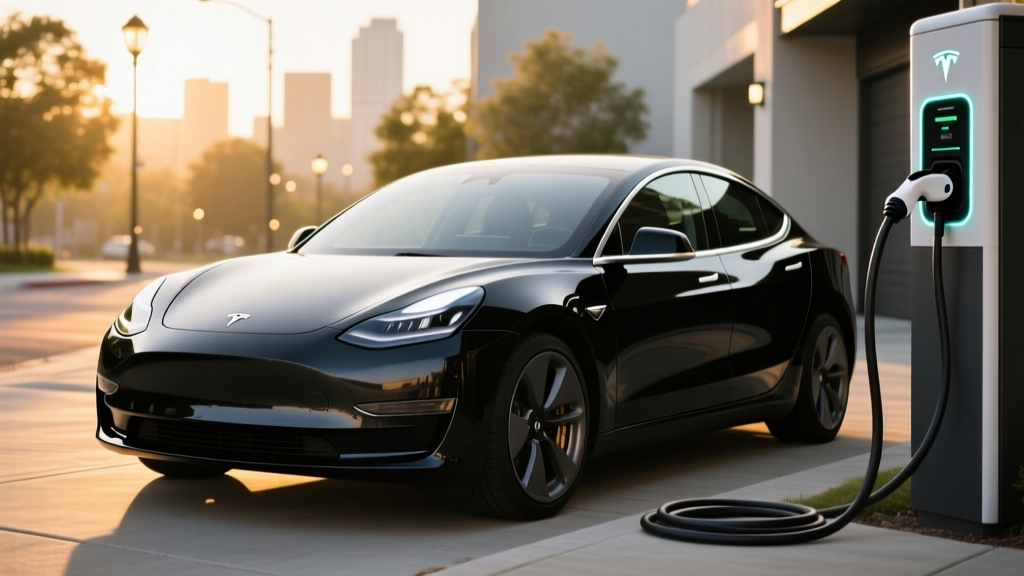
Quick Verdict: The 2018 Tesla Model 3 in 2026
If you are searching for a 2018 Tesla today, you are almost certainly shopping the used market — and the Model 3 is the model most buyers land on. It was the year Tesla finally delivered on its mass-market promise, with the Long Range variant offering an EPA-estimated 310 miles of range that still holds up against many 2026 EVs. Used prices have dropped into the $16,000–$24,000 range depending on mileage and condition, and select buyers can still claim up to $4,000 under the IRS §25E used-EV tax credit.
But a six-year-old EV demands scrutiny. Battery degradation, outdated MCU hardware, and the absence of a heat pump in early Model 3s all affect daily usability. This review covers exactly what you need to know before signing the paperwork.
| Spec | Long Range RWD | Long Range AWD (Dual Motor) | Performance AWD |
|---|---|---|---|
| EPA Range | 310 mi | 310 mi | 310 mi |
| Battery (usable) | ~75 kWh (NMC) | ~75 kWh (NMC) | ~75 kWh (NMC) |
| Efficiency | 130 MPGe / 26 kWh/100mi | 120 MPGe / 28 kWh/100mi | 116 MPGe / 29 kWh/100mi |
| 0–60 mph | 5.1 sec | 4.5 sec | 3.3 sec |
| Drivetrain | RWD, single motor | AWD, dual motor | AWD, dual motor |
| Horsepower | ~271 hp | ~346 hp | ~450 hp |
| Peak DC Fast Charge | ~145 kW | ~145 kW | ~145 kW |
| 10–80% DCFC Time | ~35 min | ~35 min | ~35 min |
| Level 2 Charge Rate | 11.5 kW (44 mi/hr) | 11.5 kW (44 mi/hr) | 11.5 kW (44 mi/hr) |
| Cargo Volume | 15 cu ft trunk + 3.5 cu ft frunk (18.5 total) | ||
| Battery Warranty (original) | 8 yr / 120,000 mi | 8 yr / 120,000 mi | |
| Original MSRP | $49,000 | $54,000 | $64,000 |
Sources: EPA / fueleconomy.gov, Tesla 2018 Model 3 owner's manual.
Real-World Range: What the 310-Mile EPA Sticker Actually Means
EPA estimate: 310 miles (Long Range, all trims).
Real-world expectation: 240–275 miles at sustained highway speeds (70–80 mph); 190–230 miles in freezing weather (below 32°F) without preconditioning; up to 295 miles in mixed city driving at moderate temperatures.
The 2018 Model 3's 310-mile EPA figure was class-leading when new, and it remains competitive in 2026. But EPA tests are conducted on a dynamometer with generous assumptions. Independent highway range tests by InsideEVs and others consistently show 250–270 miles at 70 mph in mild weather.
Cold weather is the real penalty. The 2018 Model 3 uses resistive cabin heating rather than a heat pump (Tesla introduced heat pumps with the 2021 Model 3 refresh). In sub-freezing conditions, expect 20–30% range loss. Preconditioning the battery while plugged in mitigates this somewhat, but winter road-trippers should plan for 200–220 miles of usable range.
Battery degradation at this age is a factor. Most 2018 Model 3s with 60,000–90,000 miles show 8–12% capacity loss based on community data from TeslaFi and Recurrent Auto. A car that originally delivered 310 miles may now display 275–285 miles at 100% State of Charge. Always check the car's displayed range at full charge before purchasing.
Charging Speeds: DC Fast Charging and Home Level 2
The 2018 Model 3 uses Tesla's proprietary connector (pre-NACS standardization) and accesses the Supercharger network natively. With the industry-wide shift to NACS, the 2018 Model 3's connector is now the de facto North American standard — a significant long-term advantage over 2018-era CCS vehicles like the Chevy Bolt or Nissan LEAF.
| Charging Level | Power / Rate | Miles Added per Hour | Notes |
|---|---|---|---|
| Level 1 (120V household) | ~1.4 kW | ~5 mi/hr | Emergency/trickle only |
| Level 2 (240V, 48A) | 11.5 kW | ~44 mi/hr | Full overnight charge in ~7 hrs |
| DC Fast Charge (Supercharger V2) | Peak ~145 kW | Up to 170 mi in 30 min | Tapers above 60% SoC |
| DC Fast Charge (Supercharger V3) | ~145 kW (hw limited) | Same as V2 | 2018 hw cannot reach V3's 250 kW |
Charging curve reality: The 2018 Model 3 peaks around 145 kW at low State of Charge (10–20%), then tapers progressively. From 10–80%, expect approximately 35 minutes at a V2 Supercharger. Above 80%, charging slows dramatically — plan to unplug at 80% on road trips unless you need the final miles.
A critical hardware note: the 2018 Model 3's onboard charge architecture cannot take advantage of V3 Supercharger speeds (250 kW). You will charge at the same ~145 kW peak whether connected to a V2 or V3 stall. This is a meaningful gap versus 2021+ Model 3s, which can peak at 250 kW and complete 10–80% in roughly 25 minutes.
For home charging, a 48-amp Level 2 wall connector on a 60-amp circuit delivers 11.5 kW — enough to fully replenish the 75 kWh battery overnight. Installation typically costs $800–$2,000 depending on panel capacity and run length (source: HomeAdvisor EV charger install data).
Performance, Efficiency, and Driving Dynamics
Even the base Long Range RWD model hits 0–60 mph in 5.1 seconds — quicker than most gas-powered sport sedans from 2018. The Performance variant's 3.3-second sprint remains genuinely fast by 2026 standards. Dual-motor AWD models provide confident all-weather traction, though the RWD version is lighter and marginally more efficient.
Efficiency is a Tesla strength. The Long Range RWD achieves 130 MPGe combined (26 kWh per 100 miles) per the EPA, translating to roughly $0.04–$0.06 per mile on average US electricity rates ($0.16/kWh). That is approximately one-third the per-mile fuel cost of a comparable 30-MPG gas sedan at $3.50/gallon.
Regenerative braking on the 2018 Model 3 is aggressive and enables true one-pedal driving in most conditions. Note that Tesla removed the user-adjustable regen setting via a 2020 software update, locking it to maximum regen — something to be aware of if you are test-driving a newer Tesla and then stepping into a 2018 with older software behavior.
Interior, Tech, and Driver Assistance
The 2018 Model 3 interior is famously minimalist: a single 15-inch touchscreen handles all controls, with no physical instrument cluster. This is polarizing — some owners love the simplicity, others find it distracting. Build quality on 2018 Fremont-built cars is inconsistent; panel gaps, wind noise, and interior rattles are common complaints from this production year.
Infotainment hardware warning: Early 2018 Model 3s shipped with MCU1 (Media Control Unit 1), which uses an NVIDIA Tegra processor. MCU1 is noticeably sluggish by 2026 standards and lacks support for newer software features. Tesla offered a paid MCU2 upgrade ($1,500–$2,500) that many owners completed. Before buying, confirm whether the vehicle has MCU2 — it dramatically improves responsiveness and enables features like the modern navigation rendering and streaming apps.
Autopilot is SAE Level 2 driver assistance — not self-driving. The driver must keep hands on the wheel and remain fully engaged at all times. Tesla's "Full Self-Driving" (FSD) software, even if purchased on a used 2018 Model 3, remains a Level 2 system requiring active supervision. It does not make the vehicle autonomous.
The 2018 Model 3 was available with Tesla's Enhanced Autopilot package ($5,000 at the time), which added features like automatic lane change and Navigate on Autopilot. Basic Autopilot (traffic-aware cruise control and lane centering) was standard. FSD capability was offered as a $3,000 add-on but was not functional at delivery — it arrived via over-the-air updates over subsequent years.
Standout tech: Over-the-air software updates continue to arrive in 2026, adding features years after purchase. The Supercharger network remains the most reliable DC fast-charging ecosystem in North America. The Tesla mobile app enables remote preconditioning, charge monitoring, and location tracking.
Notable drawbacks: No Apple CarPlay or Android Auto (still true in 2026). No head-up display. Rear-seat legroom (35.2 inches) is tight for taller passengers. Visibility to the rear is compromised by the thick C-pillar and small rear window. No spare tire — only a tire inflator kit.
Used Pricing and Federal Tax Credit Eligibility
As of early 2026, used 2018 Tesla Model 3 pricing breaks down roughly as follows:
| Trim | Mileage Range | Typical Price |
|---|---|---|
| Long Range RWD | 60,000–90,000 mi | $16,000–$20,000 |
| Long Range AWD (Dual Motor) | 60,000–90,000 mi | $18,000–$22,000 |
| Performance AWD | 50,000–80,000 mi | $20,000–$24,000 |
IRS §25E Used Clean Vehicle Credit: The 2018 Model 3 may qualify for a federal used-EV tax credit of up to $4,000 (30% of the sale price, capped at $4,000) under IRS §25E rules. Key eligibility requirements:
- Price cap: The sale price must be $25,000 or less.
- Buyer income limits: Adjusted gross income ≤ $75,000 (single), $112,500 (head of household), or $150,000 (joint).
- Dealer requirement: The vehicle must be purchased from a licensed dealer (private-party sales do not qualify).
- Vehicle age: Must be at least 2 model years old (2018 qualifies).
- First transfer: The credit can only be claimed once per vehicle VIN after August 16, 2022 — verify the credit has not already been used on this specific car.
- Claim frequency: A buyer can only claim the §25E credit once every 3 years.
Important: The §25E credit is non-refundable — it can only reduce your tax liability to zero, not generate a refund. Consult a tax professional to confirm your eligibility. Rules are subject to legislative change; verify current-year status on irs.gov.
Battery Longevity, Warranty, and What to Inspect
The 2018 Model 3 Long Range uses an NMC (nickel manganese cobalt) lithium-ion battery pack with approximately 75 kWh of usable capacity. NMC chemistry offers high energy density but is more sensitive to sustained high-State-of-Charge storage and extreme heat than LFP (lithium iron phosphate) packs Tesla introduced in Standard Range models from 2021 onward.
Original battery warranty: 8 years or 120,000 miles (whichever comes first), with a guaranteed minimum 70% capacity retention. For a 2018 model, this warranty expires in 2026 at the latest — meaning most used 2018 Model 3s are at or near the end of factory battery coverage.
Real-world degradation data from Recurrent Auto's fleet studies shows the average 2018 Model 3 battery retains approximately 88–92% of original capacity at 80,000 miles. This is within the 70% warranty threshold, so warranty claims are uncommon at this mileage — but the loss of warranty protection is a financial consideration.
Battery replacement cost: If out of warranty, a replacement pack for the 2018 Model 3 Long Range currently runs $12,000–$16,000 including labor at Tesla service centers. Third-party EV shops may offer refurbished packs for $8,000–$11,000. This is a worst-case scenario but should factor into your total-cost-of-ownership calculation.
Pre-purchase checklist:
- Check displayed range at 100% SoC (compare to 310 mi original)
- Review battery health via the Tesla app or third-party tools like TeslaFi
- Confirm MCU version (MCU1 vs MCU2)
- Inspect for undercarriage damage (battery pack vulnerability)
- Verify Autopilot/FSD purchase status (transfers with the car only if Tesla confirms)
- Check service history for drive unit or high-voltage system repairs
Who the 2018 Tesla Model 3 Suits Best
Choose the 2018 Model 3 Long Range if:
- You want a sub-$20,000 EV with 250+ real-world miles of range
- You commute 30–80 miles daily and can charge at home
- Supercharger network access matters for your road trips
- You qualify for the §25E used-EV credit, bringing effective cost to $12,000–$16,000
Look elsewhere if:
- You regularly drive in sub-zero winters and need a heat pump (consider a 2021+ Model 3 or Hyundai Ioniq 5)
- You need more than 15 cu ft of cargo space (the Model Y offers 30+ cu ft)
- You want CarPlay/Android Auto integration
- You are uncomfortable with all-touchscreen controls and no physical buttons
The 2018 Model 3 is best suited as a daily commuter and light road-tripper for singles, couples, or small families. The trunk handles groceries and luggage for two, but the rear seat is a compromise for adult passengers on longer drives. It is not a towing vehicle (no official tow rating for 2018).
Pros, Cons, and Competitor Comparison
Pros
- 310-mi EPA range remains competitive in 2026
- Supercharger network access (most reliable DCFC in North America)
- Over-the-air updates still arriving
- Strong performance even in base Long Range trim
- Low running costs (~$0.05/mi on home electricity)
- NACS connector is now the industry standard
Cons
- No heat pump — significant winter range loss
- MCU1 hardware is slow unless upgraded
- Inconsistent 2018 build quality (panel gaps, rattles)
- Battery warranty expiring in 2026
- No Apple CarPlay / Android Auto
- 145 kW peak DCFC is slow vs modern 250+ kW EVs
Versus key used competitors: The 2018 Chevy Bolt EV offers similar pricing ($14,000–$18,000 used) and 238 miles of range, but its CCS charging is slower (55 kW) and the CHAdeMO/CCS public network is less reliable than Superchargers. The 2018 Nissan LEAF (151-mile range for the 40 kWh pack, 226 for the 60 kWh Plus) suffers from passive battery cooling and CHAdeMO-only DCFC. The 2018 BMW i3 (114-mile range) is a city runabout, not a road-trip car. Against this field, the 2018 Model 3's combination of range, Supercharger access, and performance is difficult to match at this price point.
Frequently Asked Questions
What is the real-world range of the 2018 Tesla Model 3?
Expect 240–275 miles at highway speeds in mild weather, 190–230 miles in freezing temperatures, and up to 295 miles in city driving. Battery degradation typically reduces these figures by 8–12% on a car with 60,000–90,000 miles.
How fast does the 2018 Model 3 charge?
On DC fast charging (Supercharger), it peaks at ~145 kW and completes 10–80% in approximately 35 minutes. On a 48-amp Level 2 home charger, it adds ~44 miles of range per hour, fully charging overnight in about 7 hours.
Does the 2018 Tesla Model 3 qualify for any federal tax credit?
Not the new-vehicle §30D credit (that applies only to new purchases). However, it may qualify for the §25E used clean vehicle credit of up to $4,000 if purchased from a dealer for $25,000 or less, and the buyer meets income caps ($75K single / $150K joint). The credit can only be claimed once per VIN.
How much does a 2018 Tesla Model 3 cost in 2026?
Typical used prices range from $16,000 for a high-mileage Long Range RWD to $24,000 for a lower-mileage Performance AWD. After the potential $4,000 §25E credit, effective cost can drop to $12,000–$20,000.
Is the 2018 Model 3 worth buying vs newer used EVs?
It depends on budget and priorities. The 2018 Model 3 offers unmatched range-per-dollar in the sub-$20,000 segment, plus Supercharger access. However, a 2021+ Model 3 adds a heat pump, 250 kW charging, and MCU2 standard — worth the premium if you drive in cold climates or take frequent road trips.
Should I be concerned about battery replacement costs?
Battery failure before 120,000 miles is statistically uncommon based on fleet data. However, the 8-year warranty is expiring in 2026, so you are assuming replacement risk. Budget $12,000–$16,000 as a worst-case reserve, or consider an extended warranty from a third-party EV specialist if available.