The 2018 Tesla Model 3 was the EV that broke through to mainstream buyers — and the used market is now flooded with examples at tempting prices. But early Model 3s carry a specific set of quirks, build-quality realities, and battery-chemistry details that matter enormously when you're shopping secondhand. This guide covers everything from the minimalist 2018 Tesla Model 3 interior to the real-world range, charging behavior, and whether a six-year-old Model 3 still makes financial sense in 2026.
Quick Verdict: Who Should Buy a Used 2018 Model 3?
If you're a commuter who can charge at home, values minimalism over luxury materials, and wants access to the Supercharger network at a sub-$20,000 entry price, the 2018 Model 3 Long Range remains compelling. Skip it if you need physical controls, rear-seat comfort for tall adults on long trips, or the latest battery chemistry. Early-production build quality is the biggest variable — inspect carefully.
2018 Tesla Model 3 Interior: Minimalism Taken to the Extreme
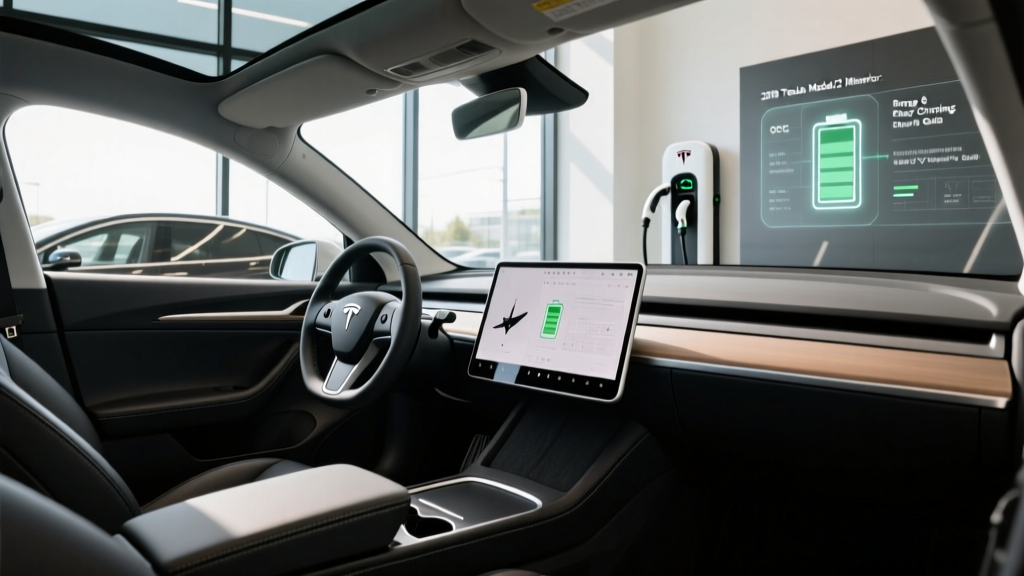
The 2018 Model 3 interior is the most polarizing cabin Tesla ever shipped. There is no instrument cluster. No physical speedometer. No HVAC vents you can see. No stalks for turn signals or wipers — everything routes through the 15-inch center touchscreen or steering-wheel buttons. Tesla's stated goal was radical simplicity; the result is a cabin that feels more like an iPad mounted on a desk than a traditional automobile.
Materials and Build Quality
Early 2018 production (Fremont-built, VIN starting with 5YJ) is notorious for panel-gap inconsistencies, misaligned trim pieces, and interior rattles. Tesla's own internal data acknowledged these issues, and the company significantly improved assembly by late 2019. When inspecting a used 2018 example, check door-panel alignment, the seam where the dashboard meets the windshield, and listen for dash rattle over bumps. Many owners have had panels re-clipped under warranty or at body shops.
The "vegan leather" (synthetic polyurethane) seats have held up better than expected. Six-year-old examples commonly show minimal cracking, though the driver's seat bolster can compress. The wood-trim dashboard strip is real open-pore wood on Long Range models and has proven durable.
Space and Cargo Dimensions
Despite its compact exterior, the Model 3's skateboard platform frees up interior volume. Here's how it measures:
- Front headroom: 40.3 inches
- Front legroom: 42.7 inches
- Rear headroom: 37.8 inches (the sloping roofline cuts into this — tall passengers will notice)
- Rear legroom: 35.2 inches (tight for adults on trips over an hour)
- Trunk cargo: 15.0 cu ft (plus a 2.1 cu ft frunk)
- Rear seats fold: 60/40 split, expanding cargo to roughly 43 cu ft
The frunk on the 2018 Model 3 is shallow — useful for charging cables and a small bag, not much more. The trunk opening is relatively narrow compared to a hatchback like the Model Y or Ioniq 5, which limits loading bulky items.
Tech and Infotainment
The 15-inch horizontal touchscreen runs Tesla's proprietary OS. In 2018, this was the fastest, most responsive infotainment system in any car. By 2026 standards, it still holds up — over-the-air updates have added features like Theater mode, improved navigation with real-time Supercharger availability, and enhanced voice commands. However, the 2018 Model 3 shipped with the HW2.5 Autopilot computer; Tesla upgraded most via a free HW3 swap in 2019-2020 to enable the current FSD (Supervised) neural-net stack. Verify the car has HW3 (or HW4 if retrofitted) before purchase — check under Settings → Software.
Notable: there is no Apple CarPlay or Android Auto. Navigation, music (Spotify, Tidal, Apple Music built-in), and phone integration all run natively through Tesla's software. Bluetooth phone connectivity works but can be finicky on older firmware builds.
Range, Battery, and Efficiency
The 2018 Model 3 was sold primarily in two configurations: Long Range (RWD and AWD) and the Mid Range (a short-lived 62 kWh variant). The Standard Range Plus didn't arrive until 2019. Here's what you'll encounter on the used market:
| Trim | Usable Battery (kWh) | Chemistry | EPA Range | MPGe (Combined) | kWh/100 mi |
|---|---|---|---|---|---|
| Long Range RWD | ~75 kWh | NMC (NCA cathode) | 310 mi | 136 MPGe | 25 |
| Long Range AWD (Dual Motor) | ~75 kWh | NMC (NCA cathode) | 310 mi | 126 MPGe | 27 |
| Performance AWD | ~75 kWh | NMC (NCA cathode) | 310 mi | 120 MPGe | 28 |
| Mid Range RWD | ~62 kWh | NMC | 260 mi | 130 MPGe | 26 |
Battery Degradation and Longevity
The 2018 Model 3 uses Panasonic-manufactured 2170 NMC/NCA cells. These have proven among the most durable lithium-ion cells in mass production. Data aggregated from owner reports and fleet analyses shows an average degradation curve of roughly 5% in the first year, then approximately 1-2% per year thereafter. A 2018 Model 3 with 80,000 miles and 90% State of Health (SoH) is common and acceptable. Examples below 85% SoH at this mileage are outliers — request a battery health reading from Tesla service or use third-party telemetry tools before purchase.
The battery and drive unit warranty was 8 years / 120,000 miles (Long Range AWD) or 8 years / 100,000 miles (RWD), whichever comes first, with a capacity retention threshold of 70%. A 2018 model's warranty expires in 2026, so most examples you'll find are either just inside or just outside coverage. Factor potential out-of-warranty battery replacement at $12,000-$16,000 into your risk assessment.
Charging Speed: DC Fast, Level 2, and Level 1
The 2018 Model 3 charges via the proprietary Tesla connector (NACS). With the North American charging industry shifting to NACS as the standard, this is an advantage in 2026 — no adapter needed at Superchargers, and most non-Tesla networks now offer NACS cables or you can use the included J1772 adapter for older public Level 2 stations.
| Charging Level | Max Power | Speed (Miles of Range per Hour) | Notes |
|---|---|---|---|
| Level 1 (120V household) | ~1.4 kW | ~3-4 mi/hr | Emergency/trickle only |
| Level 2 (240V home, 48A) | 11.5 kW | ~37-44 mi/hr | Full overnight charge in ~8 hrs |
| Level 2 (240V, 32A Mobile Connector) | 7.7 kW | ~25-30 mi/hr | Tesla Mobile Connector on NEMA 14-50 |
| DC Fast Charge (V2 Supercharger) | 150 kW peak | ~170 mi in 30 min | 10-80% in ~30 minutes |
| DC Fast Charge (V3/V4 Supercharger) | 150 kW peak (car-limited) | ~170 mi in 30 min | 2018 Model 3 cannot accept 250 kW |
Charging-curve reality: The 2018 Model 3 Long Range peaks at approximately 150 kW at low State of Charge (below 30%). This peak is not sustained — the curve tapers to roughly 100 kW by 50% SoC and drops below 50 kW past 80%. On a V3 Supercharger (capable of 250 kW), the car still maxes out at 150 kW due to its onboard charge-controller limitation. Plan 10-80% DC fast-charge stops at approximately 30-35 minutes under good thermal conditions.
Preconditioning matters: Navigate to a Supercharger using the car's built-in navigation, and the battery will automatically precondition (warm up) to optimize charge speed. Arriving at a Supercharger without preconditioning in cold weather can double your charge time. Always route through the nav.
Performance and Drivetrain
The 2018 Model 3 delivers sports-sedan acceleration that embarrassed far more expensive cars at launch. Here's the breakdown by trim:
| Trim | Drivetrain | Horsepower | 0-60 mph | Top Speed |
|---|---|---|---|---|
| Long Range RWD | Rear-Wheel Drive | 271 hp | 5.1 sec | 140 mph |
| Long Range AWD (Dual Motor) | All-Wheel Drive | 346 hp | 4.4 sec | 145 mph |
| Performance AWD | All-Wheel Drive | 450 hp | 3.3 sec | 155 mph |
The Dual Motor AWD variants use a permanent-magnet rear motor and an induction front motor — the front motor freewheels when not needed to reduce drag and improve efficiency. This architecture also provides excellent traction in snow and rain. The Performance trim adds a lowered sport suspension, larger brakes, and Track Mode (added via OTA update), which adjusts torque distribution and cooling for closed-course driving.
Regenerative braking in the 2018 Model 3 was originally adjustable (Standard vs Low). Tesla later removed the Low option via software update, enforcing strong one-pedal driving. If you prefer a coasting feel, this may take adjustment.
Autopilot and Driver Assistance
Tesla Autopilot and Full Self-Driving (Supervised) are Level 2 driver-assistance systems. The driver must remain fully engaged, hands on the wheel, eyes on the road. These systems do NOT make the car self-driving. You are legally and operationally responsible at all times.
The 2018 Model 3 shipped with basic Autopilot (Traffic-Aware Cruise Control and Autosteer) standard. Enhanced Autopilot ($5,000 at the time) added Auto Lane Change, Autopark, Summon, and Navigate on Autopilot. Full Self-Driving capability was offered as a $3,000-$8,000 add-on depending on the purchase date.
On a used 2018 Model 3, verify which software package is active. FSD does not transfer between owners in all cases — Tesla has changed its FSD transfer policy multiple times. As of 2026, FSD (Supervised) requires a $99/month subscription or a one-time purchase, and transfers only if the original buyer completed purchase before specific cutoff dates. Confirm the car's FSD status in the Tesla app or at a service center before paying a premium for it.
Pricing, Used Market Value, and Tax Credits
Original MSRP for the 2018 Model 3 ranged from approximately $49,000 (Long Range RWD) to $64,000+ (Performance with options). Depreciation has been steep — partly due to Tesla's aggressive new-car price cuts in 2023-2024 and partly due to early-production quality concerns.
| Trim | Original MSRP (2018) | Typical Used Price (2026, 60-90k mi) | Federal Used EV Credit (§25E) |
|---|---|---|---|
| Long Range RWD | ~$49,000 | $16,000 - $20,000 | Up to $4,000 (30% of sale price, max $4,000) |
| Long Range AWD | ~$54,000 | $18,000 - $23,000 | Up to $4,000 |
| Performance AWD | ~$64,000 | $20,000 - $26,000 | Up to $4,000 |
Federal Tax Credit: §25E Used EV Credit (Not §30D)
The 2018 Model 3 does not qualify for the $7,500 §30D new-vehicle credit — that applies to new purchases only. However, it does qualify for the §25E Used Clean Vehicle Credit, which provides 30% of the sale price, up to $4,000, when purchased from a licensed dealer. Key eligibility requirements:
- Sale price must be $25,000 or less — this caps the credit at $4,000 (30% of $25,000 = $7,500, but the max is $4,000)
- Buyer income limits: AGI must not exceed $75,000 (single), $112,500 (head of household), or $150,000 (joint)
- Must be purchased from a licensed dealer — private-party sales do not qualify
- Vehicle must be at least 2 model years old — a 2018 qualifies
- The credit can be transferred to the dealer at point of sale for an immediate price reduction
A 2018 Long Range AWD purchased for $21,000 from a dealer would yield a $4,000 credit, bringing the effective cost to $17,000. This makes the used Model 3 one of the most affordable ways into the Supercharger network in 2026.
Pros and Cons
Pros
- Access to Tesla Supercharger network (most reliable DC fast-charging in North America)
- Excellent efficiency: 25-28 kWh/100 mi beats most competitors
- Over-the-air updates continue to add features years after purchase
- Strong acceleration, especially Dual Motor and Performance trims
- Used prices now very affordable after steep depreciation
- Eligible for up to $4,000 used-EV tax credit (§25E)
- Minimal maintenance — no oil changes, brake pads last 80,000+ miles
Cons
- Early-production build quality issues (panel gaps, rattles, paint)
- No heat pump — significant range loss in freezing weather
- Rear seat is tight for tall adults on long drives
- No Apple CarPlay or Android Auto
- DC fast charging limited to 150 kW (slower than 2021+ Model 3 at 250 kW)
- All controls on touchscreen — distracting for some drivers
- Battery warranty expiring in 2026 for most examples
- Suspension is firm — ride quality on rough roads is harsh
2018 Model 3 vs. Key Used EV Competitors
| Spec | 2018 Tesla Model 3 LR AWD | 2018 Chevy Bolt EV | 2019 Nissan Leaf Plus |
|---|---|---|---|
| EPA Range | 310 mi | 238 mi | 226 mi |
| DC Fast Charge | 150 kW (NACS) | 55 kW (CCS) | 100 kW (CHAdeMO) |
| 10-80% DCFC Time | ~30 min | ~60 min | ~45 min |
| 0-60 mph | 4.4 sec | 6.5 sec | 6.9 sec |
| Used Price (2026) | $18,000-$23,000 | $10,000-$14,000 | $11,000-$15,000 |
| Battery Cooling | Active liquid | Active liquid | Passive air |
| Charging Network | Supercharger (NACS) | CCS networks | CHAdeMO (declining) |
Choose the 2018 Model 3 if: You road-trip regularly and need reliable DC fast charging, you value performance and OTA updates, and you can find a well-maintained example within budget.
Choose the Bolt EV if: You're on a tighter budget, drive primarily in the city, need a hatchback cargo shape, and rarely road-trip.
Avoid the Leaf Plus for road trips: CHAdeMO infrastructure is declining in the US, passive air cooling leads to faster degradation and charge-speed throttling on repeat DCFC sessions.
Frequently Asked Questions
What is the real-world range of the 2018 Tesla Model 3 Long Range?
Expect 270-285 miles in mixed driving with moderate battery degradation. Highway-only driving at 75+ mph drops this to 240-260 miles. In freezing weather, plan for 200-230 miles due to the lack of a heat pump and resistive cabin heating.
How fast does the 2018 Model 3 charge at home and on the road?
At home on a 240V/48A Level 2 charger, the car adds roughly 37-44 miles of range per hour, reaching a full charge in about 8 hours. On a DC fast charger, it peaks at 150 kW and charges from 10-80% in approximately 30-35 minutes.
Does a used 2018 Model 3 qualify for any federal tax credit?
Yes — under IRS §25E, you can claim 30% of the sale price up to $4,000 when buying from a licensed dealer, provided the sale price is $25,000 or less and your AGI falls within income limits ($75k single / $150k joint). The new-vehicle §30D credit does not apply to used purchases.
Is the 2018 Model 3 worth buying over newer EVs?
At $17,000-$23,000 after the used-EV credit, it offers range, performance, and charging-network access that few competitors match at this price. The trade-offs are early-production build quality, no heat pump, and an expiring battery warranty. If you can inspect carefully and accept those risks, the value proposition is strong.
What should I check before buying a used 2018 Model 3?
Prioritize: (1) battery State of Health via Tesla service or third-party telemetry, (2) Autopilot hardware version (confirm HW3 or HW4), (3) panel gaps and interior rattles indicating assembly quality, (4) FSD transfer eligibility if the car was sold with FSD, (5) suspension and half-shaft condition on high-mileage AWD examples, and (6) service history for any drive-unit or battery replacements under warranty.
Can I charge a 2018 Model 3 at non-Tesla chargers?
Yes. The 2018 Model 3 uses the NACS (Tesla) connector. Tesla includes a J1772 adapter for public Level 2 stations. For CCS DC fast chargers, Tesla sells an official CCS adapter (~$250) that enables charging at Electrify America and other CCS networks. As of 2026, most new public chargers are adding NACS cables, reducing the need for adapters over time.