Quick Verdict: Still a Benchmark Used EV?
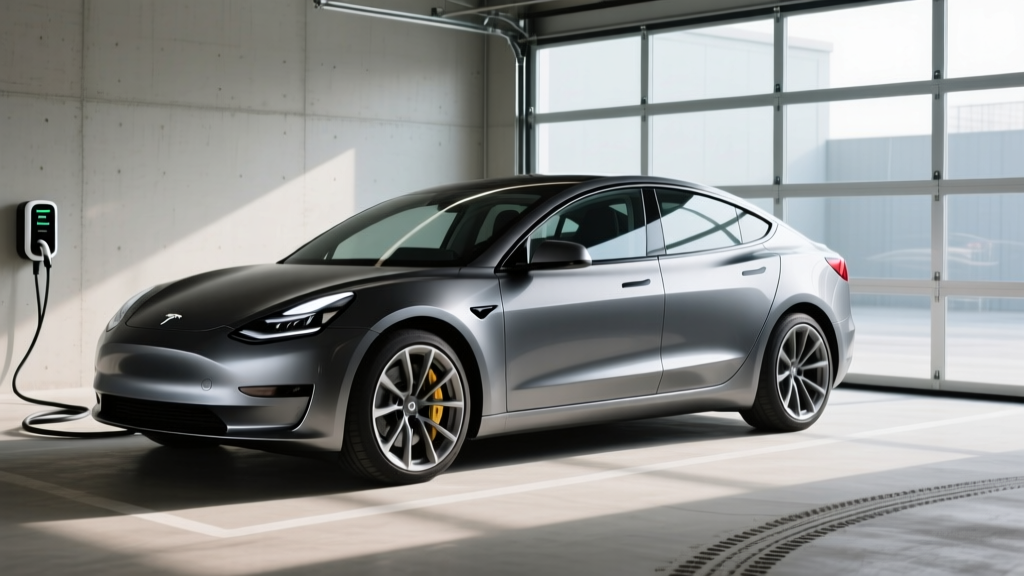
The 2018 Tesla Model 3 remains one of the most searched used electric vehicles on the market, and for good reason. With EPA ranges stretching from 220 to 310 miles depending on trim, DC fast-charging capability that still outpaces many 2026 competitors, and a 0-60 mph time as low as 3.3 seconds in the Performance variant, this early-production Model 3 holds up remarkably well. But battery degradation, outdated hardware, and the loss of federal tax credit eligibility on used purchases (unless you qualify for the separate used-EV credit) mean buyers need to go in with eyes wide open.
2018 Tesla Model 3 Specs at a Glance
| Spec | Standard Range | Long Range RWD | Long Range AWD / Performance |
|---|---|---|---|
| EPA Range | 220 mi | 310 mi | 310 mi (AWD) / 299 mi (Perf) |
| Battery (usable) | ~50 kWh | ~75 kWh | ~75 kWh |
| Chemistry | NMC (2170 cells) | NMC (2170 cells) | NMC (2170 cells) |
| 0-60 mph | 5.6 sec | 5.1 sec | 4.4 sec (AWD) / 3.3 sec (Perf) |
| Horsepower | ~283 hp | ~283 hp | ~450 hp (Perf) |
| Drivetrain | RWD | RWD | Dual-Motor AWD |
| MPGe (combined) | 134 MPGe | 134 MPGe | 120 MPGe (Perf) |
| Efficiency | 25 kWh/100mi | 25 kWh/100mi | 28 kWh/100mi (Perf) |
| Cargo Volume | 15 cu ft trunk + 2.1 cu ft frunk | ||
| Original MSRP | $35,000 | $49,000 | $54,000 / $64,000 (Perf) |
Source: fueleconomy.gov (EPA), Tesla 2018 press materials.
Real-World Range: What the EPA Sticker Doesn't Tell You
EPA Sticker: 220–310 miles (depending on trim)
Real-World Highway (70 mph, moderate temps): ~250 miles (Long Range)
Real-World Cold Weather (below 32°F): ~200–220 miles (Long Range, cabin heating active)
City/Commuter Driving: Closer to EPA or slightly above, thanks to regenerative braking
The 2018 Model 3 Long Range's 310-mile EPA rating was class-leading when it launched, and it remains competitive today. But EPA tests include generous low-speed and regenerative-braking segments that flatter EVs. On sustained highway driving at 70 mph in 65°F weather, expect roughly 250 miles before you're hunting for a charger. Drop below freezing, and the battery's internal resistance increases while cabin heating draws 3–5 kW continuously — cutting effective range to around 200–220 miles.
The Standard Range variant's 220-mile EPA figure is tighter. Real-world highway use lands closer to 175–185 miles, which is fine for commuting but requires planning on road trips longer than 150 miles one-way.
Charging Speed: DC Fast and Home Level 2
| Charging Level | Power (kW) | Speed | Notes |
|---|---|---|---|
| Level 1 (120V outlet) | ~1.4 kW | ~4–5 mi/hr | Emergency/trickle only |
| Level 2 (240V home) | 7.7 kW (32A) / 11.5 kW (48A) | 30–44 mi/hr | Full charge overnight (8–10 hrs for LR) |
| DC Fast Charge (V2 Supercharger) | Peak 145 kW | ~170 mi in 30 min | 10–80% in ~30 min |
| DC Fast Charge (V3 Supercharger) | Peak 170 kW (capped) | ~180 mi in 30 min | 2018 hardware limits V3 benefit |
The 2018 Model 3 uses Tesla's proprietary connector (now called NACS), which has become the North American standard adopted by Ford, GM, Rivian, and others for 2025+ models. On Tesla Superchargers, you'll never need an adapter.
Charging curve reality: The 2018 Model 3's battery management system peaks at around 145 kW on V2 Superchargers and roughly 170 kW on V3 units — but that peak only holds between roughly 10–30% state of charge (SoC). Above 50%, the rate tapers significantly. A 10–80% session takes approximately 30 minutes, while 80–100% can add another 25+ minutes. This taper behavior is normal for NMC lithium-ion chemistry but worth understanding for road-trip planning: charge to 80% and go.
At home, the onboard charger accepts up to 11.5 kW (48 amps) on a 60-amp Level 2 circuit, adding roughly 44 miles of range per hour. Most owners install a Tesla Wall Connector or equivalent NACS-compatible unit. Expect $500–$1,500 for installation depending on your electrical panel's proximity to the garage (source: licensed electrician estimates; always get a site-specific quote).
0-60 Performance: The Number Everyone Searches
Here's the full breakdown of 2018 Tesla Model 3 0-60 times by trim, along with the powertrain details that make them possible:
- Standard Range RWD: 5.6 seconds — single rear motor, ~283 hp. Quick for daily driving, adequate for highway merging.
- Long Range RWD: 5.1 seconds — same single motor, slightly more available power from the larger battery pack.
- Long Range Dual Motor AWD: 4.4 seconds — dual-motor all-wheel drive with combined ~350 hp. Confident in rain and light snow.
- Performance AWD: 3.3 seconds — dual-motor with performance-tuned rear motor, ~450 hp, Track Mode. Supercar territory from a four-door sedan.
These figures were measured by Tesla and independently verified by multiple outlets at launch. In real-world conditions (warm pavement, low battery state of charge, or high altitude), expect to add 0.2–0.5 seconds. The Performance variant's instant torque delivery makes it feel even quicker than the number suggests — there's no transmission lag or turbo spool-up.
Interior, Cargo, and Daily Usability
The 2018 Model 3's interior is famously minimalist: a single 15-inch center touchscreen controls everything, including climate vents, mirror adjustment, and glovebox release. There is no traditional instrument cluster — speed and navigation info live in the top-left corner of the center screen.
Dimensions:
- Front legroom: 42.7 inches
- Rear legroom: 35.2 inches
- Trunk: 15 cu ft (decent for a compact sedan, aided by a wide hatch-style opening)
- Frunk (front trunk): 2.1 cu ft (fits a charging cable bag or small backpack)
- Seating: 5 passengers (rear middle seat is narrow and best for short trips)
Build quality on 2018 units varies — this was Tesla's first full year of Model 3 production, and panel gaps, paint imperfections, and interior rattles were more common than on later model years. A pre-purchase inspection is strongly recommended.
Driver Assistance: Autopilot Hardware 2.5
SAE Level 2 — Driver Assistance, NOT Self-Driving.
The 2018 Model 3 ships with Autopilot Hardware 2.5. Basic Autopilot (traffic-aware cruise control + lane centering) was standard. Enhanced Autopilot and Full Self-Driving (FSD) capability were optional add-ons. Regardless of software package, the driver must remain fully engaged — hands on wheel, eyes on road. This is not autonomous driving.
Hardware 2.5 uses 8 cameras, 12 ultrasonic sensors, and a forward-facing radar. It's capable but a generation behind Tesla's current Hardware 4.0 (introduced in 2023), which offers higher-resolution cameras and improved processing. FSD (Supervised) on HW 2.5 receives updates but will never match HW 4.0's perception capability. Buyers should not pay a premium for FSD on a 2018 vehicle — the hardware ceiling limits its long-term value.
Pricing, Tax Credits, and Used Market Value
The 2018 Model 3 is no longer eligible for the new vehicle federal tax credit (IRS §30D), as that applies only to new purchases. However, it may qualify for the Used Clean Vehicle Credit (up to $4,000 or 30% of sale price, whichever is less) if:
- The sale price is $25,000 or below
- Buyer income is under $75,000 (single) / $112,500 (head of household) / $150,000 (joint)
- The vehicle is purchased from a licensed dealer (not private party)
- The buyer hasn't claimed a used-EV credit in the prior 3 years
Source: IRS Used Clean Vehicle Credit. Rules current as of 2026; consult a tax professional for your specific situation.
2026 Used Market Pricing (approximate):
- Standard Range RWD: $14,000–$18,000
- Long Range RWD: $18,000–$23,000
- Long Range AWD: $20,000–$25,000
- Performance AWD: $22,000–$28,000
Prices vary heavily by mileage, condition, battery state of health (SoH), and Autopilot/FSD package inclusion. A Long Range with under 60,000 miles and a clean battery report commands the top of the range.
Battery Health, Warranty, and Degradation
All 2018 Model 3 variants use NMC (nickel manganese cobalt) 2170-format cells manufactured by Panasonic at the Gigafactory. NMC chemistry offers high energy density but is more sensitive to sustained high-SoC storage and deep discharge cycles than LFP (lithium iron phosphate), which Tesla introduced in later Standard Range models.
Original warranty: 8 years / 100,000 miles (Standard Range) or 8 years / 120,000 miles (Long Range and Performance), whichever comes first. The warranty guarantees the battery will retain at least 70% of its original capacity.
Real-world degradation: Data from fleet tracking services (including TeslaFi community data) shows 2018 Model 3 Long Range batteries losing approximately 8–12% capacity over the first 100,000 miles. A 2018 Long Range with 80,000 miles might realistically offer 270–285 miles of EPA-equivalent range when new-range-adjusted. Request a battery health report or use the car's built-in range display (at 100% charge) to estimate remaining capacity before purchasing.
Out-of-warranty battery replacement costs $12,000–$16,000 as of 2026 — a significant consideration for high-mileage examples.
Pros and Cons
Pros
- Supercharger network access (most reliable DC fast-charging network in North America)
- Still-competitive 220–310 mi EPA range
- Strong 0-60 performance across all trims
- Over-the-air updates still supported
- NACS connector (now the industry standard)
- Low running costs (~$0.04–$0.08/mi on home charging)
Cons
- Early production build quality inconsistencies
- Hardware 2.5 limits Autopilot/FSD ceiling
- No heat pump (resistance cabin heater draws more power in cold weather)
- Minimalist interior frustrates some drivers (no physical buttons, no speedometer cluster)
- Insurance costs above segment average
- Rear seat comfort is average for the class
Who Should Buy a 2018 Tesla Model 3?
Choose the 2018 Model 3 Long Range if: You want a proven commuter and road-trip EV under $25,000 with access to the Supercharger network, and you can charge at home most nights. The 310-mile EPA range and 30-minute DC fast-charge stops make it viable as a sole vehicle.
Choose the Performance if: You want sports-sedan acceleration (3.3-second 0-60) at a used-economy price and don't mind slightly lower range (299 mi EPA).
Look elsewhere if: You need guaranteed Level 4 autonomy (not available on any consumer vehicle), you frequently tow (the Model 3 is not rated for towing), or you want the latest ADAS hardware — consider a 2023+ Model 3 Highland with HW 4.0 instead.
Frequently Asked Questions
What is the real-world range of the 2018 Tesla Model 3?
The Long Range achieves roughly 250 miles on the highway in mild weather and around 200–220 miles in freezing temperatures. The Standard Range manages approximately 175–185 highway miles. City driving with regenerative braking can match or slightly exceed EPA estimates.
How fast does the 2018 Model 3 charge?
On a V2 Supercharger, it peaks at ~145 kW and charges 10–80% in about 30 minutes. On V3 Superchargers, the 2018 hardware caps around 170 kW. At home on a 48-amp Level 2 charger, it adds roughly 44 miles of range per hour, fully charging overnight in 8–10 hours (Long Range).
Does the 2018 Tesla Model 3 qualify for the federal EV tax credit?
Not the new-vehicle §30D credit. It may qualify for the Used Clean Vehicle Credit (up to $4,000) if the sale price is at or below $25,000, you buy from a dealer, and your income falls under IRS caps ($75K single / $150K joint). Confirm eligibility at IRS.gov before purchasing.
Is the 2018 Model 3 worth buying vs. competitors?
Against used alternatives like the 2018 Chevrolet Bolt EV (238 mi range, slower DC charging) or 2018 Nissan Leaf (151 mi range, CHAdeMO connector with limited infrastructure), the Model 3 wins on range, charging speed, and Supercharger access. The 2019+ Hyundai Kona Electric (258 mi) is a solid alternative if you prefer a crossover form factor, but it lacks DC fast-charging speeds comparable to Tesla's.
How long will the 2018 Model 3 battery last?
NMC 2170 cells in the 2018 Model 3 show approximately 8–12% degradation over 100,000 miles based on fleet data. With proper care (avoiding sustained 100% SoC storage, using daily charge limits of 80–90%), the battery should provide usable range well beyond 150,000 miles before approaching the 70% capacity warranty threshold.
Is Autopilot on the 2018 Model 3 self-driving?
No. Autopilot and even FSD (Supervised) on the 2018 Model 3 are SAE Level 2 driver-assistance systems. The driver must remain fully attentive with hands on the steering wheel at all times. Tesla's Hardware 2.5 is capable but limited compared to current-generation systems.