Quick Answer: Is the 2018 Smart Car Electric Worth It in 2026?
The 2018 Smart EQ Fortwo (formerly the Electric Drive) delivers just 58 miles of EPA-rated range from its 17.6 kWh battery. It works as a dedicated city commuter if you can charge at home, drive under 40 miles round-trip, and never need highway speeds or passenger space. Expect to pay $7,000–$11,000 on the used market. It does not qualify for the federal §30D tax credit (new-vehicle only; the used-EV credit of up to $4,000 was limited and has specific dealer/income requirements — verify current IRS rules). For most buyers in 2026, a used Chevy Bolt EV or Nissan Leaf offers 3–4× the range at similar prices.
The 2018 Smart EQ Fortwo: What You're Actually Getting
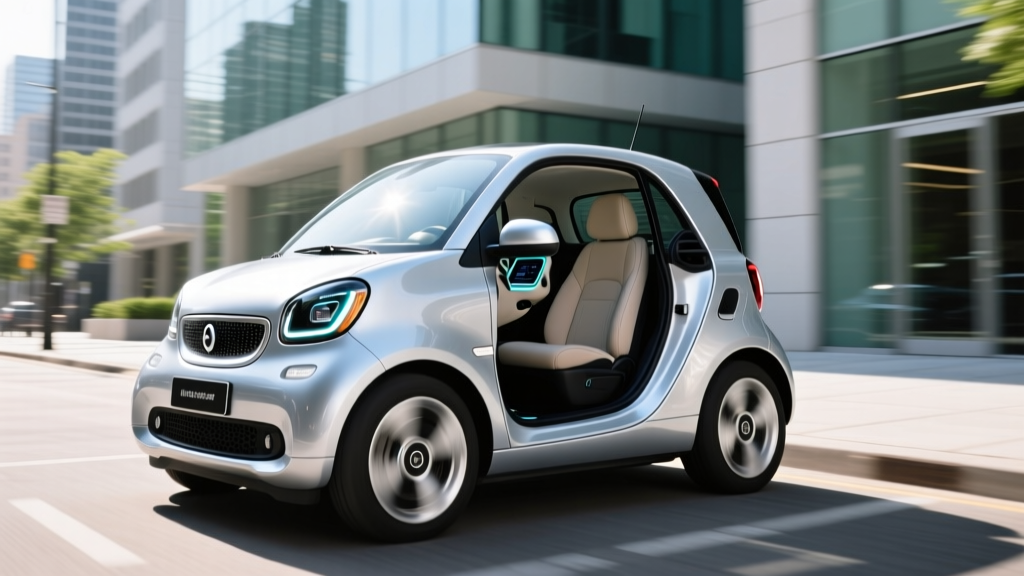
Smart rebranded the Electric Drive as the "EQ Fortwo" for 2018, aligning with Mercedes-Benz's EQ electric sub-brand. Underneath, the powertrain carried over: a rear-mounted electric motor producing 80 horsepower and 118 lb-ft of torque, paired with a 17.6 kWh lithium-ion battery (NMC chemistry). The car seats exactly two people, has a tiny rear trunk, and was sold exclusively as a battery-electric vehicle in the US for the 2018 model year — Smart dropped the gas-powered Fortwo from American showrooms after 2017.
Two body styles were offered: the Coupe and the Cabrio (convertible). Both share identical powertrains and range ratings. The Cabrio commands a slight premium on the used market.
| Spec | Value |
|---|---|
| EPA Range | 58 miles |
| Battery Capacity | 17.6 kWh (NMC) |
| Motor Output | 80 hp / 118 lb-ft |
| 0–60 mph | |
| Top Speed | 78 mph (electronically limited) |
| EPA Efficiency | 108 MPGe combined (31 kWh/100mi) |
| Level 2 AC Charge Rate | 7.2 kW max |
| DC Fast Charging | Not available |
| Level 2 Charge Time (0–100%) | ~3 hours |
| Level 1 Charge Time (120V) | ~13–16 hours |
| Cargo Volume | 9.2 cu ft |
| Curb Weight | ~2,425 lbs |
Real-World Range: The 58-Mile Sticker vs. Reality
The EPA's 58-mile estimate assumes mixed city/highway driving at moderate temperatures. In practice, the Smart EQ Fortwo's range varies significantly based on how and where you drive it.
- Ideal city driving (55°F, 25–35 mph): 65–72 miles — regenerative braking recovers energy in stop-and-go traffic
- Mixed commute (45–55 mph): 50–58 miles — aligns with EPA estimate
- Highway (65–70 mph): 40–48 miles — the boxy shape and short wheelbase create substantial drag
- Cold weather (below 32°F): 35–45 miles — the resistive cabin heater draws heavily from the small battery; the car lacks a heat pump
- Hot weather with A/C (above 90°F): 48–55 miles — climate control impact is moderate but noticeable
The Smart EQ's battery degradation is a real concern for a 2026 buyer. NMC batteries from this era typically lose 10–15% capacity over 8 years under normal use. A 2018 model with 60,000+ miles may deliver only 48–52 miles of usable range. Before purchasing, request a battery State of Health (SoH) reading from a Mercedes-Benz/Smart dealer — the car's onboard diagnostics can report this, though Smart's official tooling is limited since the brand exited the US market in 2019.
Charging at Home: What You Need to Know
The 2018 Smart EQ Fortwo supports only AC charging — there is no DC fast-charging capability. This is the car's most significant limitation for anyone who might occasionally need to drive beyond its range. You cannot pull into a public fast-charger and add 100 miles in 20 minutes. Every charge session is a multi-hour commitment.
| Level | Power | Time (0–100%) | Miles Added per Hour |
|---|---|---|---|
| Level 1 (120V household) | ~1.4 kW | 13–16 hours | ~4–5 miles/hr |
| Level 2 (240V, 32A) | 7.2 kW | ~3 hours | ~20 miles/hr |
| DC Fast Charge | N/A | N/A | Not supported |
Home charging setup: A Level 2 home charger is practically mandatory. On Level 1 alone, a full charge takes overnight and then some — workable only if you drive under 25 miles daily and plug in every night. A basic Level 2 wall unit (like a ChargePoint Home Flex or Emporia Vue) costs $300–$600 for the hardware. Professional installation by a licensed electrician typically runs $500–$1,500 if your panel has capacity, or $2,000–$4,000+ if a panel upgrade (to 200A service) is needed.
The Smart EQ uses a standard J1772 connector for AC charging, so it's compatible with virtually every Level 2 home charger and public AC station in North America. The car does not have a NACS or CCS port because it never needed DC charging hardware.
Cost Breakdown: Buying and Running a Used Smart EQ
The used-EV value proposition hinges on low purchase price and cheap electricity. Here's what ownership actually costs.
| Cost Category | 2018 Smart EQ Fortwo | 2018 Gas Subcompact (e.g., Honda Fit) |
|---|---|---|
| Purchase Price (2026 used market) | $7,000–$11,000 | $12,000–$16,000 |
| Annual Fuel/Energy (8,000 mi/yr) | $250–$400 (electricity at $0.14/kWh) | $1,100–$1,400 (gas at $3.30/gal, 33 MPG) |
| Annual Maintenance | $200–$400 (no oil, minimal brakes) | $600–$900 (oil, filters, brakes) |
| Annual Insurance | $900–$1,300 | $800–$1,100 |
| Estimated 5-Year Total Cost | $14,500–$22,500 | $22,000–$28,500 |
Charging cost math: The Smart EQ consumes roughly 31 kWh per 100 miles. At the US average residential rate of $0.14/kWh (per EIA data), driving 8,000 miles annually costs about $347 in electricity. Compare that to a gas car at 33 MPG combined: 242 gallons × $3.30 = ~$800. You save roughly $450–$950 per year on fuel alone.
Maintenance savings are genuine but modest on a car this cheap. No oil changes, no spark plugs, and regenerative braking extends pad life. The main service items are cabin air filter, brake fluid, tire rotation, and the 12V auxiliary battery (which will likely need replacement if it's still the original — budget $150–$250 for that).
The big financial risk: The traction battery. If the 17.6 kWh pack fails outside the 8-year/100,000-mile warranty, replacement costs $5,000–$8,000+ — potentially exceeding the car's value. Smart's US dealer network is thin since the brand's 2019 exit, and parts sourcing can be slow. This is not a hypothetical concern on an 8-year-old EV.
How the Smart EQ Compares to Alternatives
In 2026's used-EV market, the Smart EQ Fortwo occupies a very narrow niche. Here's how it stacks up against other budget electric options.
| Model | EPA Range | Battery | DC Fast Charge? | Seats | Typical Used Price |
|---|---|---|---|---|---|
| 2018 Smart EQ Fortwo | 58 mi | 17.6 kWh | No | 2 | $7,000–$11,000 |
| 2018 Nissan Leaf (40 kWh) | 151 mi | 40 kWh | Yes (CHAdeMO, 50 kW) | 5 | $10,000–$14,000 |
| 2017–2018 Chevy Bolt EV | 238 mi | 60 kWh | Yes (CCS, 55 kW) | 5 | $11,000–$16,000 |
| 2018 Fiat 500e | 84 mi | 24 kWh | No | 4 | $8,000–$12,000 |
| 2018 BMW i3 (non-REx) | 114 mi | 33.2 kWh | Yes (CCS, 50 kW) | 4 | $12,000–$17,000 |
The Smart EQ's only advantages are its microscopic parking footprint (8.8 feet long — it fits where nothing else will) and its low purchase price. Against the Bolt EV's 238 miles or even the Leaf's 151, the Smart's 58-mile range is severely limiting. The Fiat 500e offers a similar city-car vibe with 46% more range and four seats. The BMW i3 brings DC fast charging and 114 miles.
Common Misconceptions About the 2018 Smart EQ
| Myth | Fact |
|---|---|
| "It qualifies for the $7,500 federal tax credit." | The §30D new-vehicle credit applies only to new purchases. The used-EV credit (§25E, up to $4,000) has strict requirements: purchase from a licensed dealer, buyer income caps ($75K single / $150K joint), vehicle price under $25,000, and model-year age requirements. Verify current rules at IRS.gov. |
| "58 miles is enough because I only drive 30 miles a day." | Daily distance is only half the equation. Cold weather, highway segments, battery degradation, and the need for a reserve buffer all shrink real range. A 30-mile day is fine in summer; in a 20°F January with degraded battery, you may use 50+ miles of rated capacity. |
| "I can fast-charge it on road trips." | The 2018 Smart EQ has no DC fast-charge port. Period. Every charge takes 3+ hours minimum. This is strictly a local car. |
| "Smart/Mercedes will service it easily." | Smart exited the US market in 2019. Some Mercedes-Benz dealers still service EQ Fortwos, but parts availability and technician familiarity are declining. Independent EV shops may be your better option. |
| "The battery will last forever." | All lithium-ion batteries degrade. At 8 years old, expect 85–92% State of Health under normal conditions. High-mileage or hot-climate examples may be lower. A degraded 17.6 kWh pack means 45–50 real miles, not 58. |
Decision Framework: Should You Buy a 2018 Smart EQ Fortwo?
Buy the 2018 Smart EQ Fortwo IF:
- Your round-trip commute is under 35 miles, mostly on surface streets (under 45 mph)
- You have reliable Level 2 home charging (or can install it)
- You live in a mild climate (rarely below 30°F) or accept significant winter range loss
- You need a second car strictly for city errands and already own a longer-range vehicle
- Parking space is at an extreme premium in your city
- You can purchase one for under $9,000 with a verified battery SoH above 90%
Do NOT buy the 2018 Smart EQ Fortwo IF:
- This would be your only car
- You regularly drive more than 40 miles in a day
- You need to carry more than one passenger or any meaningful cargo
- You live in an apartment without charging access and rely on public infrastructure
- You regularly drive in freezing temperatures
- You want the option to take road trips or drive on highways frequently
- The battery SoH is unknown or below 88%
First-Time EV Buyer Essentials for the Smart EQ
If the Smart EQ is your introduction to electric vehicles, understand these fundamentals before signing:
kW vs. kWh: Kilowatts (kW) measure power — how fast energy flows. Kilowatt-hours (kWh) measure energy — how much the battery holds. The Smart EQ has a 17.6 kWh battery and charges at up to 7.2 kW. Think of kWh as your "fuel tank size" and kW as your "fuel pump speed."
Preconditioning: The Smart EQ can precondition its battery while plugged in, warming or cooling it to optimal temperature before you drive. Use this feature — it preserves range, especially in cold weather. Set your departure time in the car's timer settings.
Regenerative braking: The Smart EQ offers moderate regen. It won't provide true one-pedal driving like a Bolt or Tesla, but it does recover meaningful energy in city traffic. Expect to use the friction brakes more than in stronger-regen EVs.
The 80% rule doesn't apply here: With larger batteries, owners are advised to charge to 80% daily to preserve battery health. With a 17.6 kWh pack and only 58 miles of range, you'll likely charge to 100% regularly out of necessity. This is acceptable given the small pack size and NMC chemistry — just avoid leaving it at 100% for extended periods in hot weather.
Insurance: Get quotes before buying. Some insurers charge more for EVs due to higher repair costs, while others offer green-vehicle discounts. The Smart EQ's low value keeps premiums reasonable, but the limited parts network can push some carriers to rate it higher.
Frequently Asked Questions
How long does the 2018 Smart EQ battery last?
Mercedes-Benz warranted the battery for 8 years or 100,000 miles against defects and excessive degradation (typically defined as falling below 70% capacity). By 2026, most 2018 models are at or past the 8-year mark, meaning the warranty may have expired. Actual battery life depends on climate, charging habits, and mileage — NMC packs from this era commonly reach 150,000+ miles before significant capacity loss, but the small pack means you'll feel every percentage point of degradation.
Can I charge a 2018 Smart EQ at a Tesla Supercharger?
No. The Smart EQ has only a J1772 AC charging port. Tesla Superchargers deliver DC power through NACS (or CCS with adapter at some locations). The Smart EQ physically cannot connect to any DC fast-charging network. You are limited to Level 1 and Level 2 AC charging.
Is the Smart EQ safe for highway driving?
The car is electronically limited to 78 mph and has a very short 73.7-inch wheelbase. It carries a 4-star overall rating from NHTSA for its class, but in collisions with larger vehicles, physics is not on your side. It's safe for its intended urban use but not recommended for sustained highway travel — and at 40–48 miles of highway range, sustained highway travel isn't really possible anyway.
What happens if the Smart EQ battery dies completely?
If the traction battery reaches 0%, the car stops. You'll need a flatbed tow to a charging station — the Smart EQ cannot be flat-towed or push-started. Keep a buffer of at least 5–10 miles of range at all times. Also note: the 12V auxiliary battery (which powers lights, locks, and computers) is charged by the main pack; if the main pack is fully depleted for an extended period, the 12V can die too, requiring a jump or replacement.
Should I buy a Smart EQ or just get a used Chevy Bolt?
For most buyers, the Bolt is the better choice. It offers 238 miles of range, DC fast charging, five seats, real cargo space, and similar or slightly higher used pricing ($11,000–$16,000). The only scenario where the Smart EQ wins is if you need the absolute smallest possible vehicle for tight urban parking and your daily driving is under 35 miles with reliable home charging. If parking space isn't your primary constraint, the Bolt's versatility makes it the clear winner.
Are parts still available for the 2018 Smart EQ?
Smart officially left the US market after the 2019 model year. Mercedes-Benz dealers with Smart-certified technicians can still order parts, but availability is declining and wait times can be long, especially for EV-specific components like the onboard charger or power electronics. Body panels and trim pieces are increasingly scarce. Before buying, identify a service provider in your area who can work on the car.
Sources: EPA fuel economy data via fueleconomy.gov, IRS used clean vehicle credit guidelines via irs.gov, NHTSA safety ratings via nhtsa.gov.