Quick Verdict: The Budget EV That Still Commutes
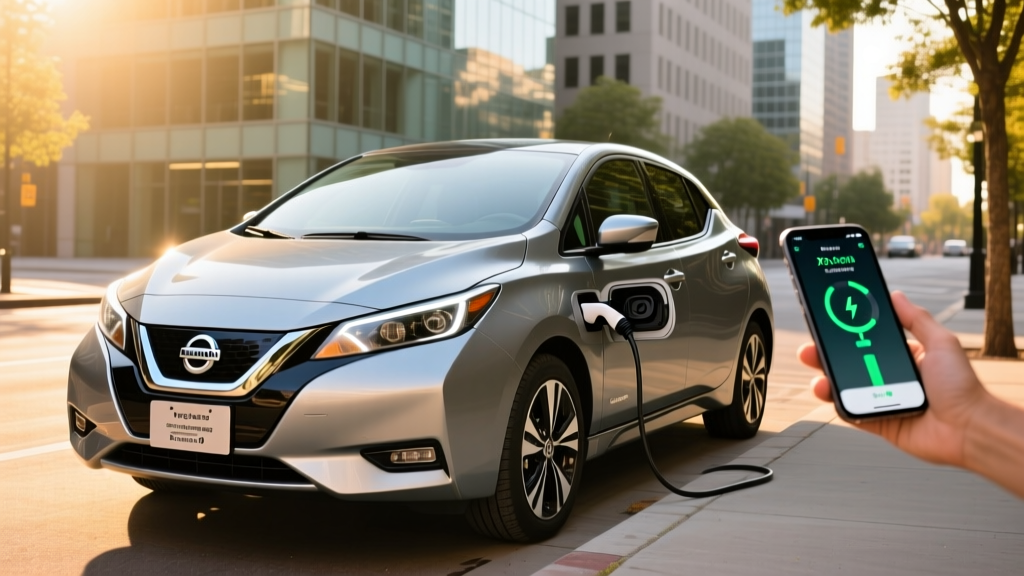
The 2018 Nissan Leaf S was the year Nissan finally gave its best-selling electric hatchback a battery worth caring about. Jumping from the first-generation's anemic 24 kWh and 30 kWh packs to a 40 kWh usable battery, the 2018 Leaf S pushed the EPA range past the 150-mile mark — a threshold that transformed it from a neighborhood runabout into a legitimate daily commuter. In 2026, it remains one of the most affordable entry points into EV ownership on the used market, often trading between $8,000 and $13,000 depending on mileage and battery health.
But the 2018 Leaf S comes with caveats that modern EV buyers should weigh carefully: passive battery thermal management, a CHAdeMO connector in a world pivoting to NACS and CCS, and a DC fast-charge rate that feels slow by today's standards. This review breaks down exactly what you get, what you give up, and whether it's still a smart buy.
| Spec | 2018 Nissan Leaf S |
|---|---|
| EPA Range | 151 miles |
| Battery (usable) | 40 kWh (NMC lithium-ion) |
| Motor Output | 110 kW / 147 hp, 236 lb-ft torque |
| Drivetrain | FWD (single motor, front axle) |
| 0-60 mph | ~7.9 seconds |
| EPA Efficiency | 112 MPGe combined (30 kWh/100 mi) |
| DC Fast Charge (peak) | ~50 kW (CHAdeMO) |
| Level 2 Charge Rate | 6.6 kW onboard charger |
| Cargo Volume | 23.6 cu ft (rear seats up) / 30.0 cu ft (folded) |
| Original MSRP (S trim) | $29,990 (before incentives) |
| Typical Used Price (2026) | $8,000–$13,000 |
| Battery Warranty (original) | 8 yr / 100,000 mi (capacity loss below 9 bars of 12) |
Range and Efficiency: EPA vs. the Real World
EPA Estimated Range: 151 miles
Real-World Expectation: 120–140 miles highway at 70 mph; 140–155 miles city/regenerative driving; 90–110 miles in freezing temperatures with cabin heat.
The 2018 Leaf S uses a 40 kWh usable battery pack built with NMC (nickel-manganese-cobalt) lithium-ion cells arranged in a laminated pouch format — the same chemistry family used across most EVs of this era, though in a different physical form factor than the cylindrical cells Tesla popularized. According to fueleconomy.gov, the Leaf S achieves 112 MPGe combined, translating to roughly 30 kWh per 100 miles driven.
That efficiency figure is genuinely good — competitive with a 2024 Hyundai Kona Electric and better than many larger crossover EVs. The Leaf's relatively light curb weight (~3,400 lbs) and modest 110 kW motor help it sip electrons in stop-and-go traffic where regenerative braking recaptures energy effectively.
However, the real-world picture diverges from the sticker in two important ways:
Highway driving: At sustained 70–75 mph, expect range to drop to roughly 120–140 miles. The Leaf's aerodynamic profile, while improved over the first generation, still creates meaningful drag at speed. If your commute is 60 miles each way on the interstate, you'll want to charge daily and plan for a buffer.
Cold weather: This is where the 2018 Leaf S reveals its biggest engineering limitation. The battery pack uses passive air cooling rather than the active liquid thermal management systems found in the Chevrolet Bolt, Tesla Model 3, and virtually every modern EV. In freezing conditions (below 32°F / 0°C), the battery's internal resistance rises, cabin heating draws heavily from the pack (the Leaf S uses a resistive PTC heater, not a heat pump), and range can plummet to 90–110 miles. If you live in Minnesota, Buffalo, or anywhere with sustained sub-freezing winters, treat 100 miles as your practical winter range.
Charging Speeds: CHAdeMO in a NACS World
Charging is where the 2018 Leaf S shows its age most visibly. The vehicle uses the CHAdeMO DC fast-charging connector — a standard that was dominant in the early 2010s but has been almost entirely abandoned in North America in favor of CCS1 and, increasingly, Tesla's NACS connector. As of 2026, Electrify America, EVgo, and most other major networks still maintain some CHAdeMO connectors at legacy stations, but new installations overwhelmingly prioritize NACS and CCS.
| Charging Level | Power / Connector | Speed |
|---|---|---|
| Level 1 (120V household) | ~1.4 kW, J1772 | ~5 miles of range per hour |
| Level 2 (240V home/public) | 6.6 kW max, J1772 | ~22 miles of range per hour; 0–100% in ~7 hours |
| DC Fast Charge | ~50 kW peak, CHAdeMO | 10–80% in ~40–45 minutes; 0–80% in ~50 minutes |
Level 2 home charging: The 6.6 kW onboard charger is adequate for overnight replenishment. A full charge from near-empty takes roughly 7 hours on a 240V Level 2 circuit. Most owners install a 32-amp or 40-amp Level 2 wallbox (such as a ChargePoint Home Flex or Emporia Vue) on a 50-amp breaker, which delivers the full 6.6 kW the Leaf can accept. Expect home installation costs of $500–$1,500 for the electrician work if your panel is near the garage and no upgrade is needed.
DC fast charging: The 50 kW peak rate was middling in 2018 and is slow by 2026 standards. A 10% to 80% charge takes roughly 40–45 minutes under ideal conditions (warm battery, low state of charge at plug-in). The charge curve tapers noticeably above 60% SoC, and the passive thermal system means repeated fast-charging sessions in hot weather will cause the battery to thermally throttle — a phenomenon Leaf owners colloquially call "Rapidgate." On a hot summer road trip, your second or third DC fast-charge stop of the day may drop to 30 kW or less as the battery overheats.
Connector reality check: If you buy a 2018 Leaf S in 2026, you'll need to research your local public charging infrastructure. CHAdeMO connectors are becoming scarce. Some owners purchase a CHAdeMO-to-CCS adapter, but these are expensive ($300–$500) and not universally compatible. The Leaf cannot natively charge at Tesla Superchargers without an approved adapter, and Tesla's NACS network compatibility with CHAdeMO vehicles remains limited.
Performance and Drivetrain
The 2018 Leaf S is powered by a single front-mounted AC synchronous motor producing 110 kW (147 horsepower) and 236 lb-ft of torque. Power delivery is instant and linear, as with all EVs, giving the Leaf a peppy around-town character that belies its modest horsepower figure.
The 0–60 mph sprint takes approximately 7.9 seconds — quick enough for confident highway merging but not sporty by the standards of a Tesla Model 3 or even a Volkswagen ID.4. Top speed is electronically limited to roughly 95 mph.
The Leaf S features Nissan's e-Pedal mode, which increases regenerative braking aggressiveness to the point where the car can be driven in near-one-pedal fashion in city traffic. It won't bring the car to a complete stop and hold it (unlike Tesla or Chevrolet's one-pedal implementations), but it significantly reduces brake pedal use in stop-and-go conditions. A separate B-mode on the shift lever offers moderate regen for drivers who prefer a coasting feel.
Ride quality is compliant and comfortable, with a low center of gravity from the under-floor battery pack giving the Leaf surprisingly composed handling for an economy hatchback. Road noise is well-suppressed at city speeds but becomes noticeable above 65 mph — a reminder of the vehicle's budget origins.
Interior, Cargo, and Technology
The 2018 Leaf S is the base trim, and it shows in places. The interior uses hard plastics throughout, though build quality is solid and the layout is intuitive. Key interior dimensions:
- Front headroom: 41.2 inches
- Front legroom: 42.1 inches
- Rear headroom: 37.3 inches
- Rear legroom: 33.5 inches
- Cargo (seats up): 23.6 cu ft
- Cargo (seats folded): 30.0 cu ft
Rear legroom is tight for taller passengers, and the cargo area, while usable, is smaller than a Bolt EV (23.8 cu ft) or a Model 3 trunk+frunk combination. There is no front trunk (frunk) — the space under the hood houses the motor and power electronics.
Infotainment (S trim): The base S trim comes with a 5.0-inch color display, Bluetooth, a USB port, and a 4-speaker audio system. Apple CarPlay and Android Auto are not available on the S trim — they were introduced on SV and SL trims. Navigation is not included on the S; you'll rely on phone-based directions via Bluetooth audio streaming.
Driver assistance: The 2018 Leaf S includes Nissan's Automatic Emergency Braking (AEB) as standard equipment — a notable safety feature for a base-trim vehicle at this price point. However, the S trim lacks the ProPILOT Assist adaptive cruise and lane-centering system that was optional on SV and standard on SL. You get a competent SAE Level 0–1 vehicle with basic collision mitigation, not a Level 2 driver-assist system. The driver must remain fully in control at all times.
Notable drawbacks: The S trim's lack of Apple CarPlay/Android Auto is a meaningful omission in 2026, when phone-mirroring is expected even in budget vehicles. The 5.0-inch screen looks dated, and the absence of a 360° camera (available on higher trims) makes parking the low-slung hatchback slightly more challenging than it needs to be.
Pricing, Used Market Value, and Tax Credits
The 2018 Nissan Leaf S carried an original MSRP of $29,990 before any incentives. In 2026, used examples typically sell for $8,000 to $13,000 depending on mileage, condition, and — critically — battery state of health (SoH). The wide range reflects buyer caution about battery degradation in passively cooled packs.
| Cost Factor | Amount |
|---|---|
| Typical Used Price (2026) | $8,000–$13,000 |
| Federal Used EV Tax Credit (§25E) | Up to $4,000 (30% of sale price, max $4,000) |
| Effective Price After Credit | ~$4,000–$9,000 |
| Income Cap (§25E) | $75k single / $112,500 HOH / $150k joint MAGI |
| Vehicle Price Cap (§25E) | Sale price must be ≤ $25,000 |
Federal tax credit — critical distinction: The 2018 Leaf S does not qualify for the new-vehicle §30D credit (which requires battery sourcing and critical mineral compliance that a 2018 vehicle cannot meet). However, it can qualify for the §25E used-EV tax credit, which provides 30% of the sale price up to a maximum of $4,000. To qualify, per IRS guidelines:
- The vehicle must be purchased from a licensed dealer (private-party sales do not qualify)
- The sale price must be $25,000 or less (easily met at current used prices)
- The buyer's modified adjusted gross income must not exceed $75,000 (single), $112,500 (head of household), or $150,000 (married filing jointly)
- The vehicle must be a qualified plug-in electric vehicle with at least 7 kWh of battery capacity (the Leaf's 40 kWh easily clears this)
- The credit can only be claimed once per vehicle (check that a prior owner hasn't already used it for this specific VIN)
- Point-of-sale transfer is available — the dealer can apply the credit as an immediate discount at purchase
For a $10,000 used Leaf S, the 30% credit equals $3,000, bringing your effective cost to $7,000. At $13,000, the full $4,000 maximum kicks in, dropping your net cost to $9,000. This makes the 2018 Leaf S one of the cheapest ways to get into a modern-ish EV in 2026.
Battery health due diligence: Before purchasing, check the battery's state of health using the dashboard's 12-bar capacity indicator. Nissan's system displays bars along the far right of the instrument cluster — a healthy battery should show 11 or 12 bars. If the car shows 9 or 10 bars, expect reduced range (roughly proportional to bar loss). Third-party tools like LeafSpy (used with an OBD-II dongle) provide more granular SoH data and are highly recommended before purchase.
Battery Longevity and Warranty
The 2018 Leaf S battery pack carries Nissan's original warranty of 8 years or 100,000 miles against capacity loss below 9 bars (out of 12) on the capacity gauge. This warranty is transferable to subsequent owners, meaning a 2018 model's battery coverage extends through 2026 by time — though many examples will have exceeded the mileage threshold.
The passive air-cooling system is the primary longevity concern. Data aggregated from Leaf owner communities and fleet studies shows that 2018-generation 40 kWh packs in moderate climates typically retain 85–92% of original capacity after 5–6 years and 60,000–80,000 miles. In hot climates (Arizona, Texas, Southern California), degradation can accelerate to 75–85% retention over the same period, particularly for vehicles that were frequently DC fast-charged or regularly parked in direct sunlight at high states of charge.
If battery replacement becomes necessary, expect a cost of $6,500–$9,000 for a refurbished 40 kWh pack through Nissan or third-party EV shops — a figure that may exceed the vehicle's value, making it a potential total-loss scenario for a $10,000 car. This is the key risk of buying any used EV without active thermal management.
Care tips for maximizing longevity:
- Avoid routinely charging to 100% — set your Level 2 charger to stop at 80% for daily use
- Minimize DC fast charging in hot weather; charge during cooler morning/evening hours
- Don't leave the car parked at high SoC in extreme heat for extended periods
- In winter, precondition the cabin while plugged in to reduce battery strain
Who Should Buy the 2018 Leaf S?
Pros
- Very low entry cost — potentially under $7,000 after the §25E used-EV credit
- Excellent city efficiency at 112 MPGe combined
- Comfortable ride, easy to park, practical hatchback cargo area
- Standard automatic emergency braking even on base trim
- e-Pedal regen mode reduces brake wear in city driving
- Low maintenance costs — no oil changes, minimal brake wear
Cons
- CHAdeMO connector is increasingly unsupported at new public chargers
- Passive battery cooling leads to faster degradation in hot climates and DC fast-charge throttling
- Real-world highway range (~120 mi) limits road-trip practicality
- No Apple CarPlay or Android Auto on S trim
- 50 kW DC fast-charge speed is slow by 2026 standards
- Battery replacement cost can exceed vehicle value
The 2018 Nissan Leaf S is best suited for a budget-conscious city commuter who has reliable Level 2 home charging, drives fewer than 70 miles round-trip per day, and lives in a moderate climate. It's an outstanding second car for errands, school runs, and local commuting where daily mileage is predictable and well within the battery's comfort zone.
It is not a good fit for:
- Long highway commuters (100+ miles daily)
- Residents of extreme-heat or extreme-cold climates without garage parking
- Buyers who need a primary family vehicle for road trips
- Anyone without access to home or workplace Level 2 charging
2018 Leaf S vs. Key Used-EV Competitors
At the $8,000–$13,000 price point, the Leaf S competes with several used EVs worth cross-shopping:
- 2017–2018 Chevrolet Bolt EV: 238 miles EPA range, 60 kWh battery with active liquid cooling, CCS connector, Apple CarPlay/Android Auto. The Bolt is the clear winner on range, thermal management, and charging-standard longevity. Used prices tend to run $2,000–$4,000 higher than a comparable Leaf, but the value proposition is stronger for most buyers.
- 2018–2019 Volkswagen e-Golf: 125 miles EPA range, 35.8 kWh battery, CCS connector. Similar range limitations to the Leaf but with better build quality and a CCS connector. Cargo space is tighter.
- 2018 Fiat 500e: 84 miles EPA range. Fun to drive but range is too limited for most buyers in 2026. Better as a neighborhood car.
If your budget allows stretching to $14,000–$16,000, the Chevrolet Bolt EV is the stronger used-EV purchase in nearly every measurable dimension. The Leaf S wins only on absolute lowest price and, potentially, on the §25E credit bringing your net cost below $7,000.
Frequently Asked Questions
What is the real-world range of the 2018 Nissan Leaf S?
The EPA rates the 2018 Leaf S at 151 miles. In real-world driving, expect 120–140 miles on the highway at 70 mph, 140–155 miles in city driving with regenerative braking, and as low as 90–110 miles in freezing weather with cabin heat engaged. Actual range also depends on battery state of health — a degraded pack showing 10 of 12 bars will deliver proportionally less range.
How fast does the 2018 Leaf S charge?
On a Level 2 home charger (240V), the Leaf S accepts up to 6.6 kW, adding about 22 miles of range per hour and reaching a full charge in roughly 7 hours. On a DC fast charger via CHAdeMO, it peaks at approximately 50 kW, achieving a 10–80% charge in about 40–45 minutes. Charging speed tapers significantly above 60% SoC and may be further reduced in hot weather due to the passive thermal management system.
Does the 2018 Nissan Leaf S qualify for the federal EV tax credit?
Not the new-vehicle §30D credit. However, it can qualify for the §25E used clean vehicle credit, which provides 30% of the purchase price up to $4,000 when bought from a licensed dealer for $25,000 or less. Buyer income caps apply ($75k single / $150k joint). Consult a tax professional or review IRS §25E guidelines to confirm eligibility for your situation.
Is the 2018 Leaf S worth buying in 2026?
It depends on your use case and budget. If you need the cheapest possible EV for short city commutes with home charging, and the §25E credit brings your cost under $8,000, the Leaf S is a compelling bargain. If you need highway range, live in a hot climate, or want access to the growing NACS/CCS charging network, the Chevrolet Bolt EV is a better investment despite the higher upfront cost.
How long will the 2018 Leaf S battery last?
In moderate climates with Level 2 home charging, the 40 kWh pack typically retains 85–92% capacity after 5–6 years. In hot climates or with frequent DC fast charging, retention may drop to 75–85%. Use the dashboard capacity bars and a LeafSpy OBD-II reader to check state of health before purchasing. The original 8-year/100,000-mile battery warranty may still apply by time through 2026, but many examples will have exceeded the mileage limit.
Can I charge the 2018 Leaf S at Tesla Superchargers?
Not directly. The Leaf S uses the CHAdeMO DC fast-charging connector, which is incompatible with Tesla's NACS connectors. While some adapter solutions exist, they are expensive and not universally supported. Your public charging options are limited to networks that still maintain CHAdeMO connectors, which are becoming less common as the industry standardizes on NACS and CCS.