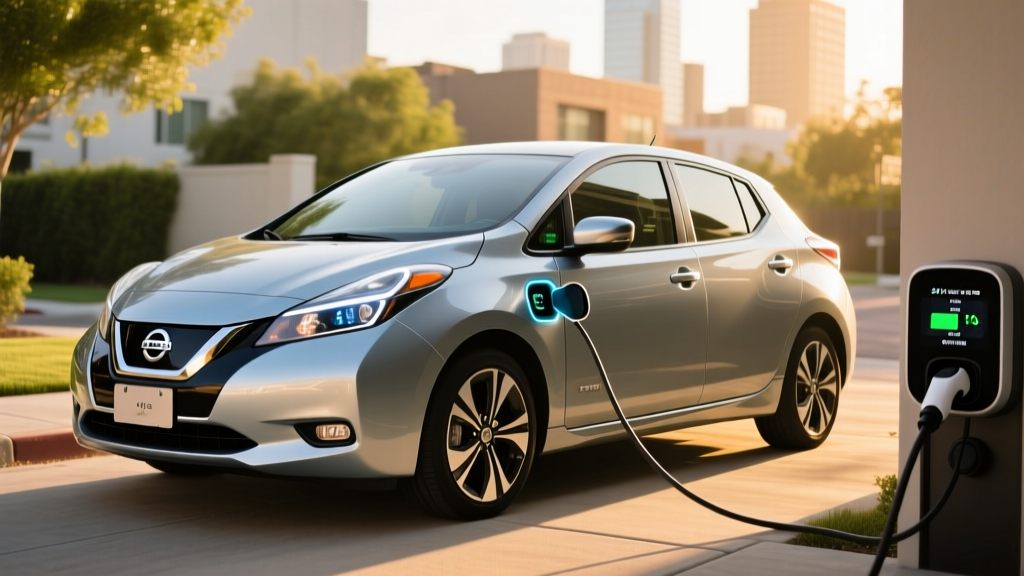
The 2018 Nissan Leaf marked a generational reset for Nissan's mass-market EV. With a larger 40 kWh battery, refreshed styling, and the introduction of ProPILOT Assist, the second-generation Leaf addressed many complaints leveled at its predecessor. Now, in 2026, the 2018 Leaf occupies a compelling position in the used EV market: an affordable commuter hatchback with real-world usability — but also some well-documented limitations around fast charging and battery thermal management. Here's everything a prospective used buyer needs to know.
Quick Verdict: A Budget-Friendly Commuter EV With Caveats
If your daily driving stays under 100 miles round-trip and you have access to Level 2 home charging, a used 2018 Leaf can be one of the cheapest ways into electric mobility. The 151-mile EPA range is adequate for most commutes, the cabin is surprisingly spacious, and running costs are minimal. However, the CHAdeMO connector, air-cooled battery, and modest DC fast-charge rate mean road trips require careful planning. This is a city and suburban EV, not a cross-country cruiser.
Range, Efficiency & Real-World Expectations
The 2018 Leaf is equipped with a 40 kWh lithium-ion battery pack (approximately 38 kWh usable) using NMC (nickel-manganese-cobalt) chemistry. The EPA rated the 2018 Leaf at 151 miles of combined range — a significant jump from the prior generation's 107 miles.
EPA Sticker: 151 miles (combined)
Real-World Highway (65-75 mph): ~120-135 miles
Cold Weather (below 32°F): ~95-115 miles (20-35% reduction)
City/Commuter Driving: ~145-160 miles (regen-friendly)
The Leaf's lack of active thermal management means battery performance drops noticeably in extreme heat and cold. Plan conservatively.
Efficiency is rated at 112 MPGe combined (city 125 / highway 99), which translates to roughly 30 kWh per 100 miles. That's competitive for the class, though newer EVs like the Chevrolet Bolt EV and Hyundai Kona Electric achieve similar or better efficiency with more range. According to fueleconomy.gov, annual fuel cost is estimated at approximately $550-$650 depending on local electricity rates — a fraction of what a comparable gas hatchback costs.
Charging Speed: DC Fast, Level 2 & Home Setup
Charging is where the 2018 Leaf reveals its most significant compromises. Nissan uses the CHAdeMO DC fast-charging connector — a standard that has lost the format war to CCS and is now being phased out across most public networks in favor of NACS (Tesla's connector, adopted by most automakers).
| Charging Level | Connector | Max Power (kW) | Charge Time | Rate |
|---|---|---|---|---|
| Level 1 (120V) | J1772 | 1.4 kW | ~35 hours (0-100%) | ~4 mi/hr |
| Level 2 (240V) | J1772 | 6.6 kW | ~7 hours (0-100%) | ~22 mi/hr |
| DC Fast Charge | CHAdeMO | ~50 kW peak | ~40 min (10-80%) | ~90 mi in 30 min |
The 50 kW DC fast-charge peak is modest even by 2018 standards — the Chevrolet Bolt EV of the same year managed 55 kW, and the Hyundai Kona Electric hit 77 kW. More critically, the Leaf's passively air-cooled battery suffers from charge tapering: after one or two fast-charge sessions in a day, the car dramatically reduces charge speed to protect the battery, a phenomenon owners call "Rapidgate." On a warm day, expect subsequent DC sessions to drop to 20-30 kW or lower.
For home charging, the 6.6 kW onboard charger is adequate. A full overnight charge from empty takes about 7 hours on a 240V Level 2 station. Most owners will need 3-4 hours to replenish a day's worth of driving.
Performance & Driving Dynamics
The 2018 Leaf is front-wheel drive, powered by a single AC synchronous electric motor producing 147 horsepower and 236 lb-ft of torque. Nissan quotes a 0-60 mph time of approximately 7.9 seconds — adequate for merging and city driving, though it won't win any stoplight drags against a Tesla Model 3 or even a Bolt EV.
Where the Leaf shines is low-speed responsiveness. The instant torque delivery makes it feel quicker than its numbers suggest around town. Regenerative braking is adjustable via the "e-Pedal" mode, which enables one-pedal driving in most situations — lift off the accelerator and the car decelerates to a stop without touching the brake pedal. It's well-calibrated and one of the better regen implementations of its era.
Ride quality is comfortable and compliant, tuned for comfort over sportiness. Road noise is noticeable at highway speeds compared to more premium EVs, but acceptable for the price point.
Interior, Cargo & Technology
The 2018 Leaf's interior was a major step up from the first generation. Materials are decent for the class, with a modern dashboard layout and an 8-inch touchscreen infotainment system featuring Apple CarPlay and Android Auto on SV and SL trims.
| Dimension | Measurement |
|---|---|
| Front Legroom | 42.1 inches |
| Rear Legroom | 33.5 inches |
| Front Headroom | 41.2 inches |
| Rear Headroom | 37.3 inches |
| Cargo Volume (rear seats up) | 23.6 cu ft |
| Cargo Volume (rear seats folded) | 30.0 cu ft |
Cargo space is generous for a compact hatchback. The 23.6 cubic feet behind the rear seats outpaces most sedans, and the 60/40 split-folding rear seats expand that to 30 cubic feet. There is no frunk (front trunk) — that space houses the power electronics.
Standout Tech:
- ProPILOT Assist (available on SV/SL): Adaptive cruise control with lane-centering — a SAE Level 2 driver-assist system. The driver must keep hands on the wheel and remain engaged at all times.
- e-Pedal: One-pedal driving mode with strong regenerative braking.
- Around View Monitor: 360-degree camera system (SL trim).
- Automatic Emergency Braking: Standard on all trims.
Notable Drawbacks:
- No active battery thermal management (passive air cooling only).
- CHAdeMO connector limits public fast-charging options as networks transition to CCS/NACS.
- Infotainment feels dated by 2026 standards; no wireless CarPlay/Android Auto.
- Rear legroom is tight for taller passengers.
2018 Leaf Trims, Pricing & Used Market Value
The 2018 Leaf was offered in three trims. Original MSRP and approximate 2026 used-market values are shown below:
| Trim | Original MSRP | Key Features | 2026 Used Est. |
|---|---|---|---|
| S (base) | $29,990 | 5" display, e-Pedal, AEB | $10,000–$13,000 |
| SV | $32,790 | 8" touchscreen, CarPlay/AA, ProPILOT Assist, adaptive cruise | $12,000–$15,500 |
| SL | $36,200 | Leather, Bose audio, LED headlights, Around View Monitor | $13,500–$17,000 |
Does the 2018 Leaf Qualify for the Federal EV Tax Credit?
Under current IRS §30D rules, the used EV tax credit (officially the Previously Owned Clean Vehicle Credit) offers up to $4,000 or 30% of the sale price (whichever is less) for eligible used EVs purchased from a dealer. Key requirements per the IRS:
- Sale price must be $25,000 or less (the 2018 Leaf qualifies easily).
- Buyer income caps: $75,000 single / $112,500 head of household / $150,000 joint filers.
- Vehicle must be at least 2 model years old (the 2018 Leaf qualifies).
- Must be purchased from a licensed dealer (private-party sales do not qualify).
- The credit can be transferred to the dealer at point of sale as an upfront discount.
Note: The new-vehicle §30D credit (up to $7,500) does not apply to used purchases. Tax rules are subject to change — consult a tax professional and verify current IRS guidance before purchasing.
Battery Warranty & Degradation: What Used Buyers Must Know
Nissan provides an 8-year/100,000-mile battery warranty covering capacity loss below 9 bars out of 12 on the battery health display (roughly 70% state of health). For a 2018 model, this warranty remains in effect through the 2026 model year, meaning some examples may still carry partial factory coverage.
The Leaf's passively cooled battery is its Achilles' heel for long-term degradation. Data from owner communities and fleet studies suggest:
- Mild-climate degradation: ~10-15% capacity loss after 6-7 years / 80,000 miles.
- Hot-climate degradation (AZ, TX, FL): ~15-25% capacity loss over the same period, with frequent DC fast charging accelerating loss.
- A 2018 Leaf in Phoenix might realistically deliver 110-120 miles of range by 2026, while one in Portland or Seattle could still achieve 130+.
When inspecting a used 2018 Leaf, check the battery health bars on the dashboard display (far right of the instrument cluster). A car showing 11 or 12 bars is in good shape; 10 bars indicates moderate degradation; 9 bars or fewer means the battery may qualify for warranty replacement.
Pros, Cons & Who Should Buy
Pros
- Affordable entry into EV ownership ($10K-$17K used)
- Spacious cargo area for the class (23.6 cu ft)
- Comfortable ride and easy one-pedal driving
- Low running costs (~$550/yr electricity)
- ProPILOT Assist is competent for the era
- Eligible for up to $4,000 used-EV tax credit
Cons
- CHAdeMO connector — shrinking public network support
- No active thermal management — Rapidgate on road trips
- Modest 50 kW DC fast-charge rate
- Range drops significantly in cold weather
- Dated infotainment by 2026 standards
- Tight rear legroom (33.5 inches)
Who This EV Suits Best
Buy the 2018 Leaf if: You need an affordable daily commuter, have Level 2 home charging, live in a mild climate, and rarely drive more than 80-100 miles in a day. It's ideal as a second car or a first EV for budget-conscious buyers who want to test the electric lifestyle without a major investment.
Look elsewhere if: You regularly take road trips, live in a hot climate and plan to use DC fast charging frequently, need more than 150 miles of reliable range, or want access to the growing NACS/Tesla Supercharger network.
2018 Leaf vs. Key Used EV Competitors
| Spec | 2018 Nissan Leaf | 2018 Chevy Bolt EV | 2018 Hyundai Kona Electric |
|---|---|---|---|
| EPA Range | 151 mi | 238 mi | 258 mi |
| Battery | 40 kWh (NMC) | 60 kWh (NMC) | 64 kWh (NMC) |
| DC Fast Charge | 50 kW (CHAdeMO) | 55 kW (CCS) | 77 kW (CCS) |
| Horsepower | 147 hp | 200 hp | 201 hp |
| 0-60 mph | ~7.9 sec | ~6.5 sec | ~6.4 sec |
| Cargo (seats up) | 23.6 cu ft | 16.9 cu ft | 19.2 cu ft |
| 2026 Used Est. | $10K–$17K | $13K–$19K | $15K–$21K |
The Bolt EV and Kona Electric both offer substantially more range and use the CCS connector, which has broader public network support than CHAdeMO. The Leaf's advantage is price — it's typically the cheapest option on the used market — and cargo space, which beats both competitors. If budget is the primary constraint and range needs are modest, the Leaf wins on value. If you need 200+ miles of range or plan to road-trip, spend the extra $3,000-$5,000 for a Bolt or Kona.
Frequently Asked Questions
What is the real-world range of the 2018 Nissan Leaf?
Expect roughly 120-135 miles on the highway, 145-160 miles in city driving, and as low as 95-115 miles in freezing temperatures. The 151-mile EPA rating assumes a mix of conditions. Battery degradation on a 2026-era used example may reduce these figures by 10-20% depending on climate history and charging habits.
How fast does the 2018 Leaf charge at home and on the road?
On a 240V Level 2 home charger (6.6 kW), a full charge takes about 7 hours, adding roughly 22 miles of range per hour. On a CHAdeMO DC fast charger, it peaks at approximately 50 kW, achieving a 10-80% charge in around 40 minutes. Subsequent fast-charge sessions in the same day will be significantly slower due to thermal throttling.
Can I charge a 2018 Leaf at a Tesla Supercharger?
Not directly. The Leaf uses CHAdeMO for DC fast charging and J1772 for Level 2. Tesla Superchargers use the NACS connector. While J1772-to-NACS adapters exist for Level 2 charging at Tesla Destination Chargers, there is currently no commercially available CHAdeMO-to-NACS adapter for DC fast charging at Superchargers. You'll rely on Electrify America, EVgo, and other networks — verify CHAdeMO availability at stations near you, as some are being retired.
Is the 2018 Leaf worth buying in 2026 vs. competitors?
It depends on your use case. At $10,000-$17,000 used (potentially $6,000-$13,000 after the used-EV tax credit), it's one of the most affordable EVs available. For a commuter who charges at home and drives under 100 miles daily, it's excellent value. For road trips, hot climates, or drivers needing 200+ miles, the used Chevrolet Bolt EV or Hyundai Kona Electric are better choices despite costing $3,000-$5,000 more.
What should I check before buying a used 2018 Leaf?
Check the battery health bars on the dash display (12 bars is ideal). Review charging history if available — frequent DC fast charging in hot climates accelerates degradation. Test the e-Pedal and regen modes. Verify which trim you're getting (ProPILOT Assist only comes on SV and SL). Confirm the CHAdeMO charging port works at a public station before finalizing the purchase.
Does the 2018 Leaf qualify for the federal EV tax credit?
As a used vehicle, it qualifies for the Previously Owned Clean Vehicle Credit under §30D — up to $4,000 or 30% of the sale price, whichever is less. You must buy from a licensed dealer, meet income caps ($75K single / $150K joint), and the sale price must be under $25,000. Always verify current IRS rules as incentive programs can change.