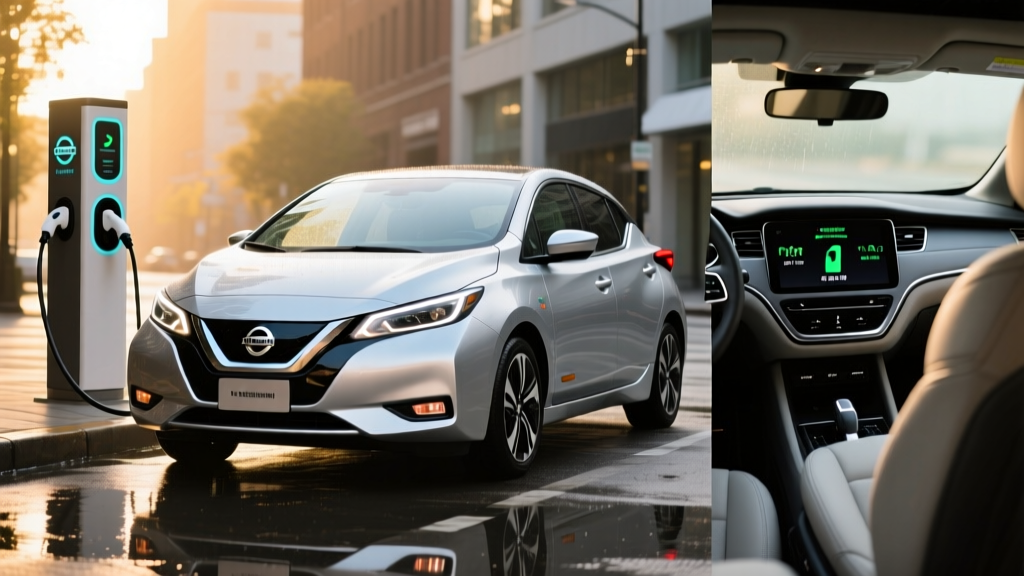
The 2018 Nissan Leaf marked a generational leap for Nissan's electric hatchback. Moving from a modest 84-mile range to an EPA-estimated 151 miles, the second-generation Leaf became a genuinely viable daily driver for a mass-market audience. Now, years later, it remains one of the most affordable entry points into EV ownership on the used market — but its CHAdeMO charging connector, passive battery thermal management, and modest fast-charging speeds demand a clear-eyed look before you buy.
This review breaks down the 2018 Leaf's specs, real-world range behavior, charging realities, and ownership economics from a 2026 perspective — helping you decide whether this pioneering EV still earns a spot in your driveway.
2018 Nissan Leaf: Core Specifications at a Glance
| Spec | Value |
|---|---|
| EPA Range | 151 miles |
| Battery (usable) | 40 kWh (NMC lithium-ion) |
| Motor Output | 147 hp / 236 lb-ft torque |
| Drivetrain | Front-wheel drive (FWD) |
| 0–60 mph | ~7.9 seconds |
| Efficiency | 112 MPGe combined (30 kWh/100 mi) |
| DC Fast Charge (peak) | ~50 kW (CHAdeMO) |
| Level 2 Charge Rate | 6.6 kW (~22 mi/hr) |
| Cargo Volume | 23.6 cu ft (rear seats up) / 30.0 cu ft (folded) |
| Original Base MSRP | $29,990 (S trim, before incentives) |
| Battery Warranty | 8 years / 100,000 miles (capacity loss coverage) |
Range and Efficiency: EPA vs. the Real World
Real-World Expectation: 120–140 miles highway; 145–155 miles city. In freezing temperatures (below 32°F), expect a 25–35% reduction, dropping usable range to roughly 100–115 miles.
The 2018 Leaf's 40 kWh battery pack (NMC chemistry) delivers its best efficiency in stop-and-go city driving, where regenerative braking recaptures energy and speeds stay low. On the EPA's test cycle, it achieves 112 MPGe combined — competitive with other EVs of its era.
Highway driving is where the Leaf loses ground. At 75 mph, aerodynamic drag and the lack of a heat pump (the Leaf uses a resistive PTC heater for cabin warmth) cut into range significantly. In our experience and consistent with owner reports, plan for roughly 120–140 miles of real-world highway range in moderate temperatures.
Cold weather is the bigger concern. The 2018 Leaf has no active battery thermal management system — no liquid cooling or heating for the pack. Below freezing, the battery's internal resistance increases, regenerative braking is limited, and cabin heating draws heavily from the 40 kWh pack. A 30% range loss is typical, meaning winter commuters should budget around 100–115 miles of usable range.
Charging: CHAdeMO, Speeds, and the 80% Taper
| Charging Level | Connector | Power | Speed / Time |
|---|---|---|---|
| Level 1 (120V) | J1772 | ~1.4 kW | ~4–5 mi/hr |
| Level 2 (240V) | J1772 | 6.6 kW | ~22 mi/hr; full charge ~7.5 hrs |
| DC Fast Charge | CHAdeMO | Peak ~50 kW | 10–80% in ~40–50 min |
The 2018 Leaf charges via CHAdeMO for DC fast charging and J1772 for Level 1 and Level 2 AC charging. This is the single most important factor for prospective used buyers to understand.
kW vs. kWh refresher: kW (kilowatts) measures charging power — how fast energy flows into the battery. kWh (kilowatt-hours) measures battery capacity — how much energy the pack stores. The Leaf's 50 kW peak charge rate fills its 40 kWh pack, but not at a sustained 50 kW.
The Leaf's DC fast-charging curve is its weakest technical point by modern standards. It peaks near 45–50 kW at a low state of charge (around 10–20% SoC) but tapers aggressively as the battery warms and fills. By 60% SoC, charge rates drop to roughly 30 kW; above 80%, they fall below 15 kW. A 10–80% session typically takes 40–50 minutes, which is significantly slower than contemporary EVs with liquid-cooled batteries that can sustain 150+ kW.
The passive air-cooled battery also suffers from "rapidgate" — consecutive DC fast-charge sessions cause the battery to heat up, and the car's software further restricts charge speed to protect the cells. On a road trip with multiple fast-charge stops, each subsequent stop will be slower than the last.
For home Level 2 charging, the onboard 6.6 kW charger is adequate. Plugging in overnight on a 240V Level 2 station (such as a ChargePoint Home Flex or Wallbox Pulsar Plus) adds roughly 22 miles of range per hour, fully replenishing the 40 kWh pack in about 7.5 hours. Most daily drivers will wake up to a full battery every morning.
Performance and Driving Dynamics
The 2018 Leaf's front-mounted electric motor produces 147 horsepower and 236 lb-ft of torque, routing all power to the front wheels. The instant torque delivery makes it feel punchy around town — 0–30 mph acceleration is brisk and responsive. The 0–60 mph sprint takes roughly 7.9 seconds, which is adequate for merging and passing but unremarkable by today's EV standards.
Ride quality is comfortable and compliant, tuned for commuting rather than cornering. The low center of gravity (battery pack under the floor) keeps body roll manageable, though the eco-oriented tires prioritize efficiency over grip. Steering is light and numb — fine for parking lots, less engaging on back roads.
One standout feature is e-Pedal, Nissan's one-pedal driving mode. When engaged, lifting off the accelerator applies aggressive regenerative braking, bringing the car to a complete stop without touching the brake pedal. It works well in city traffic and reduces brake wear, though it doesn't quite hold the car at a stoplight on steep inclines without brake intervention.
Interior, Cargo, and Technology
The 2018 Leaf's cabin is practical if unremarkable. Cloth upholstery is standard on S and SV trims; the SL trim adds leather seats. Front seats are comfortable for long commutes, though rear legroom (33.5 inches) is tight for taller passengers. Headroom is generous throughout thanks to the hatchback roofline.
Cargo space is a strong point: 23.6 cubic feet behind the rear seats and 30.0 cubic feet with the 60/40 split rear seats folded. That's competitive with compact crossovers and easily swallows groceries, luggage, or a week's worth of commuting gear. Note that the battery pack creates a slight step in the cargo floor when seats are folded.
Technology highlights include:
- Infotainment: 5.0-inch (S trim) or 8.0-inch (SV/SL) touchscreen with Apple CarPlay and Android Auto (standard on SV and SL)
- ProPILOT Assist: Available on SV and standard on SL — a SAE Level 2 driver-assistance system combining adaptive cruise control and lane-centering steering. It works well on divided highways but requires hands on the wheel and full driver attention at all times.
- Around View Monitor: 360-degree camera system (SL trim) for tight parking situations
- Automatic Emergency Braking: Standard across all trims
Pricing, Tax Credits, and Used Market Value
When new, the 2018 Leaf started at $29,990 (S trim) and climbed to roughly $36,200 (SL trim with ProPILOT Assist). The SV mid-trim sat around $32,490. All trims were eligible for the full $7,500 federal tax credit at the time of sale, bringing effective prices significantly lower.
As a used EV in 2026, the 2018 Leaf trades in a wide range depending on mileage, condition, battery health, and region. Expect to find examples between $8,000 and $14,000 on the private-party and dealer market.
| Scenario | Approximate Cost |
|---|---|
| Original 2018 MSRP (S trim) | $29,990 |
| Original federal credit (2018) | –$7,500 |
| Effective new price (2018) | ~$22,490 |
| 2026 used market (avg.) | $8,000–$14,000 |
| Federal used-EV credit (§25E, if eligible) | Up to $4,000 (30% of sale price, max $4,000) |
| Best-case 2026 used price after credit | ~$4,000–$10,000 |
Federal used-EV tax credit (§25E): If you purchase a qualifying used 2018 Leaf from a licensed dealer for $25,000 or less, you may be eligible for a credit of 30% of the sale price, up to $4,000. Income caps apply ($75,000 single / $150,000 joint filers). The vehicle must be at least two model years old and sold through a dealer. Verify current eligibility on IRS.gov before purchase, as rules and dealer registration requirements can shift.
Note: The new-vehicle §30D credit does not apply to used purchases. The used-EV credit (§25E) is the relevant incentive, and it has its own set of income, price, and sourcing requirements.
Battery Health, Degradation, and Warranty
The 2018 Leaf's 40 kWh NMC battery pack is the car's most scrutinized component on the used market. Nissan provides an 8-year/100,000-mile battery capacity warranty that covers the pack if it drops below 9 bars (out of 12) on the dashboard capacity gauge — roughly corresponding to 70–75% of original capacity.
Real-world degradation data from owner communities and fleet studies shows the 2018 Leaf typically loses 8–15% of capacity over the first 5–6 years, depending heavily on climate and charging habits. Hot climates (Arizona, Texas, Southern California) accelerate degradation because the passively cooled battery cannot shed heat effectively. Frequent DC fast charging also contributes to faster capacity loss.
Before buying used, request a Leaf Spy battery health report (a third-party OBD-II app that reads detailed pack data) or have a Nissan dealer run a battery health check. Look for:
- State of Health (SoH) above 85% for a 2018 model
- Consistent cell voltage balance
- Capacity bar reading of 11 or 12 bars on the dash
If the battery falls below the warranty threshold and the car is still within 8 years/100,000 miles of its original in-service date, Nissan will replace or refurbish the pack at no cost. Outside of warranty, a replacement pack costs roughly $6,500–$9,000 installed — a significant percentage of the car's used value.
Pros and Cons: The Honest Assessment
Pros
- Very affordable on the used market ($8K–$14K)
- Eligible for up to $4,000 federal used-EV credit
- Comfortable ride and practical hatchback cargo space
- e-Pedal one-pedal driving is excellent for city commuting
- Low operating costs — electricity far cheaper than gas
- ProPILOT Assist available (rare at this price point)
Cons
- CHAdeMO connector — shrinking public network support
- Slow DC fast charging (~50 kW peak, aggressive taper)
- No active battery thermal management — heat and cold hurt range and longevity
- Real-world winter range drops to ~100–115 miles
- Rear legroom is tight for adults
- Rapidgate limits consecutive fast-charge sessions on road trips
Who Should Buy the 2018 Nissan Leaf?
Choose the 2018 Leaf if:
- You need an affordable commuter EV for a daily round trip under 80 miles
- You can charge at home (Level 2) every night
- You live in a moderate climate (not extreme heat or cold)
- You rarely take road trips over 150 miles one-way
- You want the lowest possible entry price into EV ownership
Look elsewhere if:
- You need reliable DC fast charging for road trips (look for CCS or NACS vehicles)
- You live in a hot climate and are concerned about battery longevity
- You need rear-seat space for adults or bulky car seats
- You want 200+ miles of range without range-anxiety management
The 2018 Leaf is best understood as a dedicated commuter and city car. It excels when plugged in at home overnight, driven 30–60 miles per day, and operated in temperate weather. For that use case, it offers unbeatable value — especially with the used-EV tax credit bringing net cost below $10,000.
It is not a road-trip EV. The CHAdeMO connector is being phased out at many public charging stations in favor of CCS and NACS (Tesla's North American Charging Standard). Electrify America, for instance, has not expanded CHAdeMO stalls, and some networks have removed them entirely. If public fast charging is part of your routine, a used Chevrolet Bolt EV (CCS), Hyundai Kona Electric (CCS), or Tesla Model 3 (NACS) will serve you better.
Frequently Asked Questions
What is the real-world range of the 2018 Nissan Leaf?
The EPA rates it at 151 miles, but real-world driving yields 120–140 miles on the highway and 145–155 miles in city driving. In freezing weather, expect 100–115 miles due to battery resistance and cabin heating demands.
How fast does the 2018 Leaf charge?
On a DC fast charger (CHAdeMO), it peaks at roughly 50 kW and takes 40–50 minutes for a 10–80% charge, with significant tapering above 60% SoC. On a home Level 2 charger (240V, 6.6 kW), it adds about 22 miles per hour and fully charges in ~7.5 hours.
Does the 2018 Nissan Leaf qualify for a federal tax credit?
Not the new-vehicle §30D credit — that applied at original purchase. However, if you buy one used from a licensed dealer for $25,000 or less, you may qualify for the §25E used clean vehicle credit: 30% of the sale price, up to $4,000, subject to buyer income caps ($75K single / $150K joint). Confirm details at IRS.gov.
Is the CHAdeMO connector a dealbreaker?
It depends on your use case. If you charge at home nightly and rarely use public fast chargers, CHAdeMO is manageable. But the public charging infrastructure in North America has shifted decisively toward CCS and NACS. CHAdeMO stalls are not growing and are being removed at some locations, which limits road-trip viability long-term.
How long will the 2018 Leaf's battery last?
Most 2018 Leaf packs retain 85–92% of original capacity after 5–6 years in moderate climates. Hot climates and frequent DC fast charging accelerate degradation. The 8-year/100,000-mile warranty covers capacity loss below ~70–75%. Beyond warranty, expect gradual further loss; many Leaf packs reach 200,000+ miles with 70–80% SoH.
Is the 2018 Leaf worth buying vs. competitors?
For a pure commuter on a tight budget, it's one of the best values in EVs — especially after the used-EV credit. But if you need fast-charging road-trip capability, more range, or better battery thermal management, the used Chevrolet Bolt EV (238-mile range, CCS, liquid-cooled battery) or a 2018+ Hyundai Kona Electric (258-mile range, CCS) are stronger choices at slightly higher used prices.