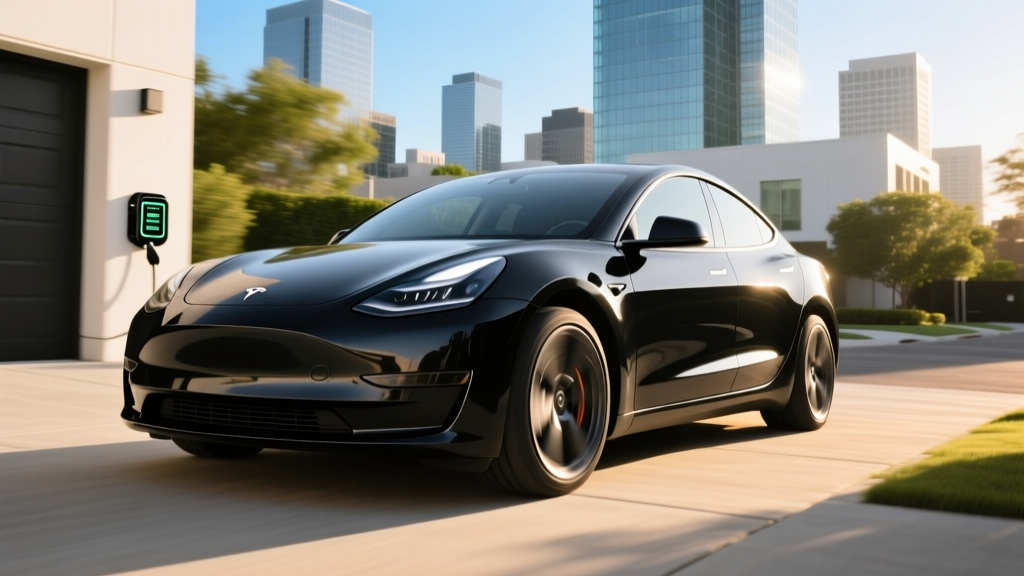
Quick Verdict: Is the 2018 Tesla Model S 100D Still Worth It in 2026?
The 2018 Tesla Model S 100D occupies a unique spot in the used EV market. With an EPA-estimated 335 miles of range, a 100 kWh battery pack, and access to Tesla's Supercharger network, it remains one of the most capable long-distance electric sedans you can buy secondhand. However, prospective buyers must weigh the aging interior, lack of modern heat-pump efficiency, and the reality of battery degradation against a used price that has fallen well below $30,000 in many markets.
This is not a car for someone chasing the latest tech — Tesla's 2026 Model S is a fundamentally different vehicle with a refreshed interior, yoke steering option, and 405-mile range. The 2018 100D is for the buyer who needs genuine cross-country range on a budget, values the Supercharger network, and understands the ownership calculus of an eight-year-old luxury EV.
| Spec | Value |
|---|---|
| EPA Range | 335 miles |
| Battery Capacity (usable) | ~98 kWh (100 kWh nominal), NMC chemistry |
| Drivetrain | Dual-motor AWD |
| Horsepower | ~518 hp (combined) |
| 0-60 mph | 4.2 seconds |
| DC Fast Charge (peak) | 120 kW (via CCS adapter or Supercharger) |
| Level 2 Charge Rate | 11.5 kW (48A) onboard |
| EPA Efficiency | 102 MPGe combined / 33 kWh/100mi |
| Cargo Volume | 26.3 cu ft (rear) + 5.3 cu ft (frunk) |
| Original MSRP | $94,000 (base) — $110,000+ as-tested |
| Typical Used Price (2026) | $22,000 – $32,000 |
| Battery Warranty (original) | 8 years / unlimited miles |
Real-World Range: What the 335-Mile EPA Sticker Actually Means
The 335-mile EPA estimate for the 2018 Model S 100D was class-leading when new and still holds up today. But as with every EV, the sticker is a starting point, not a guarantee.
- Mild weather, mixed driving (55-70 mph): 280–310 miles at 100% SoC (new battery). Expect 250–280 miles with 10-15% degradation.
- Highway at 75-80 mph: 240–270 miles. The Model S's large frontal area and older aero profile hurt efficiency at sustained high speed.
- Cold weather (below 32°F / 0°C): 200–240 miles. The 2018 Model S uses resistive cabin heating — no heat pump — which can consume 3-5 kW continuously in winter, directly cutting range by 20-35%.
- With battery degradation (5-8 years old): Most 100D packs show 8-15% capacity loss at this age. A pack that started at ~98 kWh usable may now deliver 83–90 kWh, reducing all of the above figures proportionally.
The critical variable for used buyers is battery State of Health (SoH). Before purchasing, request the car's energy screen or use third-party OBD-II tools (like Scan My Tesla with an OBDLink adapter) to read actual pack capacity. A 100D showing less than 85 kWh usable capacity should be priced accordingly or avoided.
According to fueleconomy.gov, the 2018 Model S 100D achieves 102 MPGe combined (33 kWh per 100 miles). Real-world efficiency tends to land between 30-38 kWh/100mi depending on speed, temperature, and terrain.
Charging Speed: Supercharger Access Is the 100D's Biggest Advantage
The 2018 Model S 100D uses Tesla's proprietary connector (pre-NACS standardization). In 2026, Tesla has opened Superchargers to other brands via NACS, and Tesla provides a CCS adapter for Model S owners who need access to Electrify America, EVgo, and other CCS networks. However, the native Supercharger experience remains the smoothest charging ecosystem available.
| Charging Level | Max Power | Speed / Time |
|---|---|---|
| Level 1 (120V, 12A) | ~1.4 kW | ~3-4 miles per hour |
| Level 2 (240V, 48A) | 11.5 kW | ~34 miles per hour; 0-100% in ~10 hours |
| DC Fast Charge (V2 Supercharger) | 120 kW peak | 10-80% in ~40-45 minutes |
| DC Fast Charge (V3 Supercharger) | ~120 kW (throttled by architecture) | 10-80% in ~38-43 minutes |
| DC Fast Charge (CCS adapter, 150 kW station) | ~120 kW peak | 10-80% in ~42-48 minutes |
Charging curve reality: The 2018 100D cannot take advantage of V3 Supercharger's 250 kW peak because its battery architecture predates the thermal management upgrades in the 2020+ Model S (Raven). Peak charge rate tops out around 120 kW and tapers significantly above 60% SoC. Expect the 60-80% portion alone to take 12-15 minutes. On a road trip, plan stops around 200-220 miles apart for comfortable 20-25 minute charges from ~15% to ~70%.
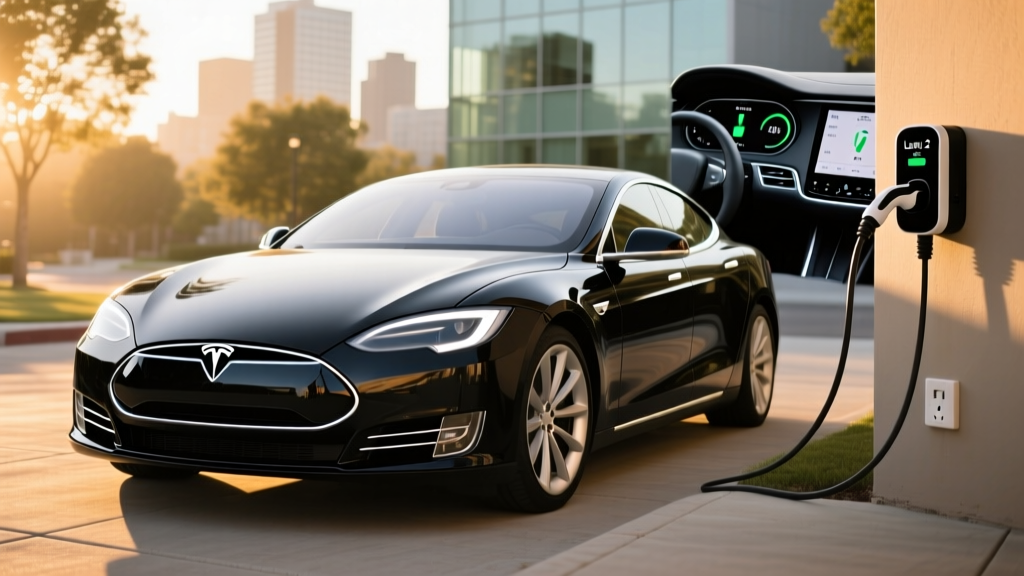
Home charging: The 48-amp onboard charger is a strong point. At 11.5 kW on a 60-amp circuit (NEMA 14-60 or hardwired Wall Connector), you recover roughly 34 miles per hour — enough to fully replenish overnight from any realistic daily drive. A Tesla Wall Connector (Gen 2 or Gen 3) is the recommended home solution.
Performance and Drivetrain: Dual-Motor AWD With Genuine Thrust
The 100D's dual-motor all-wheel-drive setup produces approximately 518 combined horsepower, launching the 4,900-pound sedan to 60 mph in 4.2 seconds. That's quick by any measure, though it's the "slow" variant compared to the P100D's Ludicrous-mode 2.5-second sprint.
The 100D prioritizes range over outright performance, and the tradeoff is sensible for most buyers. The air suspension (standard on 2018 Model S) provides adjustable ride height and a comfortable highway cruise, though used buyers should budget for potential air strut replacement — a known wear item at 80,000+ miles, costing $1,500-$2,500 per corner at independent shops.
Regenerative braking on the 2018 Model S is strong and predictable. Tesla's "Standard" and "Low" regen settings allow some customization, and one-pedal driving is practical in most conditions. Unlike newer Teslas (2021+), the 2018 model does not offer a user-selectable stop mode for creep, roll, or hold — it defaults to hold mode, which brings the car to a complete stop without brake pedal input.
Interior, Tech, and Cargo: Where Age Shows Most
The 2018 Model S interior is the car's most debated aspect. The minimalist dashboard centers on a 17-inch portrait touchscreen that controls nearly every vehicle function. In 2018, this felt futuristic. In 2026, it feels dated — the screen resolution, processor speed, and UI responsiveness lag behind both the refreshed Model S (2021+) and competitors like the Lucid Air or Mercedes EQS.
Infotainment: The 2018 model runs Tesla's MCU1 (Media Control Unit) hardware in most examples, though some late-2018 builds received MCU2. MCU1 is noticeably slower — map rendering stutters, the web browser is nearly unusable, and Netflix/YouTube streaming is limited. Tesla offered an MCU2 upgrade ($2,000-$2,500) that many original owners completed; check whether the used example you're considering has this upgrade. It dramatically improves daily usability.
Driver assistance: The 2018 Model S came with Tesla's Enhanced Autopilot hardware (HW2.5), which supports Traffic-Aware Cruise Control, Autosteer (lane centering), Auto Lane Change, and Summon. This is SAE Level 2 driver assistance — the driver must remain fully engaged with hands on the wheel and eyes on the road at all times. Full Self-Driving (FSD) capability was available as a software purchase, but even in its 2026 "Supervised" form, FSD remains Level 2 and requires constant driver oversight.
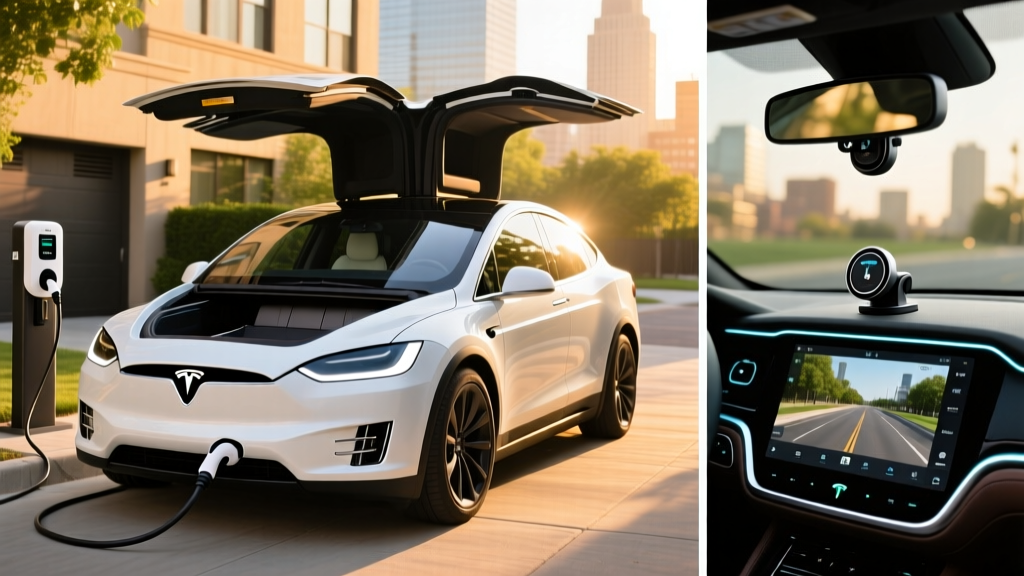
Cargo space: The Model S offers 26.3 cubic feet in the rear hatch area and 5.3 cubic feet in the front trunk (frunk), totaling 31.6 cubic feet. That's generous for a sedan and rivals many midsize SUVs. Rear legroom measures 35.4 inches — adequate but not limousine-like — and the low roofline means taller passengers may find headroom tight in back.
- 335-mile EPA range still competitive in 2026
- Tesla Supercharger network access — best public charging experience
- Over-the-air updates still adding features years after purchase
- Dual-motor AWD with strong all-weather traction
- Generous cargo space (31.6 cu ft total)
- Air suspension for adjustable ride height
- Used pricing has dropped to $22K-$32K — exceptional value per mile of range
- MCU1 infotainment is slow and outdated (unless upgraded to MCU2)
- No heat pump — resistive heating drains range in cold weather
- 120 kW max DC charge rate is slow vs. modern 250-350 kW EVs
- Air suspension struts are expensive wear items at this age
- 12V lead-acid battery is a known failure point (replace with lithium upgrade)
- No federal tax credit on used purchase from private party (limited used credit)
- Insurance costs remain elevated for Tesla vehicles
Pricing, Tax Credits, and Total Cost of Ownership
The 2018 Model S 100D originally started at $94,000 before options and delivery. Well-equipped examples with FSD, premium interior, and 21-inch wheels pushed past $115,000. In 2026, used 100D sedans typically trade between $22,000 and $32,000 depending on mileage, condition, battery health, and MCU upgrade status.
| Condition / Config | Typical Price Range |
|---|---|
| High mileage (90K+), MCU1, no FSD | $20,000 – $24,000 |
| Average (50-70K mi), MCU2 upgrade | $25,000 – $29,000 |
| Low mileage (<40K), MCU2, FSD transferred | $29,000 – $34,000 |
Federal Tax Credit on a Used 2018 Model S 100D
Under current IRS §25E used clean vehicle credit rules, you may qualify for up to $4,000 (30% of the sale price, capped at $4,000) if:
- You purchase from a licensed dealer (private-party sales do not qualify)
- The sale price is $25,000 or less
- Your modified adjusted gross income is below $75,000 (single), $112,500 (head of household), or $150,000 (joint)
- The vehicle is at least two model years old (the 2018 qualifies)
- You have not claimed the used EV credit in the prior three years
Important: The §30D new-vehicle credit does not apply to used purchases. The §25E used credit is the relevant provision. Many 100D examples priced above $25,000 will not qualify for the maximum $4,000 — the credit is 30% of sale price, so a $25,000 purchase nets the full $4,000, while a $20,000 purchase nets $4,000 (30% of $20K = $6,000, but capped at $4,000). Always confirm eligibility with a tax professional and review current IRS guidance before purchase.
Five-Year Ownership Cost Estimate
| Category | Estimated Cost |
|---|---|
| Purchase price (avg) | $27,000 |
| Electricity (home + Supercharger) | $3,800 – $5,200 |
| Insurance (5 years) | $9,000 – $13,000 |
| Maintenance (tires, cabin filter, wipers, brake fluid) | $2,500 – $4,000 |
| Potential repairs (air suspension, MCU, 12V battery) | $2,000 – $5,000 |
| Depreciation (5 years) | $8,000 – $12,000 |
| Total estimated 5-year cost | $52,300 – $66,200 |
Electricity costs assume a blend of home charging at $0.14/kWh and Supercharging at $0.30/kWh. Insurance is the wildcard — Tesla vehicles carry premiums 20-40% above comparable luxury sedans due to repair costs. Get quotes before committing.
Battery Health, Warranty, and Longevity
The 2018 Model S 100D uses an NMC (nickel manganese cobalt) lithium-ion battery pack with approximately 98 kWh usable capacity (100 kWh nominal). Tesla's battery management system includes a top and bottom buffer to protect against extreme SoC damage, but NMC chemistry is more sensitive to sustained high-SoC storage than LFP packs found in newer Standard Range Teslas.
Original warranty: Tesla provided an 8-year / unlimited-mile battery and drive unit warranty guaranteeing at least 70% capacity retention. For a 2018 model, this warranty expires in 2026 — meaning most examples are at or past warranty expiration. Some late-2018 builds may still have a few months of coverage remaining.
Degradation data: Industry data from fleet operators and owner surveys (including Tesla's own Impact Report) indicates that Model S/X 100 kWh packs typically lose 8-12% capacity in the first 100,000 miles, with the rate of degradation slowing after the initial 20,000-30,000 miles. Packs that were regularly Supercharged to 100% or stored at high SoC in hot climates may show 15%+ loss.
Battery replacement cost: A refurbished 100 kWh pack from Tesla costs $18,000-$22,000 installed as of 2026. Third-party options from EV battery recyclers range from $12,000-$16,000. This is a real risk that used buyers must budget for — though statistically, most packs outlast 200,000 miles before dropping below 70% capacity.
Ownership tips for battery longevity:
- Charge to 80-90% for daily use; reserve 100% charges for road trips
- Avoid letting the car sit at 100% SoC for more than a few hours
- Minimize DC fast charging when Level 2 is available
- Keep the car plugged in during extreme cold to allow the BMS to manage pack temperature
Who Should Buy the 2018 Model S 100D?
- You need 250+ real-world miles of range for frequent road trips
- You value Tesla Supercharger network access for cross-country travel
- You want a spacious, fast AWD sedan under $30,000
- You can charge at home (Level 2) and use Superchargers mainly for trips
- You're comfortable budgeting $2,000-$4,000/year for potential repairs on an aging luxury EV
- You live in a cold climate and need maximum winter range (consider a 2021+ model with heat pump)
- You want the latest infotainment and driver-assist hardware
- You prefer the security of a remaining factory warranty
- You primarily drive in the city — a smaller, cheaper EV like a used Model 3 or Bolt EUV offers better value
The 2018 Model S 100D's strongest competitors in the used market include the 2019-2020 Tesla Model 3 Long Range AWD (better efficiency, newer tech, less space), the 2018-2019 Jaguar I-PACE (more engaging to drive, weaker charging infrastructure), and the 2020+ Porsche Taycan 4S (superior driving dynamics, much higher used price, less range). For pure range-per-dollar on the used market, the 100D is difficult to beat.
Frequently Asked Questions
What is the real-world range of the 2018 Model S 100D?
Expect 250-310 miles in mild conditions depending on speed and battery health. Highway driving at 75 mph yields roughly 240-270 miles. Cold weather can drop range to 200-240 miles due to the resistive heating system. Battery degradation of 8-15% at this age further reduces these figures.
How fast does the 2018 Model S 100D charge?
On a V2 Supercharger or CCS fast charger, it peaks at approximately 120 kW, achieving a 10-80% charge in roughly 40-45 minutes. At home on a 240V/48A Level 2 charger, it adds about 34 miles per hour and fully charges in approximately 10 hours.
Does the 2018 Model S 100D qualify for the federal EV tax credit?
Not the $7,500 new-vehicle credit (§30D). However, it may qualify for the §25E used clean vehicle credit of up to $4,000 if purchased from a licensed dealer for $25,000 or less, and the buyer meets income requirements. Private-party purchases do not qualify.
Is the 2018 Model S 100D worth buying vs. a used Model 3?
It depends on your priorities. The Model S 100D offers more range (335 vs. 310 EPA miles for the 2018 Model 3 LR), significantly more cargo space, air suspension, and a larger cabin. The Model 3 offers newer hardware, a heat pump (2021+), better efficiency, lower insurance costs, and a more responsive infotainment system. For families and road trippers, the S wins on space and comfort. For daily commuters, the 3 is more practical.
What are the biggest risks of buying a used 2018 Model S 100D?
The primary risks are battery degradation (potentially requiring an $18,000+ replacement), air suspension failure ($1,500-$2,500 per corner), MCU1 sluggishness (upgrade costs ~$2,000 if not already done), and the 12V lead-acid battery failure (common on all Teslas of this era — a $300-$500 lithium 12V replacement is a smart first upgrade). The original 8-year battery warranty is expiring or expired on all 2018 examples.
Can I use non-Tesla chargers with the 2018 Model S 100D?
Yes, with Tesla's CCS adapter (sold separately, approximately $250). This allows access to Electrify America, EVgo, and other CCS-equipped networks. Without the adapter, you're limited to Tesla Superchargers and Destination Chargers, plus J1772 Level 2 stations with Tesla's included J1772 adapter.