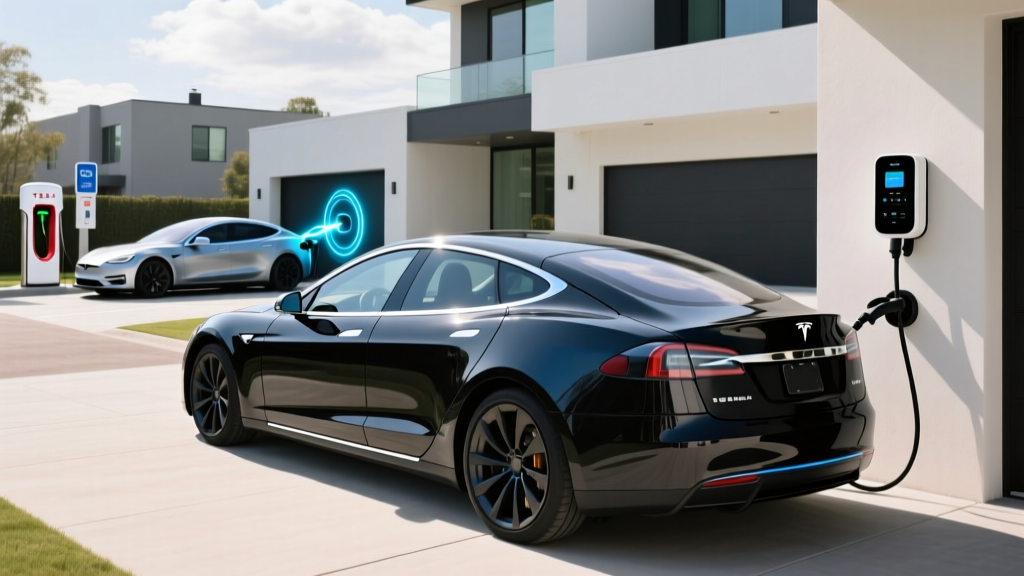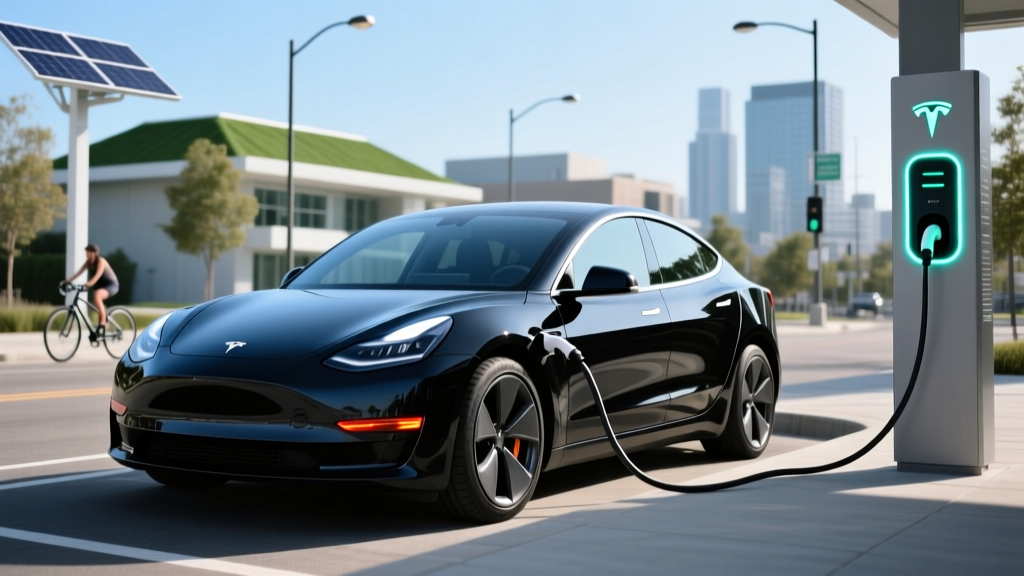
The 2018 Tesla Model 3 Performance was the car that proved a mass-market electric sedan could outrun a Porsche while undercutting it on price. Nearly eight years later, it remains one of the most sought-after vehicles on the used EV market. If you're researching a 2018 Model 3 Performance in 2026, you're likely weighing its still-impressive performance credentials against battery degradation realities, outdated charging hardware by modern standards, and a rapidly shifting used-EV landscape. This review breaks down every number that matters.
2018 Model 3 Performance: Key Specs at a Glance
| Spec | Value |
|---|---|
| EPA Range (original) | 310 miles |
| Battery Capacity (usable) | ~75 kWh (NMC) |
| Drivetrain | Dual-Motor AWD |
| Horsepower | ~450 hp (combined) |
| 0–60 mph | 3.3 seconds |
| Top Speed | 155 mph |
| Max DC Fast Charge | ~145 kW peak (V2 Supercharger) |
| 10–80% DC Charge Time | ~35–40 minutes |
| Level 2 Home Charge Rate | 11.5 kW (~44 mi/hr) |
| Efficiency (EPA) | 120 MPGe combined / 28 kWh/100 mi |
| Cargo Volume | 15 cu ft trunk + 2.5 cu ft frunk (17.5 total) |
| Rear Legroom | 35.2 inches |
| Battery Warranty (original) | 8 years / 120,000 miles (70% retention) |
| Original Base MSRP | $64,000 (before incentives) |
Real-World Range: What 310 EPA Miles Actually Means in 2026
Real-World Expectation (2026, ~80,000–120,000 mi odometer): 240–275 miles typical; 200–230 miles in freezing weather at highway speeds
The original EPA rating of 310 miles assumed a brand-new battery. A 2018 Model 3 Performance you'd buy today has likely seen 7–12% degradation based on typical Tesla battery degradation curves and third-party fleet data. That puts realistic usable range at roughly 270–285 miles on a full charge if the pack is in good health.
But EPA ratings always overstate highway range. At 75 mph in moderate temperatures (60–75°F), expect 250–265 miles from a healthy pack. Push it to 80+ mph or drive into headwinds, and 230 miles is a safer planning number. In sub-freezing conditions (below 32°F), the 2018 Model 3 lacks a heat pump — it uses resistive cabin heating, which is energy-hungry. Cold-weather highway range can drop to 200–220 miles, and you'll lose additional range to battery preconditioning overhead.
One advantage of the NMC chemistry in the 2018 Performance: energy density is high, giving you more range per pound than the LFP packs Tesla later introduced in Standard Range models. The trade-off is that NMC batteries degrade slightly faster if routinely charged to 100%. Tesla recommends daily charging to 80–90% for longevity, which effectively gives you a daily-use range of about 200–225 miles from a healthy pack.
Charging Speed: V2 Supercharger Era, Not V3/V4
The 2018 Model 3 Performance predates Tesla's V3 Supercharger architecture (which debuted in 2019 with the refreshed Model 3). Its peak DC fast-charge rate tops out around 145 kW, even when connected to a 250 kW V3 stall. The car's battery management system and thermal hardware simply can't accept the higher charge rates of newer models.
| Charging Level | Power | Speed / Time |
|---|---|---|
| Level 1 (120V outlet) | ~1.4 kW | ~5 miles per hour |
| Level 2 (240V / 48A Wall Connector) | 11.5 kW | ~44 miles per hour |
| Level 2 (240V / 32A mobile connector) | 7.7 kW | ~30 miles per hour |
| DC Fast (V2 Supercharger, 150 kW) | ~145 kW peak | 10–80% in ~35–40 min |
| DC Fast (V3 Supercharger, 250 kW) | ~145 kW peak (car-limited) | 10–80% in ~35–40 min |
| DC Fast (CCS adapter, Electrify America) | ~120–145 kW peak | 10–80% in ~38–42 min |
The charge curve matters here. The 2018 Performance hits its ~145 kW peak only between roughly 10–30% State of Charge. By 50% SoC, it tapers to around 90 kW, and above 70% it drops further to 40–50 kW. That taper is why the 10–80% time stretches to 35–40 minutes — noticeably slower than a 2024 Model 3 Highland Performance, which can do 10–80% in about 25 minutes on a V3 stall.
For home charging, the 2018 Model 3 supports up to 48 amps on a hardwired Level 2 Tesla Wall Connector, delivering 11.5 kW. That's excellent — you'll add roughly 44 miles of range per hour, or fully replenish the 75 kWh pack in about 7–8 hours overnight. If you're using the Gen 2 Mobile Connector on a NEMA 14-50 outlet (32A), expect about 30 miles per hour. A professional electrician install for a Wall Connector typically runs $500–$1,500 depending on panel proximity and local permitting.
NACS connector note: The 2018 Model 3 came with Tesla's proprietary connector (now designated NACS). In 2026, this is an advantage — NACS has become the dominant North American standard, with Ford, GM, Rivian, Hyundai, and others adopting it. You won't need an adapter for Tesla Superchargers. However, for non-Tesla DC fast-charging networks using CCS1 (like Electrify America), you'll need a Tesla CCS adapter (~$175–$250).
Performance That Still Holds Up
This is where the 2018 Model 3 Performance earns its name. The dual-motor AWD powertrain — a permanent-magnet motor up front and an induction motor in the rear — delivers roughly 450 combined horsepower and a factory-verified 3.3-second 0–60 mph time. In 2026, that still outpaces most new EVs in its price range and embarrasses nearly any gas-powered sedan you'd cross-shop.
The Performance trim included Tesla's Track Mode (introduced via OTA update), which allows adjustable front/rear torque distribution, increased regenerative braking, and active thermal management for sustained track use. The lowered sport suspension, performance brakes (larger rotors, red calipers), and 20-inch Performance wheels were all standard.
Driving dynamics remain sharp. The low center of gravity from the floor-mounted battery pack, combined with the relatively light weight (4,251 lbs — light for an EV), gives it genuinely sporty handling that heavier competitors can't match. Steering is quick but somewhat numb — a common Tesla criticism — and the regenerative braking is strong enough for true one-pedal driving in most conditions.
Interior, Tech, and Daily Usability
The 2018 Model 3 interior was polarizing at launch and hasn't aged as gracefully as the powertrain. The minimalist cabin centers on a single 15-inch touchscreen that controls everything — there are no physical buttons, no instrument cluster, and no heads-up display. Speed and navigation info appear in the upper-left corner of the screen.
Infotainment: The 2018 hardware (MCU2, or Media Control Unit 2) supports Netflix, YouTube, arcade games, and Spotify — all streamed through the car's LTE connection. Apple CarPlay and Android Auto are not supported, which remains a dealbreaker for some buyers. Navigation is Tesla's own system, which is excellent for EV route planning with integrated Supercharger stops and battery preconditioning.
Driver Assistance: The 2018 Model 3 came with Tesla's Autopilot hardware suite (HW2.5 or HW3.0 depending on build date — cars built after April 2019 got the HW3.0 retrofit if originally equipped with HW2.5). Basic Autopilot (Traffic-Aware Cruise Control and Autosteer) is standard. Full Self-Driving (FSD) capability was a $5,000–$8,000 add-on depending on when it was purchased.
Cargo and passenger space: The trunk offers 15 cubic feet — competitive with midsize sedans — plus a 2.5 cu ft front trunk (frunk) for charging cables or small bags. Rear legroom is 35.2 inches, which is tight for tall passengers on long trips. The rear seat is best suited for two adults; the middle position is cramped. The glass roof creates an airy cabin but offers no shade — a notable drawback in hot climates, and aftermarket sunshades are a common owner purchase.
Used Pricing and Federal Tax Credit Reality
The 2018 Model 3 Performance originally stickered at approximately $64,000 (before the $7,500 federal credit that was still available for Tesla in early 2018). In 2026, used examples typically trade between $22,000 and $32,000, depending on mileage, condition, battery health, FSD transferability, and regional demand.
| Cost Factor | Amount |
|---|---|
| Used Market Price (typical) | $22,000–$32,000 |
| Federal Used EV Credit (§25E) | Up to $4,000 (30% of sale price, max $4,000) |
| Effective Price After Credit | ~$18,000–$28,000 |
| Federal New EV Credit (§30D) | Not applicable — used vehicle |
Tax credit specifics: The 2018 Model 3 Performance does not qualify for the §30D new vehicle credit — it's a used car. However, it may qualify for the §25E Used Clean Vehicle Credit, which provides 30% of the sale price up to a maximum of $4,000. To qualify:
- Sale price must be $25,000 or less — this is the hard cap for §25E eligibility. A $28,000 listing won't qualify regardless of your income.
- Buyer income caps: AGI must not exceed $75,000 (single), $112,500 (head of household), or $150,000 (joint filers).
- Dealer requirement: The sale must be processed through a licensed dealer registered with the IRS — private-party sales don't qualify.
- Vehicle age: Must be at least two model years old (easily satisfied for a 2018).
- First transfer since August 16, 2022: The credit applies only to the first qualifying resale after that date. If the car has already been sold under §25E, it may still qualify on subsequent sales — verify with your tax professional.
- Point-of-sale transfer: As of 2024, the credit can be transferred to the dealer at point of sale, reducing your purchase price directly.
This means the sweet spot for maximizing the credit is finding a 2018 Performance listed at or below $25,000 through a registered dealer. At $24,000, you'd get $4,000 back (30% would be $7,200, but the cap is $4,000), bringing your effective cost to $20,000. That's exceptional value for a 3.3-second AWD sedan. Always confirm eligibility with a tax professional — IRS rules are subject to change, and dealer registration status varies.
Battery Health, Warranty, and Long-Term Ownership
The 2018 Model 3 Performance uses a ~75 kWh (usable) NMC (nickel-manganese-cobalt) battery pack. NMC offers superior energy density compared to the LFP (lithium iron phosphate) chemistry Tesla adopted for later Standard Range models, but it's more sensitive to sustained high-State-of-Charge storage and extreme heat.
Original battery warranty: 8 years / 120,000 miles, whichever comes first, with a guaranteed minimum of 70% capacity retention. For a 2018 model, this warranty is either expired or expiring very soon in 2026 — a critical ownership consideration.
Degradation reality: Based on fleet data aggregated by sources like fueleconomy.gov and Tesla owner surveys, a typical 2018 Model 3 Performance at 80,000–120,000 miles will show 8–14% degradation. That translates to roughly 265–285 miles of range at 100% SoC, down from the original 310. Units that were frequently DC fast-charged or routinely charged to 100% may show higher degradation.
Out-of-warranty battery replacement is the financial risk here. A replacement pack for a Model 3 Long Range/Performance currently runs $12,000–$16,000 including labor at Tesla Service Centers, though third-party shops are beginning to offer refurbished pack swaps for $8,000–$12,000. Before purchasing, request a battery health reading from the car's Service Mode (accessible through the touchscreen) or have a Tesla Service Center perform a pre-purchase battery diagnostic.
Other maintenance considerations: The 2018 Model 3's drive unit and suspension components are generally robust, but at 80,000+ miles, expect to budget for control arm replacements ($800–$1,500), cabin air filter service ($150–$250), brake fluid flush ($200), and potentially tire replacement — the 20-inch Performance wheels wear through tires quickly, with a set of Michelin Pilot Sport 4S or equivalent running $1,200–$1,800.
2018 Model 3 Performance vs. the Competition
How does it stack up against other used EVs in the $22K–$32K range?
| Spec | 2018 Tesla Model 3 Perf. | 2019 BMW i3s (120 Ah) | 2020 Polestar 2 LRDM |
|---|---|---|---|
| EPA Range | 310 mi | 153 mi | 233 mi |
| 0–60 mph | 3.3 sec | 6.9 sec | 4.5 sec |
| DC Fast Charge Peak | ~145 kW | 50 kW | 150 kW |
| Battery (usable) | 75 kWh NMC | 37.9 kWh NMC | 75 kWh NMC |
| Used Price (2026) | $22K–$32K | $18K–$24K | $22K–$28K |
| Supercharger Access | Native NACS | CCS (no SC) | CCS (adapter for SC) |
The Model 3 Performance wins on range, acceleration, and charging infrastructure access. The Polestar 2 is a credible alternative if you prefer a more traditional interior with physical controls and Google-based infotainment, but it's heavier, slower, and offers less range. The BMW i3s is a fun city car but its limited range and slow DC charging make it impractical for road trips.
Pros
- 3.3-second 0–60 still elite for the price
- NACS connector — native Supercharger access
- OTA updates still adding features in 2026
- Low running costs (~$0.04–$0.06/mi on home charging)
- Strong resale demand and parts availability
- Track Mode for enthusiast driving
Cons
- No heat pump — poor cold-weather efficiency
- Battery warranty expired or expiring
- Slower DC charging vs. 2023+ models
- No Apple CarPlay / Android Auto
- Tight rear seat and no physical controls
- Glass roof lacks shade; cabin heat soak in summer
- Insurance premiums remain elevated ($1,800–$2,800/yr)
Who Should Buy the 2018 Model 3 Performance?
- You want sub-4-second acceleration on a sub-$30K budget
- You have reliable home Level 2 charging access
- You road-trip along Supercharger corridors regularly
- You value OTA software updates and a strong owner community
- You regularly drive in extreme cold (no heat pump is a real penalty)
- You need spacious rear seating for adults or car seats
- You want the latest DC fast-charge speeds (look at 2023+ Highland or Ioniq 5)
- You're uncomfortable with an expired or near-expired battery warranty
The 2018 Model 3 Performance is best suited for an enthusiast driver or performance-minded commuter who has home charging and wants maximum acceleration per dollar. It's a compelling daily driver in moderate climates and a genuinely thrilling car when you want it to be. It's less ideal as a family hauler or cold-climate workhorse.
Frequently Asked Questions
What is the real-world range of a 2018 Model 3 Performance in 2026?
Expect 240–275 miles in moderate conditions from a typical used example with 8–12% battery degradation. Highway driving at 75+ mph reduces this to 230–255 miles. In freezing temperatures, plan for 200–225 miles due to the lack of a heat pump and resistive cabin heating.
How fast does the 2018 Model 3 Performance charge?
On DC fast charging, it peaks at approximately 145 kW, achieving a 10–80% charge in about 35–40 minutes. At home on a 48A Level 2 Wall Connector (11.5 kW), it adds roughly 44 miles of range per hour, or a full charge in 7–8 hours. It cannot accept the full 250 kW from V3 Superchargers due to older onboard charge hardware.
Does the 2018 Model 3 Performance qualify for any federal tax credit?
Not the §30D new vehicle credit — it's a used car. However, it may qualify for the §25E Used Clean Vehicle Credit of up to $4,000, provided the sale price is $25,000 or less, buyer income falls within caps ($75K single / $150K joint), and the sale is through an IRS-registered dealer. Consult a tax professional for your specific situation.
Is the 2018 Model 3 Performance worth buying over newer EVs?
For pure performance-per-dollar, it's hard to beat at $22K–$32K used. The 3.3-second 0–60, 270+ mile real-world range, and Supercharger access are compelling. However, you sacrifice modern DC charging speed, a heat pump, current battery warranty coverage, and some interior refinement. If charging speed and cold-weather efficiency are priorities, a 2023+ model or a Hyundai Ioniq 5 may serve you better.
How much does it cost to insure a 2018 Model 3 Performance?
Insurance premiums for the Model 3 Performance remain elevated due to repair costs and performance classification. Expect $1,800–$2,800 annually depending on your age, driving record, location, and coverage level. Shop quotes from Tesla Insurance, Geico, Progressive, and State Farm — rates vary significantly by provider.
Does Autopilot or FSD transfer with a used 2018 Model 3?
Basic Autopilot (Traffic-Aware Cruise Control and Autosteer) is permanently tied to the vehicle. Full Self-Driving (FSD) capability transfers only if the original owner purchased it outright and it wasn't revoked. Tesla has occasionally revoked FSD on resale. Verify FSD status in the car's Software menu before purchasing — don't rely solely on the listing description.