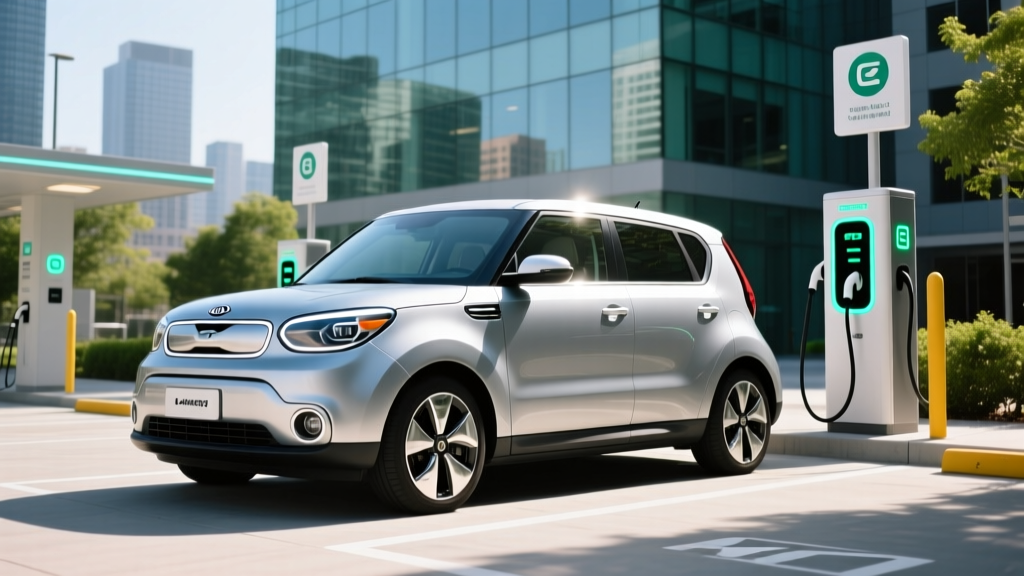
The phrase "2018 Kia EV" almost always points to one specific vehicle: the first-generation Kia Soul EV. Before the EV6 arrived in 2022 and the Niro EV expanded Kia's lineup, the boxy, love-it-or-hate-it Soul EV was the brand's only battery-electric offering in the United States. In 2018, it soldiered on with the same 27 kWh usable battery and 93-mile EPA range it launched with in 2015 — specs that felt modest then and look dated now.
So why review a 2018 model in 2026? Because the used EV market is flooded with early-generation cars priced between $7,000 and $13,000, and buyers shopping for an affordable commuter need clear-eyed data, not nostalgia. This review breaks down exactly what the 2018 Soul EV delivers — and where it falls short — for today's buyers.
Range, Battery, and Real-World Expectations
The 2018 Kia Soul EV uses a 30 kWh gross / 27 kWh usable lithium-ion battery pack with NMC (nickel-manganese-cobalt) cell chemistry. Kia rated it at 93 miles EPA combined, with a window sticker breakdown of 108 city / 80 highway miles.
EPA sticker: 93 miles combined
Real-world highway (65-75 mph): Expect 70–80 miles
Real-world city/suburban: 90–100 miles possible with regen use
Cold weather (below 32°F): 55–70 miles — the Soul EV lacks a heat pump, so resistive cabin heating can slash range by 25–35% in winter.
Battery degradation factor: A 2018 model in 2026 is 8 years old. Expect 8–15% capacity loss depending on climate and charging habits, potentially reducing real range to 60–80 miles even in mild conditions. Always check State of Health (SoH) via an OBD-II reader and the SoulEV app before purchasing.
The Soul EV's thermal management system is passive air-cooling — no liquid cooling loop. This means sustained highway driving in hot climates or repeated DC fast-charging sessions will heat-soak the pack and throttle charge speeds. If you live in Phoenix or Las Vegas, this is a meaningful concern.
| Spec | Value |
|---|---|
| EPA Range | 93 miles (combined) |
| Battery (usable) | 27 kWh, NMC chemistry |
| Efficiency | 108 MPGe combined (31 kWh/100 mi) |
| Motor | 81.4 kW (109 hp), 210 lb-ft torque |
| Drivetrain | FWD (single motor, front axle) |
| 0–60 mph | ~11.2 seconds |
| Top Speed | 90 mph (electronically limited) |
| DC Fast Charge (max) | 50 kW (CHAdeMO) |
| 10–80% DC Time | ~33 minutes |
| Level 2 AC Charge | 6.6 kW onboard charger (~25 mi/hr) |
| Level 1 (120V) | ~1.4 kW (~5 mi/hr) |
| Cargo Volume | 24.4 cu ft (rear seats up) / 49.5 cu ft (folded) |
| Curb Weight | 3,294 lbs |
Charging: Slow by Modern Standards
Charging is the 2018 Soul EV's most significant limitation for anyone considering it as more than a pure city commuter.
| Level | Power | Miles Added per Hour | Notes |
|---|---|---|---|
| Level 1 (120V household) | ~1.4 kW | ~5 mi/hr | Full charge: ~20+ hours |
| Level 2 (240V home/public) | 6.6 kW | ~25 mi/hr | Full charge: ~4.5 hours |
| DC Fast (CHAdeMO) | 50 kW peak | N/A (time-based) | 10–80% in ~33 min |
The CHAdeMO problem: The 2018 Soul EV uses the CHAdeMO DC fast-charging connector, which has been largely abandoned in the U.S. market. As of 2026, the North American Charging Standard (NACS) dominates Tesla Superchargers, and CCS1 covers most Electrify America, EVgo, and ChargePoint stations. CHAdeMO stalls still exist — primarily at older Nissan-friendly locations — but the network is shrinking. Plan your road trips carefully, or accept that DC fast charging may be impractical in many areas.
The 50 kW peak charge rate is also a hard ceiling, not a sustained rate. The charge curve tapers noticeably above 60% State of Charge (SoC), and the air-cooled battery will further reduce speeds if the pack is warm. In real-world testing, expect 10–80% to take closer to 35–40 minutes on a warm day or after highway driving.
For home charging, the 6.6 kW onboard charger is adequate. A standard Level 2 home station (32A or 40A circuit) will fully replenish the small battery overnight in about 4.5 hours — reasonable for a commuter car that returns home each evening.
Performance and Driving Impressions
The Soul EV's single front-mounted motor produces 109 horsepower and 210 lb-ft of torque. The instant torque delivery makes it feel surprisingly punchy from stoplights up to about 35 mph, but the 11.2-second 0–60 time reveals its limits when merging onto highways or climbing grades.
The 3,294-lb curb weight (about 500 lbs heavier than the gas Soul) gives it a planted feel around town, and the low center of gravity from the under-floor battery reduces body roll. Ride quality is firm but compliant. Steering is light and numb — typical of the era — but perfectly adequate for urban driving.
Regenerative braking is adjustable via steering-wheel paddles (three levels) and is strong enough at Level 3 for near one-pedal driving in city traffic. However, it does not bring the car to a complete stop, so you'll still need the friction brake pedal at lights.
Interior, Tech, and Cargo
The Soul's iconic boxy shape translates to genuinely useful interior space. Headroom is exceptional front and rear (39.5 in. front / 39.1 in. rear), and rear legroom measures a generous 38.0 inches. The flat floor (no transmission tunnel) makes the middle rear seat actually usable for adults.
Cargo volume stands at 24.4 cubic feet behind the rear seats and 49.5 cubic feet with the 60/40 split rear seats folded. There is no front trunk (frunk) — the space under the hood is occupied by the power electronics and the onboard charger.
Infotainment: The 2018 model features an 8-inch touchscreen with navigation, Apple CarPlay, Android Auto, and Kia's UVO connected services. It also includes a unique EV-specific display showing energy flow, charge scheduling, and nearby charging stations. The system is dated by 2026 standards — small screen, resistive-touch feel, slow map rendering — but it remains functional.
Driver assists: The Soul EV comes with a basic suite: rearview camera, rear parking sensors, and blind-spot monitoring with rear cross-traffic alert. There is no adaptive cruise control, no lane-keeping assist, and no automatic emergency braking — features that became common even in economy cars by 2020. This is a pre-ADAS-era vehicle.
Unique feature: The Soul EV includes a charge-port door indicator light and a cabin pre-conditioning system that can heat or cool the interior while plugged in — a valuable feature for preserving range in extreme weather.
Pricing, Tax Credits, and Used Market Value
The 2018 Kia Soul EV was offered in two trims when new:
- Soul EV (base): MSRP ~$34,600 (before incentives)
- Soul EV+: MSRP ~$36,100 (added leather seats, LED fog lights, upgraded interior trim)
As a used vehicle in 2026, expect to pay between $7,500 and $13,000 depending on mileage, condition, battery SoH, and region. Examples with under 40,000 miles and verified battery health command the top of that range.
As a used EV purchased from a dealer in 2026, the 2018 Soul EV may qualify for the §25E Used Clean Vehicle Credit — up to $4,000 or 30% of the sale price, whichever is less. Key requirements per IRS guidelines:
- Sale price must be $25,000 or less (most Soul EVs qualify)
- Buyer income caps: $75,000 single / $112,500 head of household / $150,000 joint
- Must purchase from a licensed dealer (private-party sales excluded)
- Vehicle must be at least 2 model years old (2018 qualifies)
- Credit can be transferred to the dealer as a point-of-sale discount
On a $10,000 Soul EV purchase, the 30% calculation yields $3,000 — bringing the effective price to roughly $7,000 for qualifying buyers. That makes it one of the cheapest ways into EV ownership in 2026.
Battery Warranty and Longevity
Kia originally backed the Soul EV's battery with a 10-year / 100,000-mile warranty (whichever comes first) against capacity loss below approximately 70% of original capacity. The powertrain (motor, reduction gear, onboard charger) carries the same 10/100,000 coverage.
For a 2018 model in 2026, this warranty may still have 2 years or significant mileage remaining — but only if the vehicle has a clean title, has not been salvaged, and has been maintained per Kia's schedule. Critical: Request the full service history and have a Kia dealer run a battery diagnostic before purchase. The original 10/100,000 warranty is transferable to subsequent owners.
NMC chemistry in an air-cooled pack will degrade faster than liquid-cooled alternatives, especially in hot climates or with frequent DC fast-charging. Budget for potential battery replacement (estimated $5,000–$8,000 from a Kia dealer) if you plan to keep the vehicle long-term past the warranty window.
Who Should Buy the 2018 Kia Soul EV?
- Single commuters with a sub-60-mile round trip
- Urban and suburban drivers with home Level 2 charging
- Second-car households needing a cheap, zero-tailpipe-emission runabout
- Buyers who value cargo space and upright seating over speed and range
- Budget-conscious shoppers wanting EV ownership under $10,000 (after credit)
- You need more than 80 miles of reliable daily range
- You live in a region with harsh winters (range loss is severe)
- You plan to road-trip or drive highways regularly
- You need modern ADAS features (AEB, lane-keep, ACC)
- CHAdeMO charging infrastructure is sparse in your area
2018 Soul EV vs. Used Alternatives
| Model | EPA Range | DC Charge | Connector | Used Price (2026) |
|---|---|---|---|---|
| 2018 Kia Soul EV | 93 mi | 50 kW | CHAdeMO | $7.5K–$13K |
| 2018 Nissan Leaf (30 kWh) | 107 mi | 50 kW | CHAdeMO | $7K–$12K |
| 2018 Nissan Leaf (40 kWh) | 151 mi | 50 kW | CHAdeMO | $10K–$16K |
| 2018 VW e-Golf | 125 mi | 50 kW | CCS1 | $10K–$15K |
| 2018 Chevy Bolt EV | 238 mi | 55 kW | CCS1 | $12K–$18K |
| 2018 BMW i3 (94 Ah) | 114 mi | 50 kW | CCS1 | $11K–$17K |
The Soul EV's range is the lowest in this group. The 2018 Chevy Bolt EV is the clear winner for range and usability, but costs $3,000–$5,000 more used. The VW e-Golf offers a more refined driving experience and CCS1 compatibility at a moderate price premium. If cargo space and headroom are priorities, the Soul EV remains unique — no competitor matches its boxy utility at this price point.
Final Verdict
The 2018 Kia Soul EV is a niche vehicle in 2026: a short-range, slow-charging, CHAdeMO-equipped commuter that makes sense only for specific buyers with specific needs. If your daily drive is under 50 miles round-trip, you can charge at home, you live in a temperate climate, and you want the cheapest possible entry into EV ownership — the Soul EV delivers. Its cargo space, comfortable ride, and Kia's transferable 10-year battery warranty are genuine strengths.
But if you need highway capability, road-trip flexibility, modern safety tech, or access to the growing CCS/NACS charging networks, spend the extra $3,000–$5,000 for a used 2018 Chevy Bolt EV or 2018 VW e-Golf. The Soul EV's era has passed — but for the right buyer at the right price, it still has a role to play.
- EPA Fuel Economy — 2018 Kia Soul EV (fueleconomy.gov)
- IRS §25E Used Clean Vehicle Credit (irs.gov)
- Kia Soul EV Information (kia.com)
Frequently Asked Questions
What is the real-world range of the 2018 Kia Soul EV?
The EPA rates it at 93 miles combined, but expect 70–80 miles on the highway and 55–70 miles in cold weather. An 8-year-old battery with degradation may deliver only 60–80 miles in mixed driving. Always verify battery State of Health before purchasing.
How fast does the 2018 Soul EV charge?
At home on a Level 2 (240V) charger, it adds about 25 miles per hour (6.6 kW), fully charging in roughly 4.5 hours. On a DC fast charger (CHAdeMO, 50 kW peak), it charges from 10–80% in approximately 33 minutes, though real-world speeds may be slower due to the air-cooled battery.
Does the 2018 Kia Soul EV qualify for any tax credit?
Not the §30D new-vehicle credit. However, it may qualify for the §25E Used Clean Vehicle Credit — up to $4,000 or 30% of the sale price (whichever is less) — if purchased from a licensed dealer at or below $25,000, and if the buyer meets IRS income caps ($75K single / $150K joint). Consult a tax professional for eligibility.
Is the 2018 Soul EV worth buying vs. a used Chevy Bolt or Nissan Leaf?
It depends on your priorities. The Bolt EV offers 238 miles of range and CCS1 charging for $3K–$5K more. The Leaf (40 kWh) gives 151 miles but shares the CHAdeMO limitation. The Soul EV wins on cargo space, headroom, and rock-bottom used pricing, but loses on range and charging infrastructure.
What connector does the 2018 Soul EV use, and is it a problem?
It uses CHAdeMO for DC fast charging and J1772 for Level 1/Level 2 AC charging. CHAdeMO is a declining standard in the U.S. — most new public DC fast chargers use CCS1 or NACS. You can still find CHAdeMO stalls, but availability is shrinking, which limits road-trip practicality.
How long will the battery last?
Kia's original 10-year/100,000-mile battery warranty may still cover a 2018 model in 2026. NMC chemistry in an air-cooled pack degrades faster than liquid-cooled alternatives, especially in hot climates. Expect 85–92% capacity retention at 8 years under moderate use. Replacement costs an estimated $5,000–$8,000.