Quick Verdict: Still a Smart Used EV Buy in 2026
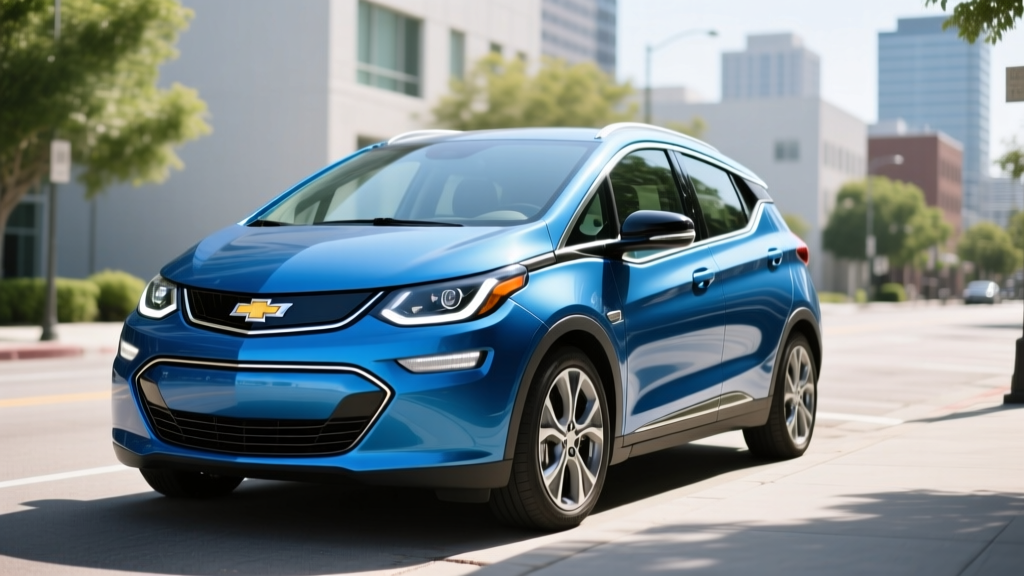
The 2018 Chevrolet Bolt EV remains one of the best-value used electric vehicles on the market eight years after its debut. With an EPA-rated 238 miles of range from a 60 kWh lithium-ion battery, it outclassed nearly every non-Tesla EV in its era and still holds up for daily commuting, errands, and moderate road trips. On the used market in 2026, expect to pay between $12,000 and $18,000 depending on mileage and condition — a fraction of what a new EV costs, with plenty of range for most drivers.
However, the 2018 Bolt's DC fast-charging speed is its Achilles' heel by modern standards. Peaking at just 50 kW, it charges far slower than today's 150–350 kW EVs. If your routine includes frequent long highway trips, this is a meaningful limitation. For commuters with home Level 2 charging, it's a non-issue.
| Spec | 2018 Chevy Bolt EV |
|---|---|
| EPA Range | 238 miles |
| Battery (Usable) | 60 kWh (NMC lithium-ion, LG Chem) |
| Motor | 150 kW (200 hp), FWD |
| 0–60 mph | 6.5 seconds |
| Max DC Fast Charge | ~50 kW (CCS1) |
| Level 2 Charge Rate | 7.2 kW (25 miles/hr) |
| MPGe (Combined) | 119 MPGe |
| Cargo Volume | 16.9 cu ft (rear seats up) / 56.6 cu ft (folded) |
| Original MSRP | $36,620 (LT) / $43,220 (Premier) |
| Used Price (2026 est.) | $12,000 – $18,000 |
| Battery Warranty | 8 years / 100,000 miles (60% capacity retention) |
Real-World Range: What to Actually Expect
Real-World Highway (70 mph, moderate weather): ~200–215 miles
Real-World City/Commuting: ~225–240 miles (regen braking helps)
Cold Weather (below 32°F): ~165–190 miles (30–35% reduction)
Hot Weather (A/C heavy, above 90°F): ~210–220 miles
The 2018 Bolt EV's 60 kWh NMC (nickel-manganese-cobalt) battery pack, supplied by LG Chem, was class-leading when new. According to fueleconomy.gov, the combined efficiency rating is 119 MPGe (28 kWh/100 mi), which is solid even by 2026 standards.
In practice, the Bolt rewards city and suburban driving. Its aggressive regenerative braking — accessible via the "L" mode shifter position and the steering-wheel regen paddle — enables near one-pedal driving and recaptures significant energy in stop-and-go traffic. Highway driving at 75+ mph erodes range faster, as the Bolt's upright hatchback shape creates more aerodynamic drag than sleeker sedans.
The critical range factor for used Bolt shoppers is battery degradation. Eight-year-old NMC packs typically retain 85–92% of original capacity, depending on charging habits and climate exposure. A 2018 Bolt with 88% state of health (SoH) would deliver roughly 209 miles of EPA-equivalent range when new — still highly usable. Ask the seller for a battery health readout; some dealers can pull this via the myChevrolet app or an OBD-II scanner with EV-capable software.
The Bolt's original 8-year/100,000-mile battery warranty (covering drops below 60% capacity) may still be active on low-mileage 2018 examples through early 2026. This provides meaningful protection, though the 60% threshold is lenient — most packs won't trigger it even with significant degradation.
Charging: The Bolt's Biggest 2026 Limitation
Here's where the 2018 Bolt shows its age. General Motors equipped it with a CCS1 connector for DC fast charging, but the peak charge rate tops out around 50 kW — acceptable in 2018, but painfully slow compared to 2026 EVs that routinely sustain 150–250 kW.
| Charging Method | Power | Speed | Notes |
|---|---|---|---|
| Level 1 (120V household) | ~1.2 kW | ~4 miles/hr | Emergency/trickle only |
| Level 2 (240V home/public) | 7.2 kW | ~25 miles/hr | Full charge in ~9 hours |
| DC Fast Charge (CCS1) | ~50 kW peak | 10–80% in ~70 min | Tapers heavily above 80% |
A full 10–80% DC fast charge takes approximately 70 minutes at a 50 kW station. The Bolt's charge curve is relatively flat up to about 60% SoC, then tapers noticeably. Above 80%, charging slows to a crawl — plan to unplug at 80% on road trips and skip the top-off unless you're at your destination overnight.
For home charging, the 7.2 kW onboard charger is the sweet spot. A standard Level 2 home station (32–48 amp, 240V) will replenish the Bolt's battery in roughly 9 hours from empty — easily overnight. Installation cost for a Level 2 home circuit typically runs $500–$1,500 depending on panel proximity and local permit fees, according to industry estimates.
One practical note: the Bolt uses the CCS1 connector, which is being phased out across the industry in favor of Tesla's NACS standard. As of 2026, Electrify America, EVgo, and ChargePoint stations still carry CCS1 cables, and adapters exist (GM sells a NACS-to-CCS adapter). However, the long-term trend favors NACS-native vehicles. This doesn't make the Bolt unchargeable — CCS infrastructure will persist for years — but it's worth factoring into your decision.
Performance and Driving Dynamics
The 2018 Bolt's single front-mounted electric motor produces 200 horsepower (150 kW) and 266 lb-ft of torque, driving the front wheels. The 0–60 mph sprint takes 6.5 seconds — genuinely quick for a compact hatchback and plenty of passing power for highway merging.
Driving dynamics are competent rather than exciting. The 3,563-lb curb weight (hefty for its size, due to the battery) gives it a planted feel, but the eco-oriented tires prioritize efficiency over grip. Steering is light and numb, which suits city driving but doesn't inspire confidence on twisty roads. The low center of gravity from the floor-mounted battery pack minimizes body roll.
Ride quality is acceptable over most surfaces, though sharp impacts can feel firm. Road noise is well-managed at city speeds but becomes noticeable at highway velocities — a common trait in affordable EVs that lack the extensive sound deadening of luxury models.
The Bolt does not offer all-wheel drive, adaptive cruise control, or any form of semi-autonomous driving assist. Its driver-assistance suite is limited to forward collision alert, automatic emergency braking, lane keep assist, and a rear vision camera. These are useful but basic by 2026 standards. The Premier trim adds a surround-view camera and rear cross-traffic alert.
Interior, Cargo, and Daily Livability
The Bolt is a compact 5-door hatchback, and its packaging is one of its strongest attributes. The flat floor (no transmission tunnel) creates generous rear legroom of 36.5 inches — adults ride comfortably back there. Front legroom is 41.6 inches.
Cargo space measures 16.9 cubic feet behind the rear seats and 56.6 cubic feet with the 60/40 split rear seats folded. That's competitive with a Honda Civic Hatchback and significantly more than a Nissan Leaf (23.6 cu ft folded). There's no frunk (front trunk); the space under the hood houses the power electronics.
The infotainment system centers on a 10.2-inch touchscreen running Chevrolet's MyLink software. It supports Apple CarPlay and Android Auto — essential in 2026, as the native navigation and app ecosystem feel dated. A 4G LTE Wi-Fi hotspot is included (subscription required after trial). The 8-inch digital driver display shows range, efficiency, and regen information clearly.
Notable drawbacks: the seats are flat and lack long-distance comfort; the steering wheel doesn't telescope (tilt only), which compromises driving position for some; and the glossy piano-black interior trim attracts fingerprints and dust magnetically. The shifter is a conventional PRNDL lever rather than the more intuitive push-button or stalk setups found in newer EVs.
Used Pricing and Tax Credit Reality
The 2018 Bolt EV originally started at $36,620 for the LT trim and $43,220 for the Premier, before the $7,500 federal tax credit that was available at the time (GM hit the 200,000-EV sales cap in late 2018, phasing out the credit for new purchases by mid-2019).
In the 2026 used market, pricing breaks down roughly as follows:
| Scenario | Estimated Cost |
|---|---|
| Used 2018 Bolt LT (60k–80k mi) | $12,000 – $14,500 |
| Used 2018 Bolt Premier (40k–60k mi) | $14,000 – $17,000 |
| Used 2018 Bolt (low mi, certified pre-owned) | $16,500 – $18,500 |
| Used EV Tax Credit (§25E, if eligible) | Up to $4,000 (30% of sale price, max $4,000) |
| Effective price after §25E credit | As low as ~$8,000 – $13,000 |
Important tax credit note: The original §30D new-vehicle credit no longer applies to the 2018 Bolt. However, the §25E Used Clean Vehicle Credit may apply if you purchase from a licensed dealer for $25,000 or less. Per IRS guidelines, this credit equals 30% of the sale price, up to $4,000. Income caps apply: modified adjusted gross income must not exceed $75,000 (single), $112,500 (head of household), or $150,000 (joint). The vehicle must be at least two model years old, and you can only claim this credit once every three years. Consult a tax professional to confirm eligibility.
Pros and Cons
- 238-mile EPA range still competitive for daily use
- Low used pricing ($12k–$18k) with potential $4,000 used-EV credit
- Spacious hatchback cargo area (56.6 cu ft folded)
- Peppy 200 hp motor with instant torque
- Strong regenerative braking enables one-pedal driving
- Apple CarPlay / Android Auto standard
- Battery warranty may still apply on low-mile examples
- 50 kW max DC fast charge — slow for road trips
- CCS1 connector being superseded by NACS industry-wide
- No adaptive cruise control or advanced driver assists
- Flat, unsupportive seats for long drives
- No telescoping steering wheel
- NMC battery degradation a factor at 8 years old
- No heat pump — resistive heater drains range in cold
Who Should Buy the 2018 Bolt EV?
Best for: Budget-conscious commuters, second-car households, college students, and apartment dwellers with workplace or public Level 2 charging access. If 80%+ of your driving is under 100 miles round-trip and you can charge overnight at home, the Bolt's limitations rarely surface.
Not ideal for: Frequent road-trippers (the 50 kW charging speed adds 30–45 minutes per stop versus modern EVs), those in extreme cold climates without garage parking (no heat pump means significant winter range loss), or buyers who want the latest ADAS technology.
Key competitors on the used market:
- 2018 Nissan Leaf (40 kWh): 151-mile EPA range, CHAdeMO connector (even less future-proof than CCS), cheaper ($9k–$13k used), but far less range.
- 2019 Hyundai Kona Electric: 258-mile EPA range, 64 kWh battery, slightly faster DC charging (~75 kW peak), $15k–$20k used — a step up if budget allows.
- 2018 Tesla Model 3 (Standard Range): 220-mile EPA range, NACS/Supercharger access, faster charging, Autopilot included — but $18k–$24k used and higher insurance costs.
Frequently Asked Questions
What is the real-world range of the 2018 Chevy Bolt?
Expect 200–215 miles on the highway, 225–240 miles in city driving, and 165–190 miles in freezing temperatures. Battery age reduces this further — a pack at 88% SoH knocks roughly 25–30 miles off the EPA figure across all conditions.
How fast does the 2018 Bolt charge at home and on the road?
At home on Level 2 (240V), it charges at 7.2 kW, adding about 25 miles per hour — a full charge in roughly 9 hours. On DC fast chargers, it peaks at ~50 kW, taking about 70 minutes from 10–80%. That's slow by 2026 standards but manageable with planning.
Does the 2018 Bolt qualify for any federal EV tax credit?
Not the new-vehicle §30D credit. However, the §25E Used Clean Vehicle Credit may provide up to $4,000 (30% of sale price) if you buy from a dealer, the sale price is $25,000 or less, and your income falls under IRS caps ($75k single / $150k joint). Verify eligibility at irs.gov or with a tax professional.
Is the 2018 Bolt EV worth buying in 2026?
Yes — if your use case fits. For commuting and daily errands with home charging, it's one of the most affordable ways to drive an EV with 200+ real-world miles. The slow DC charging and aging CCS1 connector are real drawbacks, but the price-to-range ratio is hard to beat on the used market.
What should I check before buying a used 2018 Bolt?
Prioritize three things: (1) Battery state of health via OBD-II scan or dealer diagnostic — aim for 85%+ SoH. (2) Service records for the battery recall (GM recalled 2017–2019 Bolts in 2021–2022 for fire risk; affected packs were replaced — confirm this was done). (3) Charging port and cable condition, as CCS1 port wear can cause connection issues.
Does the 2018 Bolt have a heat pump?
No. The Bolt uses a resistive electric heater for cabin warmth, which draws significant battery power in cold weather. This is the primary reason for the 30–35% range loss in freezing temperatures. Preconditioning the cabin while plugged in mitigates this somewhat.