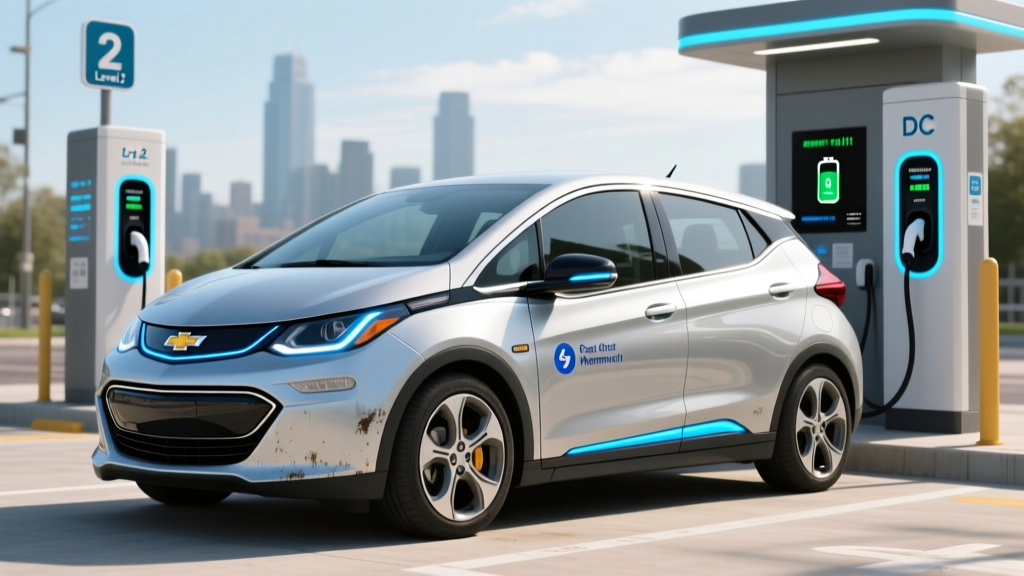
The 2018 Chevrolet Bolt EV occupies a unique position in the used electric vehicle market. When it launched, it was one of the first affordable EVs to break the 200-mile range barrier, undercutting the Tesla Model 3 on price while offering practical hatchback utility. Nearly a decade later, it remains a compelling budget entry into EV ownership — but its aging charging hardware and discontinued status demand a clear-eyed look at what you're actually getting.
Chevrolet discontinued the Bolt EV after the 2023 model year to make way for the Ultium-based Equinox EV. That means every 2018 Bolt you encounter is strictly a used-market purchase. The good news? A well-maintained example can still deliver outstanding daily-driver value, especially if you qualify for the federal used-EV tax credit.
2018 Chevy Bolt EV Core Specifications
| Specification | Value |
|---|---|
| EPA Range | 238 miles |
| Battery Capacity | 60 kWh (usable ~57 kWh), NMC lithium-ion (LG Chem) |
| Motor / Drivetrain | Single front-mounted permanent-magnet motor, FWD |
| Horsepower / Torque | 200 hp / 266 lb-ft |
| 0–60 mph | 6.5 seconds |
| EPA Efficiency | 119 MPGe combined (28 kWh/100 mi) |
| DC Fast Charge (max) | 55 kW (CCS1) |
| Level 2 Charge Rate | 7.2 kW onboard charger |
| Cargo Volume | 16.9 cu ft (rear seats up) / 56.6 cu ft (folded) |
| Original Base MSRP | $36,620 (LT) / $43,220 (Premier, before incentives) |
| Battery Warranty | 8 years / 100,000 miles (transfers to second owner) |
Real-World Range: What the 238-Mile EPA Sticker Actually Means
EPA Estimate: 238 miles
Real-World Highway (70 mph, moderate temps): ~200–215 miles
Real-World City / Suburban: ~225–245 miles (regen-friendly driving)
Cold Weather (below 32°F, highway): ~155–180 miles
Source: Owner-reported data aggregated by fueleconomy.gov and independent EV testing.
The Bolt's 238-mile EPA rating was genuinely impressive for 2018, and the NMC battery chemistry from LG Chem delivers relatively consistent energy delivery in moderate temperatures. City and suburban driving — where regenerative braking recaptures energy at every stop — can actually exceed the EPA number. The Bolt's one-pedal driving mode, activated via a steering-wheel paddle, is among the most effective regen implementations of its era.
Highway driving tells a different story. The Bolt's bluff, upright hatchback shape generates significant aerodynamic drag above 65 mph. Expect roughly 200–215 miles at 70 mph in fair weather. In winter conditions, range loss of 25–35% is typical, primarily because the Bolt uses a resistive heater rather than a more efficient heat pump. Preconditioning the cabin while plugged in mitigates some of this loss, but cold-weather road trippers should plan conservatively.
Battery degradation on the 2018 Bolt has generally been mild compared to some competitors. LG Chem's NMC cells in this generation have shown approximately 5–10% capacity loss over 60,000–80,000 miles based on owner telemetry. A 2018 model with 80,000 miles might realistically deliver 215–225 EPA-equivalent miles when new-equivalent — still very usable for most commutes.
Charging Speed: The Bolt's Biggest 2026 Limitation
| Charging Level | Power (kW) | Speed / Time |
|---|---|---|
| Level 1 (120V household) | ~1.2 kW | ~4 miles per hour |
| Level 2 (240V, 32A) | 7.2 kW | ~25 miles per hour / full charge in ~9 hours |
| DC Fast Charge (CCS1) | 55 kW peak | 10–80% in ~55–60 minutes |
This is where the 2018 Bolt shows its age most clearly. The 55 kW peak DC fast-charging rate was acceptable when public chargers commonly topped out at 50 kW, but in 2026 — with 150 kW, 250 kW, and even 350 kW stations widely available — the Bolt's charge curve is a significant road-trip bottleneck.
The Bolt's charge curve is relatively flat, which is a double-edged sword. It sustains close to its peak rate from roughly 10% to 55% state of charge (SoC), but it never ramps above 55 kW. A 10–80% session takes approximately 55 to 60 minutes on a capable CCS1 charger. For context, a Hyundai Ioniq 5 on the same station would complete that session in roughly 18 minutes. If your use case is strictly commuting with home charging, this is a minor inconvenience. If you plan regular road trips exceeding 200 miles, the slow charging will test your patience.
The 7.2 kW Level 2 onboard charger is adequate for overnight home charging. A full charge from empty takes about 9 hours — easily accomplished during a standard workday or overnight. Most Bolt owners install a 32-amp Level 2 home station (requiring a 40-amp circuit), which delivers the full 7.2 kW. Home installation costs typically range from $500 to $2,000 depending on whether your electrical panel needs upgrading.
Note that the 2018 Bolt uses the CCS1 connector standard. With the industry's ongoing transition to NACS (Tesla's connector), CCS1 chargers remain widely available at Electrify America, EVgo, and ChargePoint stations, but long-term connector availability is worth monitoring. A CCS1-to-NACS adapter is available from some manufacturers for future compatibility.
Performance and Driving Dynamics
The Bolt's 200-horsepower, front-wheel-drive powertrain remains genuinely quick for a subcompact hatchback. The 6.5-second 0–60 mph time beats most gas-powered cars in its size class, and the instant 266 lb-ft of torque makes city merging and passing effortless. The single-speed reduction gear means no shift interruptions — just a smooth, continuous wave of acceleration.
Handling is competent but not sporty. The 3,500-pound curb weight (heavier than a comparable gas hatchback due to the battery pack) is noticeable in corners, and the eco-oriented Michelin Energy Saver tires prioritize efficiency over grip. Ride quality is firm but well-damped, and the low center of gravity from the under-floor battery pack keeps body roll reasonable.
The Bolt lacks all-wheel drive, which matters in snow-belt states. Combined with its relatively low ground clearance, winter drivers should invest in dedicated winter tires rather than relying on the stock all-season rubber.
Interior, Cargo, and Technology
The Bolt's cabin is where its budget origins show most. Hard plastics dominate the dashboard and door panels, and the seating position is slightly upright due to the battery pack raising the floor. Rear-seat legroom (35.6 inches) is adequate for adults on shorter trips but tight for long journeys. Front-seat comfort is generally good, with the Premier trim adding leatherette upholstery and heated front seats.
Cargo capacity is a standout: 16.9 cubic feet behind the rear seats and 56.6 cubic feet with them folded — competitive with small crossovers. There is no frunk (front trunk); the space under the hood houses conventional drivetrain components.
The 2018 Bolt's infotainment system centers on a 10.2-inch touchscreen running Chevrolet's MyLink software. It supports Apple CarPlay and Android Auto, which in 2026 is the most practical way to access modern navigation and media. The built-in navigation is dated but functional. A 4G LTE Wi-Fi hotspot is included (subscription required after trial period).
Driver-assistance features are basic by 2026 standards. The available Driver Confidence II package (standard on Premier, optional on LT) adds lane-keeping assist, forward collision alert, automatic emergency braking, and following-distance indicator. There is no adaptive cruise control, no lane-centering steering assist, and certainly no hands-free driving capability. This is a SAE Level 1 vehicle in terms of automation — the driver is always fully in control.
Pricing, Tax Credits, and Ownership Economics
As a discontinued model, the 2018 Bolt EV is exclusively available on the used market. Pricing varies significantly by mileage, condition, and region, but typical asking prices in early 2026 fall in the following ranges:
| Trim | Mileage Range | Typical Used Price |
|---|---|---|
| LT | 50,000–70,000 mi | $12,000–$15,000 |
| LT | 70,000–100,000 mi | $9,500–$12,500 |
| Premier | 50,000–70,000 mi | $14,000–$17,500 |
| Premier | 70,000–100,000 mi | $11,000–$14,500 |
Federal Used-EV Tax Credit (§25E)
The 2018 Bolt EV may qualify for the federal used clean vehicle credit under IRS §25E — not the §30D new-vehicle credit. Key rules for §25E:
- Credit amount: 30% of the sale price, up to a maximum of $4,000
- Vehicle price cap: Sale price must be $25,000 or less (virtually all used Bolts qualify)
- Vehicle age requirement: Model year must be at least 2 years older than the calendar year of purchase (a 2018 model purchased in 2026 qualifies)
- Buyer income caps: Adjusted gross income must not exceed $75,000 (single), $112,500 (head of household), or $150,000 (joint filers)
- Dealer requirement: The sale must be through a licensed dealer who reports the transaction to the IRS; private-party sales do not qualify
- One-time use: Each buyer can claim this credit once every 3 years
At a typical used price of $13,000, the 30% calculation yields $3,900 — just under the $4,000 cap. This effectively reduces the net cost to around $9,100, making the 2018 Bolt one of the cheapest ways to access a 200+ mile EV in 2026. Always verify current rules at irs.gov and consult a tax professional for eligibility confirmation.
Operating Cost Advantage
At 28 kWh per 100 miles and a national average electricity rate of ~$0.16/kWh, the Bolt costs approximately $4.48 per 100 miles to fuel at home. A comparable 30 MPG gas car at $3.20/gallon costs $10.67 per 100 miles. Over 12,000 annual miles, that's roughly $740 in annual electricity versus $1,280 in gasoline — a savings of about $540 per year. Maintenance savings (no oil changes, reduced brake wear from regen) add another $300–$500 annually.
Battery Health, Warranty, and the Recall Factor
The 2018 Bolt's 60 kWh NMC battery pack was manufactured by LG Chem. Chevrolet's battery warranty covers 8 years or 100,000 miles against defects and excessive capacity loss (defined as dropping below ~60% of original capacity). For a 2018 model, this warranty extends through the 2026 model year — meaning most examples are either just expiring or have recently expired depending on purchase date and mileage.
Critical recall context: General Motors issued a major battery recall in 2021–2022 for 2017–2019 Bolt EVs due to manufacturing defects in certain LG Chem battery cells that posed a fire risk. Affected vehicles received replacement battery modules at no cost. Before purchasing any 2018 Bolt, verify via the NHTSA VIN lookup tool (nhtsa.gov/recalls) that the recall remedy has been completed. A Bolt that has received the updated battery modules may actually have better long-term battery health than one that narrowly avoided the defect batch.
Battery replacement cost, should it be needed out of warranty, is significant: approximately $14,000–$16,000 for a refurbished or new pack plus labor. However, catastrophic battery failure is rare; gradual degradation is the more likely scenario, and the Bolt's NMC cells have aged relatively gracefully based on fleet data.
Pros, Cons, and the Verdict
Pros
- 238-mile EPA range remains practical for most daily needs
- Strong value on the used market, especially after §25E credit
- Peppy 200 hp motor with instant torque
- Generous cargo space for a subcompact (56.6 cu ft max)
- Effective one-pedal driving with strong regen
- Low operating and maintenance costs
- Apple CarPlay / Android Auto standard
Cons
- Slow DC fast charging (55 kW peak, ~60 min 10–80%)
- No heat pump — significant winter range loss
- Dated interior materials and infotainment
- Basic driver assists — no adaptive cruise or lane centering
- Battery recall history requires VIN verification
- FWD only — no AWD option for snow climates
- Battery warranty expiring or expired on most examples
Who Should Buy the 2018 Chevy Bolt EV?
- Choose the Bolt if: You need a budget-friendly EV primarily for commuting and errands, can charge at home, drive under 150 miles daily, and want to minimize your cost-per-mile. The §25E credit makes it one of the cheapest paths into EV ownership.
- Look elsewhere if: You regularly road-trip beyond 200 miles (the 55 kW charging will frustrate), need AWD for harsh winters, require modern driver assists for highway commuting, or want a vehicle still under full factory battery warranty.
Compared to its used-market rivals, the 2018 Bolt offers more range than a similarly priced Nissan Leaf (151 miles for the 40 kWh model) and more cargo space than a used BMW i3. A 2018 Tesla Model 3 Long Range offers superior charging speed and Supercharger access but commands $5,000–$8,000 more on the used market. The Bolt's value proposition is simple: maximum range per dollar, with the trade-off of slow road-trip charging.
Frequently Asked Questions
What is the real-world range of the 2018 Chevy Bolt EV?
The EPA rates it at 238 miles. In real-world mixed driving, expect 210–230 miles in moderate temperatures. Highway-only driving at 70 mph drops this to roughly 200–215 miles. In cold weather (below freezing), plan for 155–180 miles due to the resistive cabin heater and reduced battery efficiency.
How fast does the 2018 Bolt charge?
On a DC fast charger, the Bolt peaks at 55 kW and takes approximately 55–60 minutes to charge from 10% to 80%. At home on a Level 2 (240V, 32A) station, the 7.2 kW onboard charger delivers about 25 miles of range per hour, fully replenishing the battery in roughly 9 hours. Level 1 (120V) adds about 4 miles per hour — adequate only for emergency top-ups or very low-mileage drivers.
Does the 2018 Chevy Bolt qualify for a federal tax credit?
Not the §30D new-vehicle credit — that applies only to new EV purchases. However, it may qualify for the §25E used clean vehicle credit: 30% of the purchase price (up to $4,000) if bought from a licensed dealer, the sale price is under $25,000, and the buyer's income falls within IRS limits ($75K single / $150K joint). Verify current rules at irs.gov.
Is the 2018 Bolt EV worth buying in 2026?
For the right buyer, yes. At $10,000–$15,000 (before the used-EV credit), it delivers more range and utility than almost any competing used EV at this price point. The main compromises — slow DC charging, no heat pump, dated interior — are manageable if your driving is primarily local with home charging. Road-trip-heavy buyers should look at a used Tesla Model 3 or Hyundai Kona Electric instead.
How do I check if the battery recall was performed?
Enter the vehicle's 17-digit VIN at nhtsa.gov/recalls. Look for recall numbers related to the high-voltage battery (GM recall N212349010 and subsequent campaigns). If the recall shows as incomplete, walk away or require the dealer to complete the remedy before purchase.
What happens when the battery warranty expires?
Chevrolet's 8-year/100,000-mile battery warranty is expiring or has expired on most 2018 Bolts. Out-of-warranty battery replacement costs approximately $14,000–$16,000. However, data from high-mileage Bolts suggests gradual degradation of 5–12% over 80,000+ miles rather than sudden failure. A pre-purchase battery health check (available via the car's onboard diagnostics or an OBD-II scanner like Leaf Spy) can reveal current state of health before you buy.