Quick Verdict: The 2018 Bolt EV in 2026
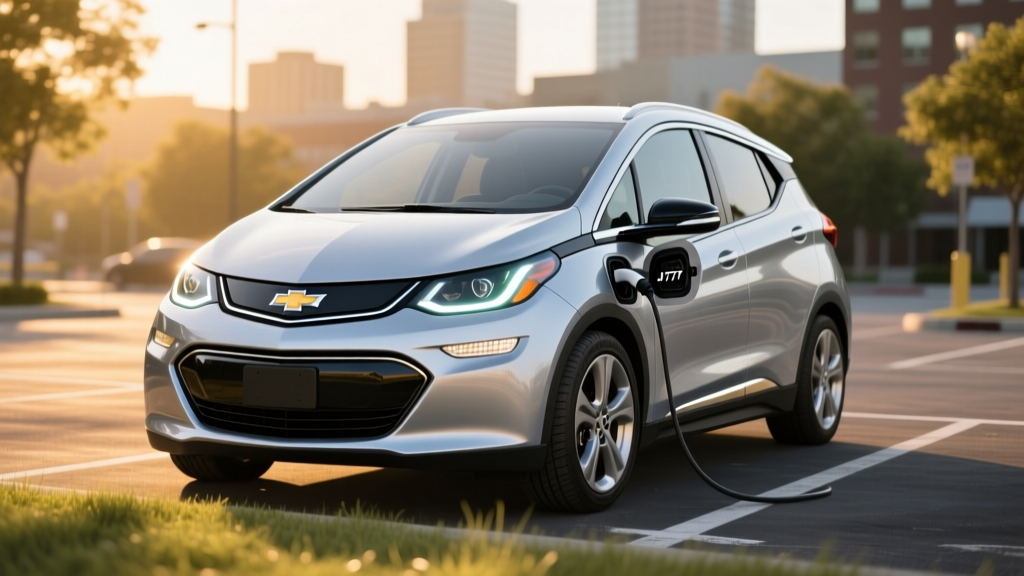
The 2018 Chevrolet Bolt EV remains one of the most compelling used electric vehicles on the market. With a 238-mile EPA-estimated range, a spacious hatchback body, and zippy around-town performance, it punches well above its original MSRP class. For 2026 used-EV shoppers, the Bolt EV offers genuine daily-driver practicality at a fraction of its original $36,620 starting price — and it may still qualify for the up-to-$4,000 used-EV federal tax credit under IRS §25E rules.
But there are trade-offs. DC fast charging tops out at just 55 kW, meaning road-trip stops take longer than modern rivals. The interior materials are budget-grade, and the infotainment system shows its age. If you primarily commute and charge at home, the 2018 Bolt EV is an outstanding value. If you regularly road-trip or need rapid public charging, you'll feel its limitations.
Range, Battery & Efficiency
The 2018 Bolt EV packs a 60 kWh lithium-ion battery using NMC (nickel manganese cobalt) chemistry supplied by LG Chem. Of that, approximately 57 kWh is usable, with the remainder held as a buffer to protect long-term battery health.
EPA-estimated range: 238 miles
Real-world expectation: 210–230 miles in mixed city/highway driving; 180–200 miles on sustained highway runs at 70+ mph; 150–180 miles in freezing temperatures (below 32°F) due to cabin heating demands and reduced battery efficiency.
Efficiency: 119 MPGe combined (28 kWh/100 mi) per fueleconomy.gov.
The Bolt EV's efficiency is a genuine strength. Its relatively light curb weight (~3,563 lbs) and front-wheel-drive layout translate to strong city range where regenerative braking recovers energy in stop-and-go traffic. Highway driving erodes range faster due to the boxy hatchback aerodynamics, but 210+ real-world miles in moderate weather is realistic for careful drivers.
| Specification | Value |
|---|---|
| EPA Range | 238 miles |
| Battery Capacity (total / usable) | 60 kWh / ~57 kWh |
| Battery Chemistry | NMC (LG Chem) |
| Efficiency | 119 MPGe combined (28 kWh/100 mi) |
| Motor Output | 200 hp / 266 lb-ft torque |
| Drivetrain | Front-wheel drive (FWD) |
| 0–60 mph | ~6.5 seconds |
| Max DC Fast Charge | 55 kW (CCS1) |
| Level 2 Charge Rate | 7.2 kW |
| Cargo Volume (rear seats up / down) | 16.9 / 56.6 cu ft |
| Rear Legroom | 36.5 inches |
| Battery Warranty (original) | 8 years / 100,000 miles |
| Original Base MSRP | $36,620 (LT) / $40,905 (Premier) |
For a 2018 model evaluated in 2026, battery degradation is a legitimate concern. NMC chemistry in the Bolt EV has proven reasonably durable, with most owner reports showing 5–10% capacity loss over 6–8 years of typical use. GM's 8-year/100,000-mile battery warranty (covering defects and capacity loss below 60% of original) may still apply to lower-mileage examples — check the vehicle's in-service date and odometer carefully.
Charging Speed: Home & DC Fast Charging
Charging is where the 2018 Bolt EV shows its most dated limitation. While home Level 2 charging is perfectly adequate for daily use, DC fast charging peaks at a modest 55 kW — far below the 150–350 kW rates common on 2024+ EVs.
| Charging Level | Power | Speed | Notes |
|---|---|---|---|
| Level 1 (120V household) | ~1.2 kW | ~4 miles/hour | Emergency/trickle only |
| Level 2 (240V home/public) | 7.2 kW | ~25 miles/hour | |
| DC Fast Charge (CCS1) | 55 kW peak | ~90 miles in 30 min | 10–80% in ~70–80 min |
DC fast-charging reality: The Bolt EV's charge curve is relatively flat compared to modern EVs. It sustains near-peak 55 kW from roughly 10–50% state of charge, then tapers gradually. A 10–80% session typically takes 70–80 minutes at a compatible CCS station. This is the Bolt's biggest road-trip drawback — plan for longer stops, or better yet, plan overnight Level 2 charges at your destination.
Home charging: At 7.2 kW on a 240V Level 2 charger (requiring a 40-amp circuit), a full 0–100% charge takes approximately 9 hours. This is ideal for overnight replenishment. Most owners install a Level 2 home charger such as the ChargePoint Home Flex or Emporia Vue for $500–$1,200 in equipment plus $500–$2,000 in electrician labor depending on panel proximity and local permitting. Consult a licensed electrician for your specific installation.
The Bolt EV uses the CCS1 connector for DC fast charging and a J1772 inlet for Level 1/Level 2 AC charging. Adapters are available for Tesla Supercharger (NACS) access as the network opens to CCS vehicles, though compatibility should be verified per Tesla's published adapter specifications.
Performance & Driving Experience
The Bolt EV's single front-mounted permanent-magnet motor produces 200 horsepower and 266 lb-ft of torque, delivered instantly to the front wheels. The 0–60 mph sprint takes approximately 6.5 seconds — genuinely quick for a sub-$40K hatchback and more than adequate for highway merging and passing.
Driving dynamics are surprisingly engaging. The low center of gravity (battery pack under the floor) minimizes body roll, and the instant torque makes city driving feel punchy. The Bolt EV offers two regenerative braking modes: standard driving with mild regen, and "L" (low) mode with aggressive one-pedal driving that can bring the car to a complete stop without touching the brake pedal. There's also a steering-wheel-mounted "Regen on Demand" paddle for momentary strong regeneration.
Ride quality is firm but compliant. Road noise is noticeable at highway speeds — a consequence of the budget-oriented insulation and low-rolling-resistance tires. The Bolt EV is not a luxury cruiser, but it's a genuinely fun commuter.
Interior, Tech & Safety
Inside, the 2018 Bolt EV is functional but plainly budget-oriented. Hard plastics dominate the dashboard and door panels. The seats are comfortable for shorter commutes but lack the bolstering for long drives. The Premier trim upgrades to leather-appointed seating, heated front and rear seats, and a heated steering wheel.
Infotainment: Both trims feature a 10.2-inch touchscreen running Chevrolet's MyLink system with Apple CarPlay and Android Auto — a genuine advantage for 2026 buyers who want modern navigation and music apps without relying on the native system. A 4G LTE Wi-Fi hotspot is included (subscription required after trial). The system is responsive enough, though graphics and processing speed show their age compared to 2024+ EVs.
Driver assistance: The 2018 Bolt EV offers a basic but competent suite:
- Rearview camera (standard)
- Rear parking sensors (standard on Premier, optional on LT)
- Lane departure warning (available)
- Forward collision alert with automatic emergency braking (available via Driver Confidence packages)
- Blind-spot monitoring (available on Premier)
Notably absent: adaptive cruise control, lane-keeping assist, and any form of hands-free driving. This is an SAE Level 0–1 vehicle in terms of driver assistance — the driver is fully in control at all times.
The 2018 Bolt EV earned a NHTSA 5-star overall safety rating and was an IIHS Top Safety Pick when equipped with available front crash prevention. Per NHTSA records, it performed well across frontal, side, and rollover crash tests.
Used Pricing & Federal Tax Credit Eligibility
As a used vehicle in 2026, the 2018 Bolt EV typically trades between $10,000 and $16,000 depending on mileage, condition, battery state of health, and regional demand. This represents exceptional value for a 238-mile EV.
| Item | Amount |
|---|---|
| Typical used price (LT, ~60K mi) | $11,000–$14,000 |
| Typical used price (Premier, ~40K mi) | $13,000–$16,000 |
| Federal used-EV tax credit (§25E) | Up to $4,000 (30% of sale price) |
| Effective price after max credit | As low as ~$7,000–$12,000 |
Federal used-EV tax credit (§25E): The 2018 Bolt EV may qualify for the IRS §25E previously owned clean vehicle credit, which provides 30% of the sale price, up to $4,000. Per IRS guidelines, eligibility requires:
- Sale price cap: Vehicle must sell for $25,000 or less (most 2018 Bolt EVs qualify)
- Buyer income limits: Adjusted gross income must not exceed $75,000 (single), $112,500 (head of household), or $150,000 (joint filers)
- Dealer requirement: Vehicle must be purchased from a licensed dealer (private-party sales do not qualify)
- Model year: Vehicle must be at least 2 model years old (2018 qualifies)
- First transfer: The credit applies only once per vehicle after August 16, 2022 — verify the specific VIN has not already been claimed
- Battery capacity: Must have at least 7 kWh (Bolt EV's 60 kWh easily qualifies)
The §25E credit is non-refundable, meaning it can only reduce your federal tax liability to zero — it won't generate a refund beyond that. Consult a tax professional for your specific situation. Unlike the §30D new-vehicle credit, §25E does not have battery-sourcing or critical-mineral requirements, and there are no MSRP caps beyond the $25,000 sale-price ceiling.
Who Should Buy the 2018 Bolt EV?
Pros
- 238-mile EPA range — still competitive in 2026
- Spacious hatchback with 56.6 cu ft cargo (seats folded)
- Strong 0–60 time (6.5s) and instant torque
- Excellent efficiency: 119 MPGe / 28 kWh/100 mi
- Apple CarPlay & Android Auto standard
- 5-star NHTSA safety rating
- Low used pricing with potential $4,000 federal credit
- Comfortable one-pedal driving in L mode
Cons
- Slow DC fast charging (55 kW peak; ~75 min 10–80%)
- Budget interior materials and road noise
- No adaptive cruise control or advanced driver assist
- FWD only — no AWD option for snow-belt buyers
- No active thermal management for battery (passive air cooling)
- Rear visibility is limited; camera helps
- Infotainment feels dated vs. 2024+ EVs
The 2018 Bolt EV is ideal for:
- Commuters with sub-100-mile round trips who charge at home overnight
- Budget-conscious buyers wanting a reliable, long-range used EV under $15K
- Urban and suburban drivers who value hatchback cargo space and low running costs
- Second-car households replacing a gas commuter with an electric daily driver
Look elsewhere if:
- You take frequent road trips over 200+ miles (the 55 kW DC charging will frustrate)
- You need AWD for heavy snow or off-pavement driving
- You want modern ADAS features like adaptive cruise or lane-centering
- You lack access to home or workplace Level 2 charging
Choose the 2018 Bolt EV if: Your daily driving is under 120 miles, you have Level 2 home charging, and you want maximum range-per-dollar in a used EV.
Consider alternatives if: You road-trip monthly, need AWD, or want hands-free highway driving. A used 2021+ Tesla Model 3 or Hyundai Kona Electric may better serve those needs.
Key Competitors Compared
In the used EV market around $10K–$16K, the 2018 Bolt EV competes against:
- 2018 Nissan LEAF (40 kWh): EPA 151 miles — significantly less range; CHAdeMO connector (declining network support); lower used prices (~$8K–$11K).
- 2018 Hyundai Ioniq Electric: EPA 124 miles — very efficient but limited range; excellent build quality; ~$9K–$12K used.
- 2019 Kia Niro EV: EPA 239 miles — nearly identical range; slightly faster DC charging (77 kW); ~$13K–$17K used.
- 2018 Tesla Model 3 (Standard Range): EPA ~220 miles; vastly superior Supercharger network and DC charging; but typically $16K–$20K+ used and higher insurance costs.
The Bolt EV's combination of 238-mile range and sub-$15K pricing makes it the best value proposition in this segment, provided you accept the charging-speed trade-off.
Frequently Asked Questions
What is the real-world range of the 2018 Chevrolet Bolt EV?
Expect 210–230 miles in mixed driving in moderate temperatures (50–80°F). Sustained highway driving at 70+ mph drops this to 180–200 miles. In freezing weather, range can fall to 150–180 miles due to battery chemistry limitations and cabin-heating energy demands. The Bolt EV lacks a heat pump, relying on resistive heating that draws significant power from the 60 kWh battery.
How fast does the 2018 Bolt EV charge?
On a Level 2 (240V) home charger at 7.2 kW, expect about 25 miles of range per hour of charging, or a full charge in roughly 9 hours. On a DC fast charger (CCS1), the Bolt peaks at 55 kW, adding about 90 miles in 30 minutes. A 10–80% DC fast-charge session takes approximately 70–80 minutes. This is the Bolt's most significant weakness for road-trip use.
Does the 2018 Bolt EV qualify for any federal tax credit?
Not the new-vehicle §30D credit (that applied at original purchase). However, it may qualify for the §25E used-EV credit — 30% of the sale price up to $4,000 — if purchased from a licensed dealer for $25,000 or less, and if the buyer meets income limits ($75K single / $150K joint). The vehicle's VIN must not have been previously claimed for this credit. Verify with your tax professional and the IRS.
How long will the 2018 Bolt EV battery last?
GM warranted the battery for 8 years/100,000 miles against defects and capacity loss below 60%. Real-world data suggests NMC degradation of roughly 5–10% over 6–8 years under normal use. A 2018 model with 60,000 miles might retain 90–95% of original capacity. Avoid vehicles that were frequently DC fast-charged in extreme heat without cooldown periods, as the Bolt EV uses passive (air-based) thermal management rather than active liquid cooling.
Is the 2018 Bolt EV worth buying vs. a newer used EV?
For pure value, yes. At $11K–$14K before the potential $4,000 credit, it delivers 238 miles of EPA range that rivals EVs costing twice as much. If your needs are commuting and local driving with home charging, it's hard to beat. If you need fast DC charging, modern ADAS, or a premium interior, budget $18K–$25K for a used 2021+ Tesla Model 3, Hyundai Ioniq 5, or Chevrolet Bolt EUV.
Can I charge a 2018 Bolt EV at Tesla Superchargers?
Tesla has been opening select Supercharger stations to non-Tesla EVs via the NACS connector, but compatibility varies. The Bolt EV uses CCS1 natively. Tesla offers a CCS-to-NACS adapter (check Tesla's website for current compatibility lists). Not all Supercharger stalls support non-Tesla vehicles, so verify station compatibility via the Tesla app before relying on this for travel.
What should I check before buying a used 2018 Bolt EV?
Request a battery state-of-health (SoH) reading from a Chevrolet dealer or use an OBD-II reader with EV-capable software (such as MyChevy app diagnostics or third-party tools). Check for any outstanding recalls — the Bolt EV had a battery-related recall for certain 2017–2019 models related to potential fire risk when charging to full capacity. Verify that any recall remediation (software update or battery module replacement) has been completed. Inspect the charging port for wear, and test both Level 2 and DC fast charging during your pre-purchase evaluation.