Quick Verdict: The 2017 Model X 100D in 2026
The 2017 Tesla Model X 100D occupies a curious space in the used EV market. It was Tesla's flagship long-range family hauler before the Plaid era, pairing a 100 kWh battery with dual-motor all-wheel drive and those unmistakable falcon-wing rear doors. In 2026, it remains one of the most spacious electric SUVs available on the secondary market — but prospective buyers need clear eyes about battery degradation, charging architecture limitations, and the realities of owning a nine-year-old luxury EV.
If you find a well-maintained example with strong State of Health (SoH) readings, the Model X 100D still delivers a compelling blend of range, cargo space, and performance. If you don't do your homework, you could inherit someone else's deferred maintenance. Here's everything you need to know.
Range, Battery, and Efficiency
| Spec | Value |
|---|---|
| EPA Range (original) | 289 miles |
| Battery Capacity (gross) | 100 kWh |
| Battery Capacity (usable) | ~98 kWh |
| Battery Chemistry | NMC (Nickel Manganese Cobalt) |
| EPA Efficiency | 98 MPGe combined |
| Energy Consumption | 34 kWh/100 mi |
| Drivetrain | Dual-motor AWD |
Real-World Range Expectations: The EPA rated the 2017 Model X 100D at 289 miles when new. In 2026, expect a used example with moderate degradation (roughly 8-15% capacity loss depending on charging habits and mileage) to deliver 245-265 miles in mixed driving. Highway driving at 75+ mph will drop that to approximately 220-240 miles. In cold weather (below 32°F), plan for 190-220 miles of usable range. The Model X's large frontal area and ~5,000-lb curb weight work against highway efficiency — this is not a vehicle that rewards lead-foot driving with range.
The 100 kWh NMC pack was the largest Tesla offered at the time, and its energy density was class-leading in 2017. NMC chemistry provides excellent range but is more sensitive to high state-of-charge storage than LFP batteries. If the previous owner routinely charged to 100% and let the car sit, degradation will be on the higher end of that range. Ask for a State of Health (SoH) reading — anything above 85% is acceptable; below 80% means you're looking at noticeable range compromise.
Tesla's battery management system (BMS) includes a bottom buffer (~2 kWh) that protects against deep discharge, but NMC cells still benefit from daily charge limits of 80-90% for longevity. Per fueleconomy.gov, the combined MPGe rating is 98, with 101 city / 95 highway — strong numbers for a three-row SUV, though newer EVs like the refreshed Model X and Rivian R1S have improved on this.
Charging Speed: DC Fast and Home Level 2
| Charging Level | Power / Rate | Time or Miles Added |
|---|---|---|
| DC Fast Charge (Supercharger V2) | Peak ~120 kW | 10-80% in ~45-50 minutes |
| DC Fast Charge (Supercharger V3/V4) | Capped at ~120 kW (vehicle limit) | No speed benefit over V2 |
| Level 2 (240V / 48A home charger) | ~11.5 kW | ~30 miles of range per hour |
| Level 2 (240V / 32A mobile connector) | ~7.7 kW | ~20 miles of range per hour |
| Level 1 (120V standard outlet) | ~1.4 kW | ~3-4 miles of range per hour |
The 2017 Model X 100D's biggest charging limitation in 2026 is its DC fast-charge ceiling. The vehicle's onboard architecture tops out at approximately 120 kW, even when plugged into a 250 kW V3 or 325 kW V4 Supercharger. This means road-trip charging stops take roughly 45-50 minutes from 10-80% SoC — noticeably longer than modern EVs with 250+ kW peak rates that achieve 10-80% in 18-25 minutes.
The charge curve on the 100 kWh pack is relatively flat between 20-60% SoC (sustaining near peak power), then tapers progressively above 70%. Plan your road-trip stops accordingly: arriving at a charger at 10-15% SoC gives you the fastest initial ramp, but don't expect to linger past 80% — the taper becomes steep, and you'll add more miles by driving than by waiting.
For home charging, a Level 2 wall connector at 48 amps delivers about 11.5 kW, replenishing the full battery in roughly 8.5-9 hours. This is adequate for overnight charging. Note: the 2017 Model X uses Tesla's proprietary connector (now called NACS). With the industry-wide NACS adoption through 2025-2026, this vehicle charges natively at all Superchargers and at most third-party networks that have added NACS cables or where you use a CCS-to-NACS adapter.
Performance and Driving Dynamics
The 100D ("100" for the battery, "D" for dual motor) is the efficiency-focused variant, not the performance one. Here's what it delivers:
- 0-60 mph: 4.7 seconds
- Horsepower: ~518 hp (combined front and rear motors)
- Torque: ~487 lb-ft combined
- Top Speed: 155 mph (electronically limited)
- Towing Capacity: 5,000 lbs (with tow package)
That 4.7-second 0-60 time remains quick by any SUV standard, even in 2026. The dual-motor AWD system provides confident traction in rain and light snow, and the air suspension (standard on all Model X variants) adjusts ride height for highway efficiency or rough-road clearance. However, the Model X's ~5,000-lb curb weight is evident in corners — this is a cruiser, not a canyon carver. Compared to the Plaid variant (2.5 seconds to 60), the 100D feels deliberately relaxed, which suits its family-hauler mission.
The regenerative braking system offers two modes (Standard and Low in 2017 software). Standard regen enables near one-pedal driving in city traffic, though it doesn't bring the vehicle to a complete stop — you'll still use the brake pedal for final halts. Tesla added a "Hold" mode in later software updates that enables full stop via regen; check whether the specific vehicle you're evaluating has received this update.
Interior, Cargo, and Technology
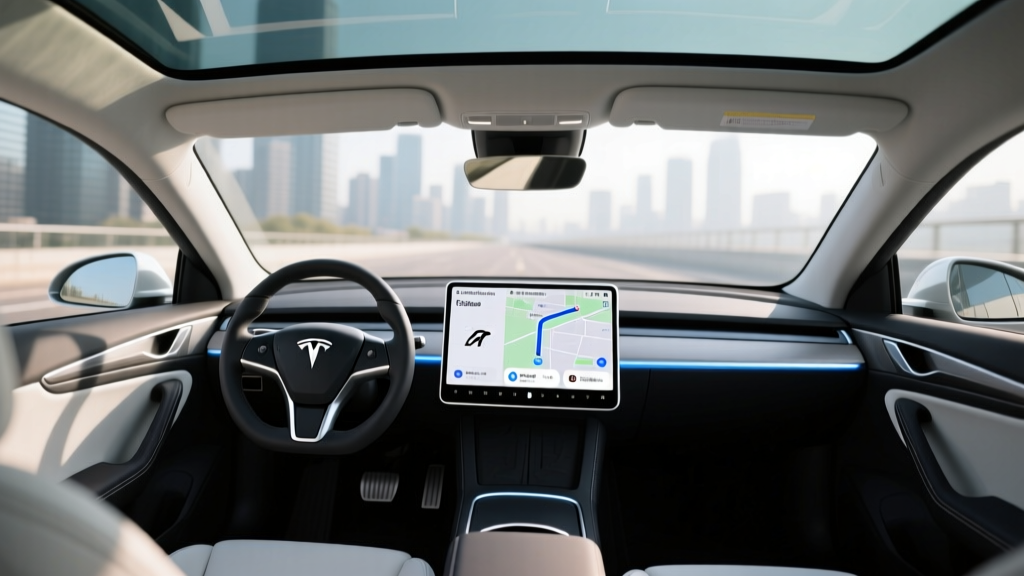
The Model X's cabin is where opinions split sharply. The 17-inch center touchscreen dominated the dash in 2017 and still looks modern, though the hardware (MCU1 or MCU2 depending on build date) affects responsiveness. Vehicles with the original MCU1 (Nvidia Tegra 3) are noticeably sluggish by 2026 standards and lack support for newer software features. Tesla offered an MCU2 upgrade (Intel Atom) for ~$2,000; ask whether this has been performed.
Passenger and Cargo Dimensions:
- Seating: 5, 6, or 7 passengers (depending on second-row config: bench or captain's chairs)
- Front Headroom: 41.7 inches
- Front Legroom: 41.2 inches
- Second-Row Legroom: 38.4 inches
- Cargo (behind 3rd row): 21.8 cu ft
- Cargo (behind 2nd row): 26.6 cu ft (5-seat config)
- Cargo (max, seats folded): 88.1 cu ft
- Frunk: 6.6 cu ft
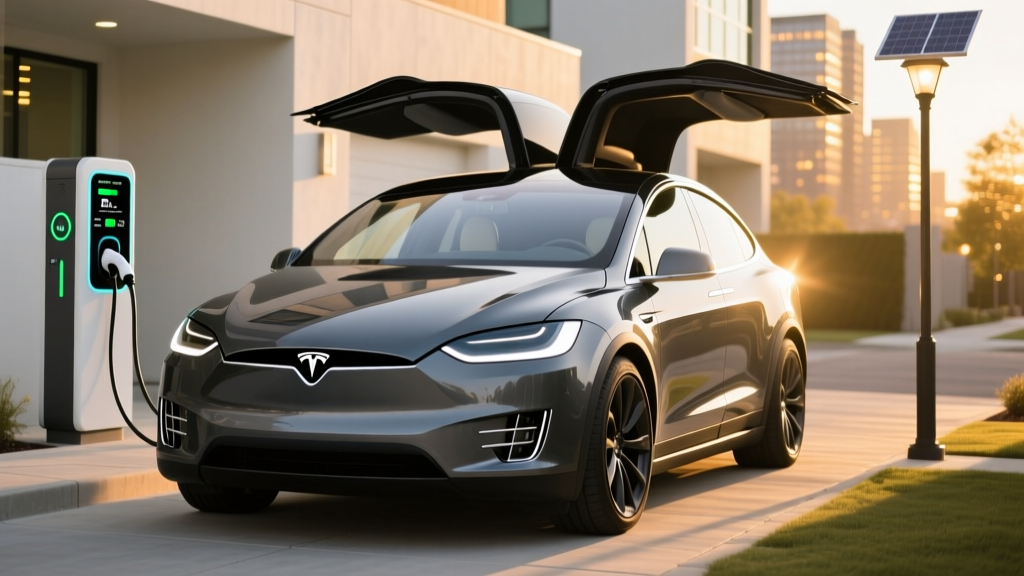
The falcon-wing rear doors are the Model X's signature feature. They open upward, providing excellent access to second- and third-row seats in tight parking spaces — genuinely useful for loading children into car seats. However, they add mechanical complexity. Door actuator and sensor issues were common enough on 2016-2017 models that Tesla extended coverage on some components. Test every door panel multiple times during your pre-purchase inspection.
Standout Tech Features:
- Autopilot (basic): Traffic-Aware Cruise Control and Autosteer — SAE Level 2 driver assistance, not self-driving
- Enhanced Autopilot (optional): Auto Lane Change, Autopark, Summon, Navigate on Autopilot
- Full Self-Driving capability (optional purchase, never fully autonomous)
- HEPA air filtration with "Bioweapon Defense Mode"
- Over-the-air software updates (still receiving updates in 2026, though feature additions have slowed)
- 17-speaker premium audio system
ADAS Clarification: The 2017 Model X's Autopilot and optional Enhanced Autopilot are SAE Level 2 driver-assistance systems. The driver must remain fully attentive, keep hands on the wheel, and be prepared to take over at any moment. This is not autonomous driving. Vehicles with FSD capability purchased in 2017 received FSD (Supervised), which remains Level 2. Only purpose-built robotaxi services like Waymo operate at Level 4.
Pricing, Used Market Value, and Tax Credits
| Item | Amount |
|---|---|
| Original Base MSRP (2017) | $96,000 |
| As-Tested Typical (with options) | $105,000 - $120,000 |
| 2026 Used Market Range | $28,000 - $42,000 |
| Federal Used EV Tax Credit (§25E) | Up to $4,000 (30% of sale price, max $4,000) |
| Federal New EV Credit (§30D) | Not eligible (discontinued model, only applies to new vehicles) |
The 2017 Model X 100D does not qualify for the §30D new-vehicle federal tax credit, as it is no longer in production. However, it may qualify for the §25E Previously-Owned Clean Vehicle Credit, which provides 30% of the sale price up to a maximum of $4,000 for qualifying used EVs. Per IRS guidelines, eligibility requires:
- Sale price of $25,000 or less (this is the binding constraint — many Model X 100D examples exceed this threshold)
- Buyer income limits: $75,000 single / $112,500 head of household / $150,000 joint
- Purchase from a licensed dealer (private-party sales do not qualify)
- Vehicle must be at least two model years old (2017 qualifies)
- Credit can be transferred to the dealer at point of sale for an immediate price reduction
In practice, finding a 2017 Model X 100D at or below $25,000 from a dealer is challenging in 2026. Most well-maintained examples list between $30,000-$40,000, which prices them above the §25E sale-price cap. If you find one under $25,000, verify the battery SoH carefully — a bargain-priced 100D may have significant degradation or undisclosed damage history.
Warranty and Long-Term Ownership Costs
The original factory warranty on the 2017 Model X 100D has expired for most vehicles:
- Basic Vehicle Limited Warranty: 4 years / 50,000 miles (expired)
- Battery & Drive Unit Warranty: 8 years / 150,000 miles (some low-mileage examples may still have coverage through early 2026)
- Battery Capacity Retention Threshold: 70% minimum over warranty period
If the battery SoH drops below 70% within the 8-year/150,000-mile window, Tesla covers replacement. Outside of that window, a 100 kWh battery replacement costs approximately $14,000-$20,000 at a Tesla Service Center (refurbished pack) in 2026. This is the single largest financial risk of buying a used Model X 100D.
Annual Ownership Cost Estimates (2026):
- Insurance: $2,200-$3,200/year (varies by state, driving record; Model X remains in a high-premium category)
- Home Charging (12,000 mi/yr at $0.14/kWh): ~$570/year
- Maintenance: $400-$800/year (cabin air filter, wiper fluid, tire rotation; no oil changes, but tires wear faster due to weight and torque)
- Tires: $1,200-$1,800 every 25,000-35,000 miles (20" or 22" OEM sizes are expensive)
Compared to a similarly aged gas-powered luxury SUV (e.g., BMW X5, Mercedes GLE), the Model X 100D saves on fuel and routine maintenance but carries higher insurance premiums and the looming battery-replacement risk. Total cost of ownership breaks even around year 3-4 depending on your electricity rates and annual mileage.
How It Compares: Model X 100D vs. Key Used EV Alternatives
Best Range: Model X 100D — 289 miles EPA (new) still edges the 2017 Jaguar I-PACE (234 mi) and 2018 Audi e-tron (204 mi).
Fastest Charging: Audi e-tron (150 kW peak) and newer platforms — the Model X's 120 kW cap is its weakest competitive point in 2026.
Best Build Quality: Jaguar I-PACE and Audi e-tron — Tesla's 2017 panel gaps, interior rattles, and falcon-wing door issues are well documented.
Most Cargo Space: Model X 100D — 88.1 cu ft max cargo and available third row beat all competitors in this price bracket.
Lowest Ownership Risk: Audi e-tron — simpler doors, better build, though less range and no third row.
Best for Families: Model X 100D — three-row seating, falcon-wing access, and Supercharger network access make it the practical choice for larger families who road-trip.
The closest competitor in the used market is the 2018-2019 Tesla Model X Long Range (the 100D's direct successor), which offers slightly better range (325 mi EPA) and improved Supercharger speeds. If your budget allows $45,000-$55,000, the Long Range is a meaningfully better vehicle. Below $35,000, the 100D is the best-value entry into a three-row electric SUV with Supercharger access.
Who Should Buy the 2017 Model X 100D?
Buy it if:
- You need three-row seating and genuine 5,000-lb towing in an EV
- You road-trip regularly and value Supercharger network access (still the most reliable DC fast-charging network in the US)
- You find a well-maintained example with SoH above 85% and under 80,000 miles
- You can charge at home (Level 2) and don't rely solely on public fast charging
Look elsewhere if:
- You prioritize fast DC charging for frequent long-distance driving (the 120 kW cap adds ~20 minutes per stop vs. modern EVs)
- You're uncomfortable with the possibility of a $15,000+ battery replacement outside warranty
- Build quality and interior refinement are top priorities
- You only need two rows — a used Model Y Long Range offers similar range with lower running costs
Pros and Cons
Pros
- 289-mile EPA range remains competitive for a used three-row EV
- Massive cargo capacity (88.1 cu ft) with available third row
- Falcon-wing doors provide genuinely excellent rear-seat access
- Native NACS connector — full Supercharger and growing third-party network access
- HEPA air filtration is best-in-class
- Still receives OTA software updates
- 4.7-second 0-60 is quick for its class
- Air suspension provides adjustable ride height
Cons
- DC fast-charge capped at ~120 kW — slow by 2026 standards
- Falcon-wing door mechanisms are a known reliability concern
- MCU1 infotainment hardware is sluggish if not upgraded
- High insurance premiums ($2,200-$3,200/year)
- Battery replacement cost ($14,000-$20,000) outside warranty
- Build quality inconsistencies (panel gaps, interior creaks)
- Heavy curb weight (~5,000 lbs) increases tire wear
- Most examples exceed the $25,000 cap for the §25E used-EV credit
Frequently Asked Questions
What is the real-world range of the 2017 Tesla Model X 100D?
With typical battery degradation of 8-15% by 2026, expect 245-265 miles in mixed driving, 220-240 miles at sustained highway speeds, and 190-220 miles in freezing temperatures. The original EPA rating was 289 miles when new.
How fast does the 2017 Model X 100D charge?
DC fast charging peaks at approximately 120 kW, achieving 10-80% in roughly 45-50 minutes. Home Level 2 charging at 48 amps (11.5 kW) adds about 30 miles of range per hour, fully replenishing the battery overnight in 8.5-9 hours.
Does the 2017 Model X 100D qualify for any federal tax credit?
It does not qualify for the §30D new-vehicle credit. It may qualify for the §25E used-EV credit (up to $4,000) if purchased from a dealer for $25,000 or less and the buyer meets income limits ($75,000 single / $150,000 joint). Most examples list above the $25,000 price cap. Consult a tax professional for your specific situation.
Is the 2017 Model X 100D worth buying in 2026?
It offers the best combination of range, cargo space, and Supercharger access among used three-row EVs under $40,000. However, the 120 kW charging cap, potential door-mechanism repairs, and battery replacement risk mean buyers should budget for contingencies and insist on a pre-purchase battery health check.
What should I check before buying a used 2017 Model X 100D?
Prioritize: (1) Battery State of Health via the Tesla app or service menu — aim for 85%+ capacity. (2) Falcon-wing door operation — test all panels repeatedly for smooth, consistent opening. (3) MCU version — confirm whether the MCU2 upgrade has been performed. (4) Service history — check for drive unit replacements, suspension work, and software update compliance. (5) Title status — avoid salvage or rebuilt titles, which void any remaining warranty.
How does the Supercharger network access compare to non-Tesla EVs?
As a native NACS vehicle, the 2017 Model X charges at all Tesla Superchargers without adapters. With the industry's NACS adoption through 2025-2026, third-party networks (Electrify America, EVgo, ChargePoint) increasingly offer NACS connectors, expanding access. This remains a significant advantage over older CCS-equipped used EVs that now require adapters at NACS-only stations.