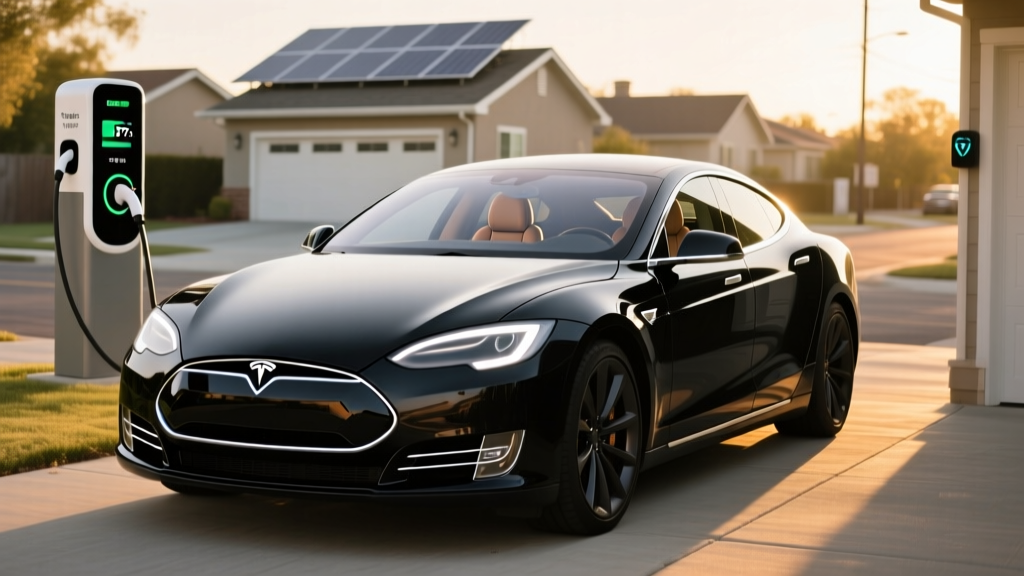
The 2017 Tesla Model S occupies a strange space in the used EV market in 2026. It's a nine-year-old luxury sedan that still outperforms most new EVs on a straight line, offers access to the most reliable DC fast-charging network in North America, and carries a used price that has dropped into the territory of a new economy car. But buying a nearly decade-old EV demands hard questions about battery degradation, out-of-warranty repair costs, and whether the 2017 Model S's aging hardware holds up against modern competitors like the Hyundai Ioniq 6, BMW i5, and Tesla's own refreshed Model S.
This review breaks down the real-world numbers — range, charging, battery health, and total cost — that matter when you're evaluating a 2017 Model S on the used market today.
2017 Tesla Model S Core Specifications
| Spec | 75 (RWD) | 75D (AWD) | 100D (AWD) | P100D (AWD) |
|---|---|---|---|---|
| EPA Range | 249 mi | 259 mi | 335 mi | 315 mi |
| Battery (Usable) | ~72.5 kWh | ~72.5 kWh | ~98 kWh | ~98 kWh |
| Chemistry | NMC | NMC | NMC | NMC |
| 0-60 mph | 4.3 sec | 4.2 sec | 4.2 sec | 2.5 sec |
| Horsepower | 328 hp | 328 hp | 417 hp | 762 hp |
| Drivetrain | RWD | Dual-Motor AWD | Dual-Motor AWD | Dual-Motor AWD |
| MPGe (Combined) | 104 MPGe | 102 MPGe | 102 MPGe | 98 MPGe |
| Efficiency | 32 kWh/100mi | 33 kWh/100mi | 33 kWh/100mi | 34 kWh/100mi |
| Original MSRP | $69,500 | $74,500 | $94,000 | $134,500 |
| Typical 2026 Used Price | $18,000–$24,000 | $22,000–$28,000 | $28,000–$38,000 | $38,000–$52,000 |
Real-World Range: What the EPA Sticker Doesn't Tell You
The 2017 Model S 100D carries a 335-mile EPA estimate — impressive even by 2026 standards. But real-world range depends heavily on conditions:
- Highway (70 mph, moderate temps): Expect ~270–290 miles. The Model S's large frontal area and older aero design hurt efficiency at sustained speed.
- City / mixed driving: Closer to EPA, ~300–320 miles on the 100D thanks to regenerative braking recapturing energy.
- Cold weather (below 32°F): Plan for 20–30% range loss. The 2017 Model S lacks the heat pump found in newer Teslas, relying on resistive cabin heating that draws heavily from the pack. A 335-mile 100D could deliver as little as 230–250 miles in freezing conditions.
- Battery degradation: Most 2017 Model S vehicles in 2026 show 8–15% degradation depending on mileage and charging habits. A 100D with 90,000 miles might retain ~85–90% of original capacity, reducing effective range to roughly 280–300 miles EPA-basis before environmental factors.
Sources: EPA Fueleconomy.gov, owner-reported data.
For the 75 and 75D trims, the picture is tighter. The EPA-rated 249–259 miles translates to roughly 200–220 miles of real-world highway driving in fair weather, and potentially as low as 160–180 miles in winter. If your daily round-trip commute exceeds 120 miles, the 75 kWh variants will require mid-day or frequent charging.
Key takeaway: The 100D is the trim to target if range matters. Its ~98 kWh usable pack still delivers competitive real-world miles in 2026, but you should budget for a State of Health (SoH) check before purchase.
Charging Speed: Supercharger Access Is the Big Advantage
| Charging Level | Power | Rate | Notes |
|---|---|---|---|
| Level 1 (120V) | ~1.4 kW | ~3–4 mi/hr | Emergency/trickle only |
| Level 2 (240V, 48A) | 11.5 kW | ~29–34 mi/hr | Full charge in 8–10 hrs (100D) |
| DC Fast (Tesla Supercharger V2) | Peak ~120 kW | ~200 mi in 30 min (100D) | 10–80% in ~40–45 min |
| DC Fast (Tesla Supercharger V3/V4) | Peak ~120 kW (capped) | Same as V2 | 2017 Model S cannot exceed ~120 kW due to older battery architecture |
| CHAdeMO Adapter (optional) | ~50 kW | ~100 mi in 30 min | Rarely used; Tesla adapter discontinued |
The 2017 Model S uses Tesla's proprietary connector (which became the basis for the NACS standard). In 2026, this is an advantage: the Tesla Supercharger network remains the most reliable and widely deployed DC fast-charging infrastructure in the US, with over 6,000 stations and 60,000+ stalls nationally.
However, the 2017 Model S's battery management system caps DC fast-charging at approximately 120 kW peak, even when connected to a V3 Supercharger rated at 250 kW. The charge curve tapers significantly above 60% State of Charge (SoC), and a 10–80% session on a 100D takes roughly 40–45 minutes. By comparison, a 2025 Hyundai Ioniq 5 can complete 10–80% in about 18 minutes at 240 kW peak.
Home charging: The onboard charger supports up to 11.5 kW on Level 2 (240V, 48 amps) with the dual-charger option, or 7.2 kW with the single charger. A full overnight charge on a home Level 2 unit is practical for all trims. Installation of a 240V/60A circuit typically costs $800–$2,000 depending on panel proximity — factor this into your purchase budget if you don't already have a Level 2 setup.
Performance That Still Holds Up
Even in 2026, the 2017 Model S P100D's 2.5-second 0-60 mph time places it among the quickest production sedans ever built. Ludicrous Mode (and the software-enabled Ludicrous+) delivers violent acceleration that few vehicles at any price can match.
The 100D and 75D variants, at 4.2 seconds to 60 mph, remain genuinely quick and offer the traction advantage of dual-motor all-wheel drive. The base 75 RWD, at 4.3 seconds, is only marginally slower and may suit buyers in mild climates who don't need AWD.
Ride quality benefits from the standard adaptive air suspension, though 2017 models with high mileage may need air strut replacement — a known wear item that costs roughly $1,500–$2,500 per corner at an independent EV shop. The steering is precise but numb, and the Model S's 4,600–4,900 lb curb weight is noticeable in tight corners compared to lighter 2026 EVs like the Porsche Taycan or BMW i5.
Interior, Cargo, and Technology
The 2017 Model S interior was minimalist even when new, and it shows its age against 2026 luxury EV competition. Key dimensions:
- Cargo volume: 26.3 cu ft rear trunk + 5.3 cu ft front trunk (frunk) = 31.6 cu ft total. With rear seats folded: 58.1 cu ft.
- Rear legroom: 35.4 inches — adequate for adults but tighter than a 2026 Mercedes EQS or BMW i5.
- Front legroom: 42.7 inches.
- Seating: 5-passenger standard; optional rear-facing third-row jump seats (small children only, 2 additional seats, bringing capacity to 7).
The 17-inch center touchscreen dominated the dashboard in 2017 and still functions well, though the infotainment software has received continuous over-the-air (OTA) updates. Navigation, media, and vehicle controls all route through the screen. Apple CarPlay and Android Auto are not supported — a notable drawback for buyers accustomed to phone projection.
Driver assistance: The 2017 Model S came with Tesla's Enhanced Autopilot hardware (HW2 or HW2.5 depending on build date). This is an SAE Level 2 driver-assist system — it provides adaptive cruise control, lane centering, and lane changes on command, but requires continuous driver supervision. It is not self-driving. Full Self-Driving (FSD) capability can be purchased as a software add-on, but its supervised status means you must remain engaged at all times. HW2.5 units cannot run the latest FSD neural networks as effectively as Tesla's HW3/HW4 computers found in 2019+ vehicles.
Tesla Autopilot and FSD (Supervised) are SAE Level 2 systems. The driver must keep hands on or near the wheel and eyes on the road at all times. These systems do not make the vehicle autonomous. Misuse has resulted in NHTSA investigations and recalls.
Battery Health, Degradation, and Warranty Status
All 2017 Model S variants use NMC (nickel manganese cobalt) lithium-ion battery chemistry. LFP (lithium iron phosphate) batteries were not introduced in the Model S lineup — they appeared later in the Model 3/Y Standard Range trims. NMC offers higher energy density but is more sensitive to prolonged high SoC storage and extreme heat.
Degradation data: Based on fleet data and owner reports, 2017 Model S batteries typically retain 85–92% of original capacity at 80,000–100,000 miles. Units that were frequently DC fast-charged or regularly stored at 100% SoC may show greater loss. Tesla's battery management system includes a top and bottom buffer (roughly 3–5 kWh combined) that protects against deep degradation.
Warranty status in 2026: The original battery and drive unit warranty was 8 years / 150,000 miles (100D/P100D) or 8 years / 125,000 miles (75/75D), with a capacity retention threshold of 70%. Most 2017 Model S vehicles have now exceeded the time limit of this warranty. Units with under 125,000–150,000 miles may still have residual powertrain coverage through 2025–2026 depending on exact in-service date. Confirm the in-service date and warranty status through Tesla's VIN lookup before purchasing.
Replacement cost: A remanufactured Model S battery pack from Tesla costs approximately $12,000–$16,000 installed at a Service Center in 2026. Third-party EV shops may offer replacement for $8,000–$12,000. This is a critical factor when evaluating high-mileage examples.
Pricing, Tax Credits, and Total Cost of Ownership
| Trim | Used Price Range (2026) | Federal Used EV Credit (§25E) | Price After Credit |
|---|---|---|---|
| 75 RWD | $18,000–$24,000 | Up to $4,000 (30% of sale price, max $4,000) | $14,000–$20,000 |
| 75D AWD | $22,000–$28,000 | Up to $4,000 | $18,000–$24,000 |
| 100D AWD | $28,000–$38,000 | Up to $4,000 | $24,000–$34,000 |
| P100D AWD | $38,000–$52,000 | Up to $4,000 | $34,000–$48,000 |
The 2017 Model S does not qualify for the new-vehicle §30D federal tax credit (up to $7,500), as that applies only to new vehicle purchases. Instead, it may qualify for the §25E Previously-Owned Clean Vehicle Credit, which provides 30% of the sale price up to a maximum of $4,000.
§25E eligibility requirements:
- Sale price must be $25,000 or less — this limits eligibility primarily to the 75 and 75D trims, and lower-priced 100D examples.
- Buyer adjusted gross income: ≤$75,000 (single), ≤$112,500 (head of household), ≤$150,000 (joint).
- Vehicle must be at least 2 model years old (the 2017 qualifies).
- Must be purchased from a licensed dealer (private-party sales do not qualify).
- The credit can be transferred to the dealer as a point-of-sale discount.
- Battery sourcing requirements do not apply to the used credit.
Total cost of ownership considerations:
- Electricity cost: At $0.16/kWh national average and 33 kWh/100mi efficiency, fueling costs roughly $5.28 per 100 miles — compared to ~$12–$15 per 100 miles for a comparable gas sedan at $3.50/gallon.
- Insurance: Model S insurance premiums run 20–40% higher than average sedans. Expect $2,200–$3,500/year depending on state, age, and driving record.
- Maintenance: No oil changes or spark plugs, but budget for tire replacement ($1,200–$2,000 for a set of 19" or 21" tires every 25,000–35,000 miles), cabin air filter ($150), brake fluid flush, and potential air suspension or drive unit repairs.
- Depreciation: Already steep — the 2017 Model S has absorbed most of its depreciation hit. Further loss should be moderate if battery health is strong.
Pros and Cons of the 2017 Model S in 2026
Pros
- Supercharger network access — the most reliable DC fast-charging ecosystem in the US
- Class-leading cargo space (31.6 cu ft combined) with frunk and hatchback utility
- P100D performance still world-class (2.5-sec 0-60)
- OTA software updates continue to add features and refinements
- Air suspension provides adjustable ride height and comfort
- No gas, no oil changes, minimal routine maintenance
- §25E used EV credit may reduce cost by up to $4,000
Cons
- DC fast-charging capped at ~120 kW — slow by 2026 standards (40–45 min 10–80%)
- Battery warranty mostly expired — replacement risk of $12,000–$16,000
- No Apple CarPlay or Android Auto
- Autopilot HW2/2.5 cannot run latest FSD neural nets as well as HW3+
- Cold-weather range loss is significant without a heat pump
- Air suspension struts and MCU1/MCU2 screen are known failure points
- Insurance premiums are elevated vs. mainstream EVs
- Interior materials and build quality don't match 2026 luxury EV peers
2017 Model S vs. Key 2026 Competitors
| Attribute | 2017 Tesla Model S 100D | 2022 Hyundai Ioniq 5 (Used) | 2021 Ford Mustang Mach-E ER AWD (Used) |
|---|---|---|---|
| Used Price | $28,000–$38,000 | $24,000–$32,000 | $25,000–$33,000 |
| EPA Range | 335 mi | 303 mi | 305 mi |
| Real-World Highway | ~270–290 mi | ~250–270 mi | ~250–270 mi |
| DC Fast Charge Peak | ~120 kW | 240 kW | 150 kW |
| 10–80% Time | ~40–45 min | ~18 min | ~35 min |
| Battery Warranty Left | Likely expired | ~4–6 yrs remaining | ~4–6 yrs remaining |
| Apple CarPlay | No | Yes | Yes |
| Charging Network | Tesla Supercharger (NACS) | CCS (growing NACS adapter access) | CCS (growing NACS adapter access) |
| Cargo (cu ft) | 31.6 (rear + frunk) | 27.2 (rear + frunk) | 29.7 (rear + frunk) |
The 2017 Model S 100D wins on raw range and cargo volume, plus exclusive Supercharger access. But newer competitors offer dramatically faster charging, remaining battery warranty, modern infotainment with phone projection, and competitive real-world range. If road-trip charging speed is a priority, the Ioniq 5's 800V architecture is a generation ahead. If warranty peace of mind matters, a 2021–2022 EV with remaining factory coverage is a safer bet.
Who Should Buy the 2017 Model S?
Choose the 2017 Model S if:
- You want a large luxury sedan with 300+ mile range at a sub-$35,000 price point
- You road-trip frequently and value Tesla Supercharger reliability over peak charge speed
- You need hatchback cargo versatility with up to 58 cu ft seats-folded
- You live in a mild climate where cold-weather range loss is less of a concern
- You can verify strong battery SoH (≥87%) and low mileage (<80,000 mi) on a specific car
Look elsewhere if:
- You need fast DC charging for frequent 300+ mile trips (40+ min stops will frustrate)
- You want remaining factory battery warranty for peace of mind
- You rely on Apple CarPlay/Android Auto for daily driving
- You live in a cold climate and need a heat pump for winter efficiency
- Insurance cost is a primary concern
Frequently Asked Questions
What is the real-world range of the 2017 Model S?
The 100D's 335-mile EPA rating translates to approximately 270–290 miles at highway speed in moderate temperatures, and 230–250 miles in freezing weather. The 75/75D trims deliver roughly 200–220 real-world highway miles. Battery degradation of 8–15% further reduces these figures on higher-mileage examples.
How fast does the 2017 Model S charge?
On DC fast charging (Supercharger), the 2017 Model S peaks at approximately 120 kW, completing a 10–80% session in about 40–45 minutes. On Level 2 home charging at 11.5 kW (48A), it adds roughly 29–34 miles per hour, reaching a full charge overnight in 8–10 hours for the 100D.
Does the 2017 Model S qualify for any federal tax credit?
Not the new-vehicle §30D credit. However, it may qualify for the §25E Previously-Owned Clean Vehicle Credit if purchased from a dealer for $25,000 or less, and the buyer meets income limits (≤$75K single / ≤$150K joint). The credit is 30% of the sale price, up to $4,000, and can be applied as a point-of-sale discount.
Is the 2017 Model S worth buying vs. newer used EVs?
It depends on your priorities. The Model S 100D offers more range and cargo space than most used EVs at similar prices, plus Supercharger access. But it charges slower, lacks modern infotainment features, and carries out-of-warranty battery risk. A 2021–2022 Ioniq 5, Mach-E, or Model 3 offers faster charging, remaining warranty, and modern tech at comparable prices.
What are the biggest risks of buying a 2017 Model S?
Battery replacement ($12,000–$16,000 if the pack fails outside warranty), air suspension strut failure ($1,500–$2,500 per corner), MCU (touchscreen) replacement on early-build units, and elevated insurance costs. Always get a pre-purchase inspection from a Tesla-certified or EV-specialist shop, and request the battery SoH report.
Can the 2017 Model S use non-Tesla chargers?
Yes, with adapters. Tesla's NACS connector is now the North American standard, and most new public chargers are adding NACS cables. For older CCS-equipped stations, Tesla sells a CCS adapter (~$250) that enables DC fast charging on non-Tesla networks, though at the vehicle's ~120 kW cap.